Kindle Available Civil War Curiosities: Strange Stories, Oddities, Events, and Coincidences |
 The Battle of the Wilderness May 5-6, 1864 Fought in a tangled forest fringing the south bank of the Rapidan River, the Battle of the Wilderness marked the initial engagement in the climactic months of the Civil War in Virginia, and the first encounter between Ulysses S. Grant and Robert E. Lee |
 The Civil War Day By Day An Almanac, 1861-1865 The most exhaustively detailed and fascinating book on the American Civil War of its kind. Not only does it provide a day-by-day look at the major events of the war, but lists so many of the small skirmishes and actions as well. Accurate and enjoyable |
Kindle Available Civil War Medicine The staggering challenge of treating wounds and disease on both sides of the conflict. Written for general readers and scholars alike, this first-of-its kind encyclopedia will help all Civil War enthusiasts to better understand this amazing medical saga. Clearly organized, authoritative, and readable |
|
 Sabine Pass The Confederacy's Thermopylae Sabine Pass was the site of one of the most decisive Civil War battles |
 Jubal's Raid: General Early's Famous Attack on Washington in 1864 General Grant was hammering at the gates of Richmond and the Confederacy seemed doomed. In a bold and desperate stroke, General Lee countered by sending General. Early and a force of only twelve thousand men toward Washington, D.C. |
 The Confederacy's Greatest Cavalryman: Nathan Bedford Forrest A renowned cavalryman, He perfected a ruthless hit-and-run guerrilla warfare that terrified Union soldiers and garnered the respect of warriors like Sherman, who described his adversary as "that Devil, Forrest. the most remarkable man our Civil War produced on either side." |
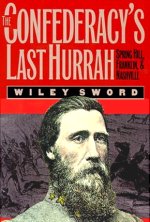 The Confederacy's Last Hurrah: Spring Hill, Franklin, and Nashville John Bell Hood rallied his demoralized troops and marched them off the Tennessee, desperately hoping to draw Sherman after him and forestall the Confederacy's defeat |
|
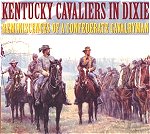 Kentucky Cavaliers in Dixie Reminiscences of a Confederate Cavalryman Mosgrove was born in Kentucky, in 1844, and enlisted in the Fourth Kentucky Cavalry Regiment on September 10, 1862. His eyewitness account illuminates the western theater of the Civil War in Kentucky, east Tennessee, and southwest Virginia |
Kindle Available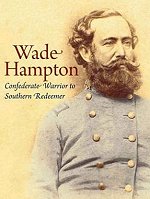 Wade Hampton: Confederate Warrior to Southern Redeemer General Wade Hampton was for a time the commander of all Lee's cavalry and at the end of the war was the highest-ranking Confederate cavalry officer |
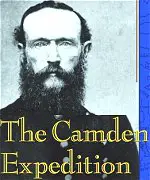 The Camden Expedition of 1864 and the Opportunity Lost by the Confederacy to Change the Civil War The Confederacy had a great opportunity to turn the Civil War in its favor in 1864, but squandered this chance when it failed to finish off a Union army cornered in Louisiana because of concerns about another Union army coming south from Arkansas. The Confederates were so confused that they could not agree on a course of action to contend with both threats, thus the Union offensive advancing from Arkansas saved the one in Louisiana and became known to history as the Camden Expedition. |
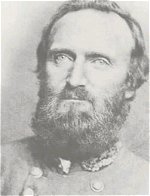 Attack of Stonewall Jackson at Chancellorsville The cadenced ranks of Lieutenant General Thomas J. Stonewall Jackson's Confederates. The gray-clad Southerners plowed into the Union defense |
|
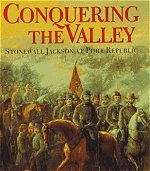 Conquering the Valley: Stonewall Jackson at Port Republic Using accurate background information as well as anecdotal material, eyewitness accounts, and new primary sources, a historic narrative outlines the events surrounding the Civil War battles at Port Republic and Cross Keys |
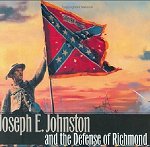 Joseph E. Johnston and the Defense of Richmond The high-level conferences in Richmond to set strategy and the relationship of the Peninsula campaign to operations in the Shenandoah Valley and the western Confederacy. What emerges is a portrait of a general who was much more complex in thought and action than even his advocates have argued |
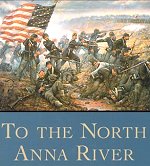 To the North Anna River Grant and Lee, May 13-25, 1864 Spectacular narrative of the initial campaign between Ulysses S. Grant and Robert E. Lee in 1864. May 13 through 25, was critical in the clash between the Army of the Potomac and the Army of Northern Virginia. |
Kindle Available The Maps of First Bull Run: An Atlas of the First Bull Run (Manassas) Campaign, including the Battle of Ball's Bluff, June-October 1861 The Maps of First Bull Run breaks down the entire operation (and related actions) into numerous map sets or "action-sections" enriched with more than fifty full-color original full-page maps. These cartographic originals bore down to the regimental and battery level and include the march to and from the battlefield and virtually every significant event in between. |
|
Kindle Available From Manassas to Appomattox General James Longstreet According to some, he was partially to blame for the Confederate defeat at Gettysburg; according to others, if Lee had followed Longstreet's advice, they would have won that battle. He has been called stubborn and vain; and he has been lauded as one of the greatest tacticians of the Civil War |
 Shiloh and Corinth: Sentinels of Stone The brave deeds performed by soldiers of the North and South. Approximately 93 striking photographs and accompanying histories bring the battlefields to life, from Shiloh and Savannah, Tennessee, to Iuka and Corinth, Mississippi |
Kindle Available One Continuous Fight: The Retreat from Gettysburg and the Pursuit of Lee's Army of Northern Virginia The first detailed military history of Lee's retreat and the Union effort to catch and destroy the wounded Army of Northern Virginia Complimented with 18 original maps, dozens of photos, and a complete driving tour with GPS coordinates of the entire retreat |
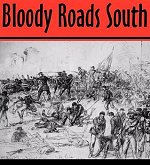 Bloody Roads South: The Wilderness to Cold Harbor, May-June 1864 This chronicles the great 1864 Overland Campaign, forty days that marked the end of the Civil War. In detail the battles in Virginia's Wilderness to the combat at Spotsylvania the trap laid by Lee at the North Anna River, to the killing ground of Cold Harbor |
|
|
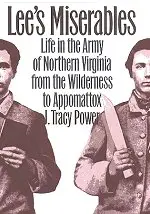 Lee's Miserables: Life in the Army of Northern Virginia from the Wilderness to Appomattox The words of the soldiers themselves provide a view of the army's experiences in camp, on the march, in combat, and under siege—from the battles in the Wilderness to the final retreat to Appomattox. |
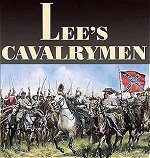 Lee's Cavalrymen: A History of the Mounted Forces of the Army of Northern Virginia, 1861-1865 The cavalry of the Army of Northern Virginia its leadership, the military life of its officers and men as revealed in their diaries and letters, the development of its tactics as the war evolved, and the influence of government policies on its operational abilities. All the major players and battles are involved |
Kindle Available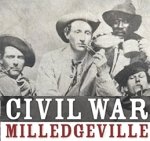 Civil War Milledgeville: Tales from the Confederate Capital of Georgia In the town of Milledgeville, Georgia--the state capital during the Civil War the actions of local soldiers and citizens alike tell a story that is unique to that locale. The division between combatant and civilian at the local level is not always clear. The often forgotten events and people that have shaped our larger understanding of the Civil War, from a womens riot to a confederate cavalry rescue. |
|
 Ironclads and Big Guns of the Confederacy : The Journal and Letters of John M. Brooke Information about the Confederate Navy's effort to supply its fledgling forces, the wartime diaries and letters of John M. Brooke tell the neglected story of the Confederate naval ordnance office, its innovations, and its strategic vision. |
 Where the South Lost the War: An Analysis of the Fort Henry-Fort Donelson Campaign The war probably could have been over in 1862 had Lieutenant Phelps destroyed the bridge at Florence. Not doing so provided a retreat for A. S. Johnston to move his men to Corinth and then to Shiloh |
Lee's Cavalrymen: A History of the Mounted Forces of the Army of Northern Virginia, 1861-1865 The cavalry of the Army of Northern Virginia its leadership, the military life of its officers and men as revealed in their diaries and letters, the development of its tactics as the war evolved, and the influence of government policies on its operational abilities. All the major players and battles are involved |
Kindle Available John Hunt Morgan and His Raiders The "Thunderbolt of the Confederacy" John Hunt Morgan from Tompkinsville, Kentucky to Greeneville, Tennessee. |
|
The Battle of the Wilderness May 5-6, 1864 Fought in a tangled forest fringing the south bank of the Rapidan River, the Battle of the Wilderness marked the initial engagement in the climactic months of the Civil War in Virginia, and the first encounter between Ulysses S. Grant and Robert E. Lee |
To the North Anna River: Grant and Lee, May 13-25, 1864 Spectacular narrative of the initial campaign between Ulysses S. Grant and Robert E. Lee in 1864. May 13 through 25, was critical in the clash between the Army of the Potomac and the Army of Northern Virginia. |
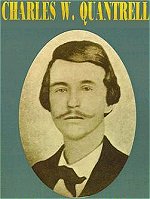 Charles W. Quantrell A True History Of His Guerilla Warfare On The Missouri And Kansas Border During The Civil War Of 1861-1865 This book was written just as Captain Harrison Trow told it to John P. Burch, giving accounts of fights that he participated in, narrow escapes experienced, dilemmas it seemed almost impossible to get out of, and also other battles |
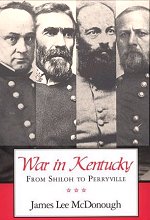 War in Kentucky: From Shiloh to Perryville Union gains in the Mississippi Valley and in Tennessee and Kentucky had brought the Confederacy to a point of crisis. This addition to the literature on the Civil War in the West tells how the Union then failed to press home its advantage while the Confederacy failed to force Kentucky into the Confederacy |
|
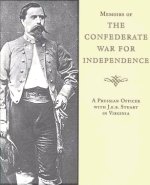 Memoirs of the Confederate War for Independence This is a wonderful memoir of the author's year and half of active service on the staff of the legendary Confederate cavalry General, J. E. B. Stuart. |
Kindle Available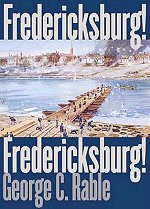 Fredericksburg! Fredericksburg! A stunning defeat for the Union. Confederate Robert E. Lee suffered roughly 5,000 casualties but inflicted nearly 13,000--on his opponent, General Ambrose Burnside. |
Kindle Available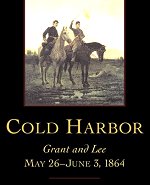 Cold Harbor Grant and Lee May 26-June 3, 1864 The spring 1864 campaignwhich pitted Ulysses S. Grant against Robert E. Lee for the first time in the Civil War |
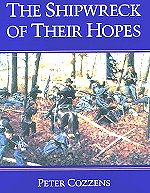 The Shipwreck of Their Hopes The Battles for Chattanooga All the information you need to understand the flow of the battle at Chattanooga as well as the political intriguing that helped to shape the results is here |
|
 Rebel Boast First at Bethel, Last at Appomattox Based on the stories of 5 men who enlisted in the Confederate Army to fight for what they believed. Where did they go? How did they feel? What did they do day to day? What did they see? How did they live and die? Nominated for a Pulitzer in 1956 |
Kindle Available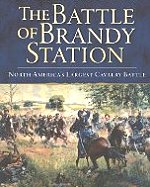 The Battle of Brandy Station North America's Largest Cavalry Battle Just before dawn on June 9, 1863, Union soldiers materialized from a thick fog near the banks of Virginia's Rappahannock River to ambush sleeping Confederates. The ensuing struggle, which lasted throughout the day, was to be known as the Battle of Brandy Station the largest cavalry battle ever fought on North American soil. |
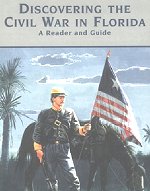 Discovering the Civil War in Florida A Reader and Guide While Confederates fought to preserve their sovereignty and way of life, Union troops descended on Florida with a mission to cripple the Confederacy: to destroy seashore salt works, to prevent the transfer of supplies and raw materials into, and to seize slaves and cattle |
 Season of Fire The Confederate Strike on Washington The Confederacy's last effort to do something meaningful by trying to attacked Washington DC. The Confederate forces came pretty close to success. The battle at Monocacy River and fighting in the District of Columbia where President Lincoln came under fire at Fort Stevens |
|
Kindle Available The Rise and Fall of the Confederate Government Jefferson Davis' point of view is essential to understanding the causes of the Civil War. |
 Confederate Military History Of North Carolina: North Carolina In The Civil War, 1861-1865 At the Battle of Big Bethel, North Carolina experienced the first Confederate casualty of the War. Field officers and privates discuss their unit's skirmishes and battles. Included are diaries and memoirs from unit historians; underscoring the veracity of their fighting history |
Kindle Available From Manassas to Appomattox: General James Longstreet According to some, he was partially to blame for the Confederate defeat at Gettysburg; according to others, if Lee had followed Longstreet's advice, they would have won that battle. He has been called stubborn and vain; and he has been lauded as one of the greatest tacticians of the Civil War |
 Struggle for the Heartland: The Campaigns from Fort Henry to Corinth The military campaign that began in early 1862 with the advance to Fort Henry and culminated in late May with the capture of Corinth, Mississippi. The first significant Northern penetration into the Confederate west |
|
Kindle Available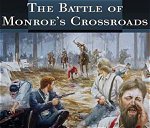 Battle of Monroe's Crossroads and the Civil War's Final Campaign Detailed tactical narrative of this important but long-forgotten battle, and places it in its proper context within the entire campaign. Author Eric Wittenberg study features 28 original maps and 50 illustrations. Finally, an author of renown has brought to vivid life this overlooked portion of the Carolinas Campaign |
 The State of Jones Mississippi's Longest Civil War A true story about the South during the Civil War ”the real South". Not the South that has been mythologized in novels and movies, but an authentic, hardscrabble place where poor men were forced to fight a rich man's war for slavery and cotton. In Jones County, Mississippi, a farmer named Newton Knight led his neighbors, white and black alike, in an insurrection against the Confederacy at the height of the Civil War. |
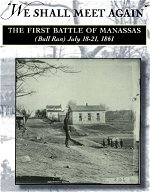 "We Shall Meet Again": The First Battle of Manassas (Bull Run), July 18-21, 1861 The First Battle of Manassas claimed the lives of approximately 878 soldiers and wounded another 2,489. With a battlefield stretching nearly five miles, 15,000 Union and 14,000 Confederate soldiers clashed for four fateful days, many of them young and terrified and receiving their first taste of a long and bitter war |
 The Railroads of the Confederacy The story of the first use of railroads on a major scale in a major war. A complex and fascinating tale, with the railroads of the American South playing the part of tragic hero in the Civil War: at first vigorous though immature; then overloaded, driven unmercifully, starved for iron; and eventually worn out |
|
Lee's Cavalrymen: A History of the Mounted Forces of the Army of Northern Virginia, 1861-1865 The cavalry of the Army of Northern Virginia its leadership, the military life of its officers and men as revealed in their diaries and letters, the development of its tactics as the war evolved, and the influence of government policies on its operational abilities. All the major players and battles are involved |
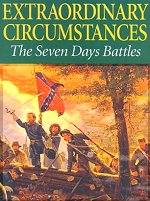 Extraordinary Circumstances The Seven Days Battles One of the most decisive military campaigns in Western history, the Seven Days were fought in the area southeast of the Confederate capitol of Richmond from June 25 to July 1, 1862 |
 This Terrible Sound The Battle of Chickamauga Study of the great bloody battle of Chickamauga that was the last great offensive, although costsly, victory by the Confederates. This is a detailed account of the movements of regiments, brigades, divisions |
 Civil War Soldier 102 Piece Playset
|
Union Generals Confederate Commanders Alphabetic Battle List American Civil War Exhibits American Civil War Timeline Civil War Summary Civil War Documents Women In The War Kids Zone Gettysburg Civil War Cooking Civil War Music Lyrics |
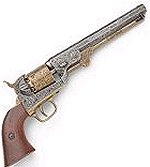 Civil War Model 1851 Naval Pistol Engraved Silver Tone / Gold Tone Finish and Wooden Grips - Replica of Revolver Used by Both USA / Union and CSA / Confederate Forces |