Kindle Available The Class of 1846: From West Point to Appomattox: Stonewall Jackson, George McClellan, and Their Brothers No single group of men at West Point has been so indelibly written into history as the class of 1846. The names are legendary: Thomas "Stonewall" Jackson, George B. McClellan, Ambrose Powell Hill, Darius Nash Couch, George Edward Pickett, Cadmus Marcellus Wilcox, and George Stoneman |
 Generals in Bronze: Interviewing the Commanders of the Civil War Revealing interviews with the commanders of the Civil War. In the decades that followed the American Civil War, Artist James E. Kelly (1855-1933) conducted in-depth interviews with over forty Union Generals |
 Encyclopedia of the American Civil War: A Political, Social, and Military History Definitive Reference Work, this volume, rich with over 500 illustrations, 75 maps, and 250 primary source documents, offers more than 1,600 entries that chart the war's strategic aims, analyze diplomatic and political maneuvering, describe key military actions, sketch important participants, assess developments in military science, and discuss the social and financial impact of the conflict. |
|
Kindle Available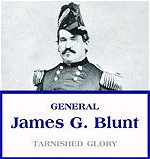 General James G. Blunt: Tarnished Glory General Blunt was an immensely successful leader. He and John Brown helped escaped slaves reach Canada; he led the defeat of Confederate troops at Fort Wayne, Prairie Grove, and Cane Hill. Also accused of corruption, womanizing, and egotistical tirades throughout his military career |
|||
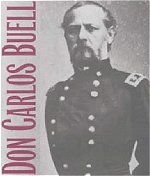 Don Carlos Buell: Most Promising of All Major General Don Carlos Buell stood among the senior Northern commanders early in the Civil War, led the Army of the Ohio in the critical Kentucky theater in 1861-62, and helped shape the direction of the conflict during its first years |
|||
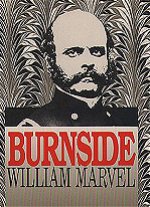 Burnside Ambrose Burnside, the Union general, was a major player on the Civil War stage from the first clash at Bull Run until the final summer of the war. He led a corps or army during most of this time and played important roles in various theaters of the war. |
 The Life And Public Services Of Ambrose E. Burnside: Soldier, Citizen, Statesman |
||
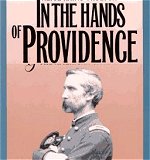 In the Hands of Providence: Joshua L. Chamberlain and the American Civil War The professor-turned-soldier who led the Twentieth Maine Regiment to glory at Gettysburg, earned a battlefield promotion to brigadier general from Ulysses S. Grant at Petersburg, and was wounded six times during the course of the Civil War |
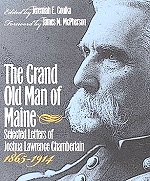 Selected Letters of Joshua Lawrence Chamberlain, 1865-1914 Known as the hero of Little Round Top and the commanding officer who accepted the Confederates' surrender at Appomattox. |
Kindle Available The Passing of Armies: An Account Of The Final Campaign Of The Army Of The Potomac The beginning of the final campaign of the Army of the Potomac against Confederate General Robert E. Lee and the Army of Northern Virginia. It was the spring of 1864 and General Grant had Lee and his army backing up toward what finally became the siege of Petersburg, Virginia. |
Kindle Available Through Blood and Fire at Gettysburg: General Joshua L. Chamberlain and the 20th Maine This book is based on the actual report written by Joshua Chamberlain after Gettysburg. It is full of photos and maps which helps to clarify positions and movements on the battlefield. Chamberlain's account are full of excellent insight and illustrations. |
 Custer Victorious: The Civil War Battles of General George Armstrong Custer Custer was promoted to major general and the helm of the Third Cavalry Division when he was only twenty-four. Urwin describes the Boy General's vital contributions to Union victories from Gettysburg to Appomattox. |
 CUSTER: The Controversial Life of George Armstrong Custer After graduating last in his class at West Point, he rose to become the Union's youngest general on the strength of his flamboyance and military genius. Next came 12 years of checkered service in the American West, ending with the famous massacre at Little Bighorn |
||
Kindle Available A Newer World : Kit Carson John C Fremont And The Claiming Of The American West Between 1842 and 1854 John C. Frémont, renowned as the nineteenth century's greatest explorer, and Kit Carson, the legendary scout and Indian fighter, boldly ventured into untamed territory to fulfill America's "manifest destiny." |
 Memoirs of My Life and Times During his remarkable life, John Charles Frémont served as a senator for the newly-formed state of California, led Union troops in the Civil War, and was governor of the territory of Arizona. His race for the presidency in 1856 brought prestige to the fledgling Republican Party, yet despite his popularity, his uncompromising determination to abolish slavery cost him the election. |
||
 Grant's Lieutenants From Chattanooga to Appomattox This new volume assesses Union generalship during the final two years of the Civil War. Steven Woodworth, one of the war's premier historians, is joined by a team of scholars-- Grimsley, Marszalek, and Hess, among others--who critique Ulysses S. Grant's commanders |
 Unconditional Surrender: U. S. Grant and the Civil War This is the best juvenile biography on Ulysses S. Grant by a wide margin. Marrin has done an excellent job in introducing Grant to a young audience. I highly recommend it. |
 Grant's Secret Service: The Intelligence War from Belmont to Appomattox The first scholarly examination of the use of military intelligence under Ulysses S. Grant's command during the Civil War. Feis makes the new and provocative argument that Grant's use of the Army of the Potomac's Bureau of Military Information played a significant role in Lee's defeat |
Kindle Available Cigars, Whiskey & Winning: Leadership Lessons from Ulysses S. Grant How did a man of only average talents lead a group of ordinary men to victory after victory over highly motivated, well trained and often brilliantly led opponents? In this masterful retelling of Grant's story, Al Kaltman draws on Grant's writings and life experiences to present a series of practical lessons in management that are more relevant than ever today |
Kindle Available Grant Wins the War Decision at Vicksburg A brilliantly constructed new account,A penetrating analysis of Grant's strategies and actions leading to the Union victory at Vicksburg. Approaching these epic events from a unique and well-rounded perspective, and based on careful research |
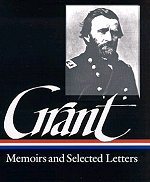 Ulysses S. Grant Memoirs and Selected Letters Grant wrote his "Personal Memoirs" to secure his family's future. In doing so, the Civil War's greatest general won himself a unique place in American letters. His character, sense of purpose, and simple compassion are evident throughout this deeply moving account, as well as in the letters to his wife, Julia |
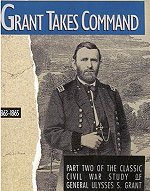 Grant Takes Command 1863 - 1865 The enigmatic commander in chief of the Union forces through the last year and a half of the Civil War. It is both a revelatory portrait of Ulysses S. Grant and the dramatic story of how the war was won. |
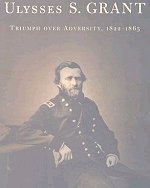 Ulysses S. Grant: Triumph Over Adversity, 1822-1865 Even as he waged war, he realized the broader political implications of the struggle; he came to believe that the preservation of the Union depended upon the destruction of slavery. Equally compelling is Grant's personal story--one of a man who struggled against great odds |
 Grant Rises in the West by Kenneth P. Williams From Iuka to Vicksburg, 1862-1863 Published in 1952 and 1956, respectively, these trace this Civil War-rior's rise from colonel in the Illinois volunteers to his defeat of the Confederacy. A fine portrait of Grant. |
Kindle Available The Passing of Armies: An Account Of The Final Campaign Of The Army Of The Potomac The beginning of the final campaign of the Army of the Potomac against Confederate General Robert E. Lee and the Army of Northern Virginia. It was the spring of 1864 and General Grant had Lee and his army backing up toward what finally became the siege of Petersburg, Virginia. |
||
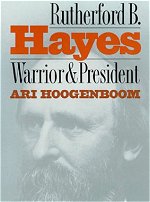 Rutherford B. Hayes Warrior and President The first biography of Hayes in nearly fifty years, Hoogenboom's book recreates the rapidly changing world of Victorian America as experienced by one of its most reflective and perceptive figures. The Hayes that emerges is a much more progressive and far-sighted leader than previously suggested. |
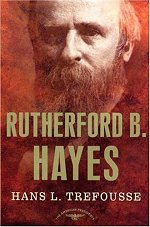 Rutherford B. Hayes While Hayes did officially terminate the Reconstruction, Trefousse points out that this process was already well under way by the start of his term and there was little he could do to stop it. A great intellectual and one of our best-educated presidents, Hayes did much more in the way of healing the nation and elevating the presidency. |
||
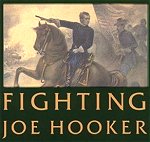 Fighting Joe Hooker Union general Joseph Hooker assumed command of an army demoralized by defeat and diminished by desertion. Acting swiftly, the general reorganized his army, routed corruption among quartermasters, improved food and sanitation, and boosted morale by granting furloughs and amnesties. The test of his military skill came in the battle of Chancellorsville. It was one of the Union Army's worst defeats |
|||
Kindle Available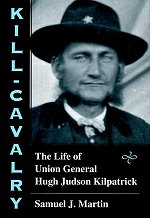 Kill-Cavalry: The Life of Union General Hugh Judson Kilpatrick Nicknamed "Kill-Cavalry" because of the unusually high casualty rate among his men, cavalry commander Hugh Judson Kilpatrick was also the most notorious scoundrel in the Union army. Kilpatrick lied, thieved, and whored his way through the Civil War, yet managed to attain the stars of a major general. |
 Cavalry on the Roads to Gettysburg: Kilpatrick at Hanover and Hunterstown The Union cavalry spent the first years of the war trying to equal Southern horsemen, until new leaders emerged with new tactics for handling these horsemen. Cavalry on the Roads to Gettysburg covers mounted actions in 1863, outlining units, battles, and leaders and individuals who made names for themselves in the cavalry |
||
 Lee Vs. McClellan: The First Campaign An interesting account of the struggle for western Virginia in 1861. It follows that year's rolls of Generals McClellan and Lee; the former using the successes of the campaign to further his reputation and career, and the latter struggling to straighten out a quagmire and failing to do so |
 The Civil War Papers Of George B. Mcclellan: Selected Correspondence, 1860-1865 General-in-chief of the entire Union army at one point, he led the Army of the Potomac through the disaster at Antietam Creek, was subsequently dismissed by Lincoln, and then ran against him in the 1864 presidential campaign. This collection of McClellan's candid letters about himself, his motivations, and his intentions |
 George B. McClellan and Civil War History: In the Shadow of Grant and Sherman The complex general who, though gifted with administrative and organizational skills, was unable and unwilling to fight with the splendid army he had created. In this book, Rowland presents a framework in which early Civil War command can be viewed without direct comparison to the final two years of the war |
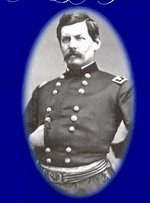 George B. Mcclellan The Young Napoleon By age 35, General George B. McClellan (1826–1885), designated the "Young Napoleon," was the commander of all the Northern armies. He forged the Army of the Potomac into a formidable battlefield foe, and fought the longest and largest campaign of the time as well as the single bloodiest battle in the nation's history |
 McClellan's Own Story Born in Philadelphia on December 3, 1826, George B. McClellan graduated from West Point in 1846 before serving in the Mexican War. At the start of the Civil War, McClellan was put in a position of leadership and after a successful campaign in Virginia he was given command of the Army of Potomac, one of the Union's strongest armies. He led the Peninsular campaign with almost 100,000 troops under his command. marching toward Richmond. |
|||
Kindle Title Official Records of the Union and Confederate Armies: General Irvin McDowell's Account of the Battle of First Bull Run Irvin McDowell was a career American army officer, famous for his defeat during the First Battle of Bull Run, the first large-scale battle of the Civil War. McDowell was promoted to brigadier general in the regular army on May 14, 1861, and given command of the Army of Northeastern Virginia, despite never having commanded troops in combat. |
|||
 Personal Recollections and Observations of General Nelson A. Miles Served his country with distinction for forty-two years. During the Civil War he fought in almost every important battle of the Army of the Potomac, and by its end had been promoted to the rank of major general of volunteers. In 1869 transferred to the West, where he achieved his greatest fame fighting against the Sioux, Cheyennes, Apaches, and Nez Perces |
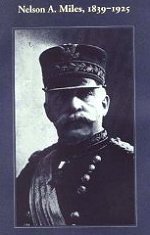 A Hero to His Fighting Men: Nelson A. Miles, 1839-1925 Without the benefit of a college education, Miles attained the rank of major general of volunteers two months after his twenty-sixth birthday. At the close of the Civil War, he was Jefferson Davis's military jailer, then served with the Freedmen's Bureau in North Carolina. |
||
 The Union Generals Speak: The Meade Hearings on the Battle of Gettysburg The first annotated edition of the 1864 congressional investigation into Major General George Gordon Meade's conduct during the Gettysburg campaign. The transcripts alone, which present eyewitness accounts from sixteen participant officers at Gettysburg, offer a wealth of information about the most pivotal battles in American history |
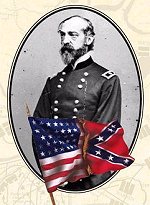 George Gordon Meade and the War in the East To most students of the Civil War, he is merely the man who was lucky enough to benefit from Confederate mistakes at Gettysburg, but whose shortcomings as a commander compelled Abraham Lincoln to bring in Ulysses S. Grant from the West to achieve victory |
Kindle Available Meade: Victor At Gettysburg Meade took command only hours before his forces stumbled upon Robert E. Lee's Confederates at Gettysburg, Pennsylvania, in 1863. He led his men to victory in one of the most famous battles in history, but Meade was soon embroiled in political battles with fellow generals and Washington politicians |
 Meade's Headquarters 1863 to 1865: Letters of Theodore Lyman from the Wilderness to Appomattox |
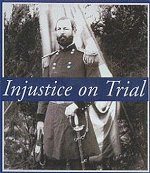 Injustice on Trial: Second Bull Run, General Fitz John Porter's Court Martial, and the Schofield Board Investigation That Restored His Good Name A prominent Union corps commander, Fitz John Porter, was cashiered by a court martial for his role in the Battle of Second Bull Run. It wasn't until 1878 that the disgraced West Pointer was able to win full vindication from a court of inquiry |
|||
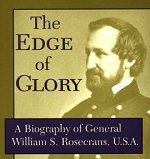 The Edge of Glory: A Biography of General William S. Rosecrans, U.S.A The best biography on William Rosecrans despite having been published over 40 years ago. William Lamers, who was a school official and not a historian, was looking at a limited portion of his subject's career. Lamers does a solid job in offering the basic narrative of Rosecrans' roller coaster ride in the Union command |
 Rosecrans Campaign With The Fourteenth Army Corps Or The Army Of The Cumberland In the interest of creating a more extensive selection of rare historical book reprints, we have chosen to reproduce this title even though it may possibly have occasional imperfections. Because this work is culturally important, we have made it available as a part of our commitment to protecting, preserving and promoting the world's literature. Kessinger Publishing |
||
Kindle Available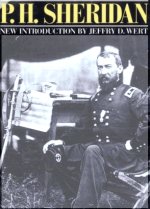 Personal Memoirs of P.H. Sheridan General United States Army Philip H. Sheridan earned the enmity of many Virginians for laying waste to the Shenandoah Valley. His date and place of birth is uncertain, but he himself claimed to have been born in New York in 1831 |
 Glory Enough for All: Sheridan's Second Raid and the Battle of Trevilian Station After the ferocious fighting at Cold Harbor Grant ordered his cavalry to distract the Confederate forces. Tthe battle that resulted when Confederate cavalry pursued and caught their Federal foes at Trevilian Station, Virginia, perhaps the only truly decisive cavalry battle of the American Civil War. |
Kindle Available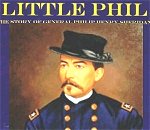 Little Phil: The Story of General Philip Henry Sheridan The author makes no pretense of presenting a scholarly recitation of the historic military maneuvers and tactics that surrounded the man's career. His purpose is to present the story of the man, using his own words and the words of his contemporaries so that we might see what he saw, hear what he heard, and feel what he felt. |
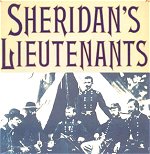 Sheridan's Lieutenants: Phil Sheridan, His Generals, and the Final Year of the Civil War Summary of Sheridan's role in the last year of the Civil War. An introduction to the lives of a remarkable group of soldiers. Merritt, Mackenzie, Crook, Upton, and Wilson were young, gifted, and tough officers who contributed to Union victory. Custer is remembered today because he blundered at the Little Bighorn |
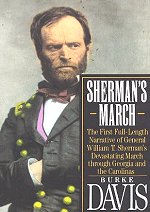 Sherman's March: The First Full-Length Narrative of General William T. Sherman's Devastating March through Georgia and the Carolinas Beginning with the fall of Atlanta, the unrelenting aggressive slash and burn total warfare of General Sherman's Union troops, and then the final march into Raleigh |
Kindle Available Southern Storm Sherman's March to the Sea The destruction spanned more than sixty miles in width and virtually cut the South in two, disabling the flow of supplies to the Confederate army. He led more than 60,000 Union troops to blaze a path from Atlanta to Savannah, ordering his men to burn crops, kill livestock, and decimate everything that fed the Rebel war machine |
 Sherman's Mississippi Campaign Sherman set out from Vicksburg on February 3, 1864, with an army of some 25,000 infantry and a battalion of cavalry. An opportunity to observe how this large-scale raid presaged Shermans Atlanta and Carolina campaigns, revealing the transformation of Shermans strategic thinking |
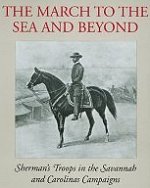 The March to the Sea and Beyond: Sherman's Troops in the Savannah and Carolinas Campaigns This book contains an examination of the army that General William Tecumseh Sherman led through Georgia and the Carolinas, in late 1864 and early 1865. Instead of being just another narrative of the March to the Sea and Carolina campaigns, however, Glatthaar's book is a look at the individuals that composed the army. |
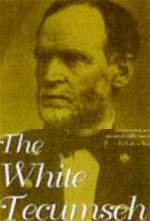 The White Tecumseh: A Biography of General William T. Sherman Utilizing regimental histories, historian Hirshon offers a sympathetic yet excellent biography of one of the more noted Civil War generals, best remembered for burning Atlanta, cutting a swath of destruction across Georgia, then creating total destruction in South Carolina, including the burning of Columbia. Hirshon gives us an insight into how Sherman's own troops felt about him and his relationships with fellow generals, especially Grant. |
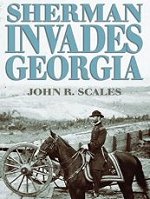 Sherman Invades Georgia: Planning the North Georgia Campaign Using a Modern Perspective Sherman Invades Georgia takes advantage of modern planning techniques to fully examine what went into the Georgia campaign. Unlike other studies, though, this one puts the reader squarely into the mind of General Sherman on the eve of his most famous military undertaking—limiting the information to that possessed by Sherman at the time, as documented in his correspondence during the campaign and not in his after-the-fact reports and autobiography. |
 Sherman's Horsemen: Union Cavalry Operations in the Atlanta Campaign A comprehensive study of the role of the cavalry in Sherman's coordinated assault on Atlanta in 1864, involving three federal armies that swept in from the west through Alabama and Georgia |
|
Kindle Available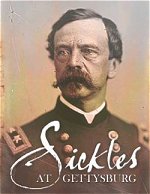 Sickles at Gettysburg: The Controversial Civil War General Who Committed Murder, Abandoned Little Round Top, and Declared Himself the Hero of Gettysburg No individual who fought at Gettysburg was more controversial, both personally and professionally, than Major General Daniel E. Sickles. By 1863, Sickles was notorious as a disgraced former Congressman who murdered his wife's lover on the streets of Washington and used America's first temporary insanity defense to escape justice |
Kindle Available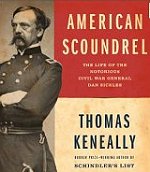 American Scoundrel: The Life of the Notorious Civil War General Dan Sickles Dan Sickles was a member of Congress, led a controversial charge at Gettysburg, and had an affair with the deposed Queen of Spain—among many other women. But the most startling of his many exploits was his murder of Philip Barton Key (son of Francis Scott Key), the lover of his long-suffering and neglected wife, Teresa. |
||
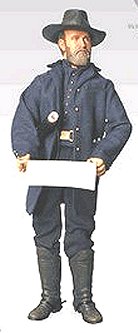 General US Grant 12 inch Action Figure |
CSA Generals Book Titles Union Generals Confederate Commanders Alphabetic Battle List American Civil War Exhibits American Civil War Timeline Civil War Summary Civil War Documents Women In The War Kids Zone Gettysburg Civil War Cooking Civil War Music Lyrics |
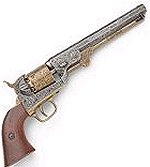 Civil War Model 1851 Naval Pistol Engraved Silver Tone / Gold Tone Finish and Wooden Grips - Replica of Revolver Used by Both USA / Union and CSA / Confederate Forces |
 Robert E. Lee: Civil War General The game comes with two types of battles to choose from, 45 historical battles and more than 100 alternative ones. The alternative ones are usually smaller versions of the historical ones. Of great interest is the way the game handles campaigns. Not only does it string together varying numbers of individual scenarios but puts the emphasis on how well or poorly your army performs during battle |
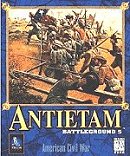 Antietam: Battleground 5 PC Game focuses on individual areas of the battle, including the pre-battle South Mountain delaying action, or you can fight the whole Antietam scrap between McClellan and Lee on September 17th 1862 |
 Take Command 2nd Manassas 2nd Manassas explores one of the American Civil War's most important battles. Travel back to 1862 and fight what the North remembers as the Second Battle of BullRun -- a battle which was pivotal to the Northern Virginia Campaign. Take on the essential elements of decision-making for this crucial battle - Take Command or be overcome by it. Accurate ballistics for weapons Play |
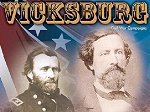 Civil War Campaigns: Vicksburg A chance to refight one of the American Civil War's most crucial battles. It's April of 1863, and General U.S. Grant has led his men to the banks of the Mississippi River. After disastrous Union campaigns at Chickasaw Bayou, Steele Bayou and Greenville, Grant elects to bypass the Confederate fortress city of Vicksburg |

