
Shiloh Tennessee
American Civil War
April 6 - April 7 1862
|
Kindle Available  Shiloh: The Battle That Changed the Civil War The battle of Shiloh, fought in April 1862 in the wilderness of south central Tennessee, marked a savage turning point in the Civil War. In this masterful book, The drama and the horror of the battle and discusses in authoritative detail the political and military policies that led to Shiloh Kindle Available  Shiloh--In Hell before Night Whether the reader is a Civil War novice or an expert, this book provides an accurate storytelling of this great battle. This is a great read about the battle. This fills in the gaps on this battle, and examines all the command decisions. | ||||||||||||||||||||||||||||||||||||||||||||||||||||||||||||||||||||||||||||||||||||||||||||||||||||||||||||||||||||||||||||||||||||||||||||||||||||||||||||||||||||||||||||||||||||||||||||||||||||||||||||||||||||||||||||||||||||||||||||||||||||||||||||||||||||||||||||||||||||||||||||||||||||||||||||||||||||||||||||||||||||||||||||||||||||||||||||||||||||||||||||||||||||||||||||||||||||||||||||||||||||||||||||||||||||||||||||||||||||||||||||||||||||||||||||||||||||||||||||||||||||||||||||||||||||||||||||||||||||||||||||||||||||||||||||||||||||||||||||||||||||||||||||||||||||||||||||||||||||||||||||||||||||||||||||||||||||||||||||||||||||||||||||||||||||||||||||||||||||||||||||||||||||||||||||||||||||||||||||||||||||||||||||||||||||||||||||||||||||||||||||||||||||||||||||||||||||||||||||||||||||||||||||||||||||||||||||||||||||||||||||||||||||||||||||||||||||||||||||||||||||||||||||||||||||||||||||||||||||||||||||||||||||||||||||||||||||||||||||||||||||||||||||||||||||||||||||||||||||||
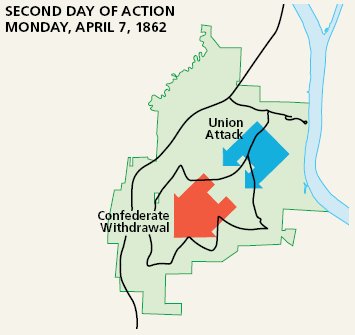
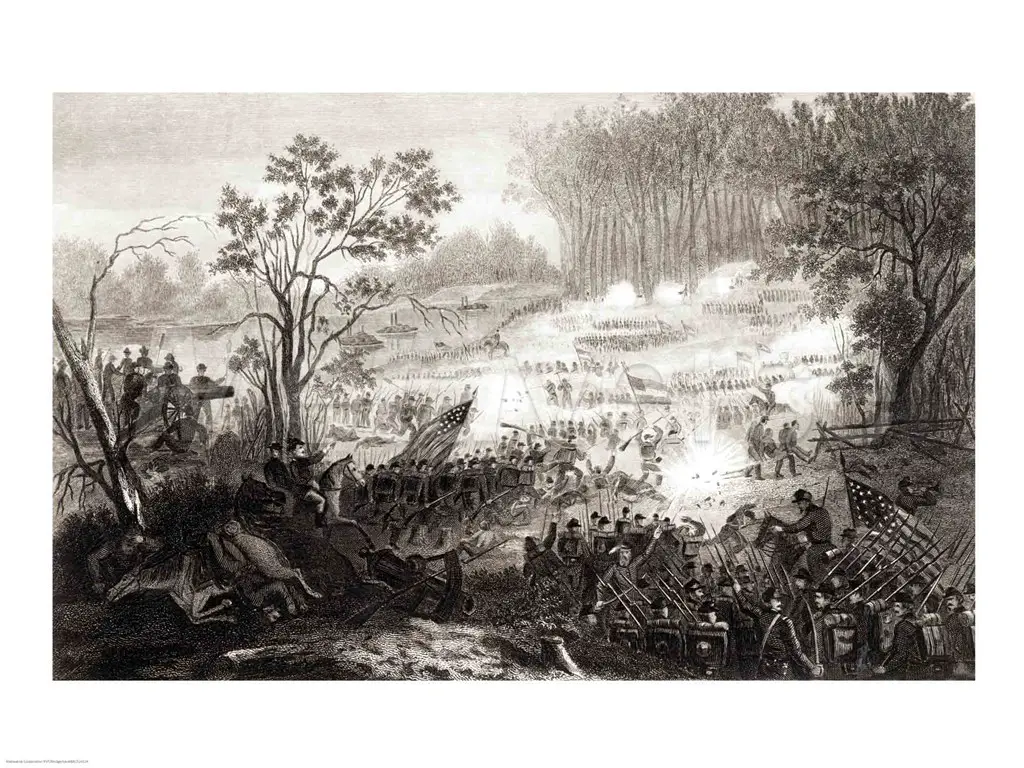
April 7Monday morning, April 7, at daylight, the vanquished of the previous day renewed the struggle with increased strength and restored confidence. Anxious to take the initiative the Union armies were put in motion almost simultaneously, with General Buell on the left, Lew Wallace on the extreme right, and Grant's weary troops occupying the space between. The movement began unopposed, except by small unsupported parties which were quickly forced to retreat. The Confederates had been unable to reorganize their widely scattered forces during the night. Therefore, when the Union The Confederates, one brigade strong, were first encountered by Lew Wallace a short distance in front of his Sunday night bivouac. In a brief but spirited engagement, the Confederates were attacked in front and on the left flank by the Union division. To keep from being surrounded, they fell back almost a mile in the direction of Shiloh Church to take their place in the forming line of battle. In the meantime, Buell moved his troops rapidly forward until they developed the Confederate line of battle west of the Peach Orchard. The Southerners boldly charged the advancing Union infantry which had moved forward so rapidly that its artillery was still far to the rear. With out artillery support, the Federals were unable to withstand the violent assault of the Confederates and were forced to make a hasty retreat. The timely arrival and effective use of two batteries of artillery permitted the Union line again to advance, only to be driven back once more by the stubborn Confederates. The battle now raged the entire length of the field. Charge followed by countercharge moved the fitfully swaying line first toward the river and then toward the church. The advantage would seem to test momentarily with the weary Southerners, but would soon be lost to their greatly strengthened opponent. Commands became so intermingled and confused that it was often impossible to distinguish between friend and foe. The Confederates, clad in a variety of colored uniforms, with no well-defined line and on an ever-changing front, suffered the heavier losses from the fire of their own troops. Meanwhile, General Beauregard, at Shiloh Church, anxiously awaited the return of couriers he had dispatched to Corinth to hurry forward General Earl Van Dorn's army of about 20,000 men, daily expected there from Van Buren, Ark. He had promised to make a junction with General Beauregard as soon as possible, but was delayed because he had no means of transporting his troops across the Mississippi. Unaware that Van Dorn was still in Arkansas, General Beauregard maintained his largest troop concentration in the vicinity of the church to defend the Corinth-Pittsburg Road so that reinforcements could be quickly moved onto the field. As soon as it became known that additional troops were not on the way, Beauregard realized that the road would have to be kept open as a possible line of retreat. The Union commanders were equally determined to drive the Confederates from the position. Consequently, furious fighting raged before the church long after the tempo of the battle had slackened on each flank. Despite all efforts of the Confederates, the Union line continued slowly to advance. In desperation the Confederates made a gallant charge, first expending their ammunition and then relying on the bayonet. The charge carried the surging line through waist-deep Water Oaks Pond, beyond which the fire from the adversary became so strong that the line was brought to an abrupt halt. Taking cover at the edge of a woods, they repulsed every attempt by the Federals to advance. By 2 p. m. General Beauregard decided it was useless to prolong the unequal struggle. Since early morning, his lines had been forced back, step by step, with heavy losses. From all parts of the field his subordinates were sending urgent requests for reinforcements, which he was unable to supply. Even his position at the church was in danger of being taken. A continuation of the battle could bring only additional disasters upon his already greatly depleted ranks. To forestall a complete rout, he ordered a rear guard with artillery support to be put in position on the ridge west of the church and instructed his corps commanders to begin withdrawing their troops. By 4 o'clock, the last of the Confederate Army, or what was left of it, had retired from the field and was leisurely making its way back to Corinth without a single Federal soldier in pursuit. The Union armies did not attempt to harass the retreating Southern columns or attack them when they went into bivouac for the night. Instead, Grant's troops, from the privates to the highest commanders, appear to have been content to return to their recaptured camps, while the Confederates returned to their former positions in and around Corinth to recruit and reorganize. In explanation of his inactivity Grant said: "My force was too much fatigued from two days' hard fighting and exposure in the open air to a drenching rain during the intervening night, to pursue immediately. Night closed in cloudy and with heavy rain, making roads impracticable for artillery by the next morning." The next morning, April 8, however, General Thomas J. Wood, with his division, and Sherman, with two brigades and the 4th Illinois Cavalry, went in pursuit. Toward evening they came upon the Confederate rear guard at Fallen Timbers, about 6 miles from the battlefield. The Southern cavalry, commanded by Colonel Nathan Bedford Forrest, charged the Federals, putting the skirmishers to flight and throwing the Union cavalry into confusion. The Confederates, pursuing too vigorously, came suddenly upon the main body of Federal infantry and were repulsed, after Colonel Forrest had been seriously wounded in the side. Before returning to camp, the Northerners tarried long enough to bury their 15 dead, gather up their 25 wounded, and find out that they had lost 75 as prisoners. The spirited action of the Confederate rear guard at Fallen Timbers put an end to all ideas of further pursuit by the Federals.
April 6
| |||||||||||||||||||||||||||||||||||||||||||||||||||||||||||||||||||||||||||||||||||||||||||||||||||||||||||||||||||||||||||||||||||||||||||||||||||||||||||||||||||||||||||||||||||||||||||||||||||||||||||||||||||||||||||||||||||||||||||||||||||||||||||||||||||||||||||||||||||||||||||||||||||||||||||||||||||||||||||||||||||||||||||||||||||||||||||||||||||||||||||||||||||||||||||||||||||||||||||||||||||||||||||||||||||||||||||||||||||||||||||||||||||||||||||||||||||||||||||||||||||||||||||||||||||||||||||||||||||||||||||||||||||||||||||||||||||||||||||||||||||||||||||||||||||||||||||||||||||||||||||||||||||||||||||||||||||||||||||||||||||||||||||||||||||||||||||||||||||||||||||||||||||||||||||||||||||||||||||||||||||||||||||||||||||||||||||||||||||||||||||||||||||||||||||||||||||||||||||||||||||||||||||||||||||||||||||||||||||||||||||||||||||||||||||||||||||||||||||||||||||||||||||||||||||||||||||||||||||||||||||||||||||||||||||||||||||||||||||||||||||||||||||||||||||||||||||||||||||||||
| |||||||||||||||||||||||||||||||||||||||||||||||||||||||||||||||||||||||||||||||||||||||||||||||||||||||||||||||||||||||||||||||||||||||||||||||||||||||||||||||||||||||||||||||||||||||||||||||||||||||||||||||||||||||||||||||||||||||||||||||||||||||||||||||||||||||||||||||||||||||||||||||||||||||||||||||||||||||||||||||||||||||||||||||||||||||||||||||||||||||||||||||||||||||||||||||||||||||||||||||||||||||||||||||||||||||||||||||||||||||||||||||||||||||||||||||||||||||||||||||||||||||||||||||||||||||||||||||||||||||||||||||||||||||||||||||||||||||||||||||||||||||||||||||||||||||||||||||||||||||||||||||||||||||||||||||||||||||||||||||||||||||||||||||||||||||||||||||||||||||||||||||||||||||||||||||||||||||||||||||||||||||||||||||||||||||||||||||||||||||||||||||||||||||||||||||||||||||||||||||||||||||||||||||||||||||||||||||||||||||||||||||||||||||||||||||||||||||||||||||||||||||||||||||||||||||||||||||||||||||||||||||||||||||||||||||||||||||||||||||||||||||||||||||||||||||||||||||||||||||


Kindle Available Advance And Retreat: Personal Experiences In The United States And Confederate States Armies John Bell Hood entered the Confederate Army at 29, loyal to Confederate Independence. He led his men into the battles of Second Manassas, Gaines's Mill, Sharpsburg, Fredericksburg, Gettysburg, and Chickamauga |
Kindle Available Tennessee in the Civil War Selected Contemporary Accounts of Military and Other Events, Month by Month |
 Winter Lightning: A Guide to the Battle of Stones River Lincoln thanked Rosecrans saying that the nation could not have taken another defeat. Additionally, Lincoln said he would remember this victory as long as he lived |
 Storming the Heights: A Guide to the Battle of Chattanooga The Confederate victory of Chickamauga drove the Union Army of the Cumberland back to the key railroad hub of Chattanooga. In early October it had appeared that all Union gains in southern Tennessee might be lost | |
Kindle Available Civil War Curiosities: Strange Stories, Oddities, Events, and Coincidences |
 The Battle of the Wilderness May 5-6, 1864 Fought in a tangled forest fringing the south bank of the Rapidan River, the Battle of the Wilderness marked the initial engagement in the climactic months of the Civil War in Virginia, and the first encounter between Ulysses S. Grant and Robert E. Lee |
 The Civil War Day By Day An Almanac, 1861-1865 The most exhaustively detailed and fascinating book on the American Civil War of its kind. Not only does it provide a day-by-day look at the major events of the war, but lists so many of the small skirmishes and actions as well. Accurate and enjoyable |
Kindle Available Civil War Medicine The staggering challenge of treating wounds and disease on both sides of the conflict. Written for general readers and scholars alike, this first-of-its kind encyclopedia will help all Civil War enthusiasts to better understand this amazing medical saga. Clearly organized, authoritative, and readable | |
 The Bridge Burners: A True Adventure of East Tennessee's Underground Civil War The railroad that proved such a peacetime boon would become a point of conflict only three years later |
 The Civil War Catalog More than 200 illustrations and restored photographs, all the weapons, uniforms, and implements of battle. Packed with color photos of insignia, medals, kits, paper ephemera, rare uniforms, and personal equipment for all enlisted ranks. |
Kindle Available Standard Catalog of Civil War Firearms Over 700 photographs and a rarity scale for each gun, this comprehensive guide to the thousands of weapons used by Billy Yank and Johnny Reb will be indispensable for historians and collectors. |
 The Confederacy's Last Hurrah: Spring Hill, Franklin, and Nashville John Bell Hood rallied his demoralized troops and marched them off the Tennessee, desperately hoping to draw Sherman after him and forestall the Confederacy's defeat |
 Bad Blood: The Border War That Triggered the Civil War In the years leading up to the Civil War, a bloody conflict between slaveholders and abolitionists focused the nation's eyes on the state of Missouri and the territory of Kansas. Told through the actual words of slave owners, free-staters, border ruffians, and politicians, Bad Blood presents the complex morality, differing values, and life-and-death decisions faced by those who lived on the Missouri-Kansas border |
 Blue Vs. Gray - Killing Fields Relive the most vicious fighting of the Civil War, in which General Ulysses S. Grant forcibly reversed the tide of the conflict by paying with the blood of thousands. It was a desperate time for the Union |
 Civil War Combat: America's Bloodiest Battles The violent mayhem of the hornet's nest at Shiloh, the valiant charge on the sunken road at Antietam, the carnage in the wheat field at Gettysburg, and the brutal fighting at Cold Harbor |
 Shiloh: The War is Civil No More |
|||||||||||||||||||||||||||||||||||||||||||||||||||||||||||||||||||||||||||||||||||||||||||||||||||||||||||||||||||||||||||||||||||||||||||||||||||||||||||||||||||||||||||||||||||||||||||||||||||||||||||||||||||||||||||||||||||||||||||||||||||||||||||||||||||||||||||||||||||||||||||||||||||||||||||||||||||||||||||||||||||||||||||||||||||||||||||||||||||||||||||||||||||||||||||||||||||||||||||||||||||||||||||||||||||||||||||||||||||||||||||||||||||||||||||||||||||||||||||||||||||||||||||||||||||||||||||||||||||||||||||||||||||||||||||||||||||||||||||||||||||||||||||||||||||||||||||||||||||||||||||||||||||||||||||||||||||||||||||||||||||||||||||||||||||||||||||||||||||||||||||||||||||||||||||||||||||||||||||||||||||||||||||||||||||||||||||||||||||||||||||||||||||||||||||||||||||||||||||||||||||||||||||||||||||||||||||||||||||||||||||||||||||||||||||||||||||||||||||||||||||||||||||||||||||||||||||||||||||||||||||||||||||||||||||||||||||||||||||||||||||||||||||||||||||||||||||||||||||
 The Blue and the Gray The Complete Miniseries The Civil War proved a backdrop for this 1982 miniseries. Complete and uncut three disc set. Two families divided by the War Between the States. A Southerner caught when he becomes a war correspondent for the Northern newspaper. He finds himself where history's in the making from the Battle of Bull Run to Abraham Lincoln's assassination |
 Battle of Stones River The Fight for Murfreesboro At dawn on December 31, 1862 the two armies clashed in a deadly struggle along the banks of Stones River. |
 The Battle of Chickamauga Special Widescreen Edition Chickamauga one of the fiercest engagements of the American Civil War. Over a period of two days, more than 100,000 men struggled for control of the south's transportation hub, Chattanooga. |
 Struggle For Vicksburg Photography of the park with authentic battlefield illustrations and life-like paintings. Vicksburg's wartime role in the bloody and brutal conflict. |
|||||||||||||||||||||||||||||||||||||||||||||||||||||||||||||||||||||||||||||||||||||||||||||||||||||||||||||||||||||||||||||||||||||||||||||||||||||||||||||||||||||||||||||||||||||||||||||||||||||||||||||||||||||||||||||||||||||||||||||||||||||||||||||||||||||||||||||||||||||||||||||||||||||||||||||||||||||||||||||||||||||||||||||||||||||||||||||||||||||||||||||||||||||||||||||||||||||||||||||||||||||||||||||||||||||||||||||||||||||||||||||||||||||||||||||||||||||||||||||||||||||||||||||||||||||||||||||||||||||||||||||||||||||||||||||||||||||||||||||||||||||||||||||||||||||||||||||||||||||||||||||||||||||||||||||||||||||||||||||||||||||||||||||||||||||||||||||||||||||||||||||||||||||||||||||||||||||||||||||||||||||||||||||||||||||||||||||||||||||||||||||||||||||||||||||||||||||||||||||||||||||||||||||||||||||||||||||||||||||||||||||||||||||||||||||||||||||||||||||||||||||||||||||||||||||||||||||||||||||||||||||||||||||||||||||||||||||||||||||||||||||||||||||||||||||||||||||||||||
Source:
Library of Congress
National Park Service
Department of the Interior
| Search AmericanCivilWar.com |
| Enter the keywords you are looking for and the site will be searched and all occurrences of your request will be displayed. You can also enter a date format, April 19,1862 or September 1864. |
