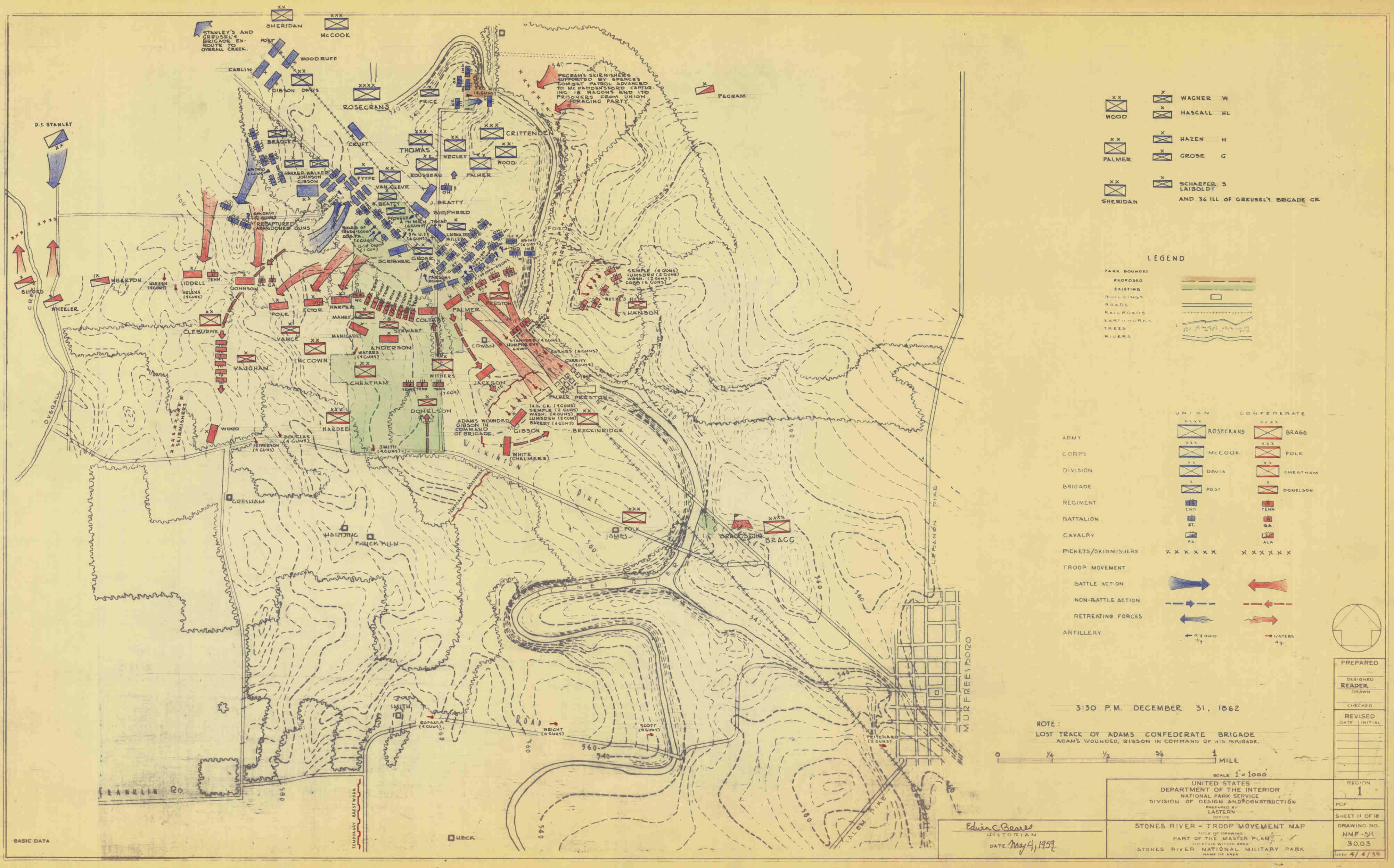
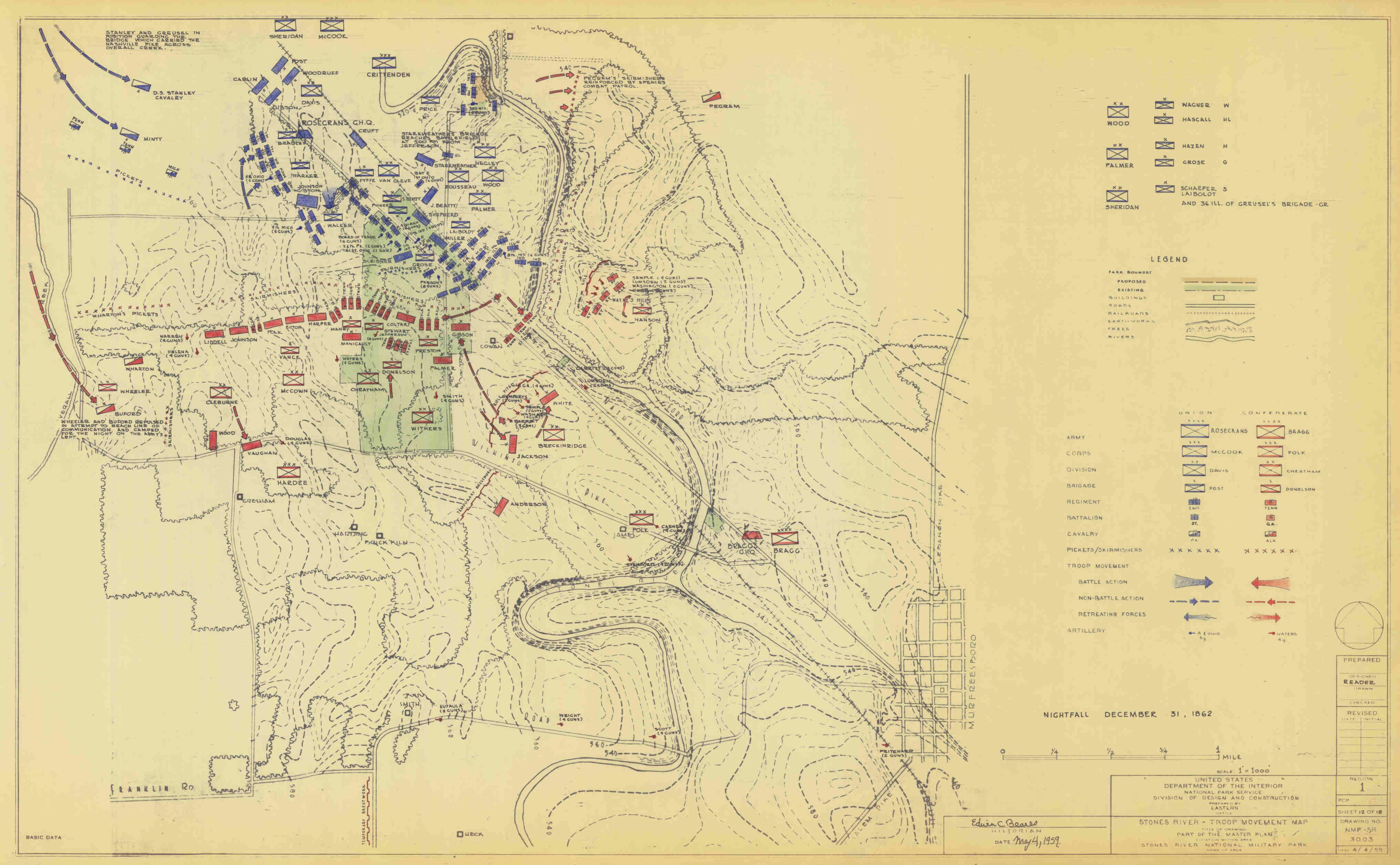
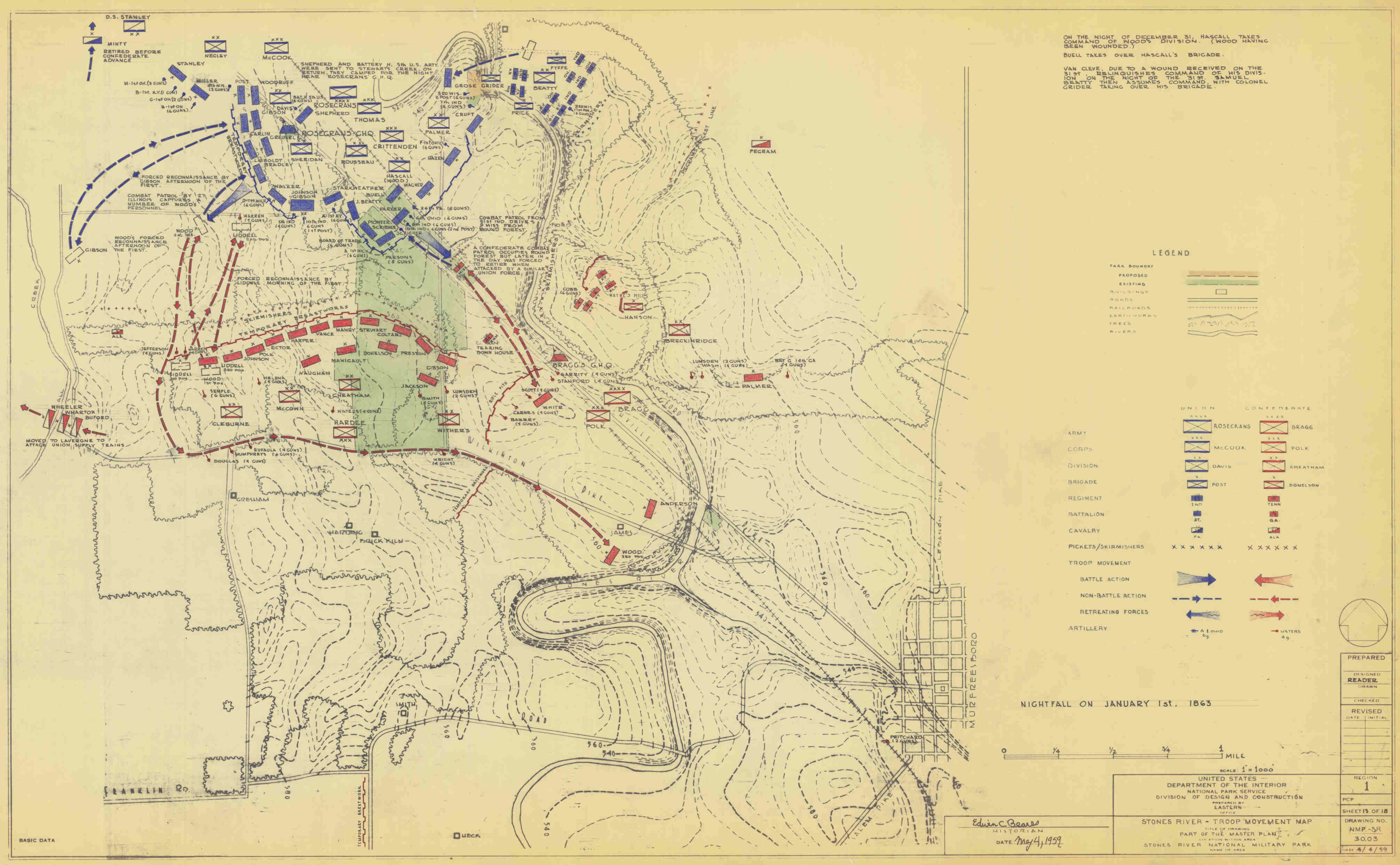
Stones River Tennessee Campaign Map
American Civil War
December 1862 - January 1863
December 31 Afternoon
| Stones River Campaign | Morning December 31 | Afternoon December 31 | January 2 1863 |
|
 No Better Place to Die The Battle of Stones River The forces of Braxton Bragg came very close to victory. But the star-crossed Confederate general ended up withdrawing, leaving Rosecrans' Union forces to claim victory by holding the field of battle  Winter Lightning: A Guide to the Battle of Stones River Lincoln thanked Rosecrans saying that the nation could not have taken another defeat. Additionally, Lincoln said he would remember this victory as long as he lived |

|
After McCown's dawn assault, Confederate units to the north began attacking the enemy in their front. These attacks were not meant to break through, but to hold Union units in place as the flanking attack swept up behind them. General Philip Sheridan had his men rise early and form a line of battle. His men were able to repulse the first enemy attack, but the loss of the divisions to his right forced Sheridan's commanders to reposition their lines to keep Cleburne's Division from cutting off their escape route. Sheridan's lines pivoted to the north, anchored by General James Negley's Division in the trees and rocks along McFadden Lane. Confederate brigades assaulted Sheridan's and Negley's Divisions without coordination. The terrain made communication and cooperation between units nearly impossible. For more than two hours, the Union forces fell back step by bloody step slowing the Confederate assault. By noon, the Confederate Brigades of A.P. Stewart, J. Patton Anderson, George Maney, A.M. Manigault, and A.J. Vaughn assaulted the Union salient from three sides. With their ammunition nearly spent, Negley's and Sheridan's lines shattered and their men made their way north and west through the cedars towards the Nashville Pike. The cost of this delaying action was enormous. Sam Watkins of the First Tennessee Infantry, CS was amazed at the bloodshed. “I cannot remember now of ever seeing more dead men and horses and captured cannon all jumbled together, than that scene of blood and carnage … on the (Wilkinson) … Turnpike; the ground was literally covered with blue coats dead." All three of Sheridan's brigade commanders were killed or mortally wounded and many Federal units lost more than one-third of their men. Many Confederate units fared little better. Union soldiers recalled the carnage as looking like the slaughter pens in the stockyards of Chicago. The name stuck. Troop Positions December 31 1:00 PM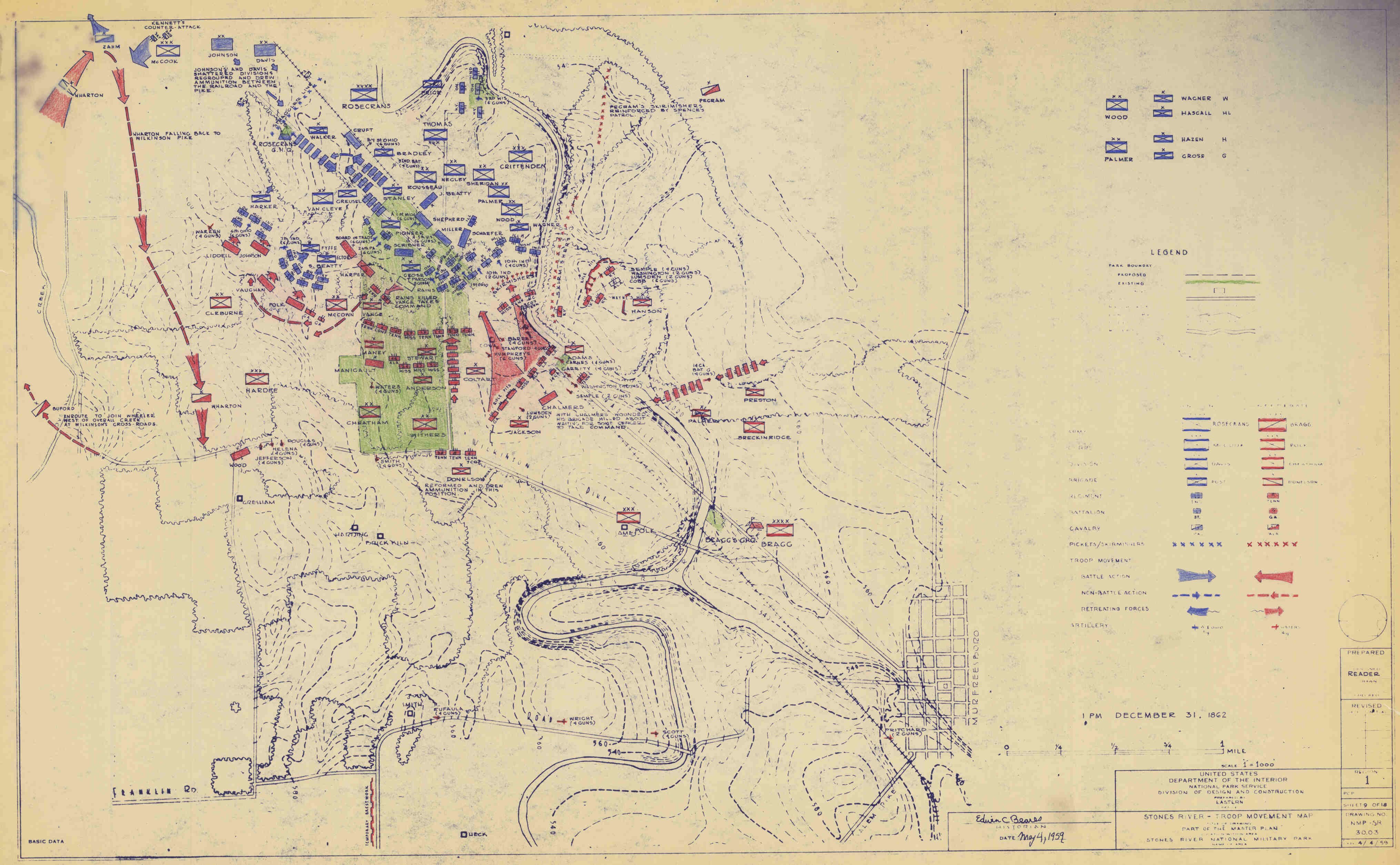
|
Kindle Available Civil War Curiosities: Strange Stories, Oddities, Events, and Coincidences |
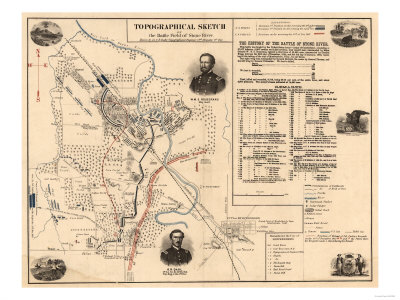 Battle of Stones River - Civil War Panoramic Map 12 in. x 9 in. Buy at AllPosters.com Framed Mounted |
|
While the fighting raged in the Slaughter Pen, General Rosecrans was busy trying to save his army. He cancelled the attack across the river and funneled his reserve troops into the fight hoping to stem the bleeding on his right. Rosecrans and General George Thomas rallied fleeing troops as they approached the Nashville Pike and a new line began to form along that vital lifeline backed up by massed artillery. The new horseshoe shaped line gave the Army of the Cumberland solid interior lines and better communication than their attackers. The Union cannon covered the long open fields between the cedars and the road. Most of the troops in this line had full cartridge boxes and knew that they must hold here or the battle would be lost. Again the woods and rocky ground helped the Union. Confederate organization fell apart as they struggled through the cedars. Most of Confederate artillery was unable to penetrate the dense forests strewn with limestone outcroppings. Each wave of enemy attack along the pike was repulsed in bloody fashion by the Federal artillery that commanded the field. Lietenant Alfred Pirtle (Ordnance Officer, Rousseau's Division) watched the cannon do their deadly work that afternnon. “… then our batteries opened on them with a deafening unceasing fire, throwing twenty-four pounds of iron from each piece, across that small space. … But men were not born who could longer face that storm of canister. … They broke, they fled, and some took refuge in the clump of trees and weeds." As night approached, the Union army was bloody and battered, but it retained control of the pike and its vital lifeline to Nashville. Although Confederate cavalry would wreak havoc on Union wagon trains, enough supplies got through to give General Rosecrans the option to continue the fight. December 31 2:00 PM Stones River Campaign Map December 31 1862 3:00 PM |

Campaigns of the Civil War
Civil War Exhibits
Timeline of the War
State Battle Maps
Civil War Navy Ships
Civil War Summary
Civil War Picture Album
Women of the Civil War
Civil War Submarines
Kindle Available Advance And Retreat: Personal Experiences In The United States And Confederate States Armies John Bell Hood entered the Confederate Army at 29, loyal to Confederate Independence. He led his men into the battles of Second Manassas, Gaines's Mill, Sharpsburg, Fredericksburg, Gettysburg, and Chickamauga |
Kindle Available Tennessee in the Civil War Selected Contemporary Accounts of Military and Other Events, Month by Month |
 A Battlefield Atlas of the Civil War Informative text enhanced 24 three-color maps and 30 black/white historical photographs. |
 Storming the Heights A Guide to the Battle of Chattanooga The Confederate victory of Chickamauga drove the Union Army of the Cumberland back to the key railroad hub of Chattanooga. In early October it had appeared that all Union gains in southern Tennessee might be lost |
|||||||||||||||||||||||||||||||||||||||||||||||||||||||||||||||||||||||||||||||||||||||||||||||||||||||||||||||||||||||||||||||||||||||||||||||||||||||||||||||||||||||||||||||||||||||||||||||||||||||||||||||||||||||||||||||||||||||||||||||||||||||||||||||||||||||||||||||||||||||||||||||||||||||||||||||||||||||||||||||||||||||||||||||||||||||||||||||||||||||||||||||||||||||||||||||||||||||||||||||||||||||||||||||||||||||||||||||||||||||||||||||||||||||||||||||||||||||||||||||||||||||||||||||||||||||||||||||||||||||||||||||||||||||||||||||||||||||||||||||||||||||||||||||||||||||||||||||||||||||||||||||||||||||||||||||||||||||||||||||||||||||||||||||||||||||||||||||||||||||||||||||||||||||||||||||||||||||||||||||||||||||||||||||||||||||||||||||||||||||||||||||||||||||||||||||||||||||||||||||||||||||||||||||||||||||||||||||||||||||||||||||||||||||||||||||||||||||||||||||||||||||||||||||||||||||||||||||||||||||||||||||||||||||||||||||||||||||||||||||||||||||||||||||||||||||||||||||||||
 Struggle for the Heartland: The Campaigns from Fort Henry to Corinth The military campaign that began in early 1862 with the advance to Fort Henry and culminated in late May with the capture of Corinth, Mississippi. The first significant Northern penetration into the Confederate west |
 Encyclopedia of the American Civil War: A Political, Social, and Military History Definitive Reference Work, this volume, rich with over 500 illustrations, 75 maps, and 250 primary source documents, offers more than 1,600 entries that chart the war's strategic aims, analyze diplomatic and political maneuvering, describe key military actions, sketch important participants, assess developments in military science, and discuss the social and financial impact of the conflict. |
Kindle Available A South Divided: Portraits of Dissent in the Confederacy An account of Southern dissidents in the Civil War, at times labeled as traitors, Tories, deserters, or mossbacks during the war and loyalists, Lincoln loyalists, and Unionists by historians of the war |
 Decision in the Heartland The Civil War in the West The western campaigns cost the Confederacy vast territories, the manufacturing of Nashville, the financial center of New Orleans, communication hub Corinth, Chattanooga, and Atlanta, along with the breadbasket of the Confederacy. |
|||||||||||||||||||||||||||||||||||||||||||||||||||||||||||||||||||||||||||||||||||||||||||||||||||||||||||||||||||||||||||||||||||||||||||||||||||||||||||||||||||||||||||||||||||||||||||||||||||||||||||||||||||||||||||||||||||||||||||||||||||||||||||||||||||||||||||||||||||||||||||||||||||||||||||||||||||||||||||||||||||||||||||||||||||||||||||||||||||||||||||||||||||||||||||||||||||||||||||||||||||||||||||||||||||||||||||||||||||||||||||||||||||||||||||||||||||||||||||||||||||||||||||||||||||||||||||||||||||||||||||||||||||||||||||||||||||||||||||||||||||||||||||||||||||||||||||||||||||||||||||||||||||||||||||||||||||||||||||||||||||||||||||||||||||||||||||||||||||||||||||||||||||||||||||||||||||||||||||||||||||||||||||||||||||||||||||||||||||||||||||||||||||||||||||||||||||||||||||||||||||||||||||||||||||||||||||||||||||||||||||||||||||||||||||||||||||||||||||||||||||||||||||||||||||||||||||||||||||||||||||||||||||||||||||||||||||||||||||||||||||||||||||||||||||||||||||||||||||
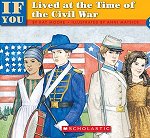 If You Lived at the Time of the Civil War All of the "If you Lived at the Time of..." books are great for kids, and also a nice, quick read for adults! What I like about them is their layout, which is easy for readers to follow. Each page begins with a question, "Would you have seen a battle in the South?" for example. Nicely drawn illustrations accompany each answer. |
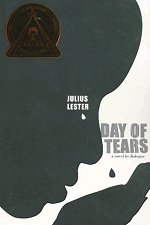 Day Of Tears Through flashbacks and flash-forwards, and shifting first-person points of view, readers will travel with Emma and others through time and place, and come to understand that every decision has its consequences, and final judgment is passed down not by man, but by his maker. |
Kindle Available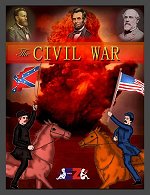 The Civil War Introduces young readers to the harrowing true story of the American Civil War and its immediate aftermath. A surprisingly detailed battle-by-battle account of America's deadliest conflict ensues, culminating in the restoration of the Union followed by the tragic assassination of President Lincoln |
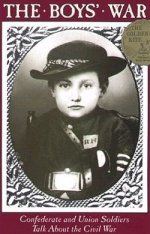 The Boys War With the many boys who fought in the civil war most of them lied about their age. A lot of them wrote letters or had a diary. Johnny Clem had run away from his home at 11. At age 12 he tried to enlist but they refused to let him join because he was clearly too young. The next day he came back to join as a drummer boy. |
Sources:
United States Military Academy
Library of Congress
National Park Service