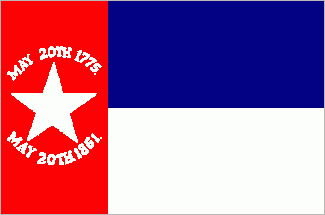
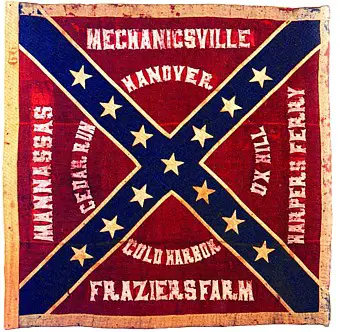
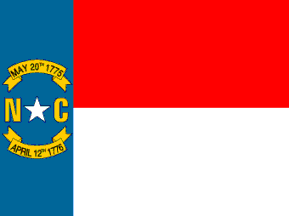
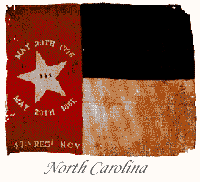
 The Flags of Civil War North Carolina In April 1861, the first flag of a new republic flew over North Carolina. The state had just seceded from the union, and its citizens would soon have to fight for their homes, their families, and their way of life |
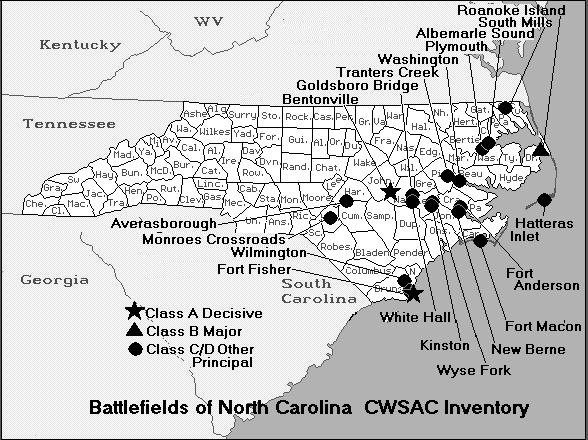
North Carolina Civil War Map of Battles
 |
 The Civil War in North Carolina From and through North Carolina, men and supplies went to Lee's army in Virginia, making the Tar Heel state critical to Lee's ability to remain in the field during the closing months of the war |
| Civil War State Battle Maps American Civil War Exhibits Civil War Music History American Civil War Timeline Civil War Summary Women in the War Battles by Campaign Ships and Naval Battles Confederate Store |
 Duke Blue Devils Sweatshirt  Duke Blue Devils Flag Kindle Available 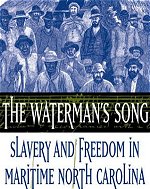 The Waterman's Song: Slavery and Freedom in Maritime North Carolina Chronicles the world of slave and free black fishermen, pilots, rivermen, sailors, ferrymen, and other laborers who, from the colonial era through Reconstruction, plied the vast inland waters of North Carolina from the Outer Banks to the upper reaches of tidewater rivers |
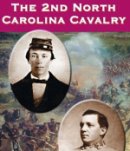 The 2nd North Carolina Cavalry The Second North Carolina Cavalry involvement with the Army of Northern Virginia and the North Carolina Cavalry Brigade, and includes official documents, letters written to and from home, diaries and memoirs to present the soldiers' war experiences |
Kindle Available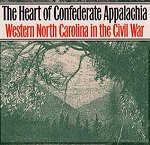 The Heart of Confederate Appalachia: Western North Carolina in the Civil War Differing ideologies turned into opposing loyalties, and the resulting strife proved as traumatic as anything imposed by outside armies. As the mountains became hiding places for deserters, draft dodgers, fugitive slaves, and escaped prisoners of war, the conflict became a more localized and internalized guerrilla war |
 Two Great Rebel Armies: An Essay in Confederate Military History The Army of Northern Virginia was able to compile a large number of impressive victories during the war. The Army of Tennessee was only able to win at Chickamauga, and even that victory proved barren strategically. |
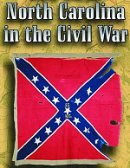 55th North Carolina in the Civil War: A History And Roster The 55th Regiment North Carolina Troops was composed primarily of farmers and tradesmen, the regiment also presented a microcosm of the Tar Heel State with a regionally diverse membership from more than 20 counties |
 The 4th North Carolina Cavalry in the Civil War: A History and Roster With the Civil War was entering its second year North Carolina was rallying to supply more troops. The Partisan Ranger Act prompted local leaders to recruit companies of irregular soldiers for service in the Confederate Army. Seven such companies were banded together into a regiment to form the 4th North Carolina Cavalry. |
Kindle Available Six Years of Hell Harpers Ferry During the Civil War While Harpers Ferry was an important location during the Civil War, in most Civil War books it's a sideshow of something larger. John Brown's raid, Lee's invasions of 1862 & 1863 as well as Early's 1864 raid are all covered in depth |
 Lee's Tar Heels: The Pettigrew-Kirkland-MacRae Brigade The most successful of North Carolina's units during the Civil War. The brigade played a central role in Pickett's Charge at Gettysburg and also fought with distinction during the Petersburg campaign and in later battles including the Wilderness, Spotsylvania, and Cold Harbor |
Kindle Available Chancellorsville The Battle and Its Aftermath Chancellorsville was a remarkable victory for Robert E. Lee's troops, a fact that had enormous psychological importance for both sides, which had met recently at Fredericksburg and would meet again at Gettysburg in just two months. But the achievement, while stunning, came at an enormous cost: more than 13,000 Confederates became casualties, including Stonewall Jackson |
 Ironclads and Big Guns of the Confederacy : The Journal and Letters of John M. Brooke Information about the Confederate Navy's effort to supply its fledgling forces, the wartime diaries and letters of John M. Brooke tell the neglected story of the Confederate naval ordnance office, its innovations, and its strategic vision. |
Kindle Available Wade Hampton: Confederate Warrior to Southern Redeemer General Wade Hampton was for a time the commander of all Lee's cavalry and at the end of the war was the highest-ranking Confederate cavalry officer |
 Struggle for the Heartland: The Campaigns from Fort Henry to Corinth The military campaign that began in early 1862 with the advance to Fort Henry and culminated in late May with the capture of Corinth, Mississippi. The first significant Northern penetration into the Confederate west |
Kindle Available John Hunt Morgan and His Raiders The "Thunderbolt of the Confederacy" John Hunt Morgan from Tompkinsville, Kentucky to Greeneville, Tennessee. |
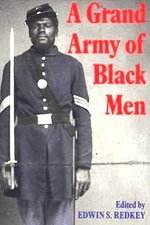 A Grand Army of Black Men: Letters from African-American Soldiers in the Union Army 1861-1865 Almost 200,000 African-American soldiers fought for the Union in the Civil War. Although most were illiterate ex-slaves, several thousand were well educated, free black men from the northern states |
 Where the South Lost the War: An Analysis of the Fort Henry-Fort Donelson Campaign The war probably could have been over in 1862 had Lieutenant Phelps destroyed the bridge at Florence. Not doing so provided a retreat for A. S. Johnston to move his men to Corinth and then to Shiloh |
 Lee's Cavalrymen: A History of the Mounted Forces of the Army of Northern Virginia, 1861-1865 The cavalry of the Army of Northern Virginia its leadership, the military life of its officers and men as revealed in their diaries and letters, the development of its tactics as the war evolved, and the influence of government policies on its operational abilities. All the major players and battles are involved |
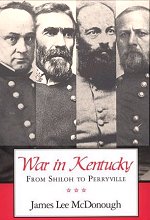 War in Kentucky: From Shiloh to Perryville Union gains in the Mississippi Valley and in Tennessee and Kentucky had brought the Confederacy to a point of crisis. This addition to the literature on the Civil War in the West tells how the Union then failed to press home its advantage while the Confederacy failed to force Kentucky into the Confederacy |
|
Kindle Available Confederate Military History Of North Carolina: North Carolina In The Civil War, 1861-1865 At the Battle of Big Bethel, North Carolina experienced the first Confederate casualty of the War. Field officers and privates discuss their unit's skirmishes and battles. Included are diaries and memoirs from unit historians; underscoring the veracity of their fighting history |
Bonnie Blue Flag Bonnie Blue The Confederate government did not adopt this flag but the people did and the lone star flags were adopted in some form in five of the southern States that adopted new flags in 1861. |
Southern Cross Flag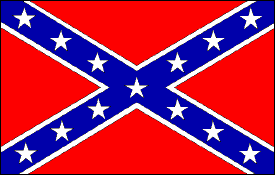 Used as a navy jack at sea from 1863 onward. This flag has become the generally recognized symbol of the South. |
Second Confederate Flag 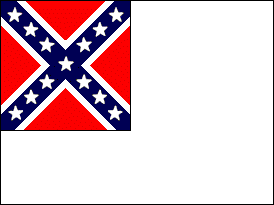 On May 1st,1863, a second design was adopted, placing the Battle Flag (also known as the "Southern Cross") as the canton on a white field. This flag was easily mistaken for a white flag of surrender especially when the air was calm and the flag hung limply. More on Confederate Flags |
Raleigh North Carolina Current Weather City History Lodging and Campgrounds
Sources:
U.S. National Park Service
U.S. Library of Congress.
Gettysburg National Military Park