The joint amphibious assault under Rear Admiral David D. Porter and Major General Alfred H. Terry took Fort Fisher, the key in the defense of Wilmington, North Carolina, which was the last port by which supplies from Europe could reach General Lee's troops at Richmond.
23-24 January
The Confederate fleet under Flag Officer John K. Mitchell attempted to dash down the James River to attack General Grant's headquarters at City Point, Virginia. The bold attack was thwarted when the heaviest of the ironclads ran aground.
17-18 February
Charleston, confronted by General William T. Sherman's soldiers approaching from the rear and a Navy-supported amphibious assault from Bull's Bay, was evacuated.
18 February
CSS Shenandoah , Lieutenant James I. Waddell, departed Melbourne to resume her commerce raiding career in the Pacific.
22 February
Wilmington, North Carolina, was evacuated as Rear Admiral Porter's ships steamed up the Cape Fear River and General Terry's soldiers marched on the city.
24 March
CSS Stonewall , Captain Thomas J. Page, put to sea from Ferrol, Spain, en route to Havana. The ironclad was intended to raise the blockade of one or more southern ports.
28 March
Rear Admiral Porter joined Generals Grant and Sherman for a conference with President Lincoln on board steamer River Queen at City Point, Virginia. They discussed the strategy to be followed in the closing days of the war and how the South would be treated at the close of the conflict.
2-4 April
CSA Secretary of the Navy Stephen R. Mallory ordered the destruction of the Confederate James River Squadron and directed its officers and men to join General Lee's troops then in the process of evacuating Richmond and retreating westward toward Danville.
3 April
Midshipmen at the Confederate Naval Academy, under the command of Lieutenant William H. Parker, escorted the archives of the government and the specie and bullion of the treasury from Richmond to Danville and southward.
4 April
Rear Admiral Porter accompanied President Lincoln up the James River to Richmond on board flagship USS Malvern . Vice Admiral David G. Farragut had already arrived in the Confederate capital.
9 April
General Lee met General Grant at Appomattox Courthouse and formally surrendered the Army of Northern Virginia.
11-12 April
Batteries Tracy and Huger, up the Blakely River from Spanish Fort, fell to Union forces and Confederate troops evacuated Mobile, which was surrendered by the mayor.
14 April
President Lincoln was shot shortly after 10 p.m. while watching "Our American Cousin'' at Ford's Theatre, Washington. He died at 7:22 a.m. the next morning.
14 April
Major General Anderson, Commander of the Union Army garrison at Fort Sumter on 14 April 1861, raised above Sumter's ruins "the same United States flag which floated over the battlements of that fort during the rebel assault...."
23-24 April
CSS Webb , Lieutenant Read, dashed from the Red River and entered the Mississippi in a heroic last-ditch effort to escape to sea.Trapped below New Orleans, Webb was grounded and fired to avoid capture.
27 April
The body of John Wilkes Booth, President Lincoln's assassin, was delivered on board USS Montauk , anchored in the Anacostia River off the Washington Navy Yard.
3 May
CSA Secretary of the Navy Mallory submitted his resignation to President Jefferson Davis at Washington, Georgia.
10 May
President Jefferson Davis was captured by Union troops near Irwinville, Georgia.
19 May
CSS Stonewall , Captain T. J. Page, was turned over to Cuban officials at Havana.
2 June
Terms of surrender of Galveston were signed on board USS Fort Jackson by Major General E. Kirby Smith on behalf of the Confederacy.
22 June
Secretary Welles announced to the naval forces that France and Great Britain had "withdrawn from the insurgents the character of belligerents'', and that the blockade of the coast of the United States would soon be lifted.
28 June
This date marked the most successful single day CSS Shenandonh , Lieutenant Waddell, enjoyed as a commerce raider during her long cruise that spanned 13 months and covered 58,000 miles.On this field day Waddell captured 11 American whalers near the narrows of the Bering Strait.
18 July
Rear Admiral Louis M. Goldsborough arrived at Flushing, in the Netherlands, where he hoisted his flag on USS Colorado and assumed command of the reinstated European Squadron. The East India Squadon was reactivated on 31 July.
2 August
Lieutenant Waddell, CSS Shenandoah , spoke the English bark Barracouta and for the first time learned positively that the war was over. He determined to make a nonstop voyage to Liverpool, England, via Cape Horn.
12 August
Brazil Squadron reactivated under Rear Admiral Godon in flagship Susquehanna .
11 September
Emperor Maximilian approved the "Regulations and Instructions'' prepared by Matthew Fontaine Maury to encourage emigration of Southerners to Mexico. The Emperor also appointed Maury director of the proposed National Observatory.
3 November
Secretary Welles ordered all naval vessels to resume rendering honors when entering British ports and to begin again exchanging official courtesies with English men of war.
6 November
CSS Shenandoah , Lieutenant Waddell, arrived at Liverpool, England, 123 days and 23,000 miles from the Aleutians.Waddell lowered the last official Confederate flag, and his ship was ultimately turned over to American authorities.
4 December
Secretary Welles announced that the West India Squadron was to be re-established under Commodore James S. Palmer, in that area ''where we have so large a trade, owing to the proximity of the islands to our shores, it is essential that we cultivate friendly relations."
31 December
In his annual report to the President, Secretary Welles wrote: ''It is still wise -- the wisest -- economy to cherish the navy, to husband its resources, to invite new supplies of youthful courage and skill to its service, to be amply supplied with all needful facilities and preparations for efficiency, and thus to hold within prompt and easy reach its vast and salutary power for the national defence and self- vindication."
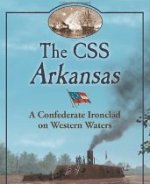
The CSS Arkansas: A Confederate Ironclad on Western Waters
While the Monitor and Merrimack are the most famous of the Civil War ironclads, the Confederacy had another ship in its flotilla that carried high hopes and a metal hull. The makeshift CSS Arkansas, completed by Lt. Isaac Newton Brown and manned by a mixed crew of volunteers, gave the South a surge of confidence when it launched in 1862.
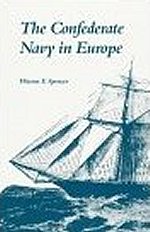
The Confederate Navy in Europe
Full account of the European activities of the Confederate navy during the American Civil War, including information on the Southerners who procured naval vessels in Great Britain and France, the construction of the ships, and the legal and political impact on the European governments that assisted in the Confederate cause.
The Confederate Navy in Europe
Full account of the European activities of the Confederate navy during the American Civil War, including information on the Southerners who procured naval vessels in Great Britain and France, the construction of the ships, and the legal and political impact on the European governments that assisted in the Confederate cause.
