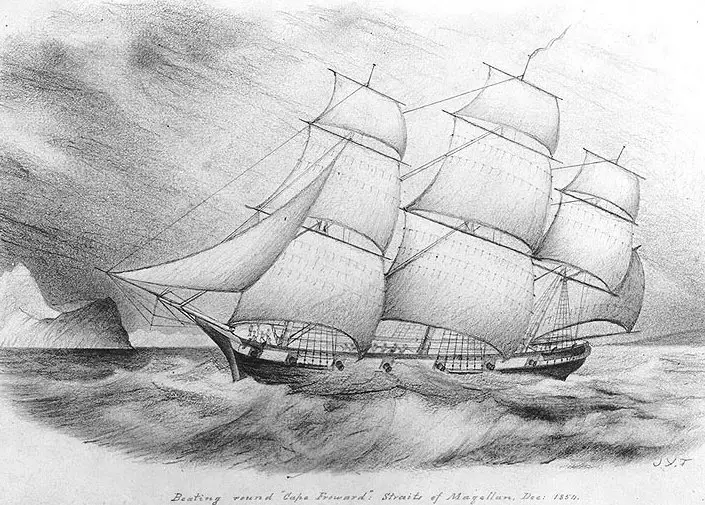
USS Decatur (1840-1865)USS Decatur , a 566-ton third-class sloop of war, was built at the New York Navy Yard. She was commissioned in March 1840 for a tour with the Brazil Squadron in the South Atlantic that lasted until February 1843. A cruise with the African Squadron followed in 1843-1845. Decatur 's next active service was off eastern Mexico in 1847, during which her crew participated in wartime operations to attack Tuxpan and capture Tobasco. Early in 1848 the sloop returned to the anti-slave trade patrol off Africa, where she remained until November 1849. During the first years of the 1850s, Decatur served along the Atlantic Coast and in the Caribbean. She was sent to the Pacific in 1854, enduring a difficult passage through the Strait of Magellan before arriving in Honolulu, Hawaii, in late March 1855. The next four years were spent cruising in the eastern Pacific from South America northwards. Decommissioned at the Mare Island Navy Yard, California, in June 1859, Decatur was thereafter laid up "in ordinary" except for Civil War duty as a defensive floating battery at San Francisco. She was sold in August 1865. "Beating round 'Cape Freward': Straits of Magellan, Dec: 1854". |
 Life in Mr. Lincoln's Navy A tantalizing glimpse into the hardships endured by the naval leadership to build and recruit a fighting force. The seaman endured periods of boredom, punctuated by happy social times and terrifying bouts of battle horror  Confederate Phoenix The CSS Virginia The CSS Virginia of the Confederate States Navy destroyed two of the most formidable warships in the U.S. Navy. Suddenly, with this event, every wooden warship in every navy in the world became totally obsolete |
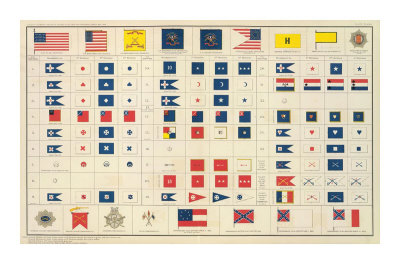 Civil War: Flags, Badges, c.1895 40 in. x 26 in. Buy at AllPosters.com Framed |
|
 Civil War Musket Wood & Steel Frontier Rifle Designed After The Original Rifle 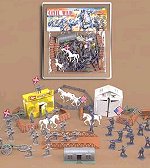 72 Piece Civil War Army Men Play Set 52mm Union and Confederate Figures, Bridge, Horses, Canon
|
Civil War Ships and Battles Civil War Submarines RAM Ships Civil War Naval Timeline American Civil War Exhibits State Battle Maps Civil War Summary Civil War Timeline Women in the Civil War Battles by Campaign |
 History Channel Civil War Secret Missions There are about a half-dozen different small arms types, but the Henry is the best for rapid repeating fire and least reloading. The shotgun they give you is useless: you must aim spot-on to affect an enemy, so why not just use the rifle? Grenades are useful at times. 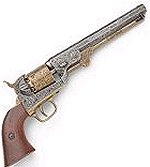 Civil War Model 1851 Naval Pistol |
Kindle Available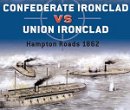 Confederate Ironclad vs Union Ironclad: Hampton Roads 1862 The Ironclad was a revolutionary weapon of war. Although iron was used for protection in the Far East during the 16th century, it was the 19th century and the American Civil War that heralded the first modern armored self-propelled warships. |
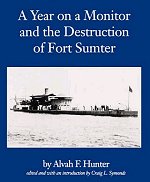 Year on a Monitor and the Destruction of Fort Sumter Personal view of the Civil War Navy. The monitor saw action in several significant naval assaults by the Union's Squadron. It took part in the failed Federal attack on Sumter in April 1863. The "Nahant" also participated in the capture of the Confederate Ram "Atlanta," and in the assault on Fort Wagner |
 Blockaders, Refugees, and Contrabands: Civil War on Florida'S Gulf Coast, 1861-1865 Coastal Florida had a refugee crisis as the war progressed. Escaped slaves ("contrabands") sought out the blockaders. Some joined the U.S. Navy. White men and their families sought to avoid conscription or vengeful neighbors/regulators and eventually sought refuge with the blockaders |
 War, Technology, and Experience aboard the USS Monitor The experience of the men aboard the Monitor and their reactions to the thrills and dangers that accompanied the new machine. The invention surrounded men with iron and threatened their heroism, their self-image as warriors, even their lives |
 Halls of Honor The U.S. Navy Museum takes you on an informed and entertaining romp through one of North America s oldest and finest military museums. The museum has been in continuous operation at the Washington Navy Yard since the American Civil War |
 Raise The Alabama She was known as "the ghost ship." During the Civil War, the CSS Alabama sailed over 75,000 miles and captured more than 60 Union vessels. But her career came to an end in June of 1864 when she was sunk by the USS Kearsarge off the coast of Northern France |
 The Civil War - A Film by Ken Burns Here is the saga of celebrated generals and ordinary soldiers, a heroic and transcendent president and a country that had to divide itself in two in order to become one |
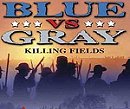 Blue Vs. Gray - Killing Fields Relive the most vicious fighting of the Civil War, in which General Ulysses S. Grant forcibly reversed the tide of the conflict by paying with the blood of thousands. It was a desperate time for the Union |
Sources:
U.S. National Park Service
U.S. Library of Congress
US Naval Archives
| Search AmericanCivilWar.com |
| Enter the keywords you are looking for and the site will be searched and all occurrences of your request will be displayed. You can also enter a date format, April 19,1862 or September 1864. |