
USS Vanderbilt
Civil War Naval Vessel
USS VanderbiltOriginally a transatlantic passenger and mail steamer—was built by Jeremiah Simonson of Greenpoint, Long Island, N.Y., in 1856 and 1857; chartered by the Army shortly after the start of the Civil War in April 1861; offered to the Army by her owner, Commodore Cornelius Vanderbilt, in early 1862; and transferred to the Navy on 24 March. Popularly known as "Vanderbilt's Yacht," the former flagship of Commodore Cornelius Vanderbilt's North Atlantic Mail Steamship Line began her military career in Hampton Roads, Va., intended for use as a ram against the Confederate ironclad CSS Virginia. Commodore Vanderbilt, himself, suggested filling the bow of the vessel with concrete and reenforcing it with iron plating. This was not done, however, and Vanderbilt was turned over to the Navy on 24 March and fitted with a heavy battery of 15 guns at the New York Navy Yard during the summer of 1862. She left New York on 10 November and—after conducting a brief search for CSS Alabama, the most destructive Confederate commerce raider of the entire war—put into Hampton Roads on 17 January 1863. Ten days later, Vanderbilt received orders to conduct a much longer and more thorough search for Alabama. This year-long cruise took the vessel to the West Indies, eastern coast of South America, Cape of Good Hope, St. Helena, Cape Verde, the Canary Islands, Spain and Portugal. During the West Indies portion of her deployment, Vanderbilt served as flagship of Commodore Charles Wilkes' Flying Squadron. During the search, Vanderbilt captured the blockade-running British steamer Peterhoff on 25 February, off St. ThomaT, Virgin Islands, causing a dispute between the British and Americans as to the disposition of mail carried aboard the steamer. President Lincoln eventually ordered the mail returned to the British. Vanderbilt's captures also included the British blockade runner Gertrude, taken off Eleuthera Island in the Bahamas on 16 April, and the British bark Saxon, seized at Angra Peguena, Africa, on 30 October. Saxon was suspected of having rendezvoused with and taken cargo off CSS Tuscaloosa earlier. However, pursuing leads as to the whereabouts of Alabama, herself, became increasingly frustrating as Vanderbilt would often arrive at a port only to discover that her quarry had departed only a few hours earlier. She eventually returned to New York in January 1864 for repairs without ever having sighted the Confederate vessel. Vanderbilt left New York in September and cruised off Halifax, Nova Scotia, searching for blockade runners. The Halifax-Wilmington, N.C., route for blockade runners was used heavily at this time owing to outbreaks of yellow fever at Bermuda and Nassau. Nevertheless, the Union cruiser failed to take any prizes and put into Boston, Mass., on 13 October. She was deployed with the blockade off Wilmington in November and participated in the unsuccessful first amphibious assault upon Confederate Fort Fisher in the Cape Fear River, N.C., on 24 and 25 December. The Fleet took the fort during a second amphibious assault on 13 and 15 January 1865. Vanderbilt returned to New York in late January, remaining until 24 March when she left for the Gulf of Mexico ferrying new recruits. From there, she proceeded to Charleston, S.C., towing the uncompleted Confederate ram Columbia from Charleston to Norfolk in May, and towed the Onondaga from Norfolk to New York in June. Vanderbilt served as a receiving ship at the Portsmouth (N.H.) Navy Yard during the summer of 1865. The Civil War now over, Vanderbilt sailed from Portsmouth on 14 August and put into the Philadelphia Navy Yard on 27 August to be fitted put for a cruise around Cape Horn. She left Philadelphia on 25 October and arrived in Hampton Roads three days later. There, she was designated flagship of a special squadron consisting of herself, Tuscarora, Powhatan, and Monad-nock. The squadron was commanded by Commodore John Rodgers and intended to increase the Pacific Squadron to a 14-ship force. The vessels left Hampton Roads on 2 November and arrived at San Francisco, Calif., on 21 June 1866 after stopping at most major South American ports while circumnavigating the South American continent. Vanderbilt was decommissioned at Mare Island, Calif., on 30 June, but was soon recommissioned and, on 13 October, sailed from San Francisco to Honolulu, Hawaii, with the Hawaiian monarch, Queen Emma, on board. The cruiser returned to San Francisco on 3 December and remained there at anchor until placed in ordinary at Mare Island on 24 May 1867. She lay there, in ordinary, until sold on 1 April 1873 to Howe & Company of San Francisco. Her new owners removed her machinery, gave her a graceful clipper bow, and full rigging. Renamed Three Brothers, she spent most of her time in the grain trade between San Francisco, Le Havre, Liverpool, and New York where she acquired an enviable reputation for speed and handling. "Vanderbilt's Yacht" served successive owners until 1899, at which time the vessel, now a coal hulk, was sold for scrap at Gilbraltar. |
Kindle Available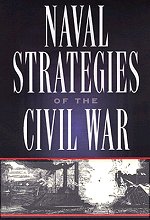 Naval Strategies of the Civil War: Confederate Innovations and Federal Opportunism Compare and contrast the strategies of the Southern Secretary of the Navy, Mallory, against his rival in the North, Welles. Mallory used technological innovation and the skill of individuals to bolster the South's seapower against the Union Navy's superior numbers |
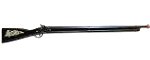 Civil War Musket Wood & Steel Frontier Rifle Designed After The Original Rifle  Civil War Soldier 102 Piece Playset
| Civil War Ships and Battles Civil War Submarines RAM Ships Civil War Naval Timeline American Civil War Exhibits State Battle Maps Civil War Summary Civil War Timeline Women in the Civil War Battles by Campaign |
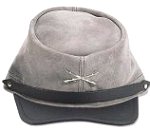 Civil War Confederate Suede Grey Kepi Hat  Civil War Model 1851 Naval Pistol |
 The Civil War on Hatteras Island North Carolina New light on the experiences of Civil War soldiers stationed on the Outer Banks. It follows the crucial maritime battles along the Outer Banks and the famous Burnsides Expedition. Aa fascinating history of how one of America's most treasured islands played a significant part in the Civil War |
Kindle Available Raising the Hunley: The Remarkable History and Recovery of the Lost Confederate Submarine For more than a century the fate of the Hunley remained one of the great unsolved mysteries of the Civil War. Then, on August 8, 2000, with thousands of spectators crowding Charleston Harbor, the Hunley was raised from the bottom of the sea and towed ashore. |
 The Story of the H.L. Hunley During the Civil War, Union forces blockade the port of Charleston so the Confederate army seeks a way to attrack the Yankee Ships. George Dixon is part of the group of men given the task of creating and building the "fish boat," a submarine. The H.L. Hunley ultimately sets out on its mission to sink Yankee ships, but fails to return, its whereabouts unknown. |
Kindle Available Wolf of the Deep: Raphael Semmes and the Notorious Confederate Raider CSS Alabama In July 1862, the Confederate captain Raphael Semmes received orders to report to Liverpool, where he would take command of a secret new British-built steam warship. His mission: to prey on Union commercial vessels and undermine the North's ability to continue the war |
 Halls of Honor The U.S. Navy Museum takes you on an informed and entertaining romp through one of North America s oldest and finest military museums. The museum has been in continuous operation at the Washington Navy Yard since the American Civil War |
 Raise The Alabama She was known as "the ghost ship." During the Civil War, the CSS Alabama sailed over 75,000 miles and captured more than 60 Union vessels. But her career came to an end in June of 1864 when she was sunk by the USS Kearsarge off the coast of Northern France |
 The Blue and the Gray The Complete Miniseries The Civil War proved a backdrop for this 1982 miniseries. Complete and uncut three disc set. Two families divided by the War Between the States. A Southerner caught when he becomes a war correspondent for the Northern newspaper. He finds himself where history's in the making from the Battle of Bull Run to Abraham Lincoln's assassination |
 Blue Vs. Gray - Killing Fields Relive the most vicious fighting of the Civil War, in which General Ulysses S. Grant forcibly reversed the tide of the conflict by paying with the blood of thousands. It was a desperate time for the Union |
