American Civil War Recipes
Civil War Fruit Cake Recipe

CIVIL WAR FRUIT CAKE

Boil for 5 minutes and then let cool: 3 c. raisins 2 c. granulated sugar 2 c. water 2 tbsp. butter or Crisco

Sift together and add to cooled mixture: 2 tsp. baking soda 1 tsp. cinnamon 1 tsp. salt 1 tsp. nutmeg 1 tsp. ground cloves

Mix and then add 1 cup chopped black walnuts. Bake in a well greased angel food or loaf pan for 1 hour at 300 degrees. This cake was developed during the Civil War when fancier fruits were rare.

Civil War Fruit Cake

Combine in a large saucepan:
3 medium apples, peeled and diced
2 cups raisins
2 cups water
1 cup white sugar
1 cup brown sugar
2 tablespoons lard or shortening
Cook together for five minutes.
Remove from heat and cool thoroughly.
Sift together into a large mixing bowl: 3 cup flour
2 teaspoon soda
1 teaspoon salt
1 teaspoon ground cloves
1 teaspoon ground nutmeg
1 teaspoon ground cinnamon
Add apple-raisin mixture and stir thoroughly.
Add 1 cup chopped nuts.
Pour into a greased and lined tube cake pan.
Bake at 350 about and hour or until done.
This is the original recipe.

If you use self-rising flour, omit salt and soda.
Also omit sugar if you use 1 cup molasses.
American Civil War Recipe Books


Civil War Soup Recipes

Books
Civil War
Womens Subjects
Young Readers
Gettysburg
Colored Troops
Native Americans
Military History
Cooking Americana


Confederate Store
Civil War DVDs
Civil War VHS
Civil War Games
Civil War Music
Civil War Posters
Civil War Flags
Military Toys
Military Video Games
Military History DVDs
Military Magazines

Click to enlarge Picture

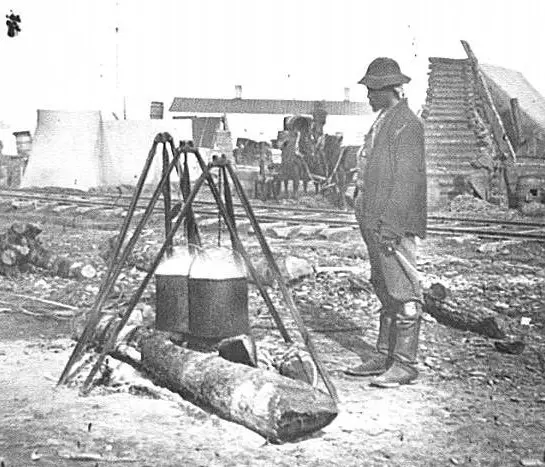
Kitchen of  'Soldiers Rest,' Alexandria, Virginia
Click to enlarge Picture

Women in the Civil War
Civil War Exhibits
Young Reader Selections
Civil War Summary
American Civil War Timeline
United States Army Timeline


Civil War History Cook Book Club Titles for Additional Reading

Civil War Recipes: Receipts from the Pages of Godey's Lady's Book
Civil War Recipes reproduces, in their original wording, receipts that appeared in the pages of Gody's Lady's Book during the decade of the Civil War. Editors Lily May Spaulding and John Spaulding have added annotations to assist those cooks who might not know, for example, that “buscuits” often referred to what we now call “cookies.” They also provide a brief overview of the technical state of cooking in America before and during the Civil War. Although leavening agents were not unknown, the recipe for “Christening Cake” requires whisking the whites of sixteen eggs into a full froth and beating the entire mixture for more than thirty minutes.
Civil War Recipe A taste for the Civil War Cook Book A Taste For War: The Culinary History of the Blue and the Gray
We know the uniforms they wore, the weapons they carried, and the battles they fought, but what did they eat and, of even greater curiosity, was it any good? Now, for the very first time, the food that fueled the armies of the North and the South and the soldiers' opinions of it--ranging from the sublime to just slime--is front and center in a biting, fascinating look at the Civil War as written by one of its most respected historians. There's even a comprehensive "cookbook" of actual recipes included for those intrepid enough to try a taste of the Civil War.
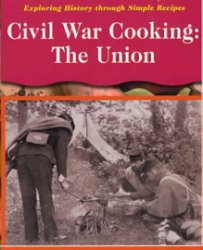
Civil War Cooking: The Union
The authors look at the foods people ate during the Civil War and on pioneer farms and offer recipes for modern readers. Each title begins with rules for kitchen safety, a metric conversion table, and an illustrated list of cooking equipment. Color is a marvelous feature of the books: the covers, maps, and page borders. Full-color photos and reproductions appear on every page.
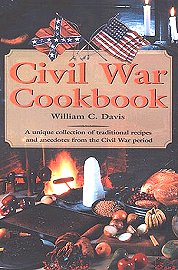
Civil War Cookbook: A Unique Collection of Traditional Recipes and Anecdotes from the Civil War Period
Every Civil War buff will want to own this unique cookbook, which takes the reader right into the kitchens of 19th-century America. Illustrated with wonderful period photographs, it intertwines history and food for a fascinating new look at the lives of Civil War soldiers and their families. Traditional recipes, illustrated with full-color photographs and highlighted with historical anecdotes, include instructions for recreating treats sent in care packages to soldiers in the field, camp dishes, and special meals.
Civil War Cookbook
The Virginia Housewife : Or Methodical Cook: A Facsimile of an Authentic Early American Cookbook
Charming guide, published in 1824, offers directions for making rabbit soup, beef steak pie, fried calf's feet, shoulder of mutton with celery sauce, leg of pork with pease pudding, pickled oysters, tansey pudding, plum cakes and other culinary treats. Also, household hints for cleaning silver, drying herbs, more.


The Confederate Housewife: Receipts & Remedies, Together with Sundry Suggestions for Garden, Farm, & Plantation

Combination cookbook and "how-to-do-it" guide, this receipt book provides for the first time a comprehensive, grass roots picture of what many Confederate housewives faces during those tumultuous years. Substitutes abound, as do ways to preserve food, care for crops and animals, make straw hats and squirrel-skin shoes, and cure everything from cancer to small pox to ingrown toenails. Half of the nearly six hundred entries here -- all published in journals or newspapers during the Civil War -- relate to the preparation and cooking of food and encompass both substitutes and standard fare, everything from snow corn cakes and cracker pie to walnut catsup and secession rice bread. Also included is advice on measuring land, estimating hay, and collecting opium for home use. "Some of these recipes may seem strange by today's standards others horrific (cures for cancer that use turkey figs, sheep sorrel, and dock root). Still others are helpful even today."

To 'Joy My Freedom is a fascinating look at the long-neglected story of black women in postwar southern culture. Hunter examines the strategies these women (98 percent of whom worked as domestic servants) used to cope with low wages and poor working conditions and their efforts to master the tools of advancement, including literacy. Hunter explores not only the political, but the cultural, too, offering an in-depth look at the distinctive music, dance, and theater that grew out of the black experience in the South.

Source:
Gettysburg National Military Park
Library of Congress
Federal Citizen