
Swords, Revolvers, and Steeds

Silas Weaver
Silas Weaver has spent decades exploring historic battlefields, reading primary journals, and tracking down the lesser-known stories of the American Civil War. His lifelong passion for 19th-century history comes through in his engaging accounts of the places, people, and lingering questions of the era. He believes that walking the actual grounds where history happened is the best way to truly connect with the past.
I have stood in more than a few museum rooms where the lights are low and the cases are spotless, and yet the objects inside still feel like they carry weather on them. A sword with its gilding rubbed thin where a thumb rode the guard. A revolver grip darkened by sweat and dust. A cavalry boot that looks like it was made to be used, not admired.
We talk about Civil War generals as names on markers and bronze silhouettes on ridgelines. But in their own time, these men were also recognized by what they wore and what they rode. The gear mattered for practical reasons, sure. It also mattered because war is theater as well as work. A general’s hat brim, sash, horse, and sidearm became part of a public image that newspapers repeated and soldiers remembered.
What gear meant
Most generals were not personally riding the fence line with sabers drawn. Their gear lived at the intersection of function and signal.
- Function: a dependable mount, boots that could take mud, a field-worthy uniform, and the tools of command: field glasses, maps, and a way to carry dispatches.
- Signal: a particular hat, a sash, branch colors, and a recognizable horse that made the man instantly recognizable to staff, troops, and the press.
- Access: high-ranking officers could purchase better quality items, receive gifts, or carry earlier U.S. Army pieces. Confederates often faced shortages, which made certain items more improvised, repaired, or personally cherished.
A quick word about sidearms: many officers owned a revolver, often a Colt pattern such as the Army or Navy models. That is a broad truth of the war, but the exact make and model a particular general carried can be hard to pin down unless a specific artifact survives with solid provenance.
If you want the broader cast of leaders and how they fit together, our generals overview is the best place to roam: https://americancivilwar.com/guide-generals/.
Ulysses S. Grant
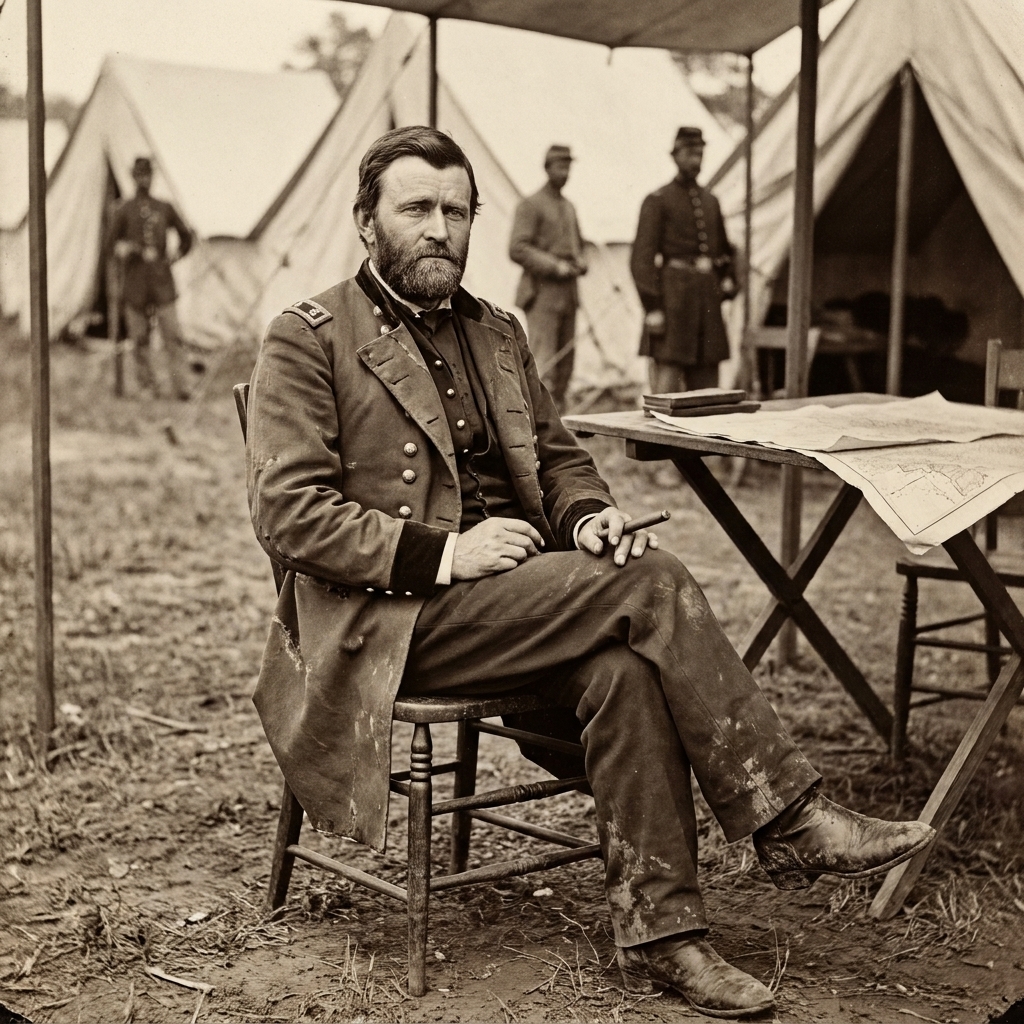
Grant is one of the easiest to picture because the image is so consistent: a comparatively plain uniform, a modest posture, and very little interest in dressing the part. That simplicity became its own trademark. In camps and on battlefields, it told a story of a commander who wanted results more than applause.
Weapons
Grant, like many generals, was more likely to carry a pistol than to use one. Many officers carried Colt-style revolvers. Grant is often linked in popular telling to an Army-pattern revolver, but the specific details are not always consistent across accounts. What feels solid is the role it played: not romance, but insurance.
Uniform and field kit
If you study wartime photographs of Grant, the thing that stands out is what he avoids. He is not selling rank with braid. He tends toward a simple field uniform, and you see him again and again with the quiet staples of headquarters close at hand: a cigar, papers, and staff moving in and out.
His cigar is not just a habit in the background. It becomes a recurring personal object in the record, the kind of small, repeatable thing that would be easy for soldiers to remember and easy for a newspaper to mention. Beyond that, I try not to assign him a specific piece of kit unless I can point to a labeled artifact or a clear description. The safe claim is the ordinary one: like any army commander, he lived by paper, maps, and field glasses, whether those were in his own hands or passed to him by an aide.
Even Grant’s coat tells a story. He is frequently pictured in a plain sack coat, often like enlisted men wore, or in a simple frock coat rather than the kind of elaborate, tailored look some men preferred, a choice that fit his reputation for getting on with it. In many images, you can also make out the quieter markers of office, shoulder straps and a well-used belt, present without being performed.
Cincinnati
Grant did have a famous mount: Cincinnati. The horse was widely admired in Union circles, especially in the later-war world where Grant’s headquarters drew visitors, journalists, and curiosity. From there, stories multiplied the way they always do around famous headquarters, with later reminiscences sometimes adding celebrity sightings and overheard praise that are hard to prove and easy to repeat. A well-known mount can do what a uniform cannot. It makes a moving commander easy to spot, and it gives soldiers something concrete to talk about when everything else is rumor and smoke.
Robert E. Lee
If Grant’s public identity was plainness, Lee’s was a kind of restrained dignity. Contemporaries often remarked on his composed appearance, and that steadiness became symbolic of the Confederacy’s high command. Lee also had something Grant only occasionally enjoyed: a singular horse that turned into legend.
Weapons
Lee had been an old army officer long before secession, and officers of his class often owned quality swords, sometimes prewar U.S. models or privately purchased pieces. In the field, a sword could be a badge of office as much as a practical weapon for an army commander. It mattered when rallying troops, directing movement under fire, or simply being seen.
Uniform and insignia
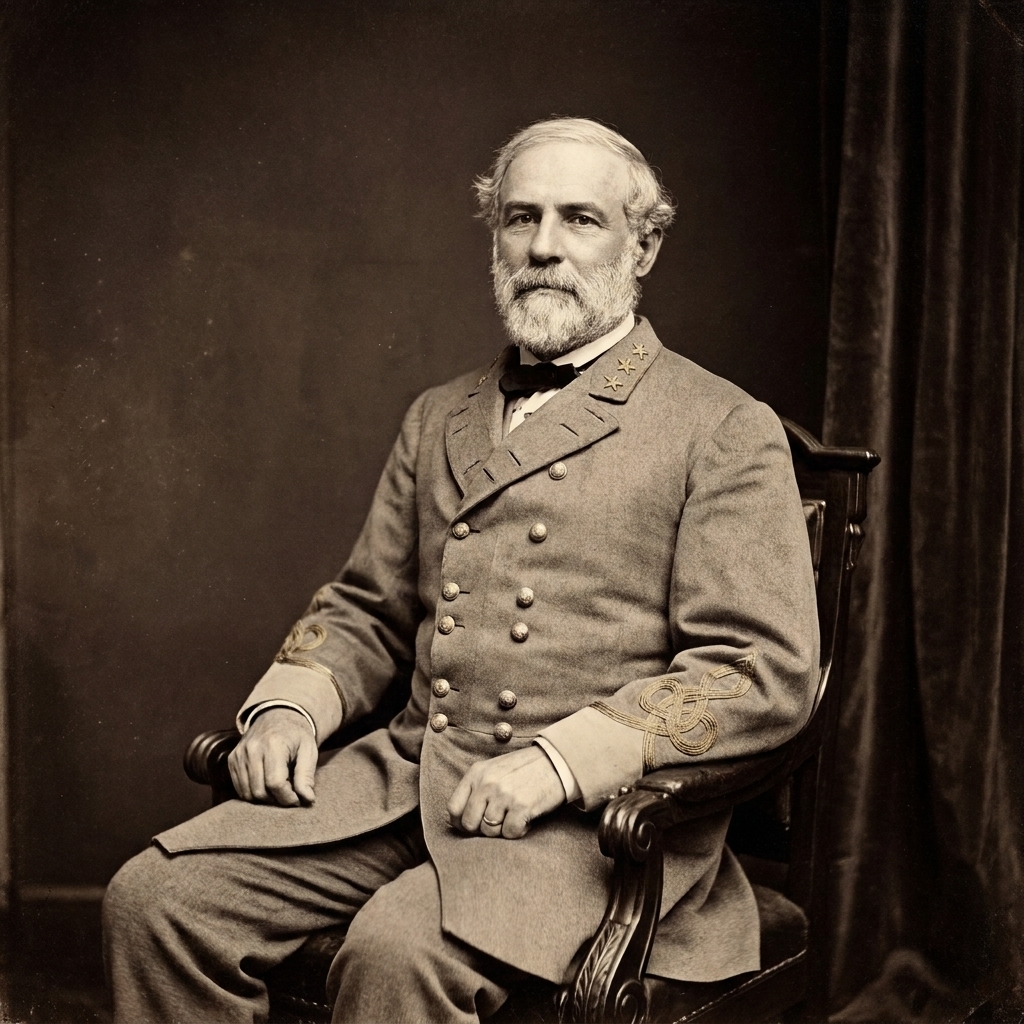
Lee is often described in a neat gray coat and a simple, recognizable style. One detail that helped make him legible, even at a distance, was the way he carried rank. The familiar Confederate full general’s insignia of three stars on the collar is frequently shown in later representations, though the detail is not always easy to read in period images where collars vanish into shadow and resolution.
And then there is the hat. Lee is strongly associated with a slouch hat, the kind of practical, wide-brimmed choice that shaded eyes and held up in weather. It is not flashy, but it is memorable. Once a newspaper describes it, and a few soldiers repeat it, the hat becomes part of the man.
Traveller
Lee’s famous horse, Traveller, was not a white icon so much as a gray one, often described as iron gray. The horse became a living emblem. Part of it was the animal itself: striking, steady, and visually unforgettable. Part of it was the way soldiers fix their attention on anything stable in a chaotic world. When you read accounts from Lee’s army, you learn quickly that men noticed the horse’s presence almost as much as the man’s.
Stonewall Jackson
Jackson’s personal gear is best understood through his temperament. He was not a man of show. He was a man of habits, austerity, and relentless marching. Whatever he carried or rode needed to survive real strain.
Weapons
Jackson would have been familiar with pistols and swords from earlier service, but his legend grew less from personal weaponry and more from the movement of entire columns. Still, a sidearm on a commander’s belt was part of the everyday kit, a last-resort tool and a symbol of authority.
Uniform and plain signals
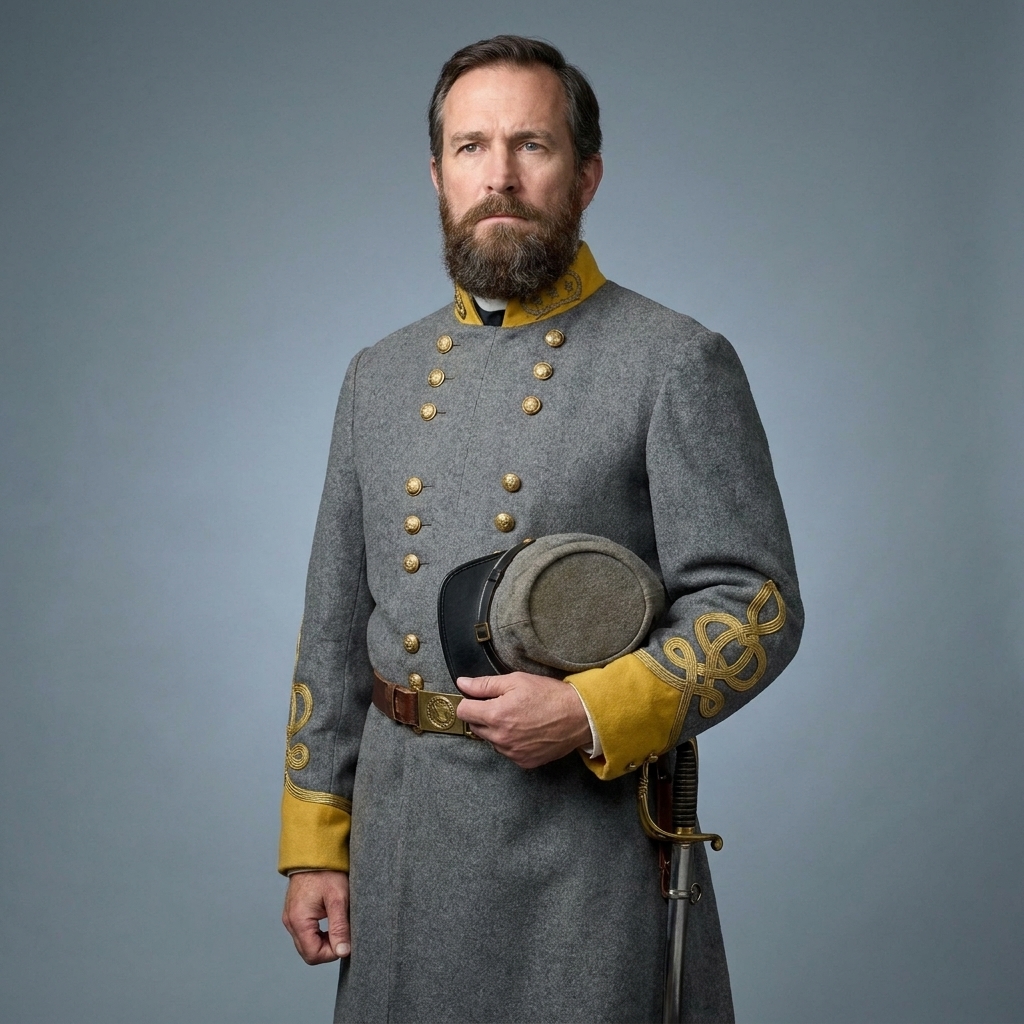
Contemporaries often noted Jackson’s plainness, sometimes to the point that people did not immediately read him as a high-ranking officer. The stories keep circling back to the same concrete details: a simple forage cap rather than a showy hat, and a worn, workmanlike coat that did not beg to be admired.
He is also tied, in memory and museum talk, to a Virginia Military Institute kind of severity, more an interpretive echo than a claim about a specific uniform: dark cloth, a spare silhouette, and the sense of a man who dressed to move. Whether you meet that detail in an artifact label or a soldier’s recollection, the message is consistent. Jackson dressed like a man who expected to be in the saddle at dawn and still moving after dark.
Horse and endurance
Jackson is closely tied to the idea of hard riding and harder marching. His mounts were part of that engine. They needed stamina more than flash, and their condition depended on the same thin supply lines that fed the infantry. In Jackson’s world, the “gear” that mattered most was whatever kept a staff and a column moving one more day.
George B. McClellan
McClellan looked like what many Americans expected a great general to look like. He understood ceremony, morale, and the importance of appearance. That did not win battles by itself, but it shaped public perception early in the war in a huge way.
Weapons and officer style
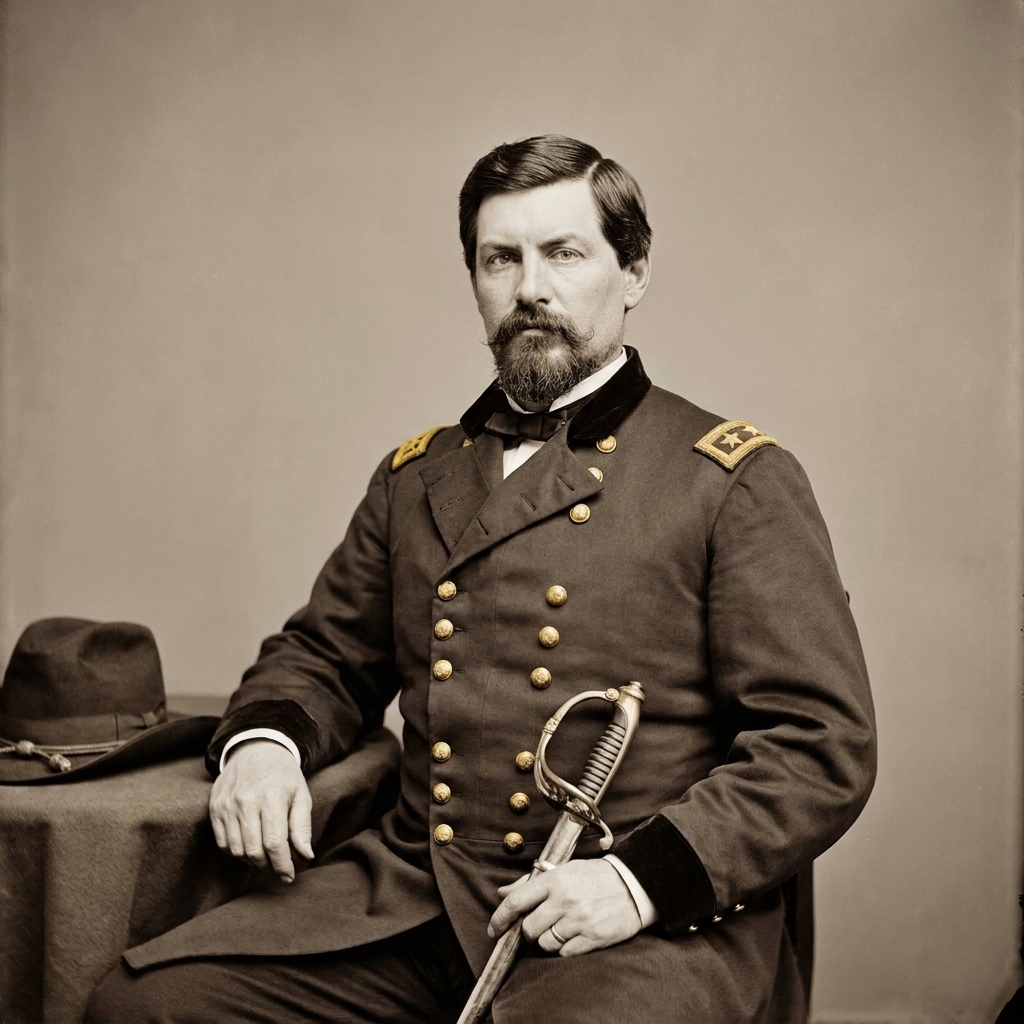
As a professional soldier, McClellan would have been comfortable with the standard officer mix: sword as emblem, pistol as practical backup. If you want a tangible detail that fits his era and his circle, it is the way an officer’s sword and belt rig completes the silhouette. In the early war, that look mattered. It projected competence, and McClellan always understood projection.
Uniform and polish
You see him in the classic double-breasted general’s frock coat, the kind of tailored garment that reads instantly as high command. Add the portrait-visible markers of rank, shoulder straps and bright buttons catching light, and you have a commander built for the front page. For soldiers, that could be reassuring. For critics, it could read as too much pageantry and too little urgency. Either way, the clothes were part of the argument people made about him.
In photographs, the impression is not just that he is dressed well. It is the clean line of the double row of buttons, the high, neat collar, and the overall sense that the uniform has been set in place on purpose.
J.E.B. Stuart
If you want a single figure whose gear became as famous as his tactics, it is J.E.B. Stuart. Stuart understood cavalry as both weapon and spectacle. He used appearance to boost morale, intimidate opponents, and make himself unforgettable.
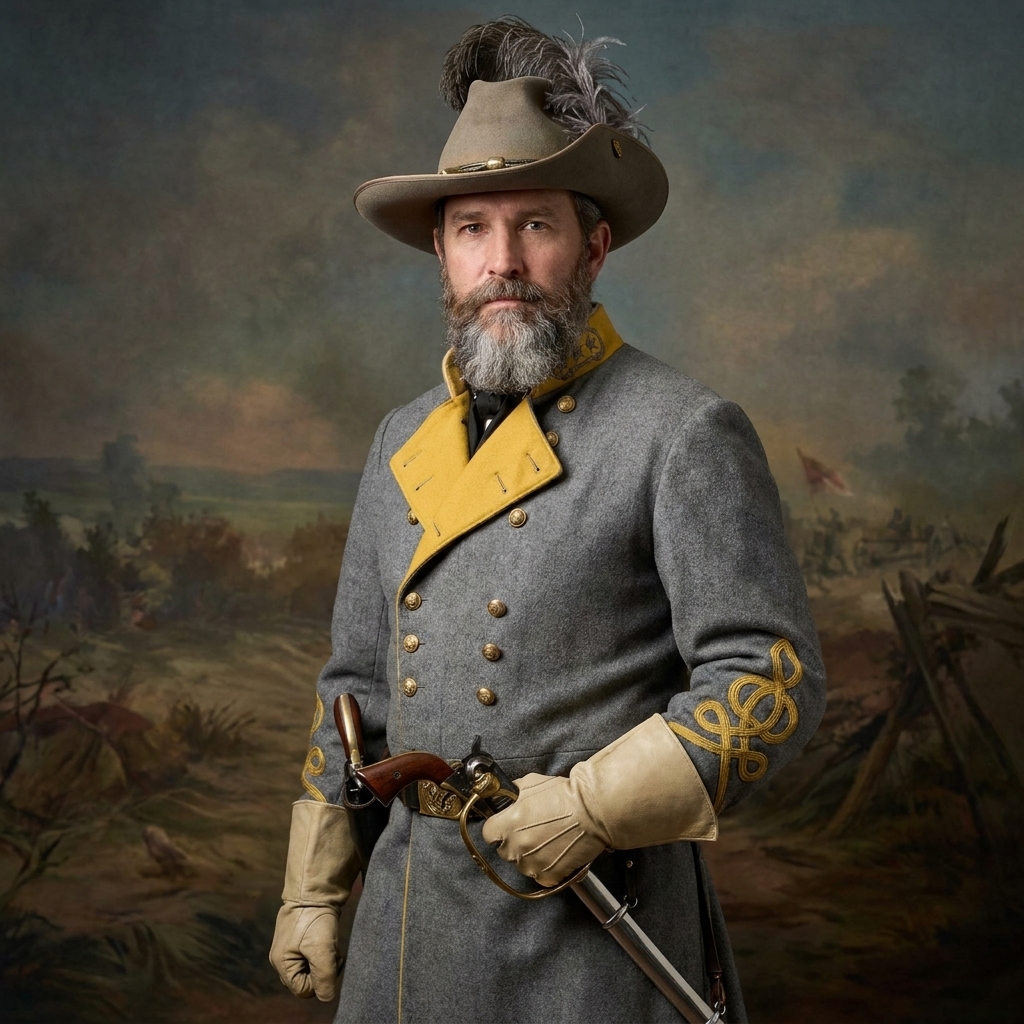
Saber and revolver
Cavalrymen lived closer to edged weapons than most infantry did, and a general who rode with his troopers kept that culture. The saber was still a potent symbol, and revolvers were common and practical for mounted fighting and sudden encounters.
Hat and trim
Stuart’s style is usually remembered in broad strokes: cavalry finery, a dramatic hat, and the kind of personal flourish that made newspaper descriptions easy to write. The drama was not imaginary. He is famously tied to a slouch hat with the brim pinned up on one side and, in many descriptions, an ostrich plume that turned a practical piece of felt into a signature.
Where branch colors were used, Confederate cavalry was sometimes associated with yellow or gold trim, though practice varied widely from unit to unit and year to year. In a war full of dust and similar hats, any consistent detail became a way to be recognized.
Horses and visibility
Cavalry commanders relied on exceptional horses, not just for speed but for presence. A leader who can be seen and recognized in a swirl of movement can rally men. That visibility also paints a target, which tells you something about Stuart’s appetite for risk.
Philip Sheridan
Sheridan’s fame rides on momentum: rapid movement, sharp blows, and a certain kind of aggressive confidence that suited the later-war Union cavalry. Like Lee with Traveller, Sheridan had a mount that entered the national story.
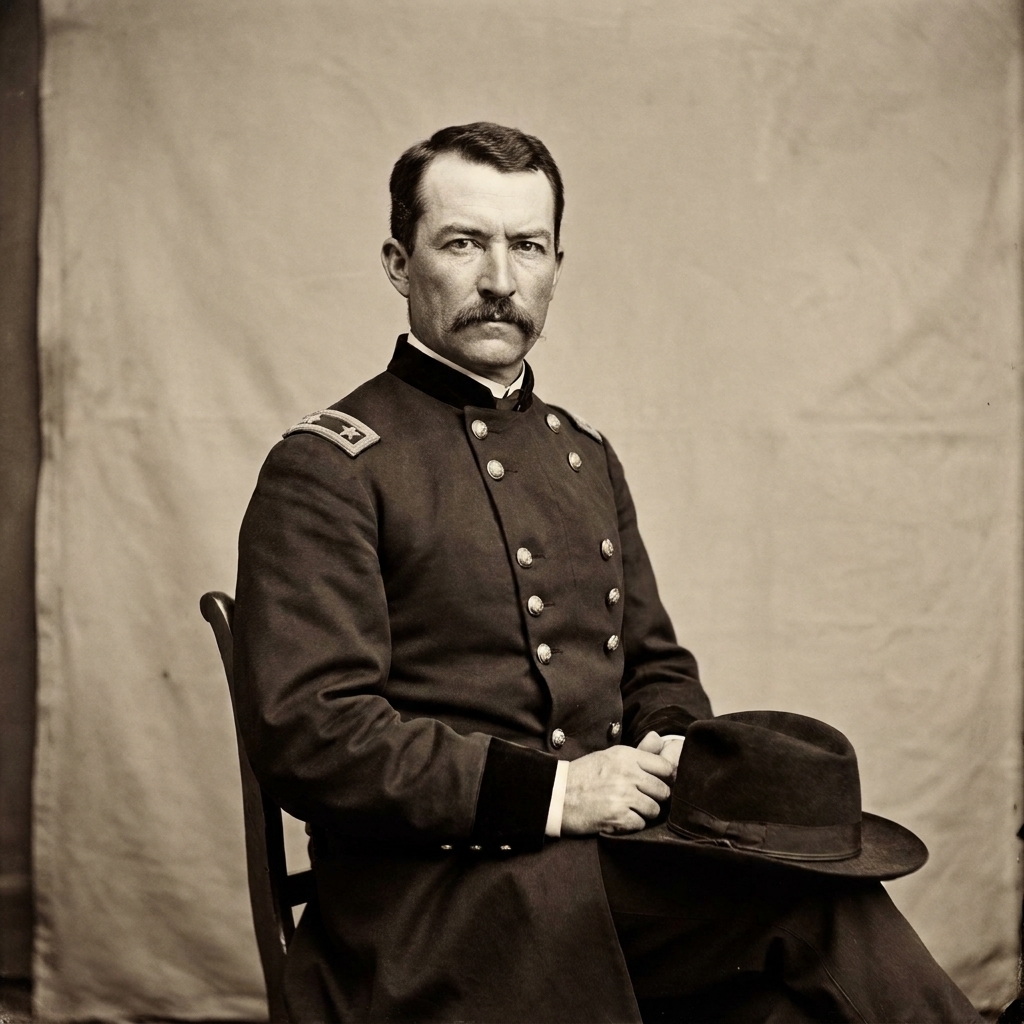
Rienzi and Winchester
Sheridan’s horse Rienzi, later popularly called Winchester, became famous through the story of Sheridan’s ride at Cedar Creek. The second name is tied largely to postwar retelling and popular tradition, which is exactly how these legends harden. War loves a symbol, and a named horse is a symbol you can picture instantly.
Weapons and cavalry kit
Sheridan, like other mounted officers, lived in a world where pistols and sabers were more than decoration. One concrete detail you can almost feel in the hand is the cavalryman’s dependence on good leather: a solid belt, a serviceable holster, straps that did not fail after a wet week on the road.
Beyond that, I keep it honest by calling it what it is: the typical cavalry outline, not a personalized shrine. A saber belt, a revolver in a holster, and the sort of saddlebags and bedroll a rider needed to stay moving, these were common sights in a mounted command. I avoid pinning a specific saddle pattern on Sheridan without an artifact or a clear description, but the truth of the ride is simple. If a general’s advantage was speed, then every buckle and strap mattered.
William T. Sherman
Sherman is remembered for movement across geography and for the psychological weight of that movement. His personal gear, in the public imagination, is less about gleaming weapons and more about the practical demands of living in the field while directing large columns.
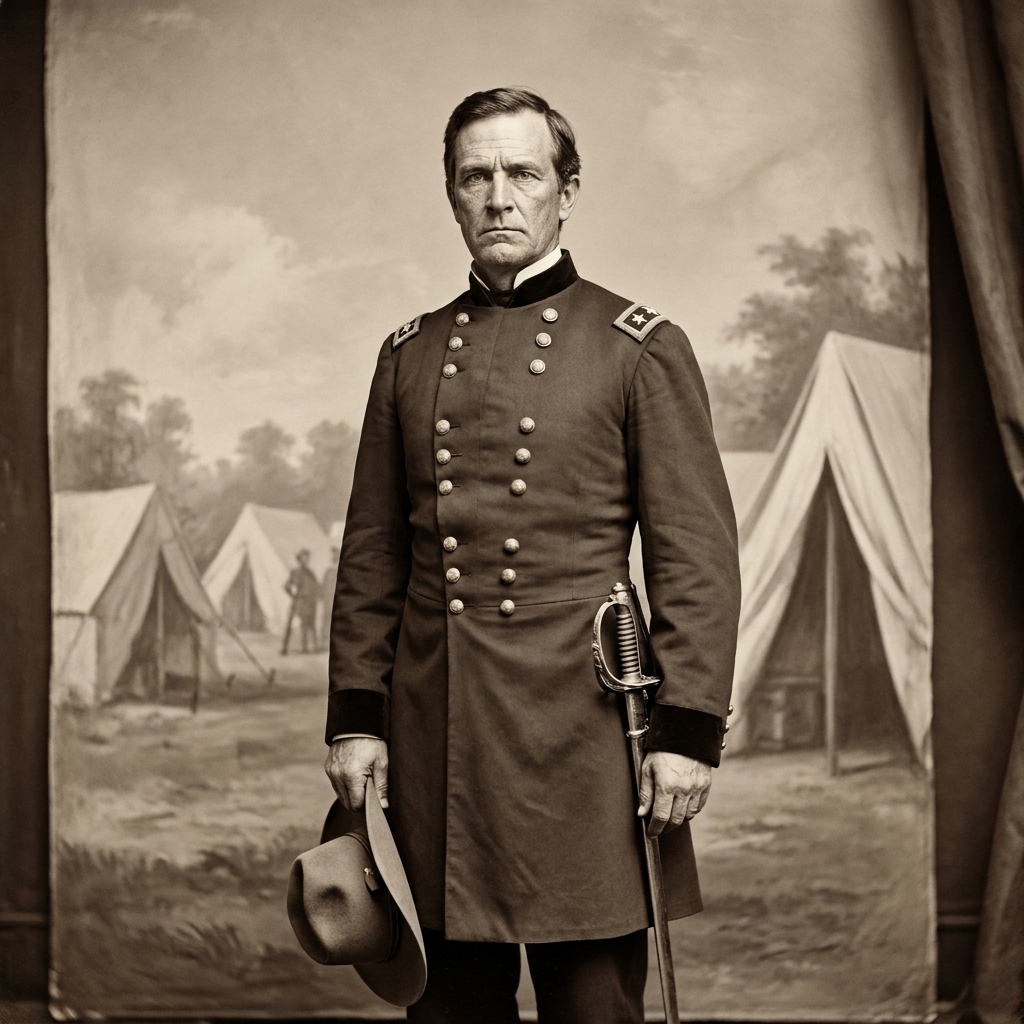
Weapons
Like most senior officers, Sherman could carry a sidearm, but his real weapons were logistics, orders, and tempo. In photographs, his equipment rarely steals the scene. That itself tells you something about how he wanted to be seen, and how the war made him.
Uniform and wear
By the middle and late war, even officers who cared about polish had to accept dust, rain, and fraying. Sherman’s image belongs to that later-war reality. When I picture him, I do not picture a parade coat. I picture a rumpled field uniform that has been slept in, ridden in, and rained on, with boots that know clay and a hat that has been handled enough to lose its crispness.
His most honest objects are command objects, the kind you see everywhere once you learn to look for them: the sort of dispatch case or satchel staff officers carried, a folded map that never quite lies flat again, and field glasses passed from hand to hand as the road unspools. Nothing glamorous, and that is the point.
What objects tell us
I always caution myself, especially when I am staring at a case label in a museum, not to let a handsome object do too much storytelling on its own. Gear is evidence, but it is incomplete evidence.
- It can tell us: what was available, what an officer could afford, what branch identity looked like, and what contemporaries chose to remember.
- It cannot tell us: whether a man was brave, wise, or morally clear. A fine revolver does not make a fine decision. A famous horse does not guarantee a sound plan.
Still, these items matter because they pull us down from the pedestal. They remind us that command was lived through leather, wool, mud, and long hours in the saddle. Sometimes the most honest thing an artifact says is simply this: it was used.
See it in person
If you have never stood at a battlefield overlook and tried to imagine the weight of a day spent riding couriers between lines, you are missing one of the most human ways to approach this war. I am biased. I grew up near Gettysburg, and I still think the ground teaches lessons books cannot.
Common questions
Did Civil War generals carry swords?
Many did carry them, especially early in the war and especially officers with prewar habits. But for army commanders, the sword was often more symbol than weapon. On chaotic fields, it could still be used for signaling, rallying, and asserting presence, even if it was not drawn to fence with the enemy.
Why are certain horses remembered by name?
A named horse is a perfect vessel for memory. Soldiers saw the horse up close, newspapers repeated the name, and later generations needed a concrete image to attach to an abstract thing like leadership. Traveller, Cincinnati, and Rienzi are remembered because they were tied to narratives people wanted to retell.
Were revolvers common for high-ranking officers?
Yes. A revolver was practical, portable, and a reasonable last resort. Even when a general never fired it in anger, it fit the reality that command sometimes collapsed into personal danger with very little warning.