|
American Civil War Recipes Union Hardtack and Confederate Johnnie Cakes
Feeding the troops was the responsibility of the Commissary Department, and both the Union and Confederacy had one. The job of this organization was to purchase food for the armies, store it until it could be used, and then supply the soldiers. It was difficult to supply so many men in so many places and the North had a greater advantage in their commissary system was already established at
the outbreak of the war, while the Confederacy struggled for many years to obtain food and then get it to their armies. Choices of what to give the troops was limited as they did not have the conveniences to preserve food like we have today. Meats were salted or smoked while other items such as fruits and vegetables were dried or canned. They did not understand proper nutrition so often there was
a lack of certain foods necessary for good health. Each side did what they could to provide the basics for the soldiers to survive. Because it was so difficult to store for any length of time, the food soldiers received during the Civil War was not very fancy and they did not get a great variety of items.
This photograph shows what a temporary Union commissary depot looked like during the war. Large wooden barrels containing salted meat, coffee beans, and sugar are stacked next to crates of hardtack. It took a lot of food to feed the army even for one day! (photo Library of Congress)
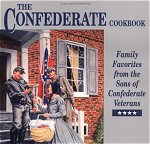
 The Confederate Cookbook: Family Favorites from the Sons of Confederate Veterans
340 of Dixie's finest recipes courtesy of contemporary Confederate kitchens from Florida to Alaska. Here you'll find the delicious, traditional dishes that evoke the flavour of the Old South, as well as savoury regional favourites from all over the country. Fascinating historic anecdotes and previously unpublished, nostalgic sepia-toned images of identified Confederate soldiers are
here for maximum visual appeal, along with easy-to-use instructions for making memorable dishes
The daily allowance of food issued to soldiers was called rations . Everything was given out uncooked so the soldiers were left up to their own ingenuity to prepare their meals. Small groups would often gather together to cook and share their rations and they called the group a "mess" , referring to each other as "messmates" . Others prided
themselves in their individual taste and prepared their meals alone. If a march was imminent, the men would cook everything at once and store it in their haversack , a canvas bag made with a sling to hang over the shoulder. Haversacks had a inner cloth bag that could be removed and washed, though it did not prevent the bag from becoming a greasy, foul-smelling container after
several weeks of use. The soldier's diet was very simple- meat, coffee, sugar, and a dried biscuit called hardtack . Of all the items soldiers received, it was this hard bread that they remembered and joked about the most.
Union Hardtack
Hardtack was a biscuit made of flour with other simple ingredients, and issued to Union soldiers throughout the war. Hardtack crackers made up a large portion of a soldier's daily ration. It was square or sometimes rectangular in shape with small holes baked into it, similar to a large soda cracker. Large factories in the north baked hundreds of hardtack crackers every day,
packed them in wooden crates and shipped them out by wagon or rail. If the hardtack was received soon after leaving the factory, they were quite tasty and satisfying. Usually, the hardtack did not get to the soldiers until months after it had been made. By that time, they were very hard, so hard that soldiers called them "tooth dullers" and "sheet iron crackers"
. Sometimes they were infested with small bugs the soldiers called weevils, so they referred to the hardtack as "worm castles" because of the many holes bored through the crackers by these pests. The wooden crates were stacked outside of tents and warehouses until it was time to issue them. Soldiers were usually allowed six to eight crackers for a three-day ration. There were a number of ways to
eat them- plain or prepared with other ration items. Soldiers would crumble them into coffee or soften them in water and fry the hardtack with some bacon grease. One favorite soldier dish was salted pork fried with hardtack crumbled into the mixture. Soldiers called this "skillygallee" , and it was a common and easily prepared meal.

Union Hardtack Recipe 2 cups of flour 1/2 to 3/4 cup water 1 tablespoon of Crisco or vegetable fat
6 pinches of salt
Mix the ingredients together into a stiff batter, knead several times, and spread the dough out flat to a thickness of 1/2 inch on a non-greased cookie sheet. Bake for one-half an hour at 400 degrees. Remove from oven, cut dough into 3-inch squares, and punch four rows of holes, four holes per row into the dough. Turn dough over, return to the oven and bake another one-half hour. Turn oven
off and leave the door closed. Leave the hardtack in the oven until cool. Remove and enjoy!
Confederate Johnnie Cake Recipe two cups of cornmeal 2/3 cup of milk 2 tablespoons vegetable oil
2 teaspoon baking soda 1/2 teaspoon of salt
Mix ingredients into a stiff batter and form eight biscuit-sized "dodgers". Bake on a lightly greased sheet at 350 degrees for twenty to twenty five minutes or until brown. Or, spoon the batter into hot cooking oil in a frying pan over a low flame. Remove the corn dodgers and let cool on a paper towel, spread with a little butter or molasses, and you have a real southern
treat!
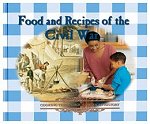
Food and Recipes of the Civil War Describes some of the foods
eaten in the North and South before and after the Civil War and the impact of the war on what foods were available and how they were prepared. Includes recipes.
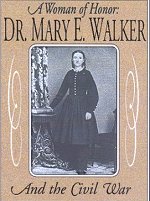
A Woman of Honor: Dr. Walker and the Civil War
A picture of Mary Walker that allows us to see the furrows in her brow as she continued to stubbornly stick to her values. This book is eye-opening and brings to the forefront many women's rights issues that we may not even be aware of.
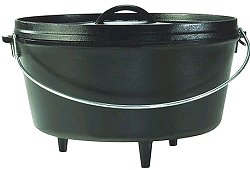
Lodge Camp Dutch Oven The legs are for ease of use in campfires. Flanged lid to
place coals on top of oven. Great for stews, chilli, roasts complete recipes for everything including old-fashioned bread. A must for reenactors villages.
Some of the other items that soldiers received were salt pork, fresh or salted beef, coffee, sugar, salt, vinegar, dried fruit and dried vegetables. If the meat was poorly preserved, the soldiers would refer to it as "salt horse". Sometimes they would receive fresh vegetables such as carrots, onions, turnips and potatoes. Confederate soldiers did not have as much variety in their rations as
Union soldiers did. They usually received bacon and corn meal, tea, sugar or molasses, and fresh vegetables when they were available. While Union soldiers had their "skillygallee", Confederates had their own version of a quick dish on the march. Bacon was cooked in a frying pan with some water and corn meal added to make a thick, brown gravy similar in consistency to oatmeal. The soldiers called
it "coosh" and though it does not sound too appetizing, it was a filling meal and easy to fix.
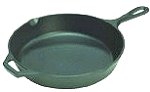
 15 Inch Cast-Iron Skillet Large Skillet 2.25 inches in depth. Not for standard
home stove. Perfect for use on the Grill or over campfires when you are cooking for the "troops". Opposite handle for easy use of this heavy skillet.
Click to enlarge Picture
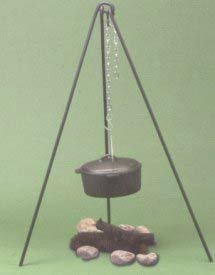
Campfire Tripod Constructed of forged iron, this will hold Cast Iron Dutch Ovens. It's
easy to set up and has an adjustable 26" chain so you've got control of the heat. Holds up to 40 lbs
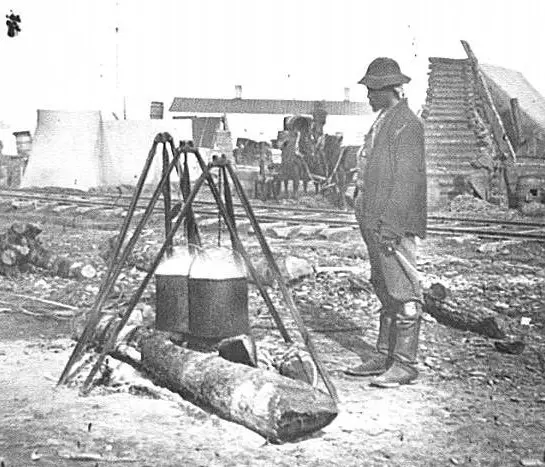
Kitchen of 'Soldiers Rest,' Alexandria, Virginia Click to enlarge Picture
Civil War History Reading Book Club Titles for Additional Reading
Civil War Recipes: Receipts from the Pages of Godey's Lady's Book Civil War Recipes reproduces, in their original wording, receipts that appeared in the pages of Gody's Lady's Book during the decade of
the Civil War. Editors Lily May Spaulding and John Spaulding have added annotations to assist those cooks who might not know, for example, that buscuits often referred to what we now call cookies. They also provide a brief overview of the technical state of cooking in America before and during the Civil War. Although leavening agents were not unknown, the recipe for Christening Cake
requires whisking the whites of sixteen eggs into a full froth and beating the entire mixture for more than thirty minutes.
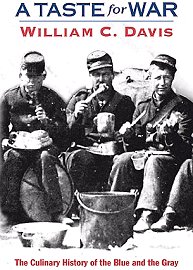
A Taste For War: The Culinary History of the Blue and the Gray We know the uniforms
they wore, the weapons they carried, and the battles they fought, but what did they eat and, of even greater curiosity, was it any good? Now, for the very first time, the food that fueled the armies of the North and the South and the soldiers' opinions of it--ranging from the sublime to just slime--is front and center in a biting, fascinating look at the Civil War as written by one of its most
respected historians. There's even a comprehensive "cookbook" of actual recipes included for those intrepid enough to try a taste of the Civil War.
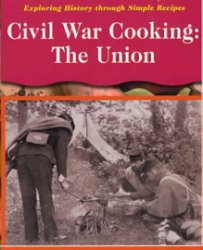
Civil War Cooking: The Union The authors look at the foods people ate during the Civil War
and on pioneer farms and offer recipes for modern readers. Each title begins with rules for kitchen safety, a metric conversion table, and an illustrated list of cooking equipment. Color is a marvelous feature of the books: the covers, maps, and page borders. Full-color photos and reproductions appear on every page.
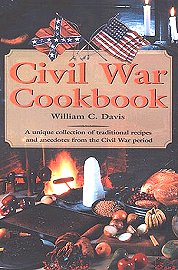
Civil War Cookbook: A Unique Collection of Traditional Recipes and Anecdotes from the Civil War
Period Every Civil War buff will want to own this unique cookbook, which takes the reader right into the kitchens of 19th-century America. Illustrated with wonderful period photographs, it intertwines history and food for a fascinating new look at the lives of Civil War soldiers and their families. Traditional
recipes, illustrated with full-color photographs and highlighted with historical anecdotes, include instructions for recreating treats sent in care packages to soldiers in the field, camp dishes, and special meals.
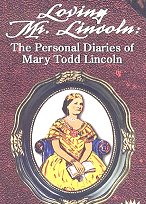
 Loving Mr. Lincoln: The Personal Diaries of Mary Todd Lincoln Chronicles life, love, and daily struggles with Abraham in their 26 years together. In frank, haunting journal entries, Mary describes the pain she felt when Abraham left her at the altar, when her sons died, and when
Abraham's political career seemed to be at an end
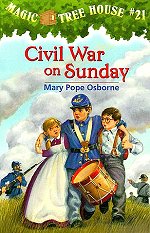
Kindle Available Civil War on Sunday Mary Pope Osborne's tremendously
popular Magic Tree House series launches into a new realm, as Jack and Annie are challenged to save Camelot. Young readers will effortlessly learn the basics of Civil War history, while losing themselves in another gripping tale that has turned many a nonreader into a bookworm. (Ages 5 to 8)
Kindle Available The Civil War Introduces young readers to the harrowing true story of the American Civil War and its immediate aftermath. A surprisingly
detailed battle-by-battle account of America's deadliest conflict ensues, culminating in the restoration of the Union followed by the tragic assassination of President Lincoln
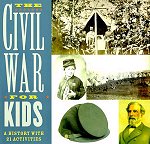
Kindle Available The Civil War for Kids History explodes in this activity
guide spanning the turmoil preceding secession, the first shots fired at Fort Sumter, the fierce battles on land and sea, and finally the Confederate surrender at Appomattox. Making butternut dye for a Rebel uniform, learning drills and signals with flags, decoding wigwag, baking hardtack, reenacting battles, and making a medicine kit bring this pivotal period in our nation's history to
life.
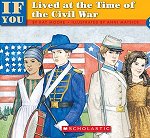
If You Lived at the Time of the Civil War All of the "If you Lived
at the Time of..." books are great for kids, and also a nice, quick read for adults! What I like about them is their layout, which is easy for readers to follow. Each page begins with a question, "Would you have seen a battle in the South?" for example. Nicely drawn illustrations accompany each answer.
Kindle Available A Yankee Girl at Fort
Sumter Tale of a girl and her family from Boston living in Charleston, SC during the months leading up to the beginning of the Civil War by the attack on Fort Sumter. The reader senses the inhunanity of slavery through Sylvia's experiences.
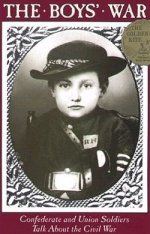
The Boys War With the many boys who fought in the civil war most of them lied about their age. A
lot of them wrote letters or had a diary. Johnny Clem had run away from his home at 11. At age 12 he tried to enlist but they refused to let him join because he was clearly too young. The next day he came back to join as a drummer boy.
Source: Gettysburg National Military Park Library of Congress Federal Citizen
Enter the keywords you are looking for and the site will be searched and all occurrences of your request will be displayed. You can also enter a date format, April 19,1862 or September 1864.
More To Explore
|
|