|
|
|
Kindle Available A Diary From Dixie This original diary of the wife of Confederate General James Chestnut, Jr., who was also an aide to President Jefferson Davis, provides an eyewitness narrative of all the years of the war. Period photographs illustrate this you-are-there account of the daily lives and tribulations of all who suffered through the war, from ordinary people to the Confederacy's generals and political figures |
Kindle Available Hit: Essays on Women's Rights by Mary Edwards, M.D. Walker The only woman to receive the Congressional Medal of Honor for her service during the Civil War, Dr. Mary E. Walker (1832-1919) was a surgeon, a public lecturer, and an outspoken champion of women's rights. One of the first women in the country to be awarded a medical degree, she served as an assistant surgeon for the Fifty-second Ohio Infantry |
Kindle Available On Her Own Ground: The Life and Times of Madam C.J. Walker The daughter of slaves, Madam C. J. Walker was orphaned at seven, married at fourteen and widowed at twenty. She spent the better part of the next two decades laboring as a washerwoman for $1.50 a week. Building a storied beauty empire from the ground up, amassing wealth unprecedented among black women and devoting her life to philanthropy and social activism. |
Kindle Available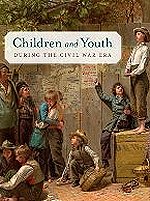 Children and Youth during the Civil War Era The experience of children and youth during that tumultuous time remains a relatively unexplored facet of the conflict. Children and Youth During the Civil War Era seeks a deeper investigation into the historical record by giving voice and context to their struggles and victories |
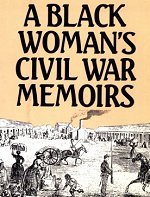 A Black Woman's Civil War Memoirs: Reminiscences of My Life in Camp With the 33rd U.S. Colored Troops, Late 1st South Carolina Volunteers Taylor was born a slave in 1848 on an island off the coast of Georgia. She gained her freedom and worked as a laundress for an African-American Union regiment during the war. She offers fascinating details about her life with the troops |
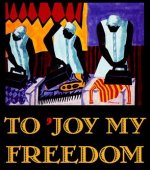 To 'Joy My Freedom: Southern Black Women's Lives and Labors after the Civil War Thousands of former slaves flocked to southern cities in search of work, they found the demands placed on them as wage-earners disturbingly similar to those they had faced as slaves: seven-day workweeks, endless labor, and poor treatment |
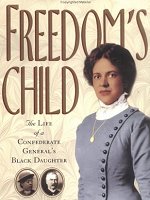 Freedom's Child: The Life of a Confederate General's Black Daughter This is one woman's personal history, she is the grand-daughter of a white Confederate General who openly acknowledged his mixed-race offspring but who also lived quite happily in the violent segreated world of the deep South of the time and who was not willing to stand up for his own children's rights |
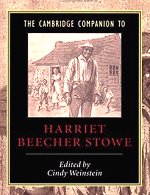 The Cambridge Companion to Harriet Beecher Stowe Perspectives on the frequently read Uncle Tom's Cabin as well as on topics of perennial interest, such as Harriet Beecher Stowe's representation of race, her attitude to reform, and her relationship to the American novel |
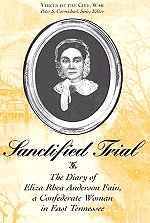 Sanctified Trial: The Diary of Eliza Rhea Anderson Fain, a Confederate Woman in East Tennessee The Diary of Eliza Rhea Anderson Fain |
Kindle Available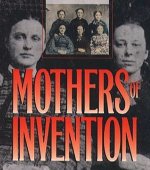 Mothers of Invention: Women of the Slaveholding South in the American Civil War When Confederate men marched off to battle, southern women struggled with the new responsibilities of directing farms and plantations, providing for families, and supervising increasingly restive slaves |
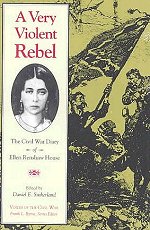 A Very Violent Rebel: The Civil War Diary of Ellen Renshaw House The Siege of Knoxville (November 1863) is covered and Sutherland's footnotes make for good history |
Kindle Available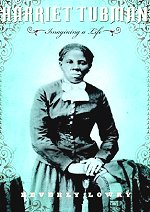 Harriet Tubman: Imagining a Life: A Biography Travel with Tubman along the treacherous route of the Underground Railroad. Hear of her friendships with Frederick Douglass, John Brown, and other abolitionists. |
 A Confederate Girl's Diary Sarah Morgan Dawson Sarah Morgan Dawson lived in Baton Rouge, Louisiana, at the outbreak of the American Civil War. In March 1862, she began to record her thoughts about the war in a diary |
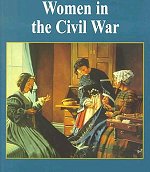 Women in the Civil War The Civil War wrought cataclysmic changes in the lives of American Women on both sides of the conflict. Women in the Civil War demonstrates their enterprise, fortitude, and fierceness. In this revealing social history |
 Confederate Scrapbook Copied From A Scrapbook Kept By A Young Girl During And Immediately After The War Lizzie Cary Danie l |
Kindle Available My Story of the War : a Woman's Narrative of Four Years Personal Experience as Nurse in the Union Army |
 Memoirs of a Soldier, Nurse and Spy: A Woman's Adventures in the Union Army On April 25, 1861, Sarah Emma Edmonds alias Frank Thompson became a male nurse in Company F, of the 2nd Michigan Volunteer Infantry Regiment. This is 'his' story |
 Divided Houses: Gender and the Civil War The new "manly" responsibilities both black and white men had thrust upon them as soldiers; the effect of the war on Southern women's daily actions on the homefront; the essential part Northern women played as nurses and spies; the war's impact on marriage and divorce; women's roles in the guerilla fighting; even the wartime dialogue on interracial sex. |
Kindle Available The Robert E. Lee Family Cooking and Housekeeping Book Part cookbook, part culinary history, part family history, this book is an engaging and enlightening glimpse into the household of a well-to-do, mid-nineteenth-century Virginia family. Seeking to learn more about her ancestors' daily lives, Anne Zimmer, great-granddaughter of Robert E. and Mary Lee, turned to her great-grandmother's small, now shabby notebook. Packed with recipes, shopping lists, and other domestic jottings, the notebook opened an intimate window onto an earlier way of life. |
 When Slavery was Called Freedom: Evangelicalism, Proslavery, and the Causes of the Civil War Dissects the evangelical defense of slavery at the heart of the nineteenth century's sectional crisis. John Patrick Daly's writing uncovers the cultural and ideological bonds linking the combatants in the Civil War era and boldly reinterprets the intellectual foundations of secession |
Kindle Available The War-Time Journal of a Georgia Girl, 1864-1865 Eliza Andrews' diary is more cogent than any novel about the Civil War. General Sherman laid a track, and ELiza had to follow his footsteps through Georgia. Her insights into war and the havoc it wrought in the South are accompanied by her own editorial comments forty-four years later |
Kindle Available When Will This Cruel War Be Over? A Confederate girl in Virginia, in 1864, Emma Simpson writes about the hardships of growing up during a turbulent time |
 A Girl's Life in Virginia Before the War First published in 1895. An engrossing eyewitness account of antebellum plantation life as it really was |
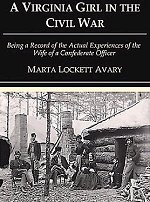 Record of the Actual Experiences of the Wife of a Confederate Officer The author tells of her many travels across the war-torn South, capture behind enemy lines, encounter with Belle Boyd, friendship with General J. E. B. Stuart, and the devastation suffered by the citizens of Richmond in the last days of the Confederacy. |
Kindle Available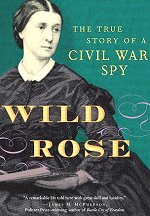 Rose O'Neale Greenhow, Civil War Spy Fearless spy for the Confederacy, glittering Washington hostess, legendary beauty and lover, Rose Greenhow risked everything for the cause she valued more than life itself |
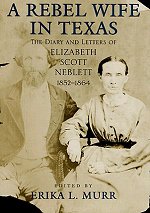 A Rebel Wife in Texas: The Diary and Letters of Elizabeth Scott Neblett, 1852-1864 Elizabeth Neblett's observations on slave and class relations, regional politics, lynching, farm management, medical practices, mental illness, and the Civil War in Texas. |
Kindle Available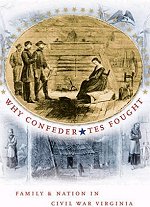 Why Confederates Fought: Family and Nation in Civil War Virginia The Southern view of slavery as essential to the Southern economy is reiterated. Slavery was the great Southern irony, viewed as a foundation of white liberty. From that perspective, the Confederate soldier's choice was simply victory or death |
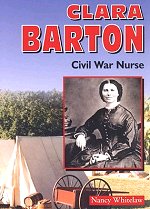 Clara Barton Civil War Nurse Comments in Barton's own words from her thoughts and diaries. There were little known facts to keep the interest of the young adult reader, and these facts tied Barton to the historical background. |
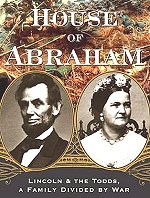 House of Abraham: Lincoln and the Todds, A Family Divided by War Mary Todd Lincoln one of fourteen siblings who were split between the Confederacy and the Union. Three of her brothers fought, and two died, for the South. Several Todds bedeviled Lincolns administration with their scandalous behavior |
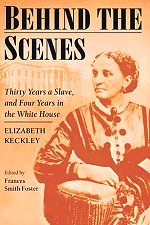 Behind the Scenes: Thirty Years a Slave, and Four Years in the White House This is a memior written by a woman who started life as a slave, then managed to buy her freedom, and later set up a successful living as a seamstress, eventually going to work for Mary Todd Lincoln in the White House |
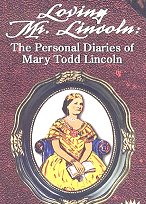 Loving Mr. Lincoln: The Personal Diaries of Mary Todd Lincoln Chronicles life, love, and daily struggles with Abraham in their 26 years together. In frank, haunting journal entries, Mary describes the pain she felt when Abraham left her at the altar, when her sons died, and when Abraham's political career seemed to be at an end |
 First Ladies of the Civil War Mary Todd Lincoln and Varina Davis Mary Todd Lincoln, the most criticized and misunderstood first lady, experienced more than her share of tragedy during her lifetime. During the Civil War, both North and South called her a traitor and seldom did the press have a kind word for her. If we examine her early life, the most impressionable years, we become enlightened and can find compassion for the woman who was the wife of the sixteenth President of the United States |
 Harriet Beecher Stowe : Three Novels : Uncle Tom's Cabin Or, Life Among the Lowly; The Minister's Wooing; Oldtown Folks Uncle Tom's Cabin is probably the most influential work of fiction in American history. This Christian epic turned millions of Americans against slavery, bringing the "peculiar institution" immeasurably closer to its destruction. In The Minister's Wooing and Oldtown Folks, Stowe examines the interplay of religion, domesticity, and women's roles and choices in the shaping of American culture. |
 The American Woman's Home by Catharine E. Beecher and Harriet Beecher Stowe Originally published in 1869, was one of the late nineteenth century's most important handbooks of domestic advice. This book represents their attempt to direct women's acquisition and use of a dizzying variety of new household consumer goods available in the post-Civil War economic boom |
 Clara Barton Professional Angel This eloquently told story of Clara Barton digs deep into who exactly Clara Barton was and the many areas in which Clara was an agent for change in society |
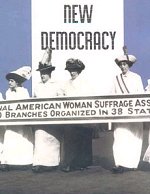 Woman Suffrage and the New Democracy The woman suffrage movement achieved its goal by forging a highly organized and centrally controlled interest group, the National American Woman Suffrage Association (NAWSA), one of the most effective single-issue pressure groups in the United States |
Kindle Available You Want Women to Vote, Lizzie Stanton? Grade 3-6. Fritz applies her gift for creating engaging, thorough historical literature to a larger-than-life historical figure. Stanton was a radical among radicals, and this objective depiction of her life and times, as well as her work for women's rights, makes readers feel invested in her struggle. An appealing, full-page black-and-white drawing illustrates each chapter. For students who need a biography, this title should fly off the shelves with a minimum of booktalking. And it is so lively that it is equally suitable for leisure reading.? |
 Not For Ourselves Alone: The Story of Elizabeth Cady Stanton and Susan B. Anthony Two heroic women who vastly bettered the lives of a majority of American citizens. For more than fifty years they led the public battle to secure for women the most basic civil rights and helped establish a movement that would revolutionize American society |
Kindle Available Women and the American Civil War An Annotated Bibliography The first reference work to draw together the stories and studies of women in the American Civil War, this annotated bibliography offers access to the literature that documents the history of women who experienced the war, changed it, and were changed by it. Offering nearly 800 entries |
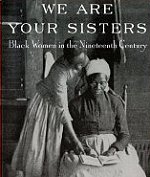 We Are Your Sisters: Black Women in the Nineteenth Century A remarkable documentary and the first in-depth record of many black women, slave and free."--Dorothy B. Porter, curator emeritus, Moorland-Spingarn Research Center, Howard University |
 The Stowe Debate: Rhetorical Strategies in Uncle Tom's Cabin This collection of essays addresses the continuing controversy surrounding "Uncle Tom's Cabin". The 13 contributors discuss questions of language and ideology, the tradition of the sentimental novel, biblical influences, and the rhetoric of anti-slavery discourse. |
Kindle Available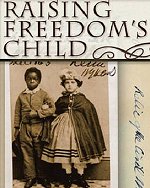 Raising Freedom's Child: Black Children and Visions of the Future After Slavery Previously untapped documents and period photographs casts a dazzling, fresh light on the way that abolitionists, educators, missionaries, planters, politicians, and free children of color envisioned the status of African Americans after emancipation |
Kindle Available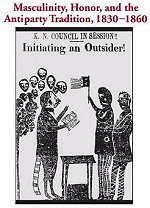 Political Culture and Secession in Mississippi: Masculinity, Honor, and the Antiparty Tradition, 1830-1860 A rich new perspective on the events leading up to the Civil War and will prove an invaluable tool for understanding the central crisis in American politics. |
 I'll Pass For Your Comrade: Women Soldiers in the Civil War Many people know about Clara Barton, the nurse who did so much to save soldiers' lives. But few have heard of Sarah Emma Edmonds, Rosetta Wakeman, or Mary Galloway. They were among the hundreds of women who assumed male identities, put on uniforms, enlisted in the Union or Confederate Army, and went into battle alongside their male comrades |
 Doctors in Blue: The Medical History of the Union Army in the Civil War An excellent treatment of a rather specialized subject |
Kindle Available Lincoln's Ladies: The Women in the Life of the Sixteenth President The tumultuous experiences Abraham Lincoln had with women have long been chronicled. Lincoln's Ladies attempts to answer the questions of how he was affected by the women in his life and how he affected them. Abandoned through death by his mother, his sister, and his sweetheart, Ann Rutledge, Lincoln found it difficult to relate to women and developed an emotional barrier that often antagonized them. |
A Girl's Life in Virginia Before the War First published in 1895. An engrossing eyewitness account of antebellum plantation life as it really was |
Kindle Title Carolina Rain Open the page of Carolina Rain and step on the streets of an era gone by. Carolina Rain is not just a read, but an experience. You will smell the magnolia trees, feel the sun on your face and taste the bittersweet tears of a beautiful young girl coming of age at the dawning of the Civil War. |
|
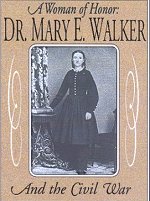 A Woman of Honor: Dr. Walker and the Civil War A picture of Mary Walker that allows us to see the furrows in her brow as she continued to stubbornly stick to her values. This book is eye-opening and brings to the forefront many women's rights issues that we may not even be aware of. |
Kindle Available Mightier than the Sword: Uncle Tom's Cabin and the Battle for America Uncle Tom's Cabin is likely the most influential novel ever written by an American. In a fitting tribute to the two hundredth anniversary of Harriet Beecher Stowe's birth, Bancroft Prize-winning historian David S. Reynolds reveals her book's impact not only on the abolitionist movement and the American Civil War but also on worldwide events |
|
 Feminism and Suffrage: The Emergence of an Independent Women's Movement in America, 1848-1869 In the two decades since Feminism and Suffrage was first published, the increased presence of women in politics and the gender gap in voting patterns have focused renewed attention on an issue generally perceived as nineteenth-century |
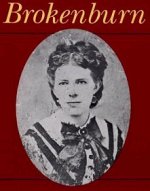 Brokenburn: The Journal of Kate Stone, 1861-1868 (Library of Southern Civilization) At the start of the war Kate was surrounded by servants who met her every need. But twenty year old Kate Stone's life would be more directly affected by the war. Kate Stone's Louisiana home was occupied by the Yankees forcing the family to flee to Texas. Describes the deprivations of the war years, lack of shoe leather, lack of cloth and the unavailability of new books, and at times cheered by false reports of great southern victories |
When Will This Cruel War Be Over? A Confederate girl in Virginia, in 1864, Emma Simpson writes about the hardships of growing up during a turbulent time |
Kindle Available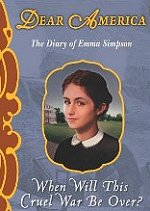 Dear America: When Will This Cruel War Be Over? The peaceful, traditional Southern life that Emma Simpson and her family know is shattered when the Civil War reaches their soil. Soon, Emma's father and brother are called to battle, but her family is confident the South will quickly win the War between the States. |
Women In The Civil War
Women Soldiers
Civil War Book Titles
Civil War Recipe Reference
American Civil War Exhibits
Young Reader Selections
Womens Suffrage Timeline
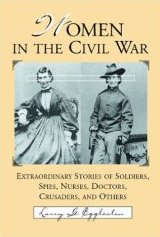 Women In The Civil War When the Civil War broke out, women answered the call for help. They broke away from their traditional roles and served in many capacities, some of them even going so far as to disguise themselves as men and enlist in the army. Estimates of such women enlistees range from 400 to 700. |
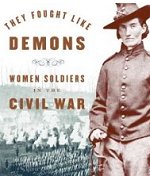 They Fought Like Demons Women Soldiers in the Civil War More than sixty women who fought or who served the Union or Confederacy in other important ways are featured in this work. Among those included are Sarah Thompson, the Union spy and nurse who brought down the famous raider John Hunt Morgan |
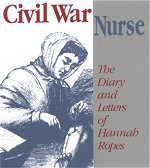 Civil War Nurse: The Diary and Letters of Hannah Ropes Hannah Ropes kept a diary for only one year during the time she served as a nurse in the Civil War. She actually supervised Louisa Mae Alcott and was responsible for many of the reforms in the hospital where she worked. She was a well-spoken woman who was also not afraid to stand up to her male supervisors |
 The Woman in Battle: The Civil War Narrative of Loreta Janeta Velazquez, Cuban Woman and Confederate Soldier A Cuban woman fought in the Civil War for the Confederacy as the cross-dressing Harry T. Buford. As Buford, she organized an Arkansas regiment; participated in the historic battles of Bull Run, Balls Bluff, Fort Donelson, and Shiloh |
 Blood, Sweat And Tears An Oral History of the American Red Cross The story of the modern-day Red Cross through the voices of twenty-nine current and former Red Cross paid and volunteer staff from all parts of the country. Stories range from that of a World War II veteran who credits the Red Cross packages with keeping him alive |
 A House Divided: The Antebellum Slavery Debates in America, 1776-1865 An excellent overview of the antebellum slavery debate and its key issues and participants. The most important abolitionist and proslavery documents written in the United States between the American Revolution and the Civil War |
Kindle Available The Grimke Sisters from South Carolina: Pioneers for Women's Rights and Abolition A landmark work of women's history originally published in 1967, Gerda Lerner's best-selling biography of Sarah and Angelina Grimke explores the lives and ideas of the only southern women to become antislavery agents in the North and pioneers for women's rights. This revised and expanded edition includes two new primary documents and an additional essay by Lerner. In a revised introduction Lerner reinterprets her own work nearly forty years later and gives new recognition to the major significance of Sarah Grimke's feminist writings |
 Recollections of 92 Years, 1824-1916 When the indomitable Meriwether was banned from her home by Union soldiers because her husband was a Confederate officer, she spent the next two years bartering for food and shelter for herself and her three young sons. After the war, Meriwether embarked on a decades-long career as an author and advocate for the equality of women, keeping up the crusade until her death in 1916--the year congressional support for women's suffrage emerged. |
 A Strong-minded Woman The Life of Mary Livermore A leading figure in the struggle for woman's rights as well as in the temperance movement, she was as widely recognized during her lifetime as Susan B. Anthony, and for a time the most popular and highly paid female orator in the country |
When Mary Livermore died in 1905 at age 84, a Boston newspaper praised her as "America's foremost woman." A leading figure in the struggle for woman's rights as well as in the temperance movement, she was as widely recognized during her lifetime as Susan B. Anthony, and for a time the most popular and highly paid female orator in the country. Yet aside from Civil War historians familiar with her service as a wartime nurse, few today remember even her name.
In this book, Wendy Hamand Venet reconstructs Mary Livermore's remarkable story and explores how and why she became so renowned in her day. Born and raised in Boston, Livermore left home at age eighteen to become the private schoolteacher to a wealthy tobacco planter's children in Virginia, an experience that afforded her an intimate look at slave-based society in the 1840s. Returning to New England, she married and lived a conventional life as the wife of a minister and mother of three daughters. With the coming of the Civil War, however, Livermore's life changed dramatically when she became active with the United States Sanitary Commission, an organization that would propel her into the public limelight and cause her to challenge society's traditional view of the role of women. |
 |
|
Brokenburn: The Journal of Kate Stone, 1861-1868 (Library of Southern Civilization) Brokenburn was a large plantation containing over 150 slaves in Madison Parish, Louisiana. From 1862 on, it was in the center of the Union Army's fierce assault to gain control of the Mississippi River and divide the Confederacy in half. Plantations were commandeered and slaves were encouraged to revolt. The civilian population was helpless before the demands of military control. Madison Parish had a population of approximately 9,000 of whom 7,000 were slaves. After 1861, the Parish was emptied of able-bodied white men, most of whom had been sent to far-off Virginia and Tennessee, leaving none to protect the civilians.In 1861, Kate was 20 years old, her immediate future being beaus, courtship, and a gay social life before she settled down to become a proper southern matron. She was unsure whether this route was ideal, as she remarked, "women grew significantly uglier in wedlock and ignored and abandoned their former female friends." This comfortable world was turned upside down, never to reappear again. With great enthusiasm and some trepidation, she watched her three older brothers go off to war. Her widowed mother made it clear that 14-year-old James was now in charge of the running of the plantation and the protection of the rest of the family.
|
 Alice Paul and the American Suffrage Campaign An analysis of Paul's nonviolent and visual rhetorical strategies, Alice Paul and the American Suffrage Campaign narrates the remarkable story of the first person to picket the White House, the first to attempt a national political boycott, the first to burn the president in effigy, and the first to lead a successful campaign of nonviolence |
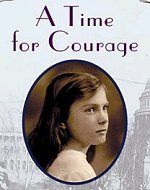 A Time For Courage The Suffragette Diary of Kathleen Bowen Kat Bowen is living in Washington D.C. during the woman's fight for the vote. Her mother is among the woman picketing the White House Her own views and opinions during this time. She supports her mother but at the same time worries about how women picketing are being treated |
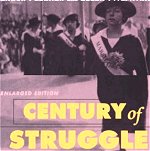 Century of Struggle The Womans Rights Movement Young suffragists who helped forge the last links in that chain were not born when it began. Old suffragists who forged the first links were dead when it ended. It is doubtful if any man, even among suffrage men, ever realized what the suffrage struggle came to mean to women |
Feminism and Suffrage: The Emergence of an Independent Women's Movement in America, 1848-1869 In the two decades since Feminism and Suffrage was first published, the increased presence of women in politics and the gender gap in voting patterns have focused renewed attention on an issue generally perceived as nineteenth-century |
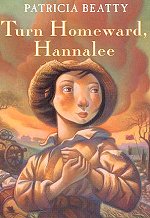 Turn Homeward, Hannalee During the closing days of the Civil War, plucky 12-year-old Hannalee Reed, sent north to work in a Yankee mill, struggles to return to the family she left behind in war-torn Georgia. "A fast-moving novel based upon an actual historical incident with a spunky heroine and fine historical detail."--School Library Journal. |
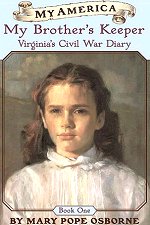 My Brothers Keeper Virginia Dickens is angry. Her father and brother Jed have left her behind while they go off to Uncle Jack's farm to help him hide his horses from Confederate raiders. It's the summer of 1863 and Pa and Jed believe 9-year-old Virginia will be out of harm's way in the sleepy little town of Gettysburg, Pennsylvania. |
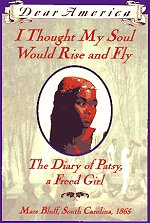 I Thought My Soul Would Rise and Fly: The Diary of Patsy, a Freed Girl, Mars Bluff, South Carolina 1865 Not only is 12-year-old Patsy a slave, but she's also one of the least important slaves, since she stutters and walks with a limp. So when the war ends and she's given her freedom, Patsy is naturally curious and afraid of what her future will hold. |
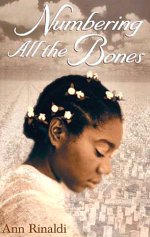 Numbering The Bones The Civil War is at an end, but for thirteen-year-old Eulinda, it is no time to rejoice. Her younger brother Zeke was sold away, her older brother Neddy joined the Northern war effort,. With the help of Clara Barton, the eventual founder of the Red Cross, Eulinda must find a way to let go of the skeletons from her past. |
| Search AmericanCivilWar.com |
| Enter the keywords you are looking for and the site will be searched and all occurrences of your request will be displayed. You can also enter a date format, April 19,1862 or September 1864. |