Kindle Title Rebellion Road Rebellion and revolution, freedom and bondage, sovereignty and subjugation: these are the competing human conditions that fill the scenes in the nove. The story---true to the material facts of history---begins as Abraham Lincoln takes possession of the Presidential Chair and tricks the Confederate Government into bombarding Fort Sumter |
American Civil War Reference Books
|
Kindle Available Civil War Curiosities: Strange Stories, Oddities, Events, and Coincidences |
 The Battle of the Wilderness May 5-6, 1864 Fought in a tangled forest fringing the south bank of the Rapidan River, the Battle of the Wilderness marked the initial engagement in the climactic months of the Civil War in Virginia, and the first encounter between Ulysses S. Grant and Robert E. Lee |
 The Civil War Day By Day An Almanac, 1861-1865 The most exhaustively detailed and fascinating book on the American Civil War of its kind. Not only does it provide a day-by-day look at the major events of the war, but lists so many of the small skirmishes and actions as well. Accurate and enjoyable |
Kindle Available Civil War Medicine The staggering challenge of treating wounds and disease on both sides of the conflict. Written for general readers and scholars alike, this first-of-its kind encyclopedia will help all Civil War enthusiasts to better understand this amazing medical saga. Clearly organized, authoritative, and readable |
|
 Sabine Pass The Confederacy's Thermopylae Sabine Pass was the site of one of the most decisive Civil War battles |
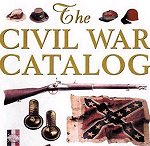 The Civil War Catalog More than 200 illustrations and restored photographs, all the weapons, uniforms, and implements of battle. Packed with color photos of insignia, medals, kits, paper ephemera, rare uniforms, and personal equipment for all enlisted ranks. |
Kindle Available Standard Catalog of Civil War Firearms Over 700 photographs and a rarity scale for each gun, this comprehensive guide to the thousands of weapons used by Billy Yank and Johnny Reb will be indispensable for historians and collectors. |
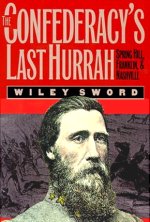 The Confederacy's Last Hurrah: Spring Hill, Franklin, and Nashville John Bell Hood rallied his demoralized troops and marched them off the Tennessee, desperately hoping to draw Sherman after him and forestall the Confederacy's defeat |
|
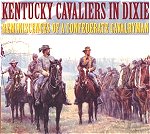 Kentucky Cavaliers in Dixie Reminiscences of a Confederate Cavalryman Mosgrove was born in Kentucky, in 1844, and enlisted in the Fourth Kentucky Cavalry Regiment on September 10, 1862. His eyewitness account illuminates the western theater of the Civil War in Kentucky, east Tennessee, and southwest Virginia |
Kindle Available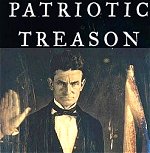 Patriotic Treason John Brown and the Soul of America The life of the first citizen committed to absolute racial equality. His friendships in defiance of the culture around him, He turned his twenty children into a dedicated militia. He collaborated with black leaders such as Frederick Douglass, Martin Delany, and Harriet Tubman to overthrow slavery. |
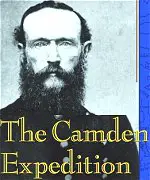 The Camden Expedition of 1864 and the Opportunity Lost by the Confederacy to Change the Civil War The Confederacy had a great opportunity to turn the Civil War in its favor in 1864, but squandered this chance when it failed to finish off a Union army cornered in Louisiana because of concerns about another Union army coming south from Arkansas. The Confederates were so confused that they could not agree on a course of action to contend with both threats, thus the Union offensive advancing from Arkansas saved the one in Louisiana and became known to history as the Camden Expedition. |
 A Stranger And a Sojourner: Peter Caulder, Free Black Frontiersman in Antebellum Arkansas An illiterate free black man, defied all generalizations about race as he served with distinction as a marksman in the U.S. Army during the War of 1812, repeatedly crossed the color line, and became an Arkansas yeoman farmer, thriving and respected by white neighbors until he fell victim of new discriminatory legislation on the eve of the Civil War |
|
 The Indians and the Civil War - Effects of the American Civil War on the Native American History Native American history has always been a study full of ambiguous points. Nowadays, when the outlived tribes still live on poor circumstances and try to keep step with our running world despairingly, their unique culture deserves more attention than used to. |
Kindle Available Civil War in the Indian Territory When the war broke out, both sides wanted the Five Civilized Tribes, led by the Cherokees, and each got around half. The Confederacy sent Brigadier General Albert Pike to recruit them, and he did a pretty good job. A strange, brilliant, man, Pike's career as a General is a minor footnote in his long life |
 The Cherokee Nation in the Civil War The Cherokee people, who had only just begun to recover from the ordeal of removal, faced an equally devastating upheaval in the Civil War. The Cherokee Nation, with its sovereign status and distinct culture, had a wartime experience unlike that of any other group of people |
 Black Flag: Guerrilla Warfare on the Western Border, 1861-1865: A Riveting Account of a Bloody Chapter in Civil War History The guerilla warfare along the Kansas-Missouri boarder brought forth some of the bloodiest incidents of the Civil War |
|
 The New York City Draft Riots: Their Significance for American Society and Politics in the Age of the Civil War For five days in July 1863, at the height of the Civil War, New York City was under siege. Angry rioters burned draft offices, closed factories, destroyed railroad tracks and telegraph lines, and hunted policemen and soldiers. Before long, the rioters also turned their murderous wrath against the black community |
 A Battlefield Atlas of the Civil War Informative text enhanced 24 three-color maps and 30 black/white historical photographs. |
 The Official Virginia Civil War Battlefield Guide Virginia was host to nearly 1/3rd of all Civil War engagements. This guide covers them all like a mini-history of the war. This guide organizes battles chronologically. Each campaign has a detailed overview, followed by concise descriptions of the individual engagements |
Kindle Available The Maps of First Bull Run: An Atlas of the First Bull Run (Manassas) Campaign, including the Battle of Ball's Bluff, June-October 1861 The Maps of First Bull Run breaks down the entire operation (and related actions) into numerous map sets or "action-sections" enriched with more than fifty full-color original full-page maps. These cartographic originals bore down to the regimental and battery level and include the march to and from the battlefield and virtually every significant event in between. |
|
 The Constitution of the Confederate States of America The original document consisted of five vellum sheest pasted together to form a scroll over twelve feet long. The original document was found at a train station in 1865 by Felix DeFontaine. In 1883, he sold the manuscript to Mrs. George Wymberley Jones DeRenne. In 1939, the DeRenne family sold the document to the University of Georgia |
 Shiloh and Corinth: Sentinels of Stone The brave deeds performed by soldiers of the North and South. Approximately 93 striking photographs and accompanying histories bring the battlefields to life, from Shiloh and Savannah, Tennessee, to Iuka and Corinth, Mississippi |
Kindle Available One Continuous Fight: The Retreat from Gettysburg and the Pursuit of Lee's Army of Northern Virginia The first detailed military history of Lee's retreat and the Union effort to catch and destroy the wounded Army of Northern Virginia Complimented with 18 original maps, dozens of photos, and a complete driving tour with GPS coordinates of the entire retreat |
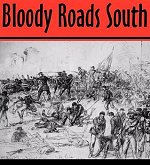 Bloody Roads South: The Wilderness to Cold Harbor, May-June 1864 This chronicles the great 1864 Overland Campaign, forty days that marked the end of the Civil War. In detail the battles in Virginia's Wilderness to the combat at Spotsylvania the trap laid by Lee at the North Anna River, to the killing ground of Cold Harbor |
|
|
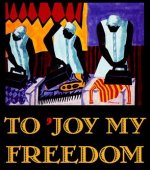 To 'Joy My Freedom: Southern Black Women's Lives and Labors after the Civil War Thousands of former slaves flocked to southern cities in search of work, they found the demands placed on them as wage-earners disturbingly similar to those they had faced as slaves: seven-day workweeks, endless labor, and poor treatment |
Kindle Available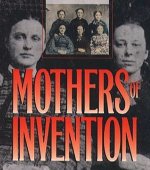 Mothers of Invention: Women of the Slaveholding South in the American Civil War When Confederate men marched off to battle, southern women struggled with the new responsibilities of directing farms and plantations, providing for families, and supervising increasingly restive slaves |
Kindle Available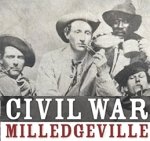 Civil War Milledgeville: Tales from the Confederate Capital of Georgia In the town of Milledgeville, Georgia--the state capital during the Civil War the actions of local soldiers and citizens alike tell a story that is unique to that locale. The division between combatant and civilian at the local level is not always clear. The often forgotten events and people that have shaped our larger understanding of the Civil War, from a womens riot to a confederate cavalry rescue. |
|
 Ironclads and Big Guns of the Confederacy : The Journal and Letters of John M. Brooke Information about the Confederate Navy's effort to supply its fledgling forces, the wartime diaries and letters of John M. Brooke tell the neglected story of the Confederate naval ordnance office, its innovations, and its strategic vision. |
Kindle Available Six Years of Hell Harpers Ferry During the Civil War While Harpers Ferry was an important location during the Civil War, in most Civil War books it's a sideshow of something larger. John Brown's raid, Lee's invasions of 1862 & 1863 as well as Early's 1864 raid are all covered in depth |
 Struggle for the Heartland: The Campaigns from Fort Henry to Corinth The military campaign that began in early 1862 with the advance to Fort Henry and culminated in late May with the capture of Corinth, Mississippi. The first significant Northern penetration into the Confederate west |
Kindle Available John Hunt Morgan and His Raiders The "Thunderbolt of the Confederacy" John Hunt Morgan from Tompkinsville, Kentucky to Greeneville, Tennessee. |
|
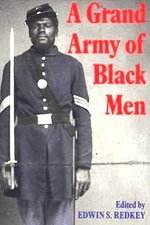 A Grand Army of Black Men: Letters from African-American Soldiers in the Union Army 1861-1865 Almost 200,000 African-American soldiers fought for the Union in the Civil War. Although most were illiterate ex-slaves, several thousand were well educated, free black men from the northern states |
 Where the South Lost the War: An Analysis of the Fort Henry-Fort Donelson Campaign The war probably could have been over in 1862 had Lieutenant Phelps destroyed the bridge at Florence. Not doing so provided a retreat for A. S. Johnston to move his men to Corinth and then to Shiloh |
 Lee's Cavalrymen: A History of the Mounted Forces of the Army of Northern Virginia, 1861-1865 The cavalry of the Army of Northern Virginia its leadership, the military life of its officers and men as revealed in their diaries and letters, the development of its tactics as the war evolved, and the influence of government policies on its operational abilities. All the major players and battles are involved |
 War in Kentucky: From Shiloh to Perryville Union gains in the Mississippi Valley and in Tennessee and Kentucky had brought the Confederacy to a point of crisis. This addition to the literature on the Civil War in the West tells how the Union then failed to press home its advantage while the Confederacy failed to force Kentucky into the Confederacy |
|
The Battle of the Wilderness May 5-6, 1864 Fought in a tangled forest fringing the south bank of the Rapidan River, the Battle of the Wilderness marked the initial engagement in the climactic months of the Civil War in Virginia, and the first encounter between Ulysses S. Grant and Robert E. Lee |
 To the North Anna River: Grant and Lee, May 13-25, 1864 Spectacular narrative of the initial campaign between Ulysses S. Grant and Robert E. Lee in 1864. May 13 through 25, was critical in the clash between the Army of the Potomac and the Army of Northern Virginia. |
 Grant's Secret Service: The Intelligence War from Belmont to Appomattox The first scholarly examination of the use of military intelligence under Ulysses S. Grant's command during the Civil War. Feis makes the new and provocative argument that Grant's use of the Army of the Potomac's Bureau of Military Information played a significant role in Lee's defeat |
Kindle Available Men of Fire: Grant, Forrest, and the Campaign That Decided the Civil War In the winter of 1862, on the border between Kentucky and Tennessee, two extraordinary military leaders faced each other in an epic clash that would transform them both and change the course of American history forever |
|
 Encyclopedia of the American Civil War: A Political, Social, and Military History Definitive Reference Work, this volume, rich with over 500 illustrations, 75 maps, and 250 primary source documents, offers more than 1,600 entries that chart the war's strategic aims, analyze diplomatic and political maneuvering, describe key military actions, sketch important participants, assess developments in military science, and discuss the social and financial impact of the conflict. |
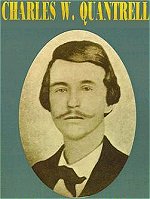 Charles W. Quantrell A True History Of His Guerilla Warfare On The Missouri And Kansas Border During The Civil War Of 1861-1865 This book was written just as Captain Harrison Trow told it to John P. Burch, giving accounts of fights that he participated in, narrow escapes experienced, dilemmas it seemed almost impossible to get out of, and also other battles |
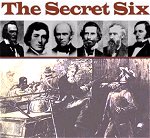 Secret Six: The True Tale of the Men Who Conspired with John Brown The story of how Brown was covertly aided by a circle of prosperous and privileged Northeasterners who supplied him with money and weapons, and, before the raid, even hid him in their homes while authorities sought Brown on a murder charge. These men called themselves the Secret Six. |
 The Shipwreck of Their Hopes The Battles for Chattanooga All the information you need to understand the flow of the battle at Chattanooga as well as the political intriguing that helped to shape the results is here |
|
 Journal Of Rufus Rowe Witness To The Battle Of Fredricksburg Witness the raw carnage of war; the dead horses, the deafening boom of cannon and gun fire, the exhaustion and hunger, soldiers stripping clothes and items off dead soldiers, truces agreed upon too bury the dead |
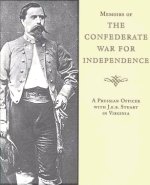 Memoirs of the Confederate War for Independence This is a wonderful memoir of the author's year and half of active service on the staff of the legendary Confederate cavalry General, J. E. B. Stuart. |
Kindle Available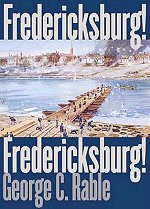 Fredericksburg! Fredericksburg! A stunning defeat for the Union. Confederate Robert E. Lee suffered roughly 5,000 casualties but inflicted nearly 13,000--on his opponent, General Ambrose Burnside. |
Kindle Available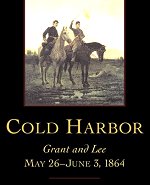 Cold Harbor Grant and Lee May 26-June 3, 1864 The spring 1864 campaignwhich pitted Ulysses S. Grant against Robert E. Lee for the first time in the Civil War |
|
 Guide to the Vicksburg Campaign U.S. Army War College Guides to Civil War Battles Army War College Examines an entire campaign, looking at many interlinked battles and joint Army-Navy operations as they played out over seven months and thousands of square miles |
Kindle Available A South Divided: Portraits of Dissent in the Confederacy An account of Southern dissidents in the Civil War, at times labeled as traitors, Tories, deserters, or mossbacks during the war and loyalists, Lincoln loyalists, and Unionists by historians of the war |
 Discovering the Civil War in Florida A Reader and Guide While Confederates fought to preserve their sovereignty and way of life, Union troops descended on Florida with a mission to cripple the Confederacy: to destroy seashore salt works, to prevent the transfer of supplies and raw materials into, and to seize slaves and cattle |
 Season of Fire The Confederate Strike on Washington The Confederacy's last effort to do something meaningful by trying to attacked Washington DC. The Confederate forces came pretty close to success. The battle at Monocacy River and fighting in the District of Columbia where President Lincoln came under fire at Fort Stevens |
|
Kindle Available Children and Youth during the Civil War Era The experience of children and youth during that tumultuous time remains a relatively unexplored facet of the conflict. Children and Youth During the Civil War Era seeks a deeper investigation into the historical record by giving voice and context to their struggles and victories |
Kindle Available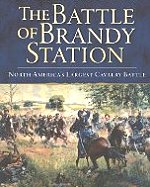 The Battle of Brandy Station North America's Largest Cavalry Battle Just before dawn on June 9, 1863, Union soldiers materialized from a thick fog near the banks of Virginia's Rappahannock River to ambush sleeping Confederates. The ensuing struggle, which lasted throughout the day, was to be known as the Battle of Brandy Station the largest cavalry battle ever fought on North American soil. |
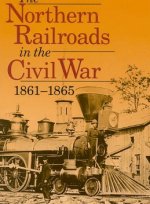 The Northern Railroads in the Civil War, 1861-1865 Account of the impact of the railroads on the American Civil War and vice versa. How the North was helped to victory through its effective use of the rails, also how the war changed the way railroads were built, run and financed after the war. |
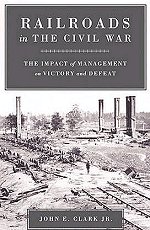 Railroads In The Civil War: The Impact Of Management On Victory And Defeat By the time of the Civil War, the railroads had advanced to allow the movement of large numbers of troops even though railways had not yet matured into a truly integrated transportation system. |
|
 Rebel Boast First at Bethel, Last at Appomattox Based on the stories of 5 men who enlisted in the Confederate Army to fight for what they believed. Where did they go? How did they feel? What did they do day to day? What did they see? How did they live and die? Nominated for a Pulitzer in 1956 |
 Civil War in the American West An accurate and detailed history of the Western Theater of the Civil War, which was largely forgotten by history. He was one of the first historians to fully understand the impact that California had on the war as he gives an accounting of the Federal raid on the Dan Showalter Ranch in San Bernadino on October 5, 1861. |
 "We Shall Meet Again": The First Battle of Manassas (Bull Run), July 18-21, 1861 The First Battle of Manassas claimed the lives of approximately 878 soldiers and wounded another 2,489. With a battlefield stretching nearly five miles, 15,000 Union and 14,000 Confederate soldiers clashed for four fateful days, many of them young and terrified and receiving their first taste of a long and bitter war |
 The American Indian in the Civil War 1862-1865 The 1862 Battle of Pea Ridge, a bloody disaster for the confederates but a glorious moment for Colonel Stand Watie and his Cherokee Mounted Rifles. The Indians were soon enough swept by the war into a vortex of confusion and chaos. |
|
Kindle Available Battle of Monroe's Crossroads and the Civil War's Final Campaign Detailed tactical narrative of this important but long-forgotten battle, and places it in its proper context within the entire campaign. Author Eric Wittenberg study features 28 original maps and 50 illustrations. Finally, an author of renown has brought to vivid life this overlooked portion of the Carolinas Campaign |
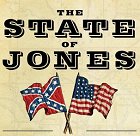 The State of Jones Mississippi's Longest Civil War A true story about the South during the Civil War ”the real South". Not the South that has been mythologized in novels and movies, but an authentic, hardscrabble place where poor men were forced to fight a rich man's war for slavery and cotton. In Jones County, Mississippi, a farmer named Newton Knight led his neighbors, white and black alike, in an insurrection against the Confederacy at the height of the Civil War. |
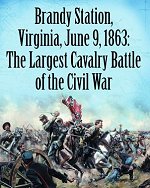 Brandy Station Virginia, 1863: Major General Joseph "Fighting Joe" Hooker. |
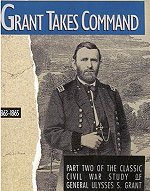 Grant Takes Command 1863 - 1865 A revelatory portrait of Ulysses S. Grant and the dramatic story of how the war was won. |
|
Kindle Available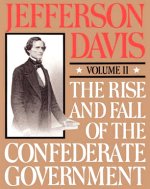 The Rise and Fall of the Confederate Government Jefferson Davis' point of view is essential to understanding the causes of the Civil War. |
 Confederate Military History Of North Carolina: North Carolina In The Civil War, 1861-1865 At the Battle of Big Bethel, North Carolina experienced the first Confederate casualty of the War. Field officers and privates discuss their unit's skirmishes and battles. Included are diaries and memoirs from unit historians; underscoring the veracity of their fighting history |
 Prelude to Civil War: The Nullification Controversy in South Carolina From 1816 to 1836 planters of the Palmetto State tumbled from a contented and prosperous life to a world rife with economic distress, guilt over slavery, and apprehension of slave rebellion. Compelling details ofhow this reversal of fortune led the political leaders down the path to states rights doctrines |
Kindle Available Naval Strategies of the Civil War: Confederate Innovations and Federal Opportunism Compare and contrast the strategies of the Southern Secretary of the Navy, Mallory, against his rival in the North, Welles. Mallory used technological innovation and the skill of individuals to bolster the South's seapower against the Union Navy's superior numbers |
|
Kindle Available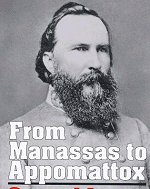 From Manassas to Appomattox: General James Longstreet According to some, he was partially to blame for the Confederate defeat at Gettysburg; according to others, if Lee had followed Longstreet's advice, they would have won that battle. He has been called stubborn and vain; and he has been lauded as one of the greatest tacticians of the Civil War |
Struggle for the Heartland: The Campaigns from Fort Henry to Corinth The military campaign that began in early 1862 with the advance to Fort Henry and culminated in late May with the capture of Corinth, Mississippi. The first significant Northern penetration into the Confederate west |
 The Railroads of the Confederacy The story of the first use of railroads on a major scale in a major war. A complex and fascinating tale, with the railroads of the American South playing the part of tragic hero in the Civil War: at first vigorous though immature; then overloaded, driven unmercifully, starved for iron; and eventually worn out |
 Decision in the Heartland The Civil War in the West The western campaigns cost the Confederacy vast territories, the manufacturing of Nashville, the financial center of New Orleans, communication hub Corinth, Chattanooga, and Atlanta, along with the breadbasket of the Confederacy. |
|
Kindle Available Civil War on the Western Border, 1854-1865 Fanatical politics of the western frontier, immigrant abolitionists with loaded Spencer rifles funded by mysterious personages back East, cut-throats, gin heads and horse thieves, colorful character descriptions |
 Bitter Fruits Of Bondage: The Demise Of Slavery And The Collapse Of The Confederacy, 1861-1865 The process of social change initiated during the birth of Confederate nationalism undermined the social and cultural foundations of the southern way of life built on slavery, igniting class conflict that ultimately sapped white southerners of the will to go on. |
Kindle Available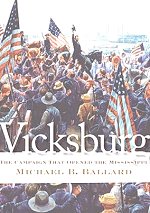 Vicksburg: The Campaign That Opened the Mississippi Confederate troops surrendered Vicksburg on July 4, 1863 a crucial port and rail depot for the South was lost |
Kindle Available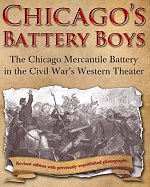 CHICAGO'S BATTERY BOYS Organized in 1862 as part of John McClernand's 13th Corps, the battery participated in the arduous Vicksburg campaign. The artillerists performed well everywhere, Chickasaw Bluffs, Port Gibson, Champion Hill, Big Black River, and the siege of Vicksburg |
|
 No Better Place to Die The Battle of Stones River The forces of Braxton Bragg came very close to victory. But the star-crossed Confederate general ended up withdrawing, leaving Rosecrans' Union forces to claim victory by holding the field of battle |
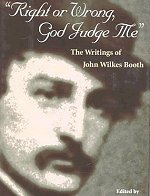 Right or Wrong, God Judge Me The Writings of John Wilkes Booth Collection of the writings of John Wilkes Booth constitutes a major new primary source that contributes to scholarship on Abraham Lincoln, the Civil War, and nineteenth-century theater history. The nearly seventy documents--more than half published here for the first time--include love letters written during the summer of 1864 |
 The Beginning and the End: The Civil War Story of Federal Surrenders Before Fort Sumter and Confederate Surrenders After Appomatox Surrenders continued for months after Appomattox. The background of Johnston's surrender in North Carolina, Taylor's in Alabama , Jones's in Florida, the same day that Davis was captured—and Kirby-Smith's, west of the Mississippi |
||
Kindle Available The Waterman's Song: Slavery and Freedom in Maritime North Carolina Chronicles the world of slave and free black fishermen, pilots, rivermen, sailors, ferrymen, and other laborers who, from the colonial era through Reconstruction, plied the vast inland waters of North Carolina from the Outer Banks to the upper reaches of tidewater rivers |
Lee's Cavalrymen: A History of the Mounted Forces of the Army of Northern Virginia, 1861-1865 The cavalry of the Army of Northern Virginia its leadership, the military life of its officers and men as revealed in their diaries and letters, the development of its tactics as the war evolved, and the influence of government policies on its operational abilities. All the major players and battles are involved |
 Extraordinary Circumstances The Seven Days Battles One of the most decisive military campaigns in Western history, the Seven Days were fought in the area southeast of the Confederate capitol of Richmond from June 25 to July 1, 1862 |
 This Terrible Sound The Battle of Chickamauga Study of the great bloody battle of Chickamauga that was the last great offensive, although costsly, victory by the Confederates. This is a detailed account of the movements of regiments, brigades, divisions |
Young Reader Selections
Women Subject Reference Books
American Civil War Exhibits
Civil War Timeline
Documents of the Civil War
Civil War Naval Resources
Civil War Summary
| Search AmericanCivilWar.com |
| Enter the keywords you are looking for and the site will be searched and all occurances of your request will be displayed. You can also enter a date format, April 19,1862 or September 1864. |
Kindle Available Don't Know Much About the Civil War by Kenneth C. Davis Everything You Need to Know About America's Greatest Conflict but Never Learned |
This fresh look at America's greatest conflict will dispel all those misconceptions you acquired by watching "Gone With the Wind". Davis has a genius for bringing history to life, sorting out the players, the politics and the key events -- Harpers Ferry, Shiloh, Gettysburg, Emancipation, Reconstruction -- in a way that will enlighten even the most dedicated back-of-the-class napper. A brilliant crash course, this book vividly brings to life the people -- from Dred Scott to Abraham Lincoln -- and the everyday details that make up History with a capital H. |
 The Civil War : A Narrative by Shelby Foote Fort Sumter to Perryville Fredericksburg to Meridian Red River to Appomattox |
This beautifully written trilogy of books on the American Civil War is not only a piece of first-rate history, but also a marvelous work of literature. Shelby Foote brings a skilled novelist's narrative power to this great epic. Many know Foote for his prominent role as a commentator on Ken Burns's PBS series about the Civil War. These three books, however, are his legacy. His southern sympathies are apparent: the first volume opens by introducing Confederate President Jefferson Davis, rather than Abraham Lincoln. But they hardly get in the way of the great story Foote tells. This hefty three volume set should be on the bookshelf of any Civil War buff. |
 The Railroads of the Confederacy by: Robert C. Black, Robert C. III Black |
The Railroads of the Confederacy tells the story of the first use of railroads on a major scale in a major war. Robert Black presents a complex tale, with the railroads of the American South playing the part of tragic hero in the Civil War: at first vigorous though immature; then overloaded, driven unmercifully, starved for iron; and eventually worn out - struggling on to inevitable destruction in the wake of Sherman's army, carrying the Confederacy down with them. With maps of all the Confederate railroads and contemporary photographs and facsimiles of such documents as railroad tickets, timetables, and soldiers' passes, the book will captivate railroad enthusiasts as well as readers interested in the Civil War. |
 Photographic History of the Civil War by William C. Davis, Vicksburg to Appomattox Fighting for Time The South Besieged The End of an Era |
This picture and reference book provides many of the often searched for pictures that have previously been lost in the Library of Congress |
 Grant Rises in the West by Kenneth P. Williams From Iuka to Vicksburg, 1862-1863 |
Paperback - 654 pages University of Nebraska June 1997 |
 'The Damned Red Flags of the Rebellion' by Richard Rollins The Confederate Battle Flag at Gettysburg |
This is the first and foremost book on the subject of the Confederate battle flags. Not only does it provide a very detailed look at the flags lost at Gettysburg but, it also gives a true relationship of the men and their flags and what it meant to them. It is a book all people, who look at the Condeferate Flag either as a symbol of hate or one of a heritage long past, should read. It places the flag and the people surrounding it in their proper light. It tells the concise story of how the flag came to be, it military as well as social place in the American Civil War and in this country's heritage. |
 After Appomattox by Stetson Kennedy How the South Won the War |
"A fascinating study of the failure of Reconstruction. . . . This lively and compelling account of the tragedy of Reconstruction is a useful volume which clearly makes its point and deserves to be read by novices as well as those familiar with the subject. Kennedy uses a variety of sources and successfully argues that although the South lost on the battlefield, they won the war during Reconstruction." |
Kindle Available Escape from Slavery by: Frederick Douglass, Michael McCurdy The Boyhood of Frederick Douglass in His Own Words |
With the power of his words and the truth of his own experience, Frederick Douglass dramatized the abomination of slavery and the struggle of a young man to break free. In this shortened version of Douglass' 1845 autobiography, McCurdy has done a splendid job of bringing the Narrative of the Life of Frederick Douglass to middle-grade readers. |
 Frederick Douglass by: David B. Chesebrough Oratory from Slavery Great American Orators, No. 26 |
Frederick Douglass, once a slave, was one of the great 19th century American orators and the most important African American voice of his era. This book traces the development of his rhetorical skills, discusses the effect of his oratory on his contemporaries, and analyzes the specific oratorical techniques he employed. |
 Battle on the Bay: The Civil War Struggle for Galveston |
First detailed study of a Texas city during the Civil War. At the end of the war, Galveston was the last major port in Confederate hands. Its story is dramatic and one of the great untold stories of the war. A must for anyone interested in the Trans-Mississippi department as well as the serious collector. Civil War history of Galveston is one of the last untold stories from America's bloodiest war, despite the fact that Galveston was a focal point of hostilities throughout the conflict. Galveston emerged as one of the Confederacy's only lifelines to the outside world. |
 Antietam The Soldiers Battle |
Synopsis : A historian tells of this bloody Civil War battle from an entirely new point of view: that of the common enlisted man. Seventy-two detailed maps describe the battle in both hourly and quarter-hourly formats. 37 rare photos.
As the book runs from anectdote to anectdote, the reader is able to get a clearer picture of the battle and what happened there. As a Civil War Reenactor, my unit fought at Antietam, and the anectdotes helped me to be more realistic in my impression. |
 Days of Defiance by Maury Klein Sumter, Secession, and the Coming of the Civil War |
Military History Editor's Recommended Book Maury Klein's knack for words shows up on the first page of this book: "How could the oldest, deadliest, most divisive conflict of a proud nation come down, after decades of bitter strife, to a dispute over an insignificant fort squatting on a hunk of rock in the harbor of the South's oldest and most defiant city?" Klein, a history professor at the University of Rhode Island, goes on to answer this question in lively prose. The Fort Sumter saga, of course, has been told well by others, but Klein makes the tale worth reading again. |
 The Alabama and the Kearsarge by William Marvel The Sailor's Civil War Civil War America |
|
Books Civil War Womens Subjects Young Readers Military History DVDs Confederate Store Civil War Games Music CDs |