
Base Ball, Dice, and Music: 7 Camp Pastimes

Silas Weaver
Silas Weaver has spent decades exploring historic battlefields, reading primary journals, and tracking down the lesser-known stories of the American Civil War. His lifelong passion for 19th-century history comes through in his engaging accounts of the places, people, and lingering questions of the era. He believes that walking the actual grounds where history happened is the best way to truly connect with the past.
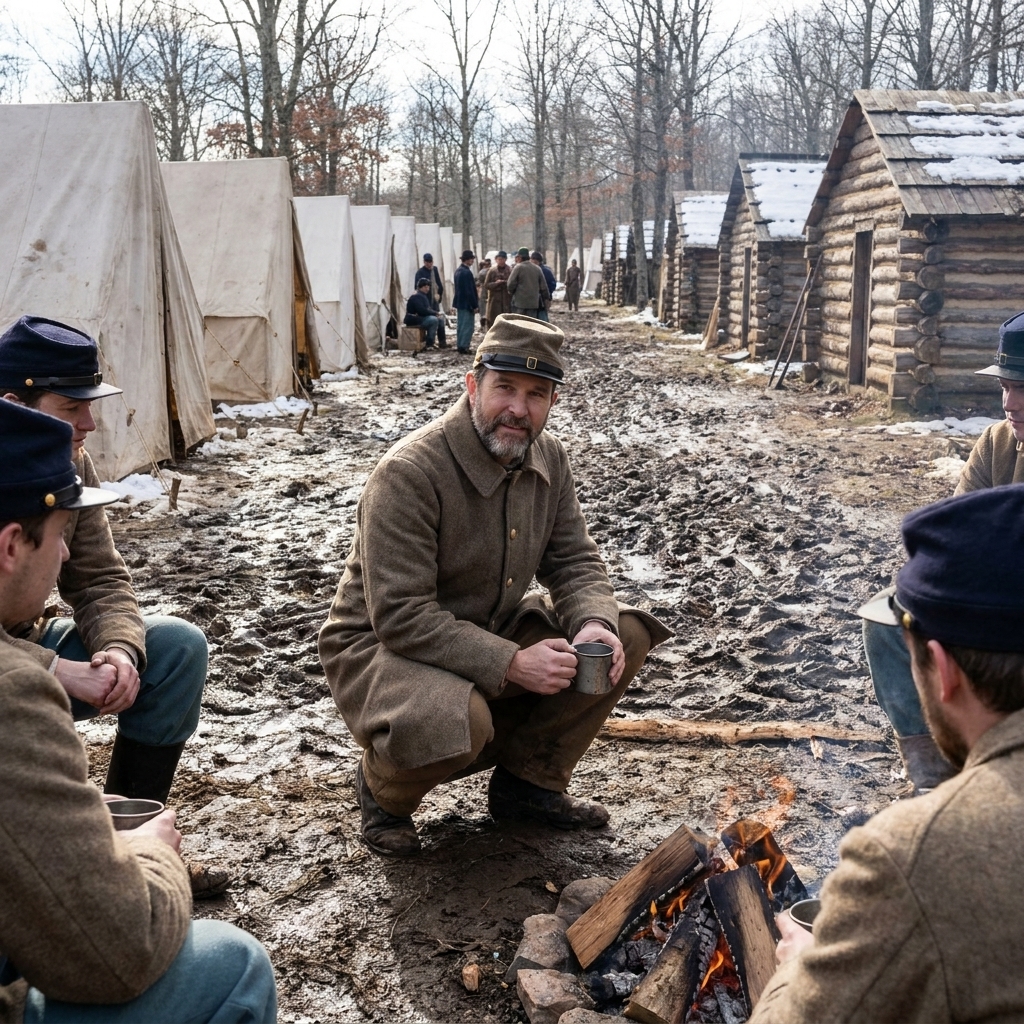
I have walked plenty of battlefields where the cannon smoke is long gone, but the quiet still feels crowded. Not with charges and countercharges, but with waiting. When you stand in the low winter light at a place like a ridgeline outside town, it is easier to imagine the hours that were not spent fighting. Much of a Civil War soldier’s life, especially between campaigns, was camp life: drills, fatigue duty, guard details, and long stretches of plain old time to fill.
That is where the small things come in. A bat carved from scrap wood. A handful of dice clicking on a drum head. A fiddle that has survived rain, mud, and a march that would break most of us in a day. In winter quarters especially, when armies hunkered down and the days grew short, recreation was not fluff. It was survival. Here are seven of the most common ways soldiers kept their minds from spiraling, and their morale from freezing solid.
1) Base ball and other ball games
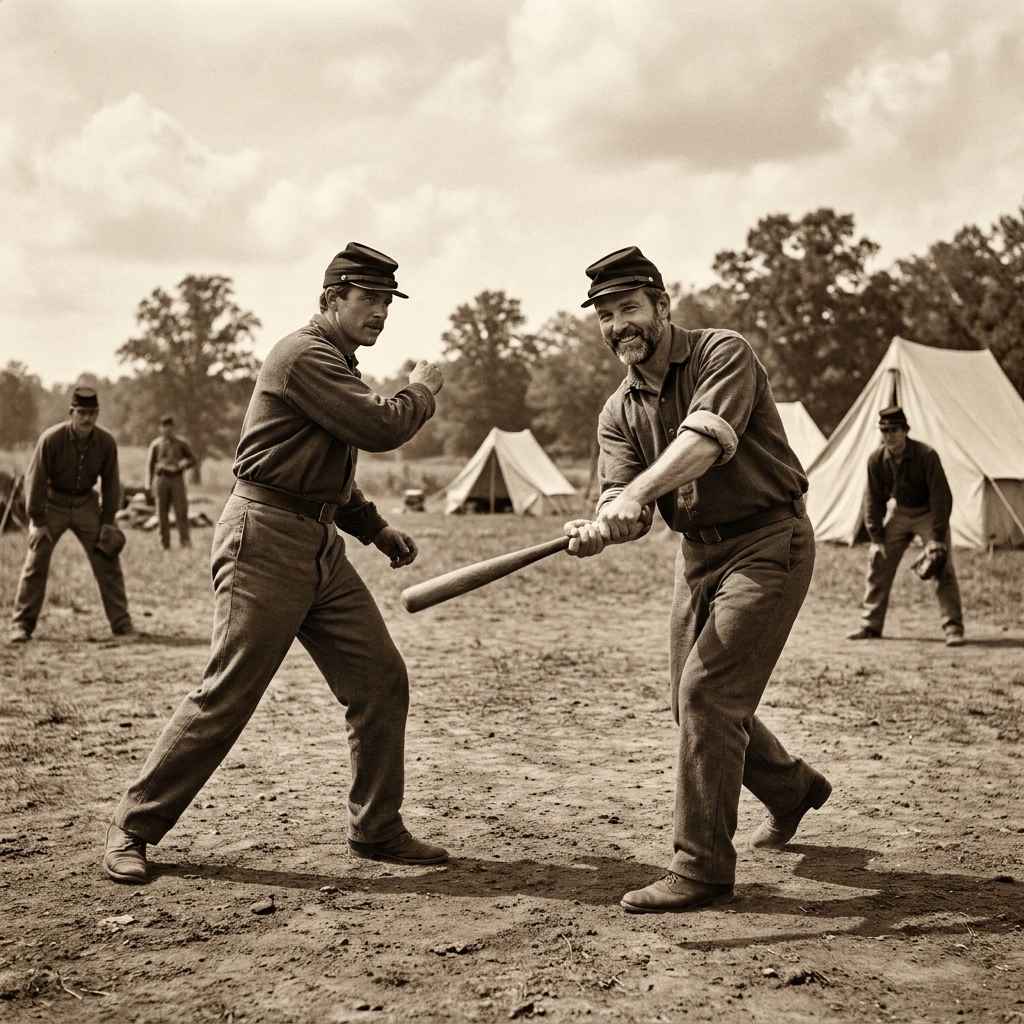
Yes, soldiers played base ball, and not just as a novelty. You will often see the period spelling as two words, and you will see the sport described in letters the same casual way a man might mention coffee or firewood. The more organized, city-bred versions were especially strong in the North before the war, but older bat-and-ball games were familiar across regions too. Once men were in uniform together, those traditions blended, and the rules could bend from regiment to regiment.
Equipment was rarely official. A bat could be turned on a lathe if one was handy, but just as often it was a smoothed branch. Balls might be purchased, mailed from home, or stitched up by somebody in the company with a steady hand. Games broke out on any flat patch of ground, often with crowds forming quickly, because spectators needed entertainment as much as the players did.
Base ball also did something quietly important: it made strangers into teammates. In a war that constantly shuffled men through sickness, detachments, and replacements, shared games helped rebuild unit cohesion without a sergeant barking at anyone.
2) Cards, especially euchre and poker
If you could pack one small luxury and still carry your musket, a deck of cards was a strong candidate. Card games were everywhere, in both armies, in good weather and bad. Diaries and letters mention them so often that they start to feel like part of the furniture. A few men squatting on their heels could create a little island of focus in the middle of a loud camp.
Euchre shows up frequently, especially among Union troops from the Old Northwest, and poker turns up with regularity too, sometimes in officer circles, sometimes among enlisted men with a little cash to risk. Sometimes soldiers played for nothing but pride. Often they played for money, hardtack, tobacco, or whatever small currency a camp economy was using at the moment.
Officers fretted about gambling, and chaplains preached against it, but moral scolding did not erase the simple fact that cards were portable, familiar, and endlessly replayable. A soldier might not have control over much, but he could control how he played a hand.
One caution worth remembering when we picture this: the stakes were not always lighthearted. Payday and bounty money could vanish fast. So could tempers. Cards provided relief, but they also brought friction, and commanders sometimes had to step in when “friendly” games turned sharp.
3) Dice and quick games of chance
Dice were even simpler than cards. A pair of small cubes, often wood and sometimes bone, could live in a pocket for months. Toss them on a knapsack, a drum head, or a flat board, and you had instant entertainment. Soldiers played a range of dice games, and like cards, the line between “passing time” and “gambling” was thin.
Dice games had a particular camp logic. They could be fast. They could be loud and funny. They could include spectators. And they worked when men were too tired for anything else. A soldier who had just come off picket duty might not have the energy to sing, but he might still lean in for one more roll.
When you read letters and diaries, you notice how often boredom is described as its own enemy. Dice were a small weapon against that enemy. Not noble, not poetic, just effective.
4) Music: fiddles, banjos, brass, and songs
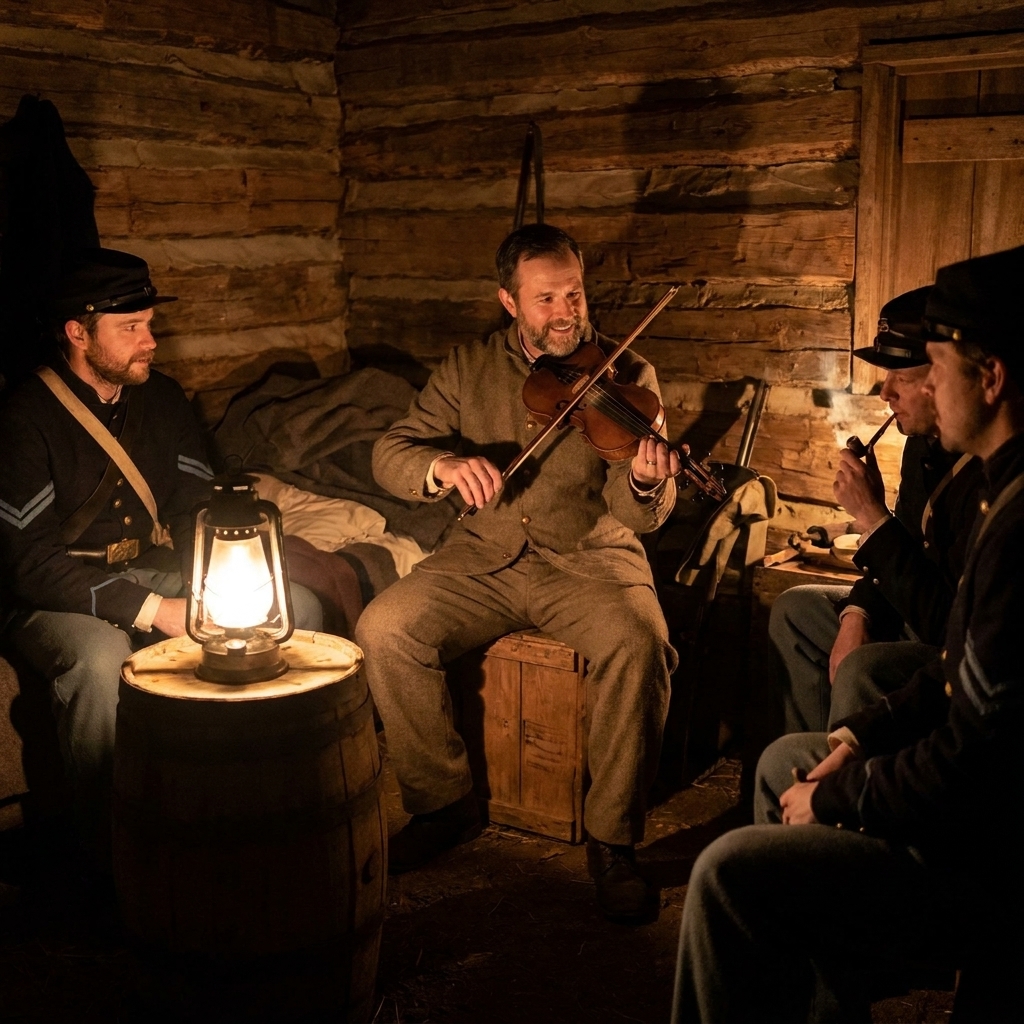
Music may have been the most powerful camp pastime of all because it did not require everyone to participate the same way. A few could play while dozens listened. A song could pull a scattered group into a single mood in under a minute.
The instruments varied by unit and by luck. Fiddles and banjos were common, and you also find flutes, fifes, and battered guitars. Where bands were available, especially in many Union regiments early in the war, brass music became part of the public rhythm of camp, turning up at dress parade, reviews, and special occasions. Even when a formal band was not present, companies often scraped together enough talent to make their own little orchestra.
The repertoire mixed the sentimental with the comic. Men sang about home, about sweethearts, about marching, about food, about generals, and about the sheer absurdity of soldiering. Songs changed lyrics the way rivers change banks. A tune that started as a parlor piece could become a biting camp parody by the end of the week.
Music mattered in winter quarters because it could fill the long dark. A fiddle inside a log hut, with snow ticking against the roof, did more than entertain. It reminded men they were still human.
5) Letter writing, reading, and newspapers
If you picture recreation as only games and noise, camp reading can surprise you. A great many soldiers read whenever they could. Some men carried pocket Bibles, hymnals, and small books. Others relied on newspapers that circulated through camp like prized contraband, passed hand to hand until the pages tore.
Letter writing was its own kind of ritual. Soldiers wrote on anything available, with whatever ink they could find, sometimes resting paper on a knee or a mess chest. It was not simply reporting the news. It was anchoring the self. When a man wrote to his wife, his mother, or a brother back home, he was temporarily stepping outside the army’s machinery and reclaiming a private life.
Reading and letters also built community. Men who could write well helped those who could not, composing messages home or reading replies aloud. That shared intimacy often does not show up in the marble monuments, but it lived in the huts and tents.
If you want a wider look at daily routines beyond recreation, I keep a running primer in our Civil War Life guide.
6) Chess, checkers, and carved games
Not every soldier wanted games of luck. Some preferred games of patience and skill, and camps produced plenty of those. Checkers and chess appear again and again in personal accounts. Boards could be bought, but they were just as often improvised, scratched into wood with a knife point or painted onto a crate top.
Pieces might be whittled from wood, cut from bone, or fashioned from whatever materials were lying around. A soldier who could carve even a little bit had value in camp. He could make a pipe, repair a tool handle, or produce a checker set that would occupy a dozen evenings.
These quiet games were well suited to winter quarters. A man could sit close to a stove, keep his hands warm, and do battle that ended with a laugh instead of a casualty list.
That same whittling instinct shows up in more practical objects too. If you are curious about the personal tools and sidearms men carried and cared for, you might enjoy Swords, Revolvers, and Steeds.
7) Theater, stories, and camp humor
When you pack thousands of young men into a camp, they will invent their own entertainment. Some units put on full skits and comic shows, complete with costumes scavenged from sutlers, cast-off uniforms, and whatever could be begged from civilians. In a number of camps, men also staged minstrel performances, usually in blackface, reflecting the era’s racist entertainment culture even as soldiers treated it as ordinary diversion. Other groups kept it simpler: a few good storytellers, a circle of listeners, and the kind of jokes that only make sense when you are cold, underfed, and trying not to think too hard about tomorrow.
Camp theater could be surprisingly elaborate, especially in large winter camps where men had time to build stages and gather props. It also served a social purpose. A performance gave soldiers something to anticipate, talk about, and laugh over.
Humor in letters from the front can feel jarring to modern readers, but it should not. Laughter was not proof men were untouched by war. Often it was proof they were trying, day by day, not to be crushed by it.
What winter quarters changed
Winter quarters did not turn the war off, but it changed the rhythm. Armies built more permanent shelters, organized camp streets, and settled into routine. With routine came predictable pockets of free time, and with free time came a richer camp culture. A regiment that might be half-scattered during a summer campaign could, in winter, become a small town with its own pastimes, feuds, and local celebrities.
Those months could still be miserable. Sickness cut through camps. Rations ran thin. Mud swallowed boots. But that is exactly why these pastimes mattered. A ballgame, a hymn, a chess match, or a letter from home could make a soldier feel briefly like something other than a piece in an enormous, grinding machine.
Two other corners of camp life are worth keeping in mind even if you do not file them under “recreation.” Sutlers, where available, turned shopping into a kind of pastime, with men browsing for coffee, sweets, stationery, and small comforts. And religious meetings, whether formal services or an impromptu prayer circle in a tent, offered structure, community, and calm when the days felt too long.
Noticing camp life on a visit
Most battlefields interpret combat first, understandably. Still, you can spot traces of the quieter life if you slow down.
- Look for flat ground near water. Camps gathered where cooking and washing were possible.
- Pay attention to tree lines and slight rises. Men preferred a bit of cover from wind and a better view of approaches.
- Imagine the soundscape. Not just drums and bugles, but singing, laughter, axe blows, and the steady murmur of a crowded camp.
- Bring children into it. Ask what game they would invent with only a stick, a string, and a few friends. That question opens doors. For more ideas, see How to Keep Kids Engaged on a Civil War Battlefield Trip.
And if you are planning a trip that mixes battlefield walking with time to read markers and really absorb a place, start with Plan a Civil War Battlefield Day.