
Sutlers and Greenbacks: How Civil War Soldiers Spent Their Pay

Silas Weaver
Silas Weaver has spent decades exploring historic battlefields, reading primary journals, and tracking down the lesser-known stories of the American Civil War. His lifelong passion for 19th-century history comes through in his engaging accounts of the places, people, and lingering questions of the era. He believes that walking the actual grounds where history happened is the best way to truly connect with the past.
The first time I stood inside a preserved earthwork at Petersburg, I tried to picture a soldier doing something ordinary in a place built for the extraordinary. Not firing. Not charging. Just counting money with dirty fingers, maybe tearing open a letter from home, maybe weighing whether a plug of tobacco was worth the price a sutler was asking today.
It is easy to think of Civil War armies as fed and equipped only by governments. But the truth on the ground was messier and more human. Men were paid, sometimes on time and often not. They carried a mix of currency in their heads and pockets: paper from the paymaster, coin when they could get it, and sometimes credit scratched in a sutler’s book. And they spent money where soldiers have always spent it: on comfort, on pride, on small pieces of home, and occasionally on trouble.
What a Civil War private earned
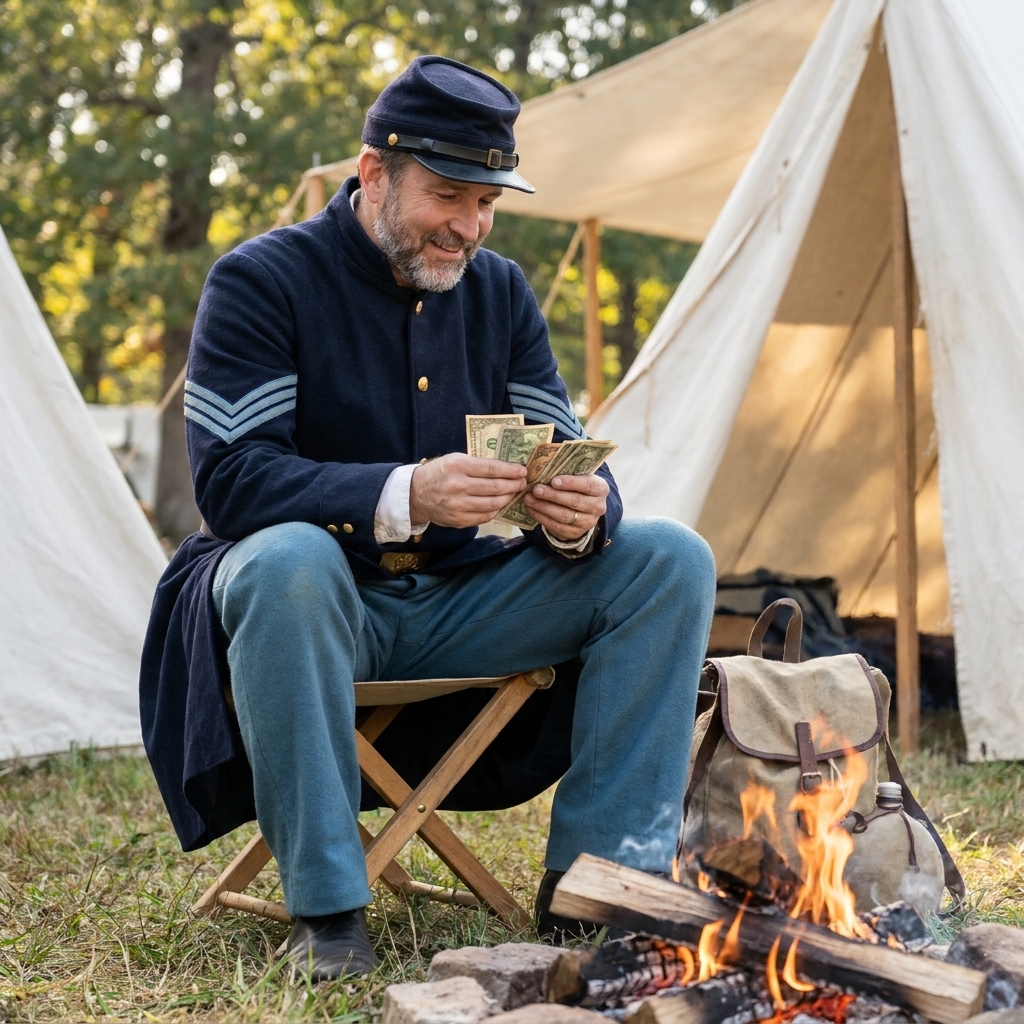
For most enlisted men, the baseline is simple to remember: a Union private’s pay was $13 a month through most of the war. That rate was raised to $16 late in the war, in 1864, as the fighting pushed into its final, grinding phase. Even then, a stated rate was not always the same as what a man actually carried away, because stoppages and deductions could take a bite out of the total.
Confederate enlisted pay was often set at nominal rates that looked roughly comparable on paper early on, but in practice it was far less dependable as the Southern economy strained and then collapsed into runaway inflation.
Those numbers sound small now, but they mattered then. A few dollars could mean writing paper, a pair of socks that were not government issue, a tin of oysters, or a pocketknife. It could also mean sending money home, which many men tried hard to manage even when they went without.
Pay changed by rank and role
Rank brought higher wages, and it did not take much promotion to change a man’s monthly outlook. A corporal or sergeant could earn a few dollars more than a private, and officers were in a different world of pay entirely. Specialist roles and extra duties could also affect what a man actually took home.
If you want broader context on how soldiers lived day to day, including what the army did and did not reliably provide, our Civil War Life guide is a good next stop.
How payday worked in camp
Payday was not a neat monthly ritual with every man stepping up to a table like clockwork. Soldiers were often paid late, sometimes very late, then paid in a lump that could disappear fast.
The paymaster and the paperwork
Union pay typically arrived through a paymaster who traveled to the army. Companies were called, names checked, amounts calculated, deductions applied, and then cash (usually paper notes) was counted out. When armies were moving, when records were tangled, or when battles interrupted everything, pay could be postponed for months. A long stretch without pay did not just pinch. It encouraged debt, tempted men to sell personal items, and made them more vulnerable to harsh pricing when money finally arrived.
Deductions and stoppages
Even when a man was “paid,” it was not always the full amount. Uniform items, lost equipment, fines, or debts could be stopped from pay. A soldier might have a month’s wage in his head and only a portion in his hand.
And then there is the simplest fact of human nature: men who have been broke a long time tend to spend quickly once coins finally clink in the palm.
Greenbacks, coin, and Confederate paper
To understand how soldiers spent their pay, you have to know what kind of money they trusted, and what merchants would accept.
Union greenbacks
The term “greenbacks” refers to United States Notes first issued during the war. Specie payments were suspended and the notes traded against gold, which meant paper and coin did not always feel like equals even when they shared the same printed numbers. Still, greenbacks became common in the Union economy, and most Union soldiers came to recognize them as spendable money in and around Northern controlled areas.
For a quick historical anchor on United States Notes and wartime finance, the U.S. Bureau of Engraving and Printing maintains a useful overview of American paper currency history at https://www.bep.gov/currency.
Gold and silver coin
Specie, meaning gold or silver coin, carried a psychological weight that paper did not. Coin was often harder to come by as the war progressed, especially gold, and people hoarded it. When a soldier had coin, he tended to guard it carefully, spend it on necessities, or move it out of camp by sending it home at the first safe chance.
Confederate currency and inflation
Confederate paper was real money in the sense that it circulated, but it steadily lost value as the war dragged on. That mattered in camp life. A sutler might quote one price in Confederate paper and another in coin. Some might refuse Confederate money altogether in certain regions or late-war conditions. In many cases, soldiers’ wages simply could not keep up with what goods cost.
Scrip, credit, and substitutes
Depending on place and time, men also encountered local scrip, credit slips, and IOUs. When pay was late and cash was scarce, some sutlers and local merchants sold “on account,” expecting to be settled up when the paymaster finally arrived. It worked until it did not, and many a payday began with a man clearing old debts before he bought anything new.
The sutler in camp
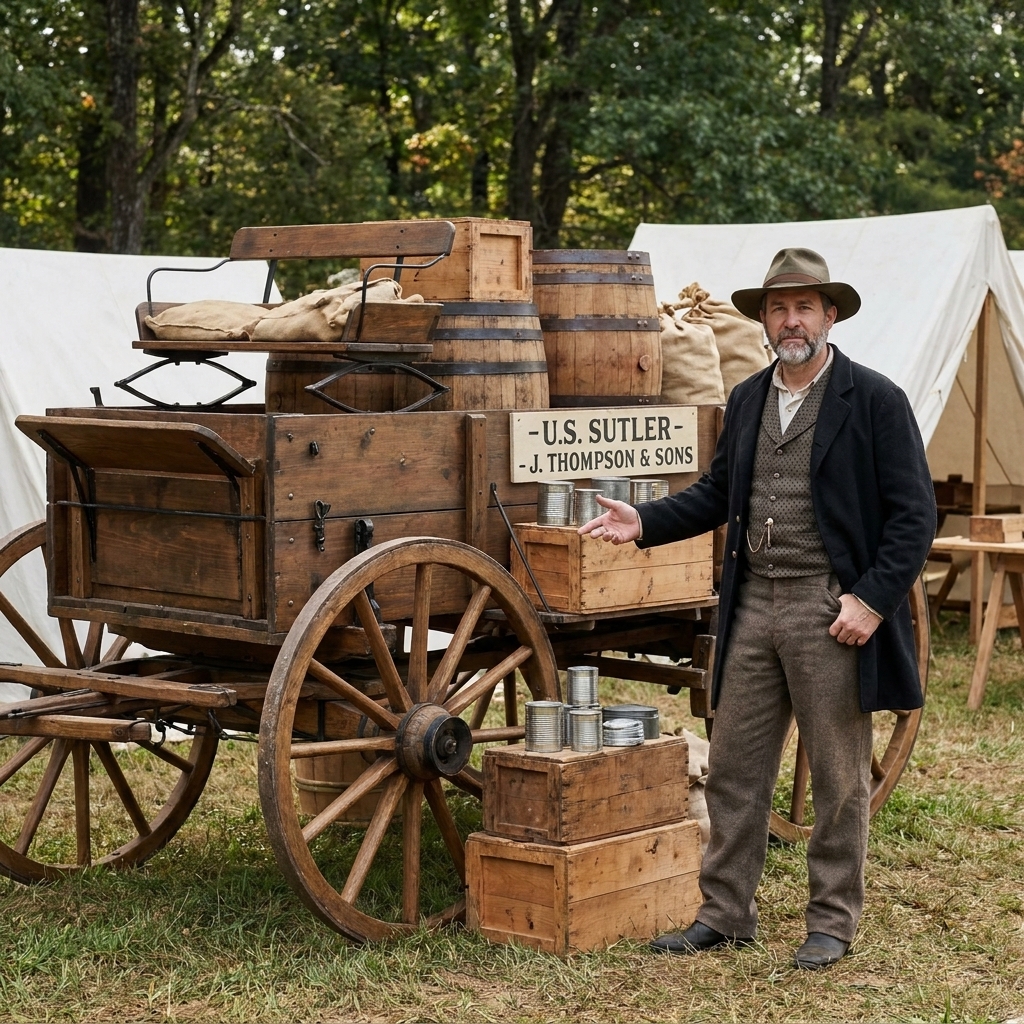
A sutler was, at heart, a traveling merchant licensed to sell goods to soldiers in camp. He followed an army, set up a tent or wagon shop, and offered a range of items the government either did not provide or could not provide well.
If you have ever walked a battlefield and tried to imagine the soundscape beyond cannon, picture the everyday noises around a sutler’s stand: men joking, bargaining, grumbling, and counting out change. Sutlers were part storekeeper, part opportunist, part essential service.
What sutlers sold
The inventory varied, but the greatest hits show up again and again in letters and diaries:
- Tobacco: plugs, pipes, and sometimes cigars
- Coffee and sugar: especially prized when rations were thin or stale
- Food treats: pies, pickles, cheese, dried fruit, canned items when available
- Writing materials: paper, envelopes, ink, pencils
- Clothing fixes: socks, gloves, thread, buttons, needles
- Hygiene items: soap, combs, razors
- Small comforts: playing cards, newspapers, cheap books
Why prices felt like robbery
Soldiers often complained that sutlers overcharged. Sometimes they did. Sutlers had to transport stock over bad roads, through mud seasons, behind marching columns, and into areas where supply could be cut off overnight. Risk and scarcity raise prices, then and now.
But soldiers’ anger was not only about economics. Sutler prices were a reminder that the army did not fully control comfort. A man could be issued hardtack and salt pork, but if he wanted a decent cup of coffee or something sweet, he entered the sutler’s world, where desire set the terms.
How sutlers were regulated
Armies attempted regulation through licenses, assigned locations, and sometimes, in certain departments and periods, through price limits pushed by commanders. Enforcement was uneven. A sutler with friends in the right places might do very well. A sutler who cheated soldiers too boldly might find his tent unpopular, or worse.
What soldiers spent money on
Spend patterns changed depending on where the army was, what season it was, whether rations were decent, and whether men expected to be paid again soon. But the spending usually clustered into a few human categories.
Food that tasted like home
Government rations kept a man alive. They did not always keep him cheerful. When you read soldiers’ accounts, you see how often they used money to chase flavor: fresh bread, onions, apples, a slab of cheese, a bit of molasses. A hot drink, too, mattered. If you want a sense of what the standard ration looked like and why it drove men toward sutlers and foraging, see Civil War soldier rations: what troops ate on the march.
Tobacco and the small rituals of relief
Tobacco was comfort and currency. It was shared, traded, hoarded, and used to smooth rough moods. A man might skip other purchases but rarely skipped tobacco if he could help it.
Keeping up appearances
Soldiers spent money on things that helped them feel like themselves: better boots, a decent shirt, a hat that did not look like it had been trampled. Vanity is too harsh a word. In camp life, dignity could be a purchased item.
Writing home
Stationery sounds small until you picture the alternative. No envelope means no letter. No letter means silence. Many men set aside money to keep the line to home open.
Entertainment
Cards, dice, cheap reading matter, music, and whatever small diversions a camp could muster were worth real dollars to men living under constant strain. For a broader look at how soldiers passed the long hours, see Base-ball, dice, and music: 7 camp pastimes.
Sending money home
Not every dollar stayed in camp. Soldiers sent money to wives, parents, and siblings, sometimes through formal allotments, sometimes through express agents and regimental channels, and sometimes simply by enclosing bills in a letter and hoping it arrived.
Vices and sudden splurges
Payday could mean drinking, gambling, and a temporary forgetting of war. Commanders knew it. Chaplains preached against it. Sutlers sometimes profited from it. And soldiers, being soldiers, did it anyway.
Spending beyond the sutler
Sutlers are the famous camp merchants, but they were not the only option.
Local civilians and nearby towns
Whenever armies camped near farms or towns, soldiers bought eggs, milk, bread, and produce from civilians. Some of these transactions were friendly, some tense, some outright coerced, depending on the army, the region, and the moment. A soldier with money in his pocket could bargain. A soldier without money might “procure” what he wanted in other ways, which is where the moral lines of war blur fast.
Regimental trades and informal markets
Men traded among themselves constantly. A fellow in one company might have better access to coffee. Another might have a knack for repairing shoes. Another might sell extra rations after a good issue. Little economies formed in the cracks of military order.
Peddlers and opportunists
Camps attracted people who smelled money: peddlers who were not licensed sutlers, traders who dealt in stolen goods, and men who would sell anything from a suspect watch to a miracle cure. Soldiers were not always victims here. Plenty of them learned to hustle, too.
What $13 could buy
This is the hardest question to answer cleanly because prices changed across regions and over time, and soldiers’ letters often mention numbers in passing without a full receipt attached. But you can still pin a few examples to the wall to show the scale of things, with the understanding that camp, season, and supply lines could swing prices hard.
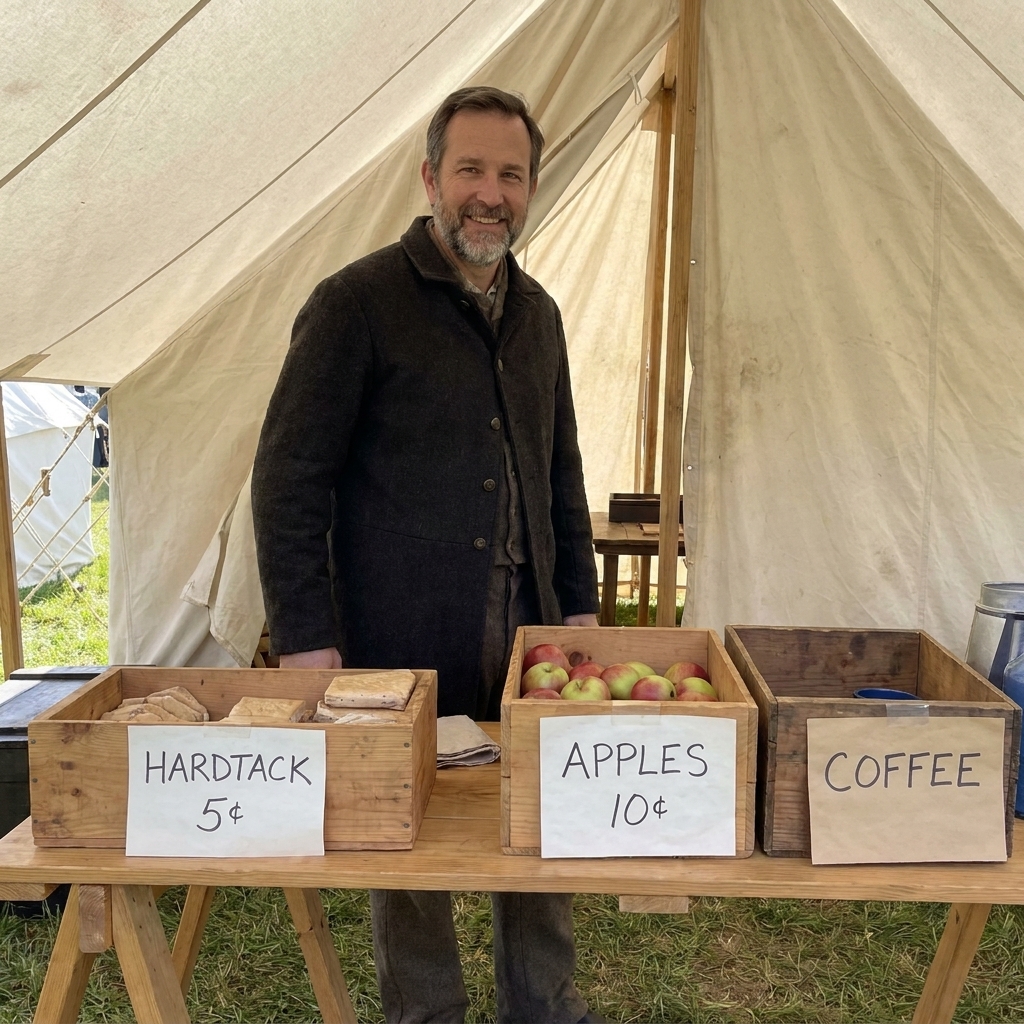
In soldiers’ accounts, small comforts often land in the dime-and-quarter range. Men mention paying about 10 cents for a pie in some camps, or 5 to 10 cents for apples when fruit was available. Tobacco, the steady appetite, could run higher: diaries and reminiscences include prices like 25 cents for a plug when supply was decent, and more when it was not. Stationery, too, added up. A soldier might pay 10 to 15 cents for paper and envelopes in a pinch, and a man who wrote often could watch coin vanish into the mail.
Put those numbers beside the monthly wage and the math becomes less romantic. A handful of pies, tobacco, and writing supplies could chew up a meaningful slice of $13, especially when pay arrived late, debt was waiting, and the whole camp was suddenly flush at the same time. Bigger purchases like replacement shirts, boots, or a good knife could turn into an all-or-nothing decision, not an impulse.
In Confederate service, inflation made the gap between wages and prices even more brutal. A soldier might be “paid” and still be unable to buy much of anything worth carrying.
The human side of camp money
When I walk a battlefield today, I try to remember that the men who fought there also argued over prices and grumbled about debt. They worried about whether money sent home arrived. They stood in line at a sutler’s tent and tried to decide what mattered most: tobacco, paper for a letter, or something sweet to break the taste of hard bread.
We talk about strategy and tactics, and we should. But the war was also lived in nickels and dimes, in folded bills, in the small economy of comfort that followed the drums.
If you are building a broader foundation for camp life, start with Civil War Life, then branch out into food, pastimes, and the equipment men carried in pieces from issue, purchase, and luck.
Common questions
Did soldiers always get paid monthly?
No. “Monthly pay” was the stated rate, but real paydays were often irregular. Men might go months without pay, then receive a lump sum.
Could sutlers take advantage of soldiers?
Yes, and soldiers complained about it constantly. But sutlers also operated under real supply risks and costs. The truth usually sits in the muddy middle: some were fair, some were sharks, and almost all charged more than soldiers liked.
Did Confederate soldiers use greenbacks?
In Confederate areas, Confederate currency was the norm, but borderlands, occupied regions, and personal circumstance could create a mix of money types. Soldiers and civilians alike often preferred harder money when they could get it.
Was gambling common on payday?
Common enough to be a recurring theme in soldiers’ writing and officers’ complaints. Payday put cash in circulation, and camps had plenty of idle time between alarms.