From $13 Union pay to greenbacks, coin, and Confederate inflation—see how payday worked, what sutlers sold, why prices stung, and what soldiers bought in camp.
Civil War Soldier Rations: What Troops Ate on the March

Silas Weaver
Silas Weaver has spent decades exploring historic battlefields, reading primary journals, and tracking down the lesser-known stories of the American Civil War. His lifelong passion for 19th-century history comes through in his engaging accounts of the places, people, and lingering questions of the era. He believes that walking the actual grounds where history happened is the best way to truly connect with the past.
Published
The first time I tried to eat a piece of hardtack on a chilly morning near Gettysburg, I understood something no monument ever quite captures. Armies do not march on glory. They march on calories, on what can be packed, issued, boiled, fried, begged, bought, or stolen. And in the Civil War, that usually meant a few stubborn staples that could survive rain, heat, and rough handling.
This guide is a practical look at what Union and Confederate soldiers typically ate on the march, how rations were issued, what men did when the system failed, and what those meals felt like in day-to-day life.
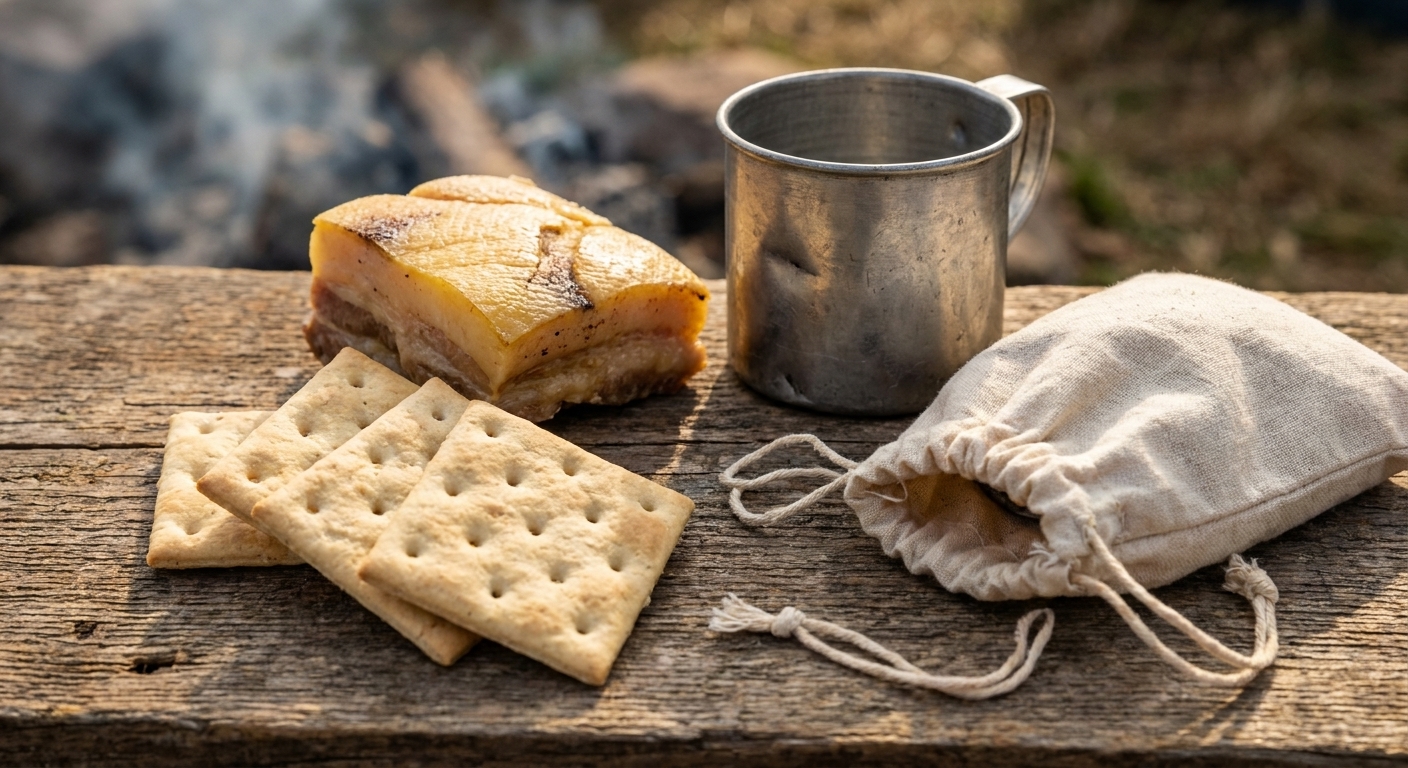
What “ration” meant in the Civil War
A ration was the government idea of one day of food for one soldier. In the field, the reality depended on roads, railroads, weather, local agriculture, corruption, enemy action, and plain old confusion. Soldiers might receive full rations for a stretch, then go hungry, then eat well after a town was taken, then go back to crumbs.
Rations were issued to companies and messes, not served cafeteria-style. A mess was simply a small group of men who cooked and ate together. If you were lucky, your mess had a man who could cook. If you were unlucky, you learned fast or you chewed things you would rather not think too hard about.
For broader context on day-to-day soldier life beyond food, see our Civil War Life guide: /guide-civil-war-life/.
The Union ration: the famous basics
The United States Army generally fed its men more consistently than the Confederacy, especially as the war went on. The “classic” Union field diet most people picture is not wrong, it is just incomplete.
Hardtack
Hardtack was a simple flour-and-water cracker baked hard as a plank. It traveled well, lasted a long time, and was notorious for cracking teeth when men bit down without thinking. Soldiers ate it dry, soaked it in coffee, crumbled it into soup, or fried it with fat when they had any. Old hands learned to inspect it first because weevils were common, especially in warm months.
Salt pork or salt beef
Salted meat, often pork, came packed in brine. It was greasy, intensely salty, and a lifesaver when calories mattered more than delicacy. Soldiers boiled it to draw off some salt, fried it to crisp the edges, or used the rendered fat to make hardtack edible.
Coffee
If there is one Union ration item that shows up in recollections like a hymn, it is coffee. Sometimes the issue was green coffee beans that men had to roast and grind themselves. Other times it arrived already roasted or ground, depending on contracts, depots, and what the supply chain could manage that week. Either way, a hot cup was comfort, routine, and morale, especially after a night march or in wet weather.
Sugar, vinegar, and salt
These small issues mattered. Sugar sweetened coffee and made hard fare feel human. Vinegar was used for flavor and, in camp lore, sometimes as a rough health measure. Salt was essential when you had fresh meat or vegetables to preserve or season.
Beans, rice, and dried vegetables
Beans were a steady companion. Rice appeared often enough to be familiar. “Dried vegetables” could mean compressed mixes that rehydrated into something vaguely soup-like. When issued regularly and cooked with care, these rounded out nutrition. When rushed, they became fuel, not food.
Occasional extras: potatoes, onions, canned goods
When supply lines were strong, Union soldiers might see fresh potatoes, onions, pickles, or canned items. These were not constant, but they were important. Fresh produce did more than feed the body. It broke the monotony that wore men down in quieter, slower ways.
Sutlers and small luxuries
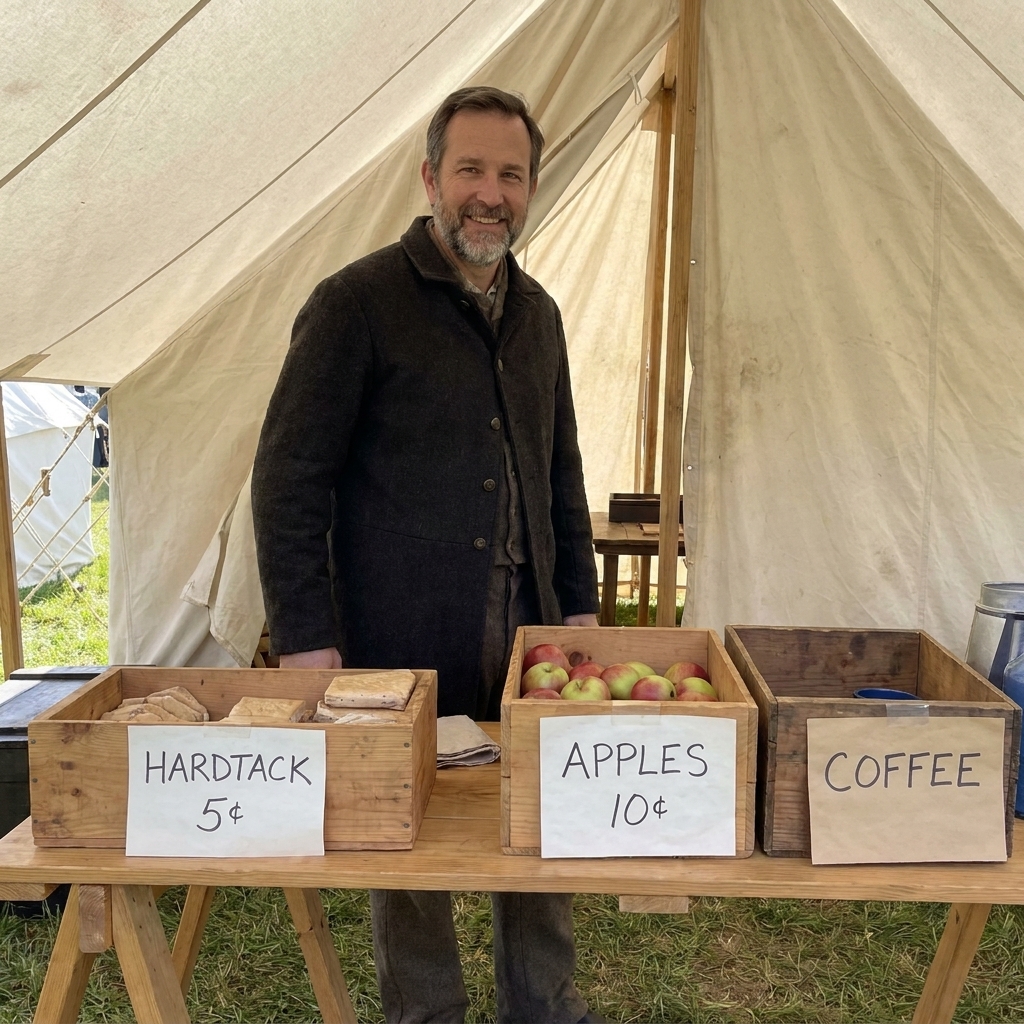
In many Union camps, sutlers operated as licensed merchants trailing the army with wagons of goods. If a soldier had money and the sutler had stock, he might buy things that never appeared on an issue list: crackers that were not hardtack, cheese, dried fruit, or a tin of something that tasted like home. Not everyone could afford it, and sutlers could be accused of steep pricing, but they were part of how “extras” entered camp life.
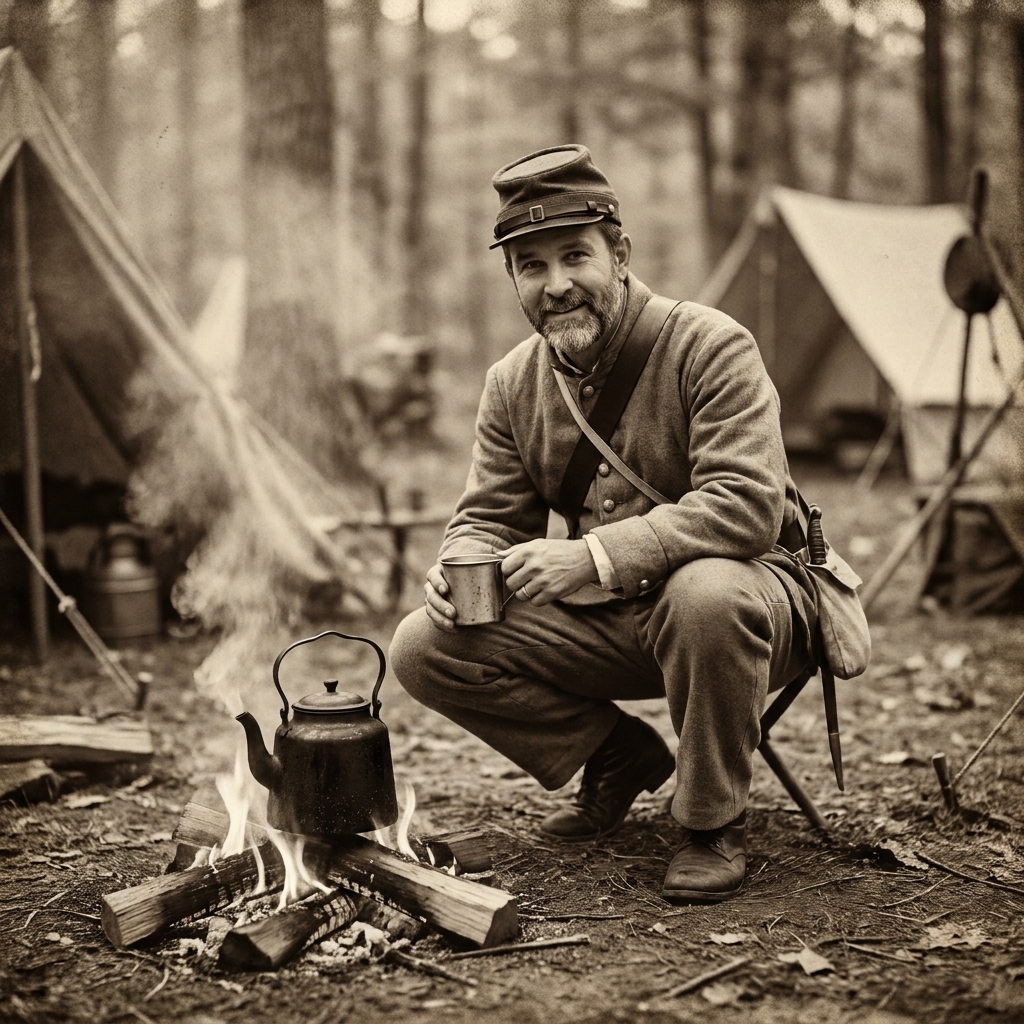
The Confederate ration: similar on paper, harsher in practice
Early in the war, Confederate soldiers often ate reasonably well in fertile regions close to home and near functioning rail lines. But as the conflict dragged on and resources tightened, the same basic ration categories shrank, disappeared, or arrived too late.
Cornmeal and flour
Cornmeal became a backbone of Confederate field cooking. It could be carried as meal, baked into pone or ash cakes, or boiled into mush. Wheat flour existed but was less dependable as shortages grew. A Confederate soldier might live for long stretches on corn-based bread with little else.
Salt pork, bacon, and whatever meat could be found
When Confederate commissaries could issue meat, it was commonly bacon or salt pork. But “meat” might also mean fresh beef driven with the army, or local livestock impressed from farms. The quality varied wildly, and breakdowns in preservation could mean rancid food or none at all.
Coffee substitutes
Real coffee became scarce in much of the Confederacy due to blockades and disruption. Soldiers and civilians alike improvised with roasted chicory, rye, corn, sweet potatoes, and other local stand-ins, including whatever a man could manage to roast and brew. They provided warmth and routine, even if the taste was a reminder of shortage.
Molasses, peas, and rice in some theaters
In certain regions and seasons, Confederate troops might draw molasses instead of sugar, and rely more heavily on peas and rice. The western and coastal theaters could look different from Virginia simply because the landscape and supply routes were different.
The simplest way to say it is this: Confederate rations often depended less on what the regulations promised and more on what the countryside could be made to surrender.
How rations were issued (and why soldiers went hungry)
A soldier’s meal began far from the campfire. It started with wagons, depots, railheads, quartermasters, and commissary officers. Then it ran into the same obstacles every traveler knows, just with higher stakes.
- Distance and roads: Mud could swallow a wagon wheel. Mountains could break an axle. A single washed-out bridge could stall an entire chain of deliveries.
- Railroads and depots: The side with better rail access usually fed men more reliably. Destroyed track, burned bridges, and captured depots meant empty haversacks.
- Enemy action: Raids targeted supply trains because hunger can do damage without a firefight.
- Bureaucracy and waste: Spoilage, theft, poor planning, and simple miscommunication all took their bite before the soldier did.
When rations ran short, men tightened belts, ate half portions, and depended on what could be scrounged. That scavenging was not a side story. It was part of daily survival.
Foraging, “liberating,” and buying
If you want to understand Civil War food, you have to follow the men off the road. When armies paused, soldiers spread into nearby fields and farmyards like a net.
Foraging in practice
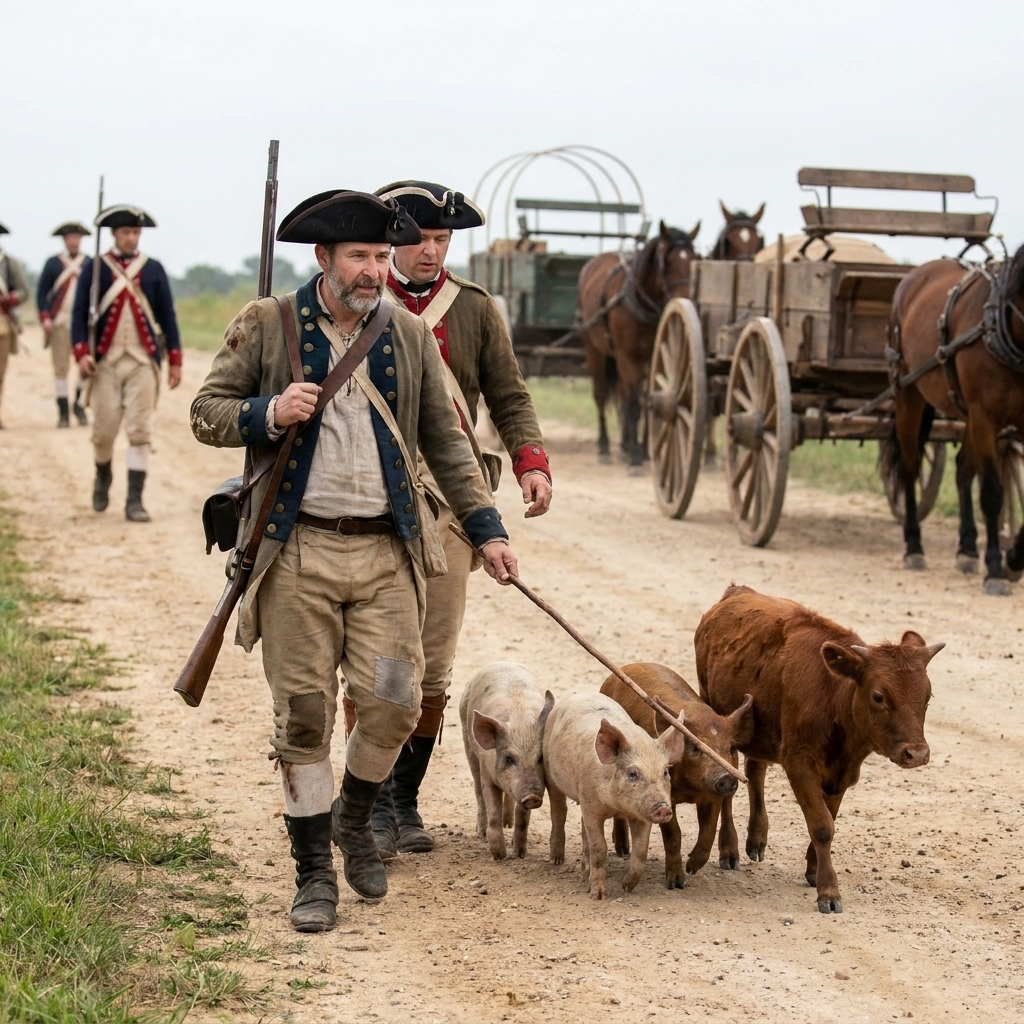
Foraging could mean picking blackberries along a fence line, digging wild onions, netting fish, or stripping corn from a field. It could also mean taking chickens, hogs, and smokehouse meat. Soldiers wrote about it with a shrug, a joke, or a hint of shame, depending on the man and the moment.
Buying food from civilians
In towns, soldiers sometimes bought pies, bread, milk, fruit, and whiskey when pay was current and locals were willing. Prices could be steep. Availability could vanish the moment a column arrived. A soldier who had money still needed time, luck, and a cooperative shopkeeper.
Hard moral edges
“Foraging” could slide into theft quickly, especially when discipline frayed. Some commanders tried to enforce rules. Some looked away. In areas repeatedly marched over, civilians learned to hide food, move livestock, or simply go without. Those are the quieter casualties that do not show up in casualty returns.
What soldiers cooked with
Most soldiers were not carrying a tidy kitchen. Cooking was improvised, messy, and shaped by whatever fuel and utensils were on hand.
Common tools
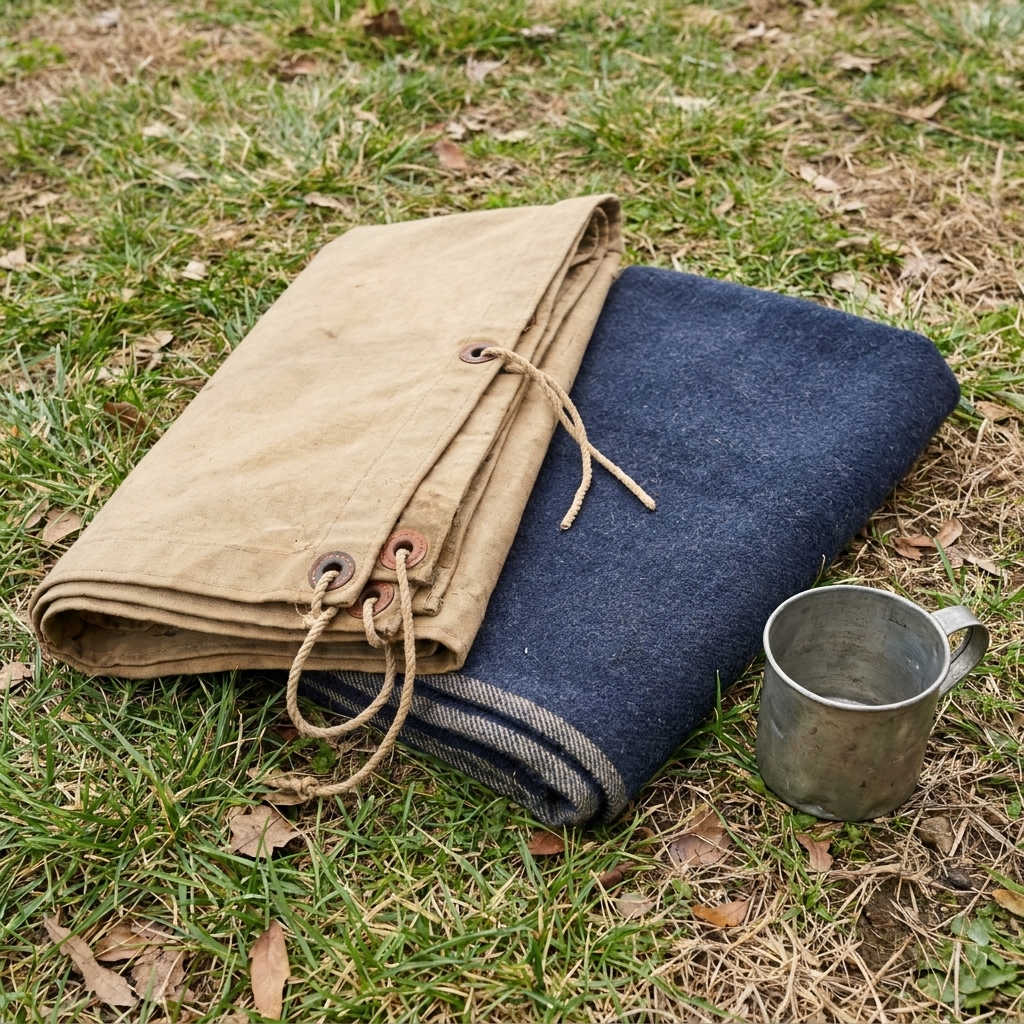
- Tin cup: boiled coffee, warmed grease, or served as a mixing vessel.
- Frying pan or small skillet: not everyone had one, but it was prized for frying meat and hardtack.
- Kettle: often shared at the mess level for coffee and stews.
- Knife and bayonet: used for cutting, spreading, skewering, and all-purpose camp work.
Typical field methods
- Boiling: the simplest method for meat, beans, rice, and coffee.
- Frying: used when grease was available. Fried hardtack could be a revelation.
- Ash cakes: dough or cornmeal mixture baked in hot ash or on a flat stone near coals.
- Stews: the best use of scraps and foraged additions, if time allowed.
The most dependable “recipe” was whatever could be made fast before the column moved again.
How steady were rations?
On paper, Civil War rations could look generous, with staples like bread or flour, meat, and coffee or sugar appearing again and again in army paperwork. In practice, intake swung wildly. A soldier might eat a heavy breakfast before marching, then live on hardtack until night, then get a late, smoky meal cooked in the dark. During rapid movement or hard fighting, men sometimes went a day or two with little more than hurried bites.
That variability is part of why diaries mention food so often. Hunger is immediate. It interrupts sleep, patience, and decision-making. You can feel it in the writing.
What rations did to the body
Hard bread, salty meat, and poor sanitation were a rough combination.
- Digestive trouble: diarrhea and constipation both appear constantly in accounts, often tied to hurried cooking and unsafe water.
- Teeth: hardtack could crack teeth and aggravate dental problems that had no easy fix in the field.
- Scurvy and deficiency: lack of fresh produce could lead to scurvy symptoms, especially in winter camps or besieged areas where variety vanished.
Food and health are inseparable, and over the course of the war, disease killed more men than combat did. Rations were not just comfort. They were survival.
A quick field menu
Every unit and season varied, but a typical marching-day pattern often looked something like this.
Union soldier, steady supply
- Morning: coffee (sometimes sweetened), hardtack, maybe fried salt pork
- Midday: hardtack and cold meat if there is time to halt
- Evening: beans or rice boiled with meat, coffee again
Confederate soldier, later-war scarcity
- Morning: cornmeal pone or mush, sometimes a small piece of bacon
- Midday: whatever is in the haversack, often bread alone
- Evening: thin stew if ingredients can be found, or more corn bread
Then add the wild card: foraged apples, a stolen chicken, a handful of berries, a gift from a sympathetic household, or nothing at all.
Winter camps and sieges
Marching is one kind of hardship. Sitting still is another.
Winter camps
Winter quarters could improve cooking because men had time to build ovens, organize messes, and trade with locals. But winter also increased dependence on preserved foods. When roads iced over or wagons bogged down, shortages hit hard.
Sieges
Sieges tightened the screw. Variety disappeared first, then quantity. Substitutes became normal. In the worst cases, soldiers ate animals not meant for the table. When people ask what a war of attrition looks like, food is one of the plainest answers.
Officers ate differently
Most of what we picture is enlisted life, and that is the right baseline. Officers often had a little more leverage, not always, but sometimes. They could buy food, draw on personal baggage, or tap local contacts, especially in quieter stretches. It did not make them immune to hunger, but it could soften the sharpest edges.
If you want to taste it yourself
Living history events and careful home experiments can teach you a lot, as long as you do it safely.
- Try hardtack in small pieces and soften it in coffee or broth rather than biting down like you are proving something.
- Cook beans long and fully and use clean water. The soldiers did not always have that luxury.
- Keep the point in mind: the lesson is not that the food was “bad.” The lesson is how much planning it took to keep thousands of men fed, and how quickly it could fall apart.
To explore more of the everyday material culture that sat beside the ration issue, you might also like: /swords-revolvers-and-steeds/.
Ration questions I hear
Did soldiers really eat worms in hardtack?
Weevils and other insects were common in stored flour products. Some men knocked them out, some ignored them, and some swore loudly and ate anyway. It was not a tall tale so much as an unpleasant normal.
Did Union soldiers eat better than Confederate soldiers?
Generally, yes, especially after the first year or two. Better industrial capacity, stronger rail logistics, and more consistent access to imported goods made a difference. But Union troops also went hungry at times, particularly during fast-moving campaigns or when supply lines were cut.
What did soldiers drink besides coffee?
Water when they could find safe sources, coffee or substitutes when they could not, and sometimes alcohol when it was available. But the everyday drink that shows up again and again in Union accounts is coffee, plain and hot.
How did rations affect marching and fighting?
A fed soldier walks farther, thinks clearer, and recovers faster. Hunger undercuts discipline and morale. It is hard to overstate how much food shaped operational choices, from where armies moved to how long they could stay.
Walking the ground changes the meal
When I am out on a battlefield road in my camper, I try to do one small thing: stand where the men stood and imagine the ordinary moment, not just the famous charge. A soldier with a tin cup, waiting his turn at a smoky fire, breaking hardtack on a canteen, listening for orders. That is the war too.
If you are planning a trip and want a simple way to structure your day, our travel planning guide can help: /plan-a-civil-war-battlefield-day/.