A grounded, gear-by-gear comparison of Union and Confederate standard issue: coats, trousers, hats, shoes, leatherwork, canteens, and blankets—plus why suppl...
Sleeping Under the Stars: Civil War Tents, Bedrolls, and Shelter Halves

Silas Weaver
Silas Weaver has spent decades exploring historic battlefields, reading primary journals, and tracking down the lesser-known stories of the American Civil War. His lifelong passion for 19th-century history comes through in his engaging accounts of the places, people, and lingering questions of the era. He believes that walking the actual grounds where history happened is the best way to truly connect with the past.
Published · Last updated
I have spent plenty of nights on Civil War ground after the visitors have gone home, when the traffic noise fades and the frogs and owls take over. Even with modern gear tucked away in the camper, I still find myself staring out across a field and thinking about the men who had nothing but a strip of canvas, a blanket, and whatever they could scrounge from the roadside. They slept where they stopped. Sometimes that meant a tidy camp with tents in rows. More often on the march it meant a damp fence line, a shallow hollow in the woods, or the leeward side (the lee side) of a rail pile with a storm rolling in.
This is a practical look at what Union and Confederate soldiers used for shelter and sleep when they were away from established camps, and how they adapted when the weather turned mean.
The big idea: camp comfort vs. marching reality
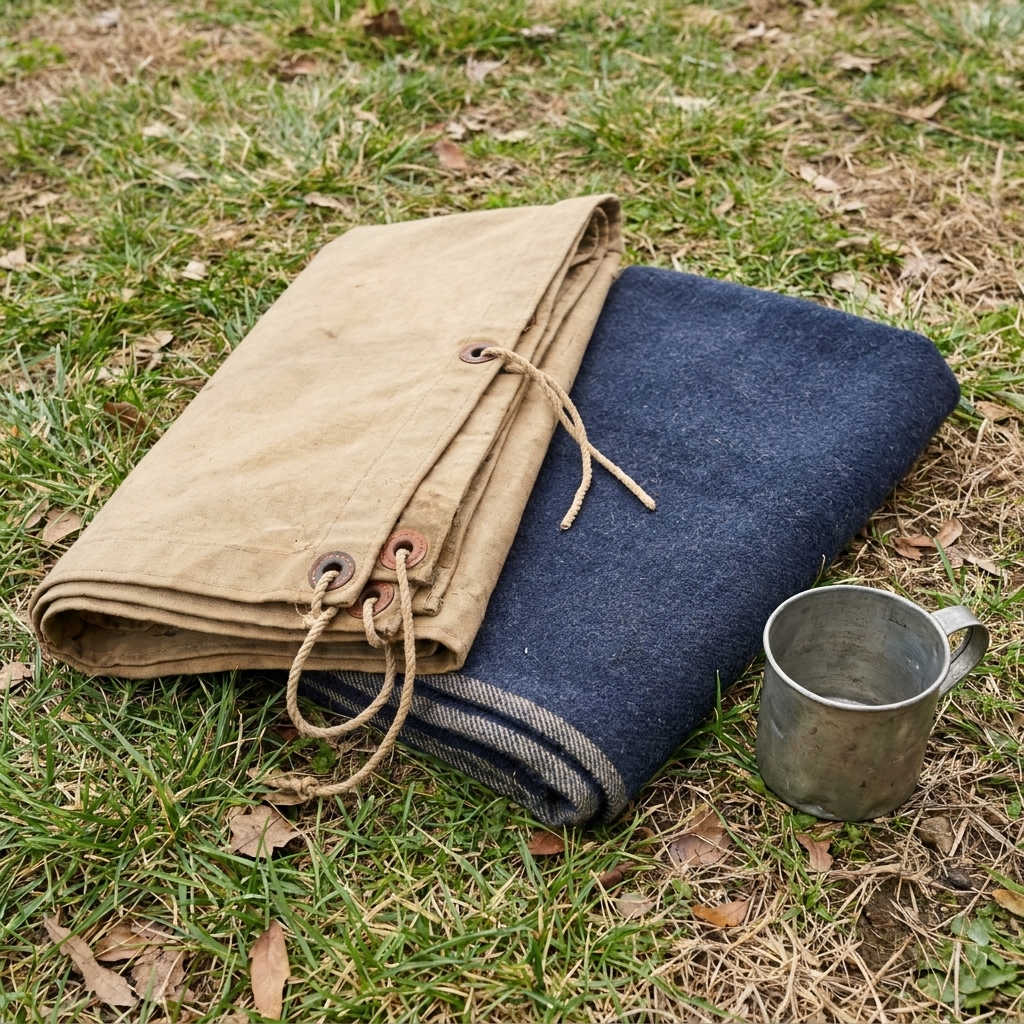
When you read diaries closely, you notice a constant tug of war between what the army issued and what a man could actually carry. A wall tent or wedge tent belongs to a fixed camp, not a fast-moving column. On the march, the “sleep system” usually boiled down to four things:
- Something over you: wool blanket, sometimes two if you were lucky or had acquired one.
- Something under you: another blanket, a gum blanket, a poncho, a few armfuls of leaves, or nothing at all.
- Something to block wind and rain: a shelter half, a gum blanket rigged as a lean-to, rails, brush, or a borrowed corner of someone else’s canvas.
- Something to keep it together: straps, a length of twine, a bayonet stuck into the ground, or the ever-handy fence rail.
If you want a quick companion to this topic, my rundown of Civil War soldier rations pairs naturally with it. Food and sleep were the two constant anxieties, and both were heavily shaped by how fast an army was moving.
Wedge tents, wall tents, and why you rarely marched with them
Wedge tent
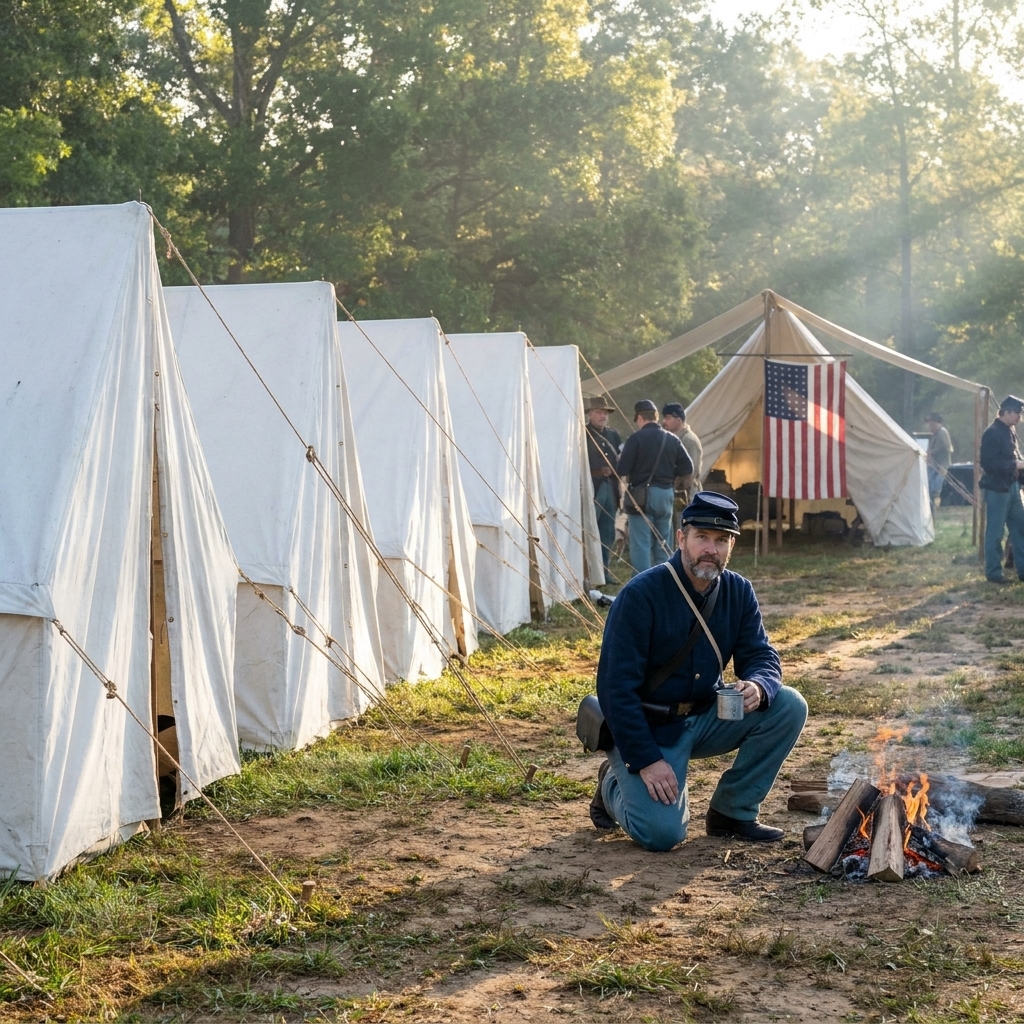
The classic “A-frame” canvas wedge tent is what many people picture in living history camps. It could be comfortable by soldier standards: room to sit up, gear out of the weather, a defined company street if the unit was settled in. But it was still a camp tent. Canvas is heavy, poles are awkward, and armies tried to keep wagons moving light.
It also mattered where that canvas lived. In many units the tentage, poles, and pins rode in company wagons. If the column had to move hard, if roads turned to soup, or if wagons were cut from the train, tents were among the first comforts to be left behind or reduced. On an active campaign, wedge tents often stayed back with baggage, were issued in smaller numbers, or were replaced in practice by rougher shelter. Soldiers might see a wedge tent again when the army went into winter quarters or settled into a semi-permanent position.
Wall tent
Wall tents, with taller sides and more headroom, show up more with officers, hospitals, and long-term encampments. They are wonderful if you have a wagon to carry them. They are miserable if you are the one expected to haul them over mountains.
The shelter half: a portable roof
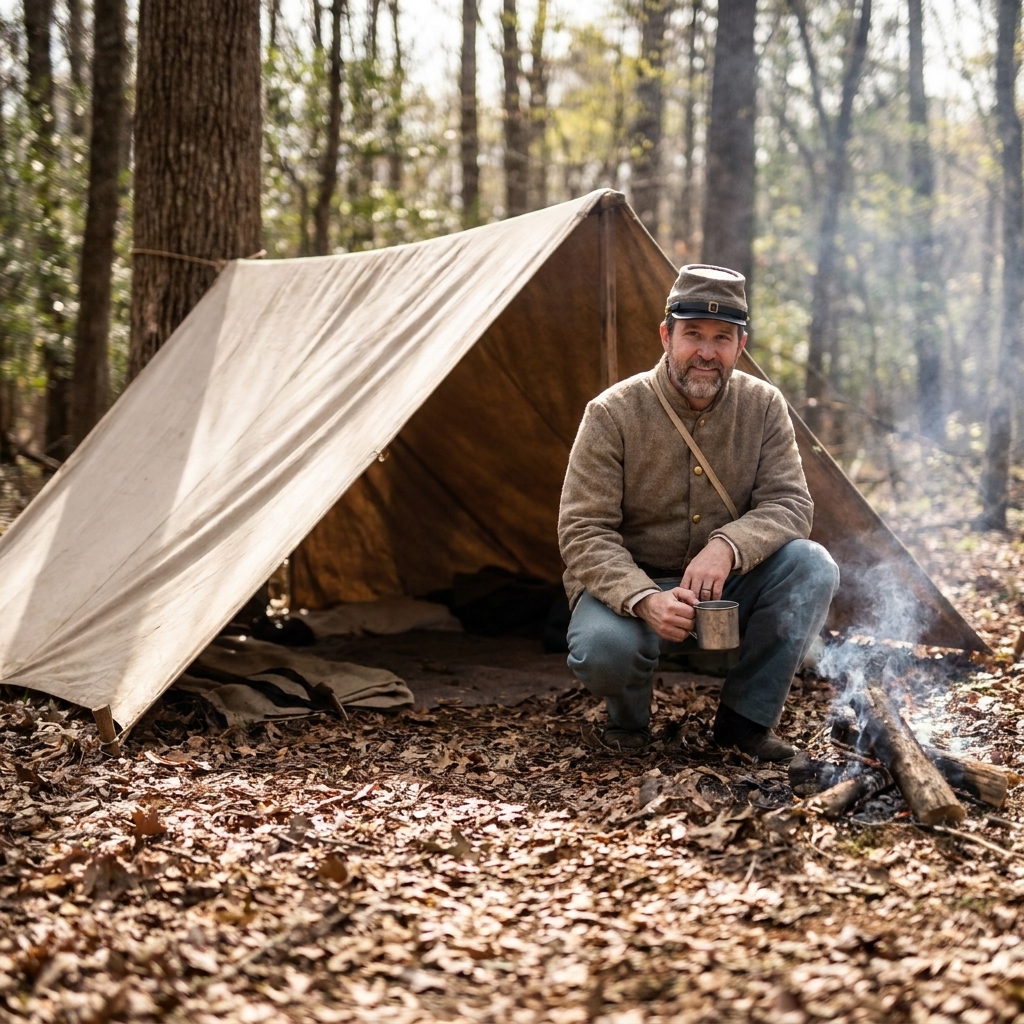
If there is one piece of field gear that feels like it was designed by hard experience, it is the shelter half, also called the shelter tent. It is strongly associated with Federal issue, but it helps to keep the timeline in mind: early in the war you see more reliance on larger tents in established camps and a lot more bare-ground nights on the march. As the war wore on, especially from roughly 1862 to 1863 onward, the shelter half becomes a more common answer to the ugly question of how to cover men who cannot stop moving.
In its basic form, one man carried one “half” section of canvas. Two men buttoned or tied the seam to make a simple roof, then propped it with poles, sticks, or muskets. That is the tidy version, anyway.
How it was meant to work
- Two halves make a roof: button or tie the seam.
- Pitch low: the lower the better in wind, and the warmer at night.
- Face the opening away from weather: a simple choice that mattered a lot.
How it actually worked on campaign
Campaign life loves to ruin neat plans. Your tent mate might be on picket duty, in the hospital, in a different column, or simply gone. In that case, one shelter half became a lean-to or a windbreak. Soldiers wrote about improvising with whatever was at hand: rails laid as a ridge, brush piled as a back wall, or a shallow trench scraped to keep runoff from pouring through the sleeping area.
And when weather turned truly sour, men did what men always do. They crowded in. Shelter halves were designed as paired panels, not as a roomy group tent, but foul weather can turn “two-man shelter” into “however many bodies can get out of the wind under the canvas that is up.” It was not elegant, but it was warmer than the open sky.
One point that surprises modern campers is how close to the ground many of these shelters were pitched. We tend to want headroom. A soldier wanted warmth and less surface for rain to push through. If the canvas sagged, water pooled. If the wind got under it, it became a sail.
Gum blankets, ponchos, and wet ground
Nothing spoils a night faster than moisture rising through your bedding from below. Soldiers knew this the hard way. One of the most valuable pieces of gear in wet weather was the gum blanket, a cloth treated with rubber to shed water. You will also see men call it a poncho, an India rubber blanket, a waterproof sheet, or oilcloth depending on what they had and what their army could supply. The names blur. The need does not: keep rain off your body and keep water out of your bedding.
Common uses
- As a ground cloth: between you and the mud, especially in steady rain.
- As a roof: rigged over a ridge line, sometimes paired with a shelter half or blanket.
- As a wrap: around the rolled blanket, to keep it dry during a march.
On the Confederate side, rubberized waterproof items were often less common as the war progressed, but it varied sharply by time, place, and army. Some units and periods did better than others. When the issue gear ran thin, the solution was usually improvisation: oilcloth when it could be found, scavenged canvas, extra cloth, and a lot of nights spent trying to dry out by a fire that never quite did the job.
Bedrolls: simple, heavy, personal
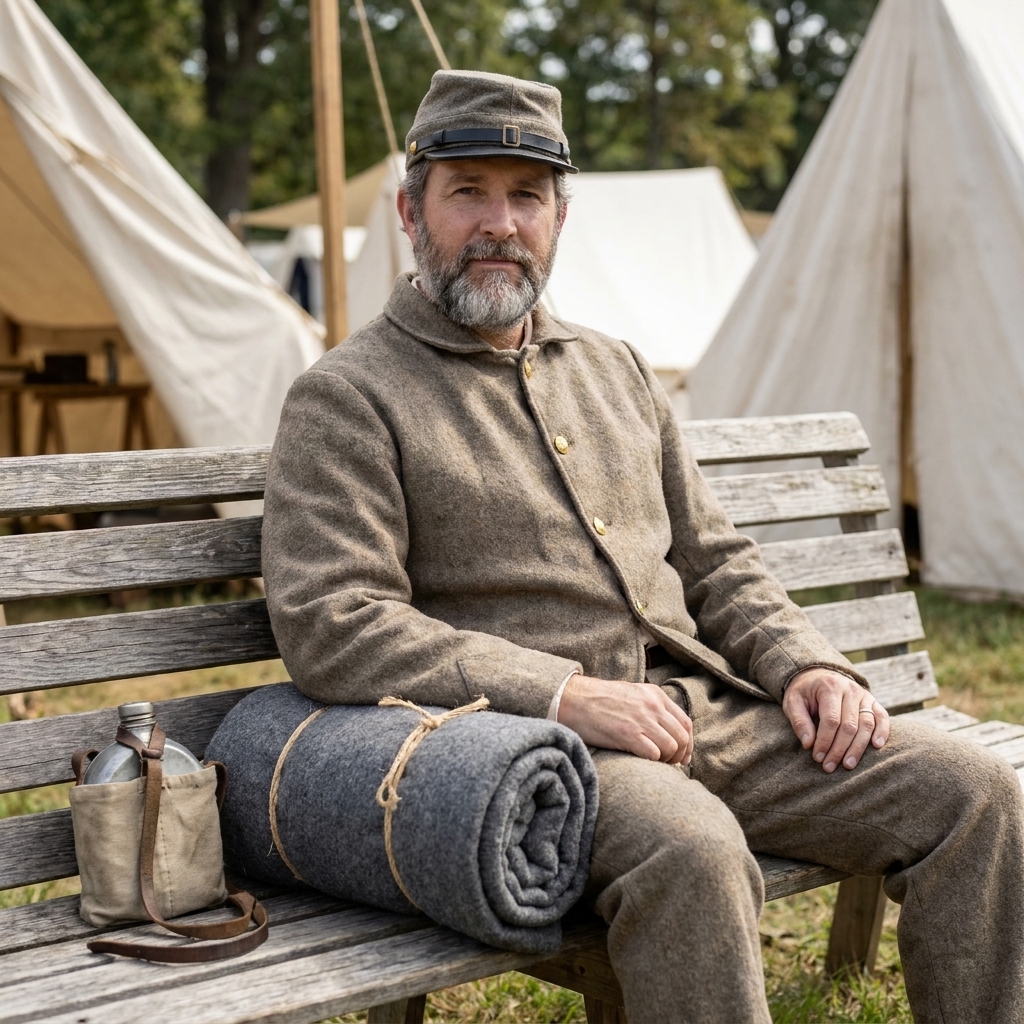
A Civil War bedroll was not a modern sleeping bag. It was usually some combination of wool blankets, a gum blanket or poncho, and whatever extra clothing a man owned. The roll had to serve three jobs at once: bedding, storage, and a weather-resistant bundle for marching.
What a typical bedroll might include
- One to two wool blankets (more blankets meant more weight, and also less misery)
- A gum blanket or oilcloth sheet to shed rain
- An extra shirt or socks, if the soldier had them
- Sometimes a small personal item tucked inside, like a letter packet to keep it dry
How they carried it
The classic look is the blanket roll slung over one shoulder. In practice it depended on the man’s load and unit habits. Some lashed the roll on top of a knapsack. Some ditched the knapsack entirely during hard marching and lived out of the bedroll. Soldiers complained often about the weight, but they also understood that a wet blanket could turn from inconvenience to danger when temperatures dropped.
Bad weather tricks in the field
It is one thing to know the gear. It is another thing to see what men did with it when the sky opened up or the cold came down hard.
1) Pitch low, pitch smart
A high, proud shelter catches wind and leaks along seams. A low shelter, especially one with brush banked along the edges, blocks drafts and holds a pocket of warmer air. The trade-off is discomfort. Comfort was rarely the goal.
2) Build the bed first
If the ground is soaked, a soldier’s best friend is whatever keeps his body off it: pine boughs, leaves, straw from a nearby field, even dry corn stalks. This “mattress” was often more important than the roof. A roof without insulation still leaves you shivering from below.
3) Channels for runoff, when they could
Veterans learned to read the slope. A slight dip that looks cozy at dusk can become a streambed at midnight. Many accounts describe men scraping a shallow channel to divert water away from the sleeping spot when rain threatened and there was time to do it. In more formal camps, officers sometimes discouraged ditching and ground-cutting because it tore up camp layouts and could create other problems. On the move, survival usually won the argument.
4) Fire, but at a cost
Fire meant warmth, a chance to dry socks, and a morale boost that is hard to overstate. It also meant smoke in your eyes, constant tending, and in many tactical situations it meant danger. On campaign, soldiers were often ordered to keep fires small or none at all. The result was predictable: more sleeplessness, more sickness, and more men starting the next day already exhausted.
5) Buddy systems and shared misery
The shelter half assumes partnership, and campaign sleep often did too. Men shared canvas, shared warmth, and shared the work of gathering bedding and fuel. If you ever wonder why comradeship runs so deep in wartime letters, think about the simple trust involved in sleeping while someone else keeps watch, or in splitting the only dry corner under a piece of canvas.
A note on winter quarters
This article is mostly about sleeping on the march and away from established camps, but winter quarters deserve a mention because they were the other extreme. When armies paused long enough, men built for the season: log huts, dugouts, brush “shebangs,” and any combination of mud, clay, boards, and scavenged brick that could hold back wind. Compared to a soaked blanket under a low shelter half, a smoky little hut could feel like a palace. Then spring came, and the road stripped life back down to canvas and wool again.
What soldiers wished modern visitors understood
When I walk a battlefield on a clear day, it is easy to romanticize “sleeping under the stars.” The soldiers did not romanticize it for long. Their writings circle back to a few hard truths:
- Wet is worse than cold. Cold can be managed with movement, extra layers, and fire when permitted. Wet soaks everything and steals heat all night.
- Sleep debt is a weapon. An army that cannot sleep cannot march well, cannot think clearly, and cannot fight with steadiness.
- Small comforts mattered. A dry pair of socks, a patch of pine boughs, a chance to lie down out of the wind.
It is the same reason I always encourage first-time battlefield travelers to slow down and imagine the ground at knee level, not just from the height of a monument. If you are planning a trip, our Civil War Life guide is a good place to keep exploring the everyday side of the war.
FAQ
Did Civil War soldiers have sleeping bags?
Not in the modern sense. They relied on wool blankets, coats, and sometimes extra clothing, wrapped into a bedroll. Warmth came from layers, shared shelter, and whatever insulation they could gather from the landscape.
Were shelter halves used by both sides?
The shelter half is strongly associated with Federal issue, especially as the war progressed. Confederates used a mix of captured shelter halves, issued canvas when available, and improvised coverings. Shortages varied by year and theater, so you can find everything from decent canvas to almost nothing, depending on the unit and the moment in the war.
How many men slept under one shelter?
Two men is the basic arrangement for a paired shelter half. In practice, men squeezed tighter during bad weather and spread out when conditions allowed. The limiting factors were canvas size, wind direction, and how much water the ground was throwing back at them.
What was the single most important item for staying dry?
Many soldiers would point to the gum blanket or waterproof sheet, because it could serve as rain protection, a ground cloth, and a wrap for the bedroll. Even then, skill mattered. A waterproof sheet does not help much if it is pitched wrong and funnels water into your bedding.