Why Winter Is the Best Time to Visit Civil War Battlefields

Silas Weaver
Silas Weaver has spent decades exploring historic battlefields, reading primary journals, and tracking down the lesser-known stories of the American Civil War. His lifelong passion for 19th-century history comes through in his engaging accounts of the places, people, and lingering questions of the era. He believes that walking the actual grounds where history happened is the best way to truly connect with the past.
The first time winter really taught me something on a Civil War battlefield, it was on a gray morning not far from home. I had been walking those fields for years in warm weather, squinting through tree lines and summer haze, trying to imagine why a ridge mattered or how a battery could see what it needed to see. Then January stripped the place down to its bones. Suddenly the land started speaking in plain sentences.
That is the quiet gift of winter travel. When the foliage is gone, the battlefield stops hiding its own logic. You can trace lines of sight the way commanders did, understand why a shallow swale felt like safety, and see how a few feet of elevation could decide whether men lived through the next ten minutes.
If you want to visit battlefields for terrain viewing, not just monuments and brochures, winter is often the best season of the year.
Winter shows the ground
From a distance, many Civil War battlefields look like peaceful parks and farmland, which they are. But the war was fought by men who made constant, practical decisions about ground: where a line could form, where it could be seen, where it could hide, and where it could move without falling apart. Trees and thick undergrowth can make those answers hard to read in summer.
In winter, you can often see:
- Subtle ridgelines that disappear behind leaves once spring arrives
- Shallow depressions that offered partial cover to advancing troops
- Fence lines, stone walls, and field edges that shaped formations and slowed movement
- Gaps in terrain where units could slip through, or where a commander feared they might
Those details are not trivia. They are the difference between a battlefield that feels like a story you heard and a battlefield that feels like a problem you are trying to solve.
Sightlines make sense
In many battles, what mattered most was not courage or numbers alone, but what could be seen and what could not. A fold in the ground, a patch of woods, a slight rise that blocked artillery fire or hid an approach, these small things often decided what options a commander believed he had.
Try this on your next cold-weather visit: stand at one position and pick a distant landmark. Now walk the ground between them slowly, paying attention to when the landmark disappears and reappears. That is the practical reality commanders were dealing with.
With bare branches and open woods, you can better understand:
- Why artillery was placed where it was, and what arcs of fire were realistic
- How a unit could advance unseen until it suddenly broke into view
- Why messengers got lost or why orders arrived too late
- How close the enemy could be without being obvious
Even in leafless woods, the Civil War was not fought on a clean chessboard. But winter removes one of the biggest modern obstacles to reading the ground: the thick screen of vegetation that soldiers often did not face to the same extent on actively farmed ground, especially where fields, orchards, and grazed woodlots kept sightlines more open than they can be today.
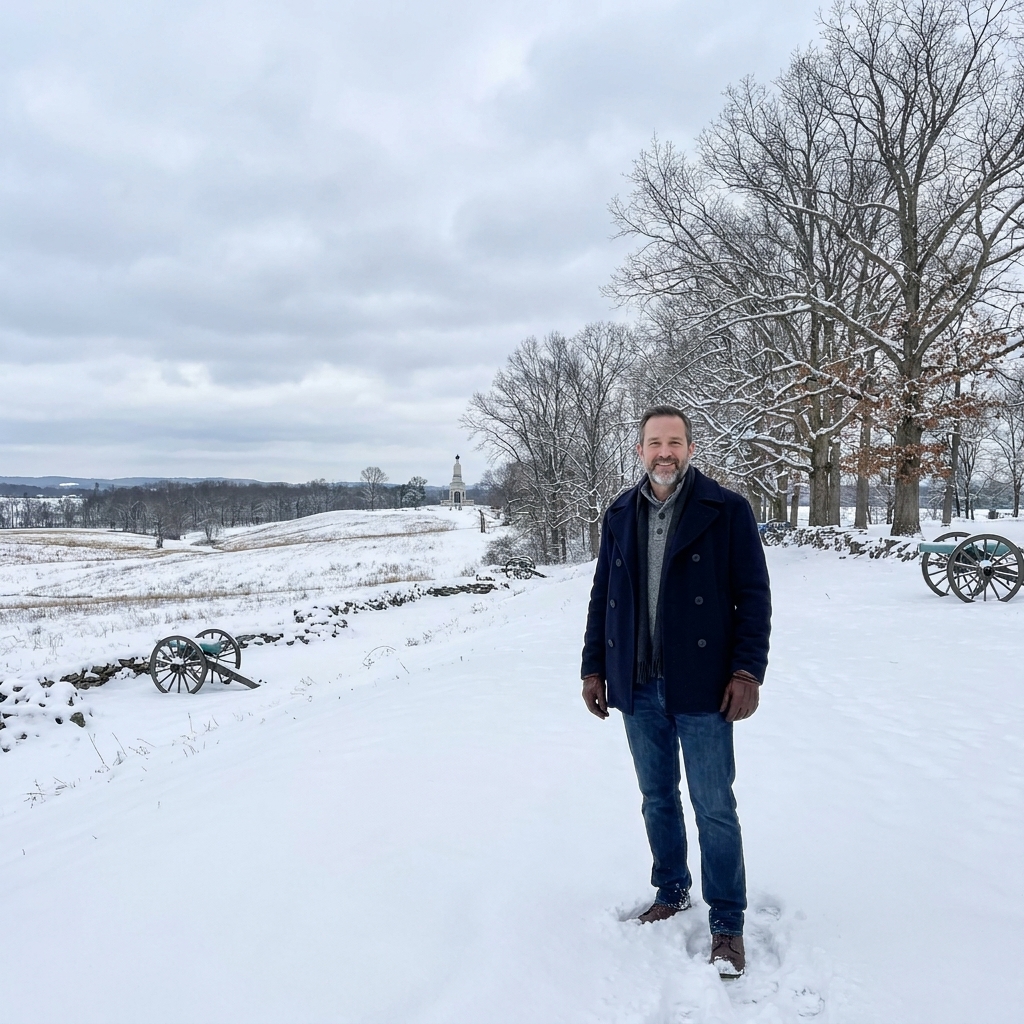
Relief stands out
Winter light is a strange ally. Low sun angles can throw long shadows across the landscape, highlighting folds in the ground that look flat at noon in July. A slope you barely noticed in summer can suddenly look like what it is: a long, tiring climb under fire.
When I walk a ridgeline in winter, I find myself noticing the way the land stacks into layers. You can see how one rise screens the next. You can understand why a defender wanted the military crest, not the top, and why attackers hated crossing open ground into a slight uphill grade that never seems to end.
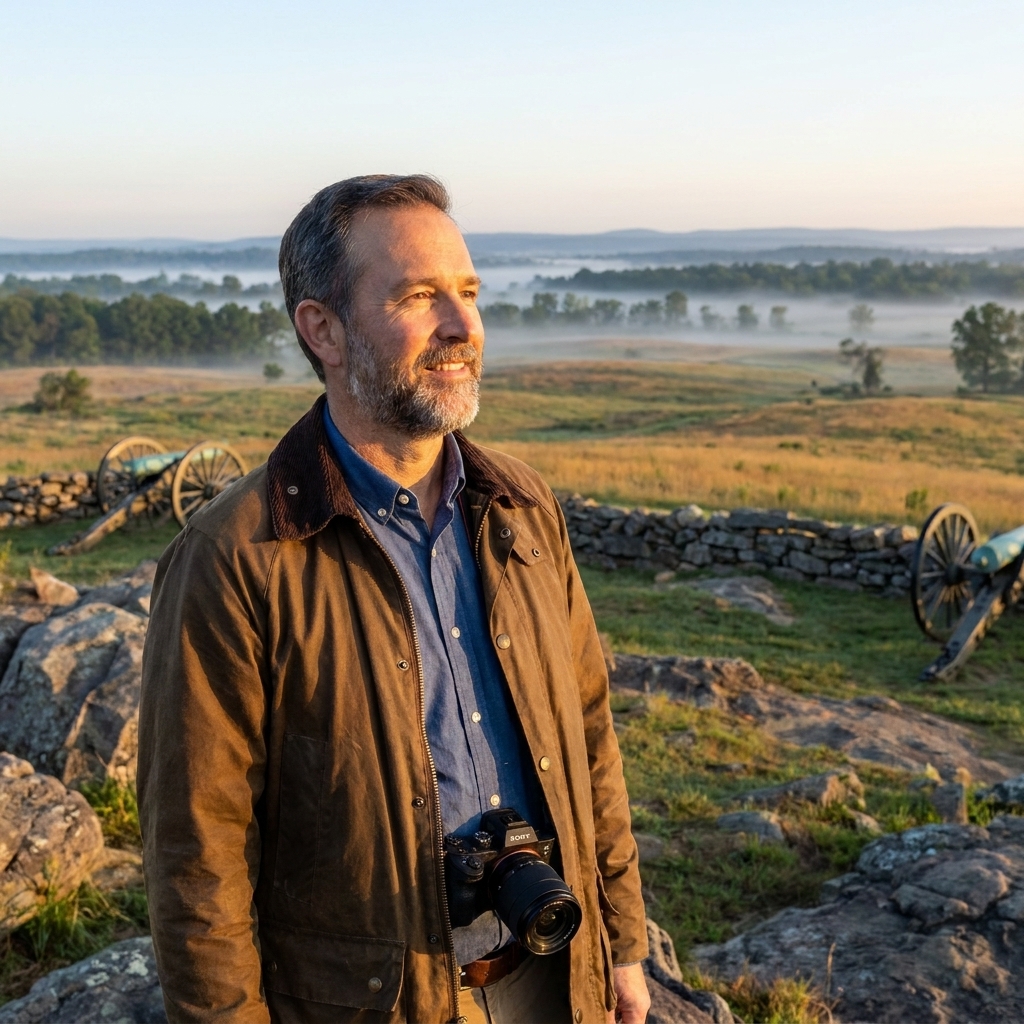
If you want to get more intentional about it, plan your visit around the day’s light. If you can, arrive within an hour of sunrise, or make sure you are still on the ground in the last hour before sunset. Those edges of the day do the best job of revealing terrain.
Movement reads clearer
Most visitors first learn a battlefield as a sequence of famous places: a hill, a lane, a church, a bridge. That is normal, and it is how many of us begin. But battles were movements, not postcards.
Winter helps because you can see the connective tissue between those places. The route from Point A to Point B is no longer obscured by foliage, and you can ask the right questions:
- Is that approach concealed or exposed?
- Does the ground allow a line to stay coherent, or does it naturally break up?
- Where would a formation bunch up at a fence, a creek, a narrow lane?
- What ground would tempt a commander to believe he was safe, right up until he was not?
If you enjoy building a battlefield day around movement, I keep my approach simple and repeatable. I start with a broad overview, then walk one key movement at ground level, then return to a high point to look back and reassess. If that style of day appeals to you, see Plan a Civil War Battlefield Day.
Quiet helps you learn
I do not mind busy battlefields. They deserve visitors. Still, there is something instructive about having space to think. Winter tends to bring fewer tour buses and fewer people competing for the same viewpoints. The quiet makes it easier to do what battlefields ask of us: slow down.
Silence also helps you notice modern intrusions you might otherwise ignore, and that matters when you are trying to reconstruct the past. Traffic noise can pull you out of it, but a calmer day makes the mental work easier. You are better able to imagine the sounds that actually mattered: skirmish fire, shouted commands, the thump of artillery, and long minutes of waiting.
What to watch for
Winter is not a perfect time capsule. It is a clearer view, not an identical one.
Land use has changed
Many battlefields were more open in the 1860s than they are now, especially where modern forests have grown up on once-farmed land. Winter helps by thinning the visual clutter, but a leafless modern woodland can still be denser than a wartime orchard or a grazed woodlot. Use winter sightlines as a tool, not a final answer.
Snow can hide micro-topography
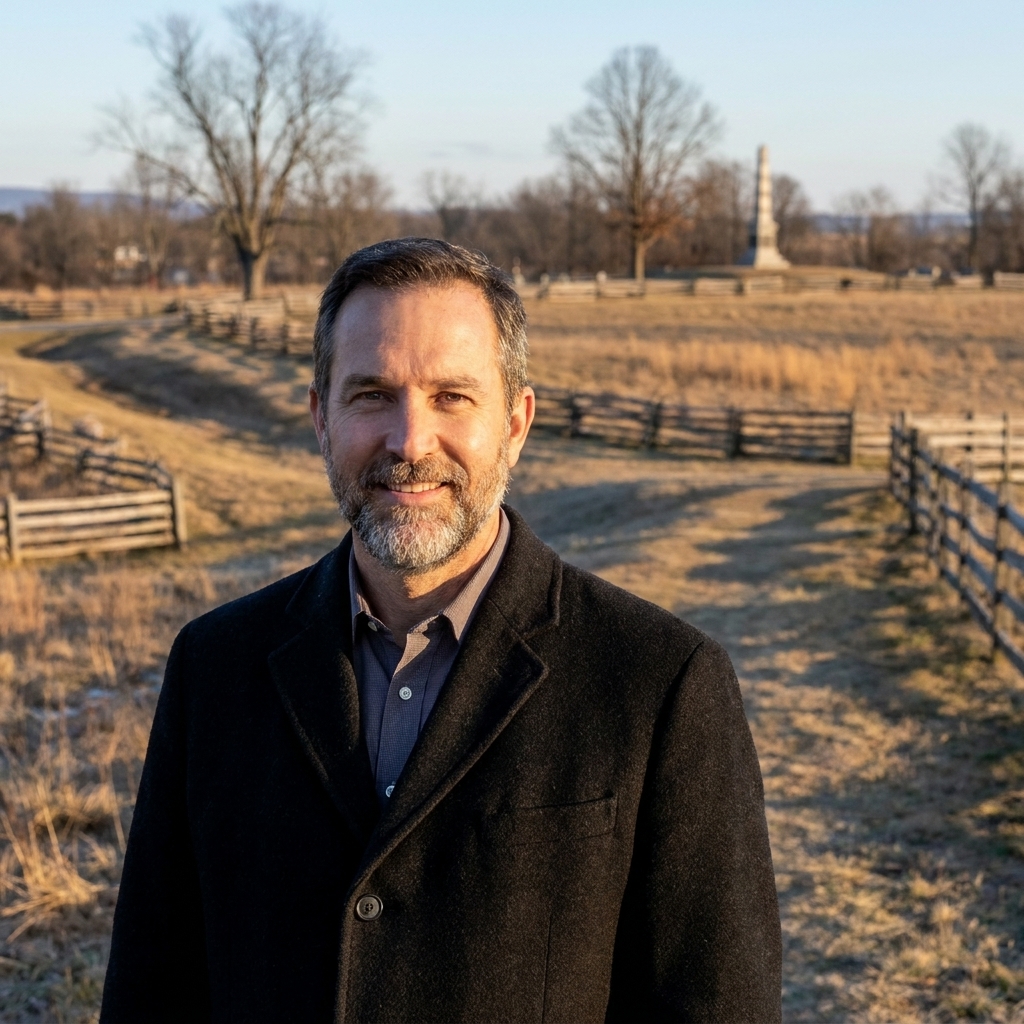
A light dusting can actually enhance ridges and ruts. Deep snow can soften everything and conceal small depressions. If your goal is detailed terrain reading, the sweet spot is often cold, clear, and mostly bare ground.
Mud and ice change everything
Trails can be slick, and low areas can be a mess. That inconvenience comes with a useful reminder: soldiers dealt with miserable footing all the time, and “easy” movement on a map was often difficult in reality.
Access can be limited
In winter, some park roads, restrooms, and visitor centers run on reduced hours or close entirely after storms. And on some landscapes, public ground can sit right against private property, or near hunting areas in the broader region. Stay on marked trails, obey closures, and keep an eye on where the boundary lines actually are.
How I walk for terrain
When I am trying to understand troop movements and sightlines, I keep a few habits.
- Start high. Find a ridge, hill, or observation point to orient yourself. Look for the natural avenues of approach and the dead ground.
- Walk the seams. Move along the edge where woods meet open field, or where a ridge falls away into a swale. Those transitions are where decisions get made.
- Look backward. After you walk a route, turn around and look at it from the opposite direction. What felt safe one way may feel exposed the other.
- Use short, repeated stops. Every 100 to 200 yards, pause and re-check lines of sight. The landscape changes faster than you think.
If you are new to battlefield travel or want a refresher on the practical side, I keep a broader set of tips here: Guide to Battlefield Travel.
What to pack
Winter visits do not require fancy gear, but they do reward preparation. I have learned that if your feet get wet or your hands go numb, you stop paying attention to terrain and start racing the clock back to the car.
- Footwear: waterproof boots with good tread, plus warm socks
- Layers: a base layer you can walk in, an insulating layer, and a wind-blocking outer layer
- Hands and head: gloves you can still use a phone or map with, and a warm cap
- Simple tools: a paper map or a saved offline park map on your phone, a small flashlight, water, and something warm to drink
Most importantly, give yourself permission to slow down. Winter terrain reading is not a box to check. It is a way of seeing.
Good winter terrain types
Almost any battlefield improves in winter, but some types of terrain especially shine.
- Ridge-and-valley fields where slight elevation changes matter more than dramatic hills
- Wooded battlefields where leaves normally block long views through the trees
- Creek crossings and low ground where the approach routes become obvious when vegetation thins
If you want one more way to deepen the experience, pair the walk with a small slice of firsthand writing from the battle you are studying, then stand where the writer stood if you can. I have spent countless hours in diaries and letters, and I still find that the ground corrects my assumptions. Winter just helps the ground speak clearer.
Frequently asked questions
Is winter good for a self-guided tour?
Yes, especially if your goal is understanding terrain. Just check hours and conditions beforehand, and be realistic about daylight. A short winter day can be a blessing if it keeps your itinerary focused.
Will I miss anything by visiting in winter?
You might miss the full effect of landscaped trees, flowering fields, and the warm-weather atmosphere many parks are known for. But for pure battlefield reading, winter often gives more than it takes.
Is it respectful to visit in harsh weather?
I think it can be deeply respectful. Cold, wind, and uncomfortable footing are not romantic, but they are closer to the physical reality many soldiers endured than a sunny afternoon stroll.