7 Stunning Vantage Points for Civil War Battlefield Photography

Silas Weaver
Silas Weaver has spent decades exploring historic battlefields, reading primary journals, and tracking down the lesser-known stories of the American Civil War. His lifelong passion for 19th-century history comes through in his engaging accounts of the places, people, and lingering questions of the era. He believes that walking the actual grounds where history happened is the best way to truly connect with the past.
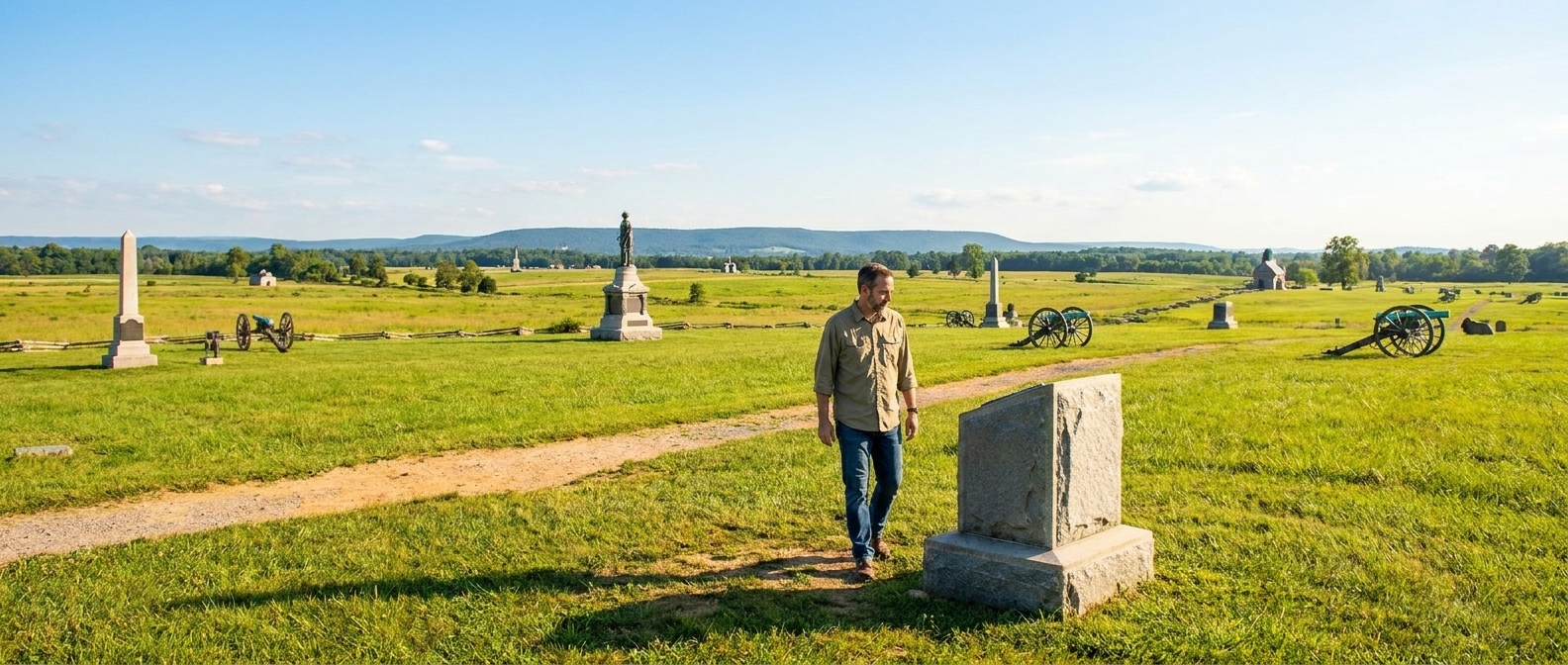
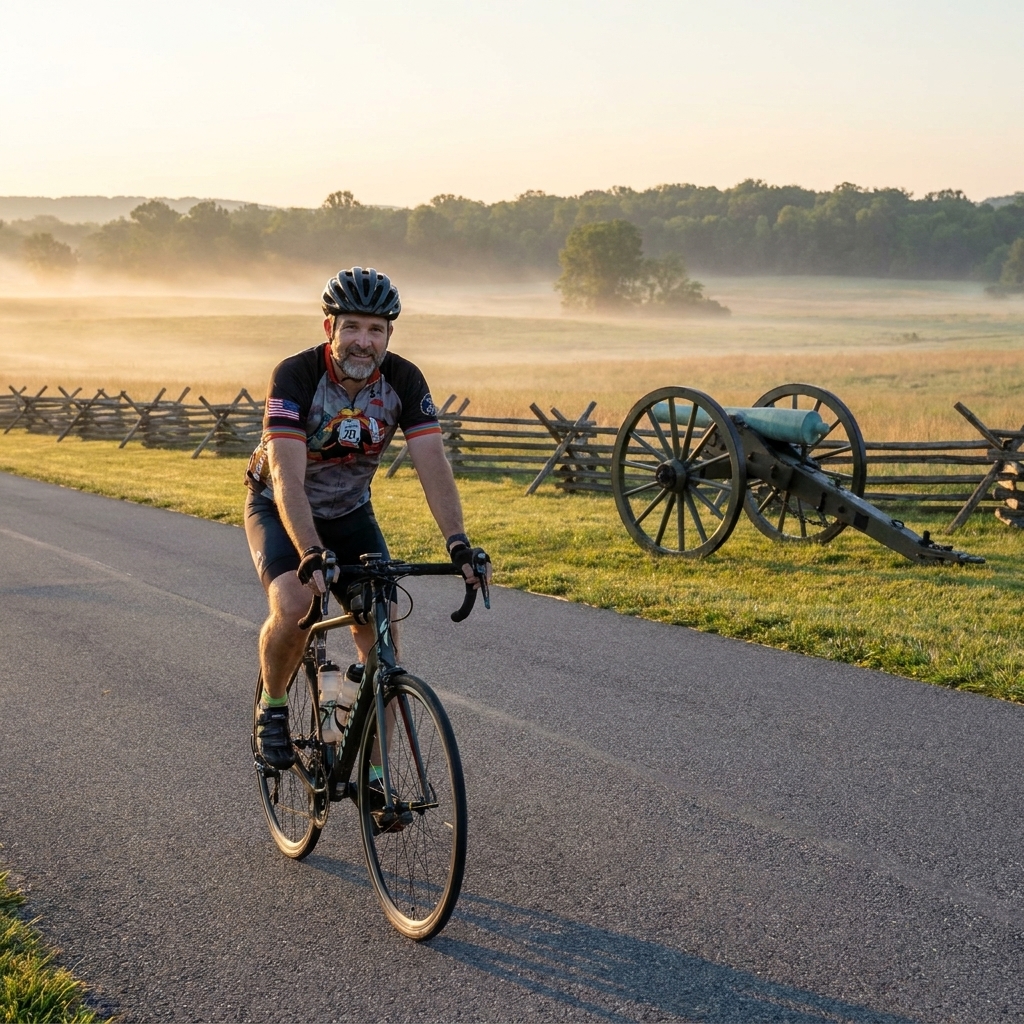
I learned to see battlefields the way I learned to see weather. Not from a classroom, but from repetition. As a kid a short drive from Gettysburg, I would climb until my lungs burned and then look out across the fields, trying to make sense of the folds in the ground. Years later, with a camera riding shotgun in my camper, I still chase the same thing: a high place where the land tells the story all at once.
Below are seven vantage points that consistently deliver for battlefield photography, the kind of spots where you can build a strong foreground, catch a clean horizon, and let the terrain explain why men fought and died where they did. I have also included what to shoot for, when the light tends to behave, where to point your feet, and a few practical notes that will save you time.
Before you climb: a simple field kit
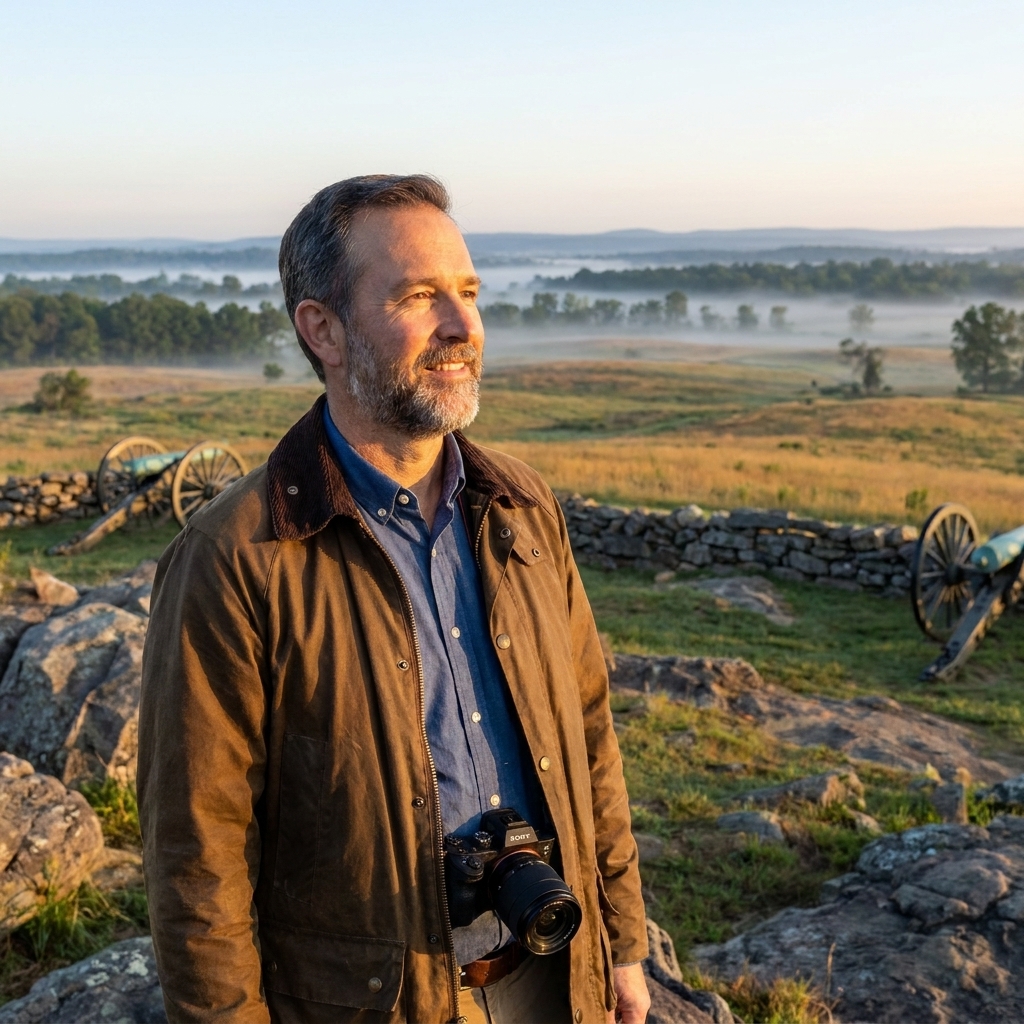
You do not need a huge bag to make strong battlefield landscapes. You do need a plan for light, wind, and distance.
- Lens choices: a wide-angle lens (for foreground and sky) plus a short telephoto (to compress ridgelines and pick out monuments) covers most scenes.
- Tripod: useful at dawn, dusk, and in wooded overlooks where shutter speeds dip fast.
- Polarizer: great for cutting haze and deepening skies, but be careful with ultra-wide lenses since polarization can go uneven.
- Respect the ground: stay on paths and platforms when they are provided. Many of these places are fragile, and the whole point is to preserve what we came to see.
If you are building a full day around one battlefield, my planning approach is laid out in Plan a Civil War Battlefield Day. For broader trip logistics, start with Guide to Battlefield Travel.
1) Little Round Top, Gettysburg
If you want one perch where the landscape reads like a map, Little Round Top is it. From the summit, you can work in layers: boulders and scrub in the foreground, the open slopes and fields beyond, then Cemetery Ridge fading into distance.
Where to stand: work along the summit rocks and look out over the open ground toward Cemetery Ridge. A small shift left or right changes your leading lines more than you think.
What to shoot
- Classic wide sweep: use the rocks as a leading foreground toward the open ground where the Union line anchored.
- Compressed ridgeline: a short telephoto lets you stack ridge on ridge, especially in humid summer haze.
- Detail frames: hands on weathered stone, boot prints in dust, the texture of lichen on boulders. Battlefield photography is not only big vistas.
Light notes
Early morning often gives you gentler contrast and fewer crowds. Late day can be gorgeous too, but watch for harsh side light in midsummer.
Practical note: parking and foot traffic can get tight at peak hours, and conditions and access can change due to preservation work. If you arrive and a section is closed, treat it as a prompt to look for a new angle instead of forcing the familiar one.
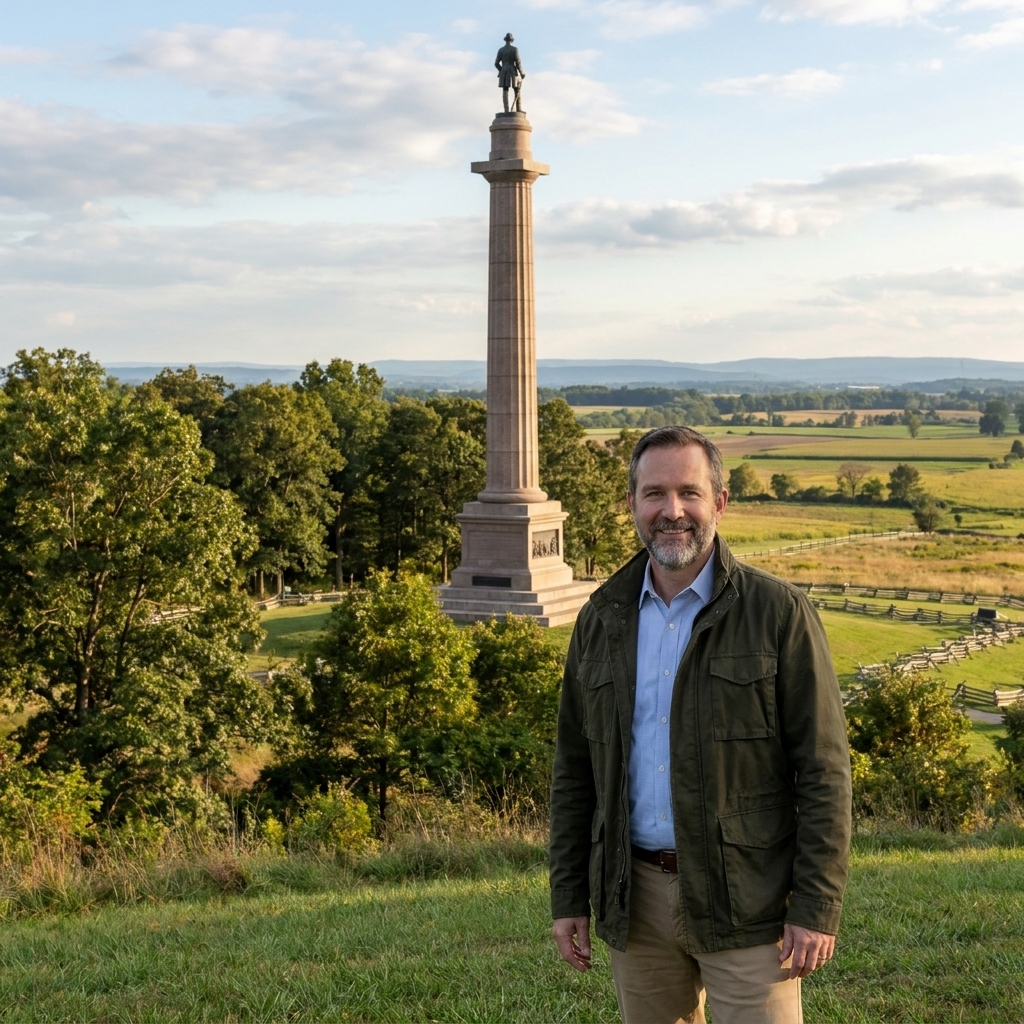
2) New York State Monument, Gettysburg
This is a photographer’s gift when it is open: a high, stable observation deck with a commanding view across the heart of the battlefield. It is also one of the best places on the field to practice storytelling with geometry. From up top, roads, fences, and tree lines become clean composition tools.
Where to stand: on the upper platform, start by facing across Cemetery Ridge, then rotate slowly and let the roads and treelines hand you your composition.
What to shoot
- Panoramas: stitch multiple frames for a long view across Cemetery Ridge and the surrounding ground.
- Downward perspective: look for S-curves in pathways and lines of monuments to lead the eye.
- Weather drama: storms rolling across open farmland look bigger from a tower.
Light notes
Overcast days shine here. The height flattens shadows, and soft light keeps distant details from dissolving into glare.
Practical note: tower access is not always guaranteed. Closures do happen, sometimes for safety or staffing. If it is locked when you arrive, you can still use the base area for strong, low-angle compositions with the monument as your anchor.
3) Marye’s Heights, Fredericksburg
Marye’s Heights is one of those places where the view is deceptively calm. You look out and think it is a pleasant slope. Then you line up the stone wall and the long, open approach in your frame, and the cost of that ground becomes harder to ignore.
Where to stand: start near the crest and look down toward the stone wall and the open ground beyond it. Then walk a little and shoot the reverse, uphill, to show what the defenders held.
What to shoot
- The slope as a subject: frame the rolling ground broadside so the incline reads clearly.
- Seasonal trees: bare winter branches can make the battlefield feel stark and honest.
- Quiet details: stone textures, worn steps, fence lines, and the hard straight line of the wall give you images that feel like memory rather than postcard.
Light notes
Late afternoon side light can rake across the ground and make the contours pop. Foggy mornings can also produce moody, minimal frames that fit the setting.
4) Burnside Bridge area, Antietam
Antietam is full of photographic subjects, but the high ground near Burnside Bridge is special because it gives you structure and landscape in the same frame. The bridge anchors the lower part of the composition while the hills and treeline explain why the crossing mattered.
Where to stand: look for elevated spots on the bluffs near the bridge where you can see the arches below and the rise beyond. The exact best perch changes with foliage and crowds, so be willing to walk a short stretch and test a few angles.

What to shoot
- Bridge plus context: include the creek and the rise beyond to show the tactical problem.
- Telephoto studies: pick out the arch reflections when the water is calm.
- Long exposures: if the creek is moving well, a slower shutter can give you a gentle stillness.
Light notes
Morning is often best for calm water and softer highlights. After rain, the creek can run higher and add energy.
Practical note: this is a popular stop, and not every viewpoint is a formal signed overlook. If a pull-off is busy, park legally, walk the trails a bit, and you will usually find breathing room and a cleaner foreground.
5) Lookout Mountain, Chattanooga
You cannot photograph the Battle Above the Clouds exactly the way it looked, but you can chase the same atmosphere. Lookout Mountain gives you elevation, distance, and weather patterns that change by the hour. When low clouds grab the ridge, your images start to feel like the war’s own mythology.
Where to stand: prioritize spots where you can show the valley dropping away below you. When visibility is good, build a composition that includes both ridge and low ground.
What to shoot
- Layered landscapes: ridges receding into mist are your best friend here.
- City and river context: include the Tennessee River and valley floor when visibility is clear to show why Chattanooga mattered.
- Weather moments: keep your camera ready, because the best light may last five minutes.
Light notes
Autumn mornings can be remarkable, with fog lifting in sheets. Midday can be flat, but storms can create dramatic breaks in the cloud deck.
Practical note: haze and sudden cloud are part of the deal. Treat them as a subject, not a problem, and expose for the highlights so your clouds keep texture.
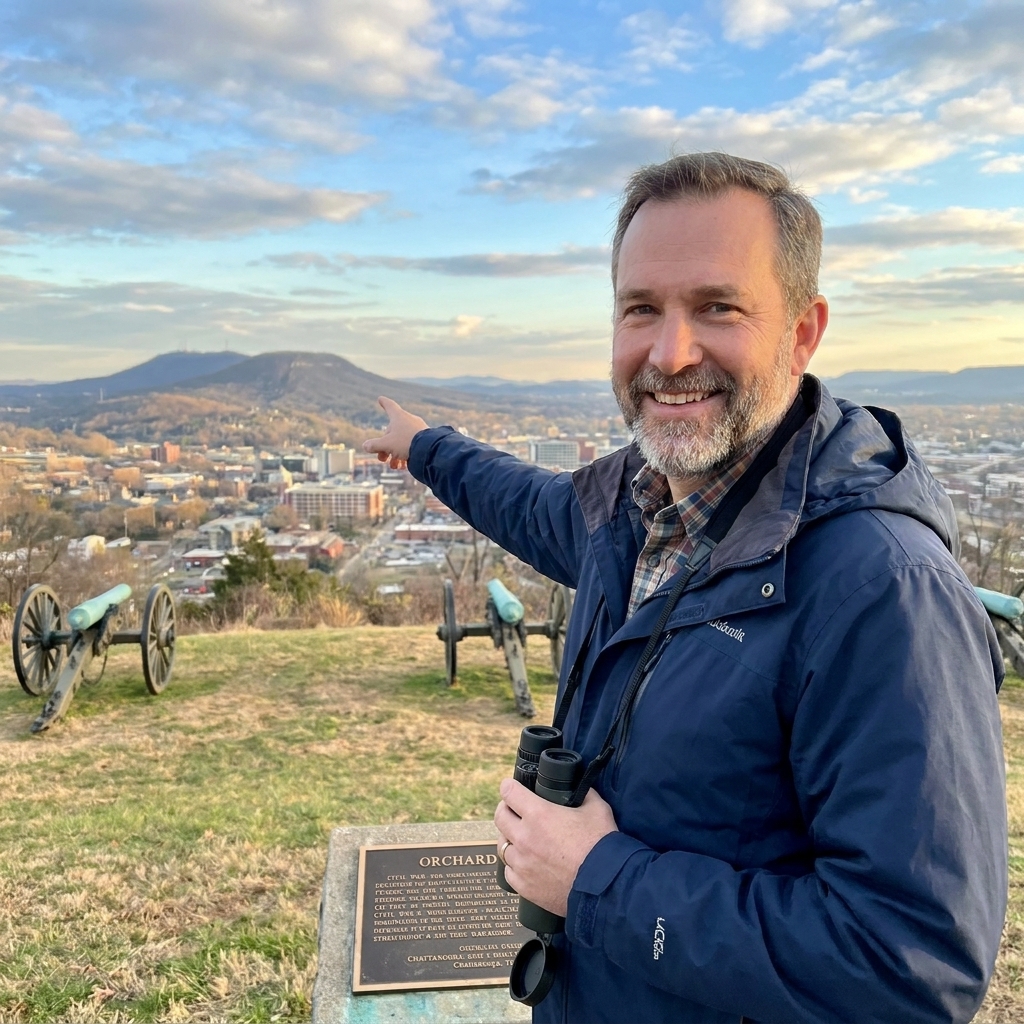
6) Orchard Knob, Chattanooga
If you want a Chattanooga-area viewpoint that is unmistakably tied to the fighting, Orchard Knob is the one I keep coming back to. It is open, readable ground, and the view helps you understand how the Union line staged and oriented itself before the assault on Missionary Ridge.
Where to stand: climb to the top of the knoll and shoot outward across the surrounding ground. Then turn and frame the higher ridges in the distance to show the problem the terrain posed.
What to shoot
- Big-sky battlefield frames: keep the horizon low and let the sky carry mood, especially when weather is moving through.
- Ground that explains itself: use grass, paths, and gentle rises as leading lines. This is a place where small undulations matter.
- Simple monuments, strong context: include markers sparingly, as punctuation, not the whole sentence.
Light notes
Late day is usually kind here. Side light defines subtle contours that disappear in midday glare.
Practical note: because it is more open than the forested overlooks, wind can be a factor. A tripod helps, and so does shielding your lens when gusts kick up.
7) Missionary Ridge, Chattanooga
Missionary Ridge is a lesson in how elevation dictates confidence, and how quickly confidence can be broken. For photography, the ridge offers long lines, open skies, and an easy way to show the relationship between high ground and the city and river corridor below.
Where to stand: find a spot along the crest where the ridgeline itself becomes a leading line. If you can see both ridge and valley in one frame, you have the story.
What to shoot
- Ridgeline perspective: use the crest to draw the viewer’s eye along the terrain.
- Wide sky compositions: storms and big cloud decks can carry the frame.
- Evening silhouettes: trees and monuments can become graphic shapes when the sun drops.
Light notes
Late afternoon through twilight is the sweet spot, especially when the light warms the valley and the ridge goes darker and more dramatic.
Make it feel like history
A battlefield photograph can be beautiful and still miss the point. The trick is to let the land explain the decision making.
- Build a “why here?” frame: include the obstacle or advantage. A slope, a creek, a gap in a ridge, a commanding height.
- Shoot the approach: take a few photos from the low ground looking up, then from the high ground looking down. Together they tell the story better than either one alone.
- Look for quiet evidence: stone walls, fence lines, road cuts, and worn paths are the battlefield’s handwriting.
- Return in a different season: summer hides contours. Winter exposes them. Fall gives you color, but can distract. Each season is a different interpretation.
Plan your route
If you want to string several of these together, you can start with our 3-Day Virginia Civil War Battlefield Road Trip for a practical, travel-first structure, then adapt it around your photography priorities. And if you are traveling with family or friends who are not as patient about waiting for golden hour, I have a few hard-earned tips in How to Keep Kids Engaged on a Civil War Battlefield Trip.
Wherever you go, give yourself time to sit on the high ground and simply watch the light move. The men who fought here did not experience the landscape at 60 miles an hour. Neither should we, especially if we are trying to photograph something true.