A practical, on-the-ground guide to wheelchair-accessible Civil War sites—Gettysburg, Antietam, Manassas, Vicksburg, Chickamauga, Shiloh, and Harpers Ferry—p...
Best Civil War Battlefields for Cycling

Silas Weaver
Silas Weaver has spent decades exploring historic battlefields, reading primary journals, and tracking down the lesser-known stories of the American Civil War. His lifelong passion for 19th-century history comes through in his engaging accounts of the places, people, and lingering questions of the era. He believes that walking the actual grounds where history happened is the best way to truly connect with the past.
Published · Last updated
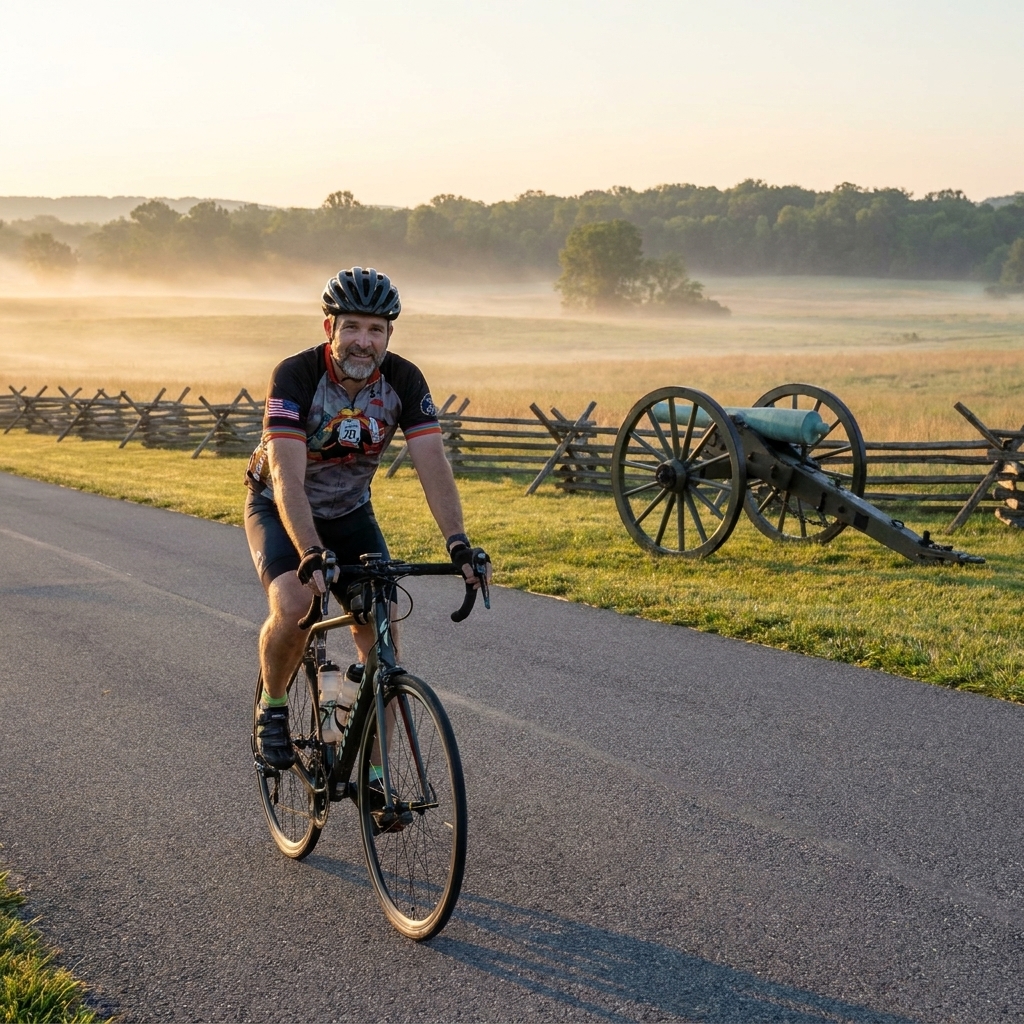
I still remember the first time I pedaled a battlefield loop at sunrise, my tires humming on the tour road while the monuments and fence lines sat in that in-between light. You move faster than a walker but slow enough to notice the ground. A shallow dip that reads like nothing from a car suddenly feels like a position. A long, gentle rise starts to explain why a brigade stalled out right there.
Cycling a battlefield is not about setting a personal record. It is about letting the landscape speak without a windshield between you and the story. Some parks make that easy with wide shoulders and steady traffic patterns. Others demand a little more planning. Below are the Civil War battlefields that tend to be the most bike-friendly, along with the route planning habits that keep the day both safe and meaningful.
What makes a battlefield good for cycling
Bike-friendly does not always mean flat. It usually means predictable.
- Paved, continuous tour roads: Loops or out-and-back roads with clear park signage are ideal.
- Manageable traffic: Lower speeds, fewer blind curves, and less commuter traffic make a world of difference.
- Frequent pull-offs: Safe places to get completely off the roadway matter more on a bike than most folks realize.
- Interpretation you can absorb in short stops: Wayside exhibits (interpretive panels), overlooks, and compact historic points you can visit without locking up for long periods.
- Services within reach: Water, restrooms, and a place to refill bottles, especially in summer.
If you are new to battlefield travel in general, our broader planning primer at Battlefield Travel pairs nicely with cycling because many of the same basics apply: start early, build in margin, and let the ground set the pace.
The most bike-friendly battlefields
Antietam National Battlefield (Maryland)
Antietam has one of the best cycling layouts of any major Civil War site. The main tour roads tie together the Cornfield, Dunker Church area, Bloody Lane, Burnside Bridge, and the later fighting ground with short distances between stops. The riding is rolling but not punishing, and the way the terrain explains the battle is hard to beat on two wheels.
- Best ride shape: A relaxed loop with frequent stops. Treat it like a moving walking tour.
- Safety notes: Expect cars that stop suddenly at pull-offs. Ride defensively near popular photo points.
- Don’t skip: The approach to Burnside Bridge and the climb away from the creek. On a bike, you feel why that crossing mattered.
Gettysburg National Military Park (Pennsylvania)
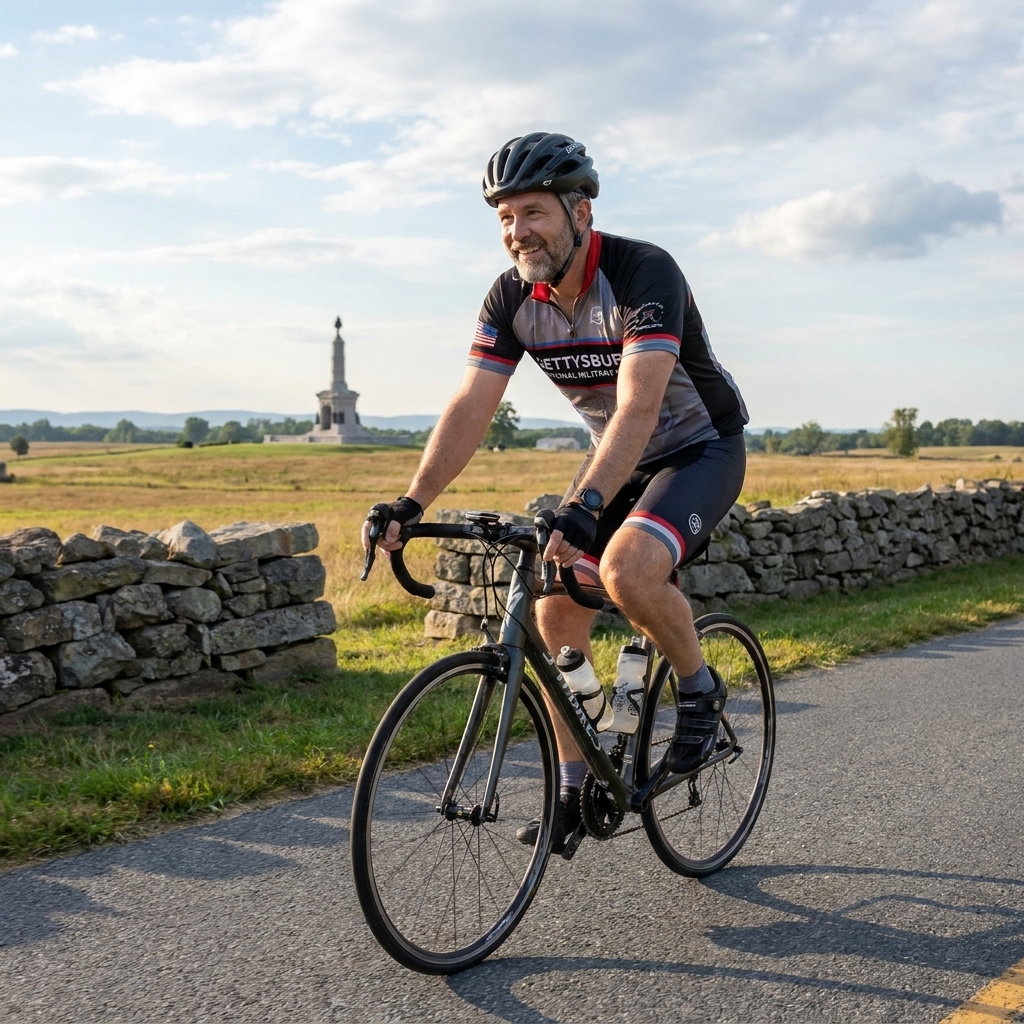
Gettysburg is where I grew up roaming, and I still think it is one of the finest places in America to learn how terrain shapes decisions. For cycling, it offers a lot of paved park roads and countless options to shorten or extend your day. The tradeoff is traffic. Gettysburg is beloved, and in peak season it can feel like everyone on the East Coast has decided to drive the loop at the same hour. It is also worth saying plainly that not every key segment is low-stress. You will likely mix park roads with connector roads and a few busier stretches, depending on what you want to see.
- Best ride shape: Start very early and link the main fields with smaller connector roads. Dawn rides here are a gift.
- Safety notes: Weekend midday traffic is the hardest. If you want a calmer ride, pick a weekday morning.
- Don’t skip: The grade up toward Little Round Top. Even at an easy cadence, it reminds you that moving a line is not a simple thing.
Vicksburg National Military Park (Mississippi)
Vicksburg is a cyclist’s park in the best sense: a paved tour road that keeps delivering. The hills are real, but that is part of the story. The siege lines and the high ground around the city are not abstractions when you have to earn them with your legs.
- Best ride shape: A steady touring loop with planned breathers at waysides.
- Safety notes: Bring more water than you think you need. Heat and humidity can turn a pleasant climb into a rough one.
- Don’t skip: Any stop where you can look down the slopes and imagine the arc of artillery fire. Vicksburg is a vertical battlefield.
Stones River National Battlefield (Tennessee)
Stones River is compact enough to feel approachable, and it works well for cyclists who want a history-rich ride without an all-day mileage commitment. The setting is quieter than you might expect given how close it sits to modern development.
- Best ride shape: Short loops and repeats. It is a good place to re-ride a segment after you read a wayside exhibit.
- Safety notes: Watch for intersections and traffic where park roads meet surrounding streets.
- Don’t skip: The Hazen Brigade area. It is one of those places where stopping for five minutes changes how you see the whole fight.
Shiloh National Military Park (Tennessee)
Shiloh is a strong choice for riders who want long, quiet stretches between stops. The park’s roads are generally smooth and the battlefield’s wooded character gives you shade in places, with plenty of open ground mixed in.
- Best ride shape: A measured loop with longer coasting segments between clusters of interpretation.
- Safety notes: Sight lines can be shorter in wooded sections. Use a bright rear light even in daytime.
- Don’t skip: The Hornet’s Nest area and the approach toward Pittsburg Landing. The shifts in ground are subtle until you ride them.
Chickamauga and Chattanooga National Military Park (Georgia and Tennessee)
If you like a ride that feels like a route through a living landscape, Chickamauga can be excellent. It is also a place where planning pays off because some roads are calmer than others, and the terrain can surprise visitors who only picture it as woods. For readers heading that way, I have a fuller field guide at Chickamauga Battlefield Guide.
- Best ride shape: Pick a handful of sectors and stitch them together rather than trying to do it all in one continuous push.
- Safety notes: Expect changing light under tree cover and vehicles pulling in and out of pull-offs.
- Don’t skip: A stop along the LaFayette Road corridor to think about how lines moved and broke in thick country where vision was limited.
Route planning tips
1) Ride early, read later, then re-ride
This is my favorite rhythm: ride the full loop at an easy pace to get the shape of the ground into your legs, then stop for a longer interpretation break, then re-ride the most important mile or two. On the second pass, the battle narrative tends to click.
2) Treat pull-offs as part of the route
On many tour roads, the safest stop is a designated pull-off, even if it is 200 yards past the marker you want. Build that into your plan. Coasting a little extra is better than balancing on a narrow shoulder with cars squeezing by.
3) Use a simple three-layer plan
- Layer one: Your must-see historic stops, usually 5 to 8 points.
- Layer two: Optional stops if legs and daylight allow.
- Layer three: A bailout route that shortens the loop if weather changes or you have a mechanical.
If you like organizing a day in a more general way first, then tailoring it to cycling, start with Plan a Civil War Battlefield Day and swap in cycling time estimates.
4) Budget time for the story
On a typical road ride, 15 miles can be about an hour. On a battlefield, 15 miles can easily become three hours because you are stopping, reading, looking, and re-orienting. That is not lost time. That is the whole point. As a rough planning range, many of these battlefields fit nicely into 1.5 to 3 hours at a stop-and-go pace, and you can always stretch that longer if you like to linger.
5) Mind the seasons
- Summer: Heat management is the real enemy. Carry extra water and electrolytes.
- Fall: Often the best mix of temperatures and visibility, but watch for earlier sunsets.
- Winter: Quiet roads can be wonderful, but wind on open fields can bite hard.
- Spring: Gorgeous, but be ready for sudden rain and slick leaves on shaded pavement.
6) Simple gear that improves safety
- Front and rear daytime lights
- A bell or clear voice for shared paths and crowded overlooks
- A small lock if you plan to step away from your bike at visitor centers
- A paper map photo or offline map saved on your phone since reception can be spotty in rural parks
7) Know that rules and access can shift
Battlefield cycling policies vary more than people expect. Some parks allow bikes only on roads, not on certain trails or closed service lanes. One-way tour roads, seasonal closures, construction, and special event days can also change how a ride feels. E-bikes are another common wrinkle, since parks can treat different classes differently. The practical rule is simple: follow posted signs, respect closures, and ask at the visitor center if you are unsure.
Ride with respect
Most parks welcome cyclists, but the battlefield experience only stays good if we act like guests on sacred ground.
- Slow down at crowded stops. Families step into roads without thinking, and they should not have to worry about a cyclist flying through.
- Stay on paved roads and open routes. Cutting across grass might seem harmless until you realize how quickly it creates wear in sensitive areas.
- Keep voices and music in check. Some people come to these places for quiet reflection.
- Give walkers the right of way. On mixed-use paths, a bicycle is the fast-moving object.
Quick FAQ
Do I need a permit?
Usually no for a standard individual ride on open park roads, but rules vary by park. Some areas may be off-limits to bikes, and special events or temporary closures can change access. When in doubt, follow posted regulations at the entrance and along the tour roads, and confirm details at the visitor center.
Road bike or gravel bike?
Most battlefield tour roads are paved, so a road bike works well. A gravel bike adds comfort and flexibility if you plan to connect the park to surrounding back roads or deal with rough shoulders.
Can this be family-friendly?
Yes, if you pick quieter hours and shorter loops, and if your group is comfortable riding near cars. For families, the safest win is often an early morning ride with lots of stops and a hard turnaround time before traffic builds.
A final note
The best battlefield rides leave you tired in the legs and busy in the mind. You start noticing how a stone wall is not just a stone wall. It is cover. How a gentle ridge is not just pretty. It is command of sight and fire. Cycling does not replace walking a key position, and it is no substitute for sitting quietly at a marker and letting the names settle on you. But it is one of the finest ways I know to stitch a battlefield’s scattered pieces into a single, memorable shape.
If you want to see more of how I plan trips and choose routes, you can find my author page at Silas Weaver.