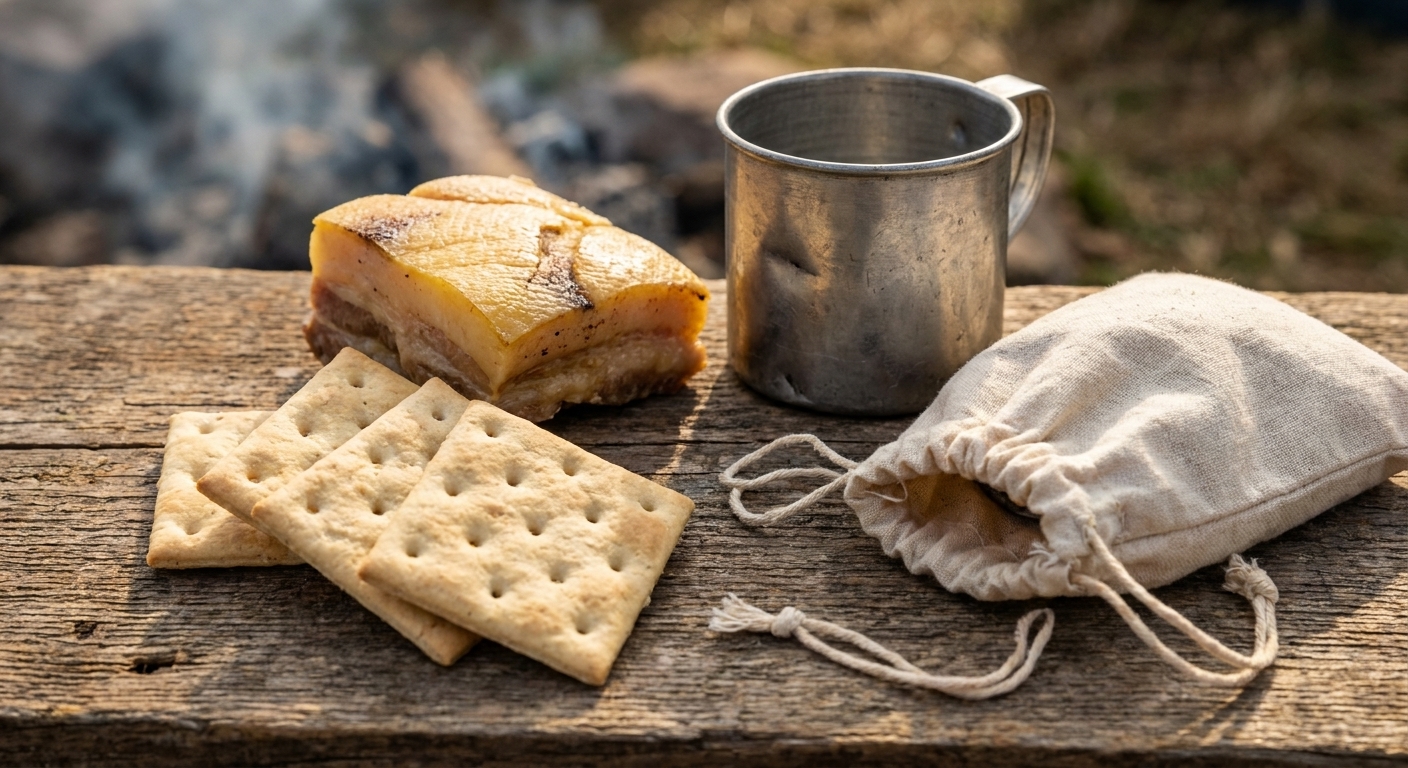
A practical guide to how Union and Confederate soldiers sheltered on campaign—wedge tents vs. shelter halves, gum blankets, bedrolls, and field tricks for we...
Union Blue vs. Confederate Gray

Silas Weaver
Silas Weaver has spent decades exploring historic battlefields, reading primary journals, and tracking down the lesser-known stories of the American Civil War. His lifelong passion for 19th-century history comes through in his engaging accounts of the places, people, and lingering questions of the era. He believes that walking the actual grounds where history happened is the best way to truly connect with the past.
Published · Last updated
On a cool morning not far from Gettysburg, I once watched a living history private lace up a pair of rough shoes that looked like they could have walked straight out of 1863. He grunted, tugged, and finally got them snug. Then he said something I have heard in one form or another for years. “You can keep the musket. Give me better shoes.”
That is the quickest way I know to get past the romance and into the reality of Civil War soldiering. Uniform color mattered for identity and pride, sure. But a man fought, marched, shivered, sweated, and slept inside his gear. When we compare Union blue and Confederate gray, we are really comparing two supply systems, two industrial bases, and two daily experiences in the field.
Before we compare, a truth about “standard issue”
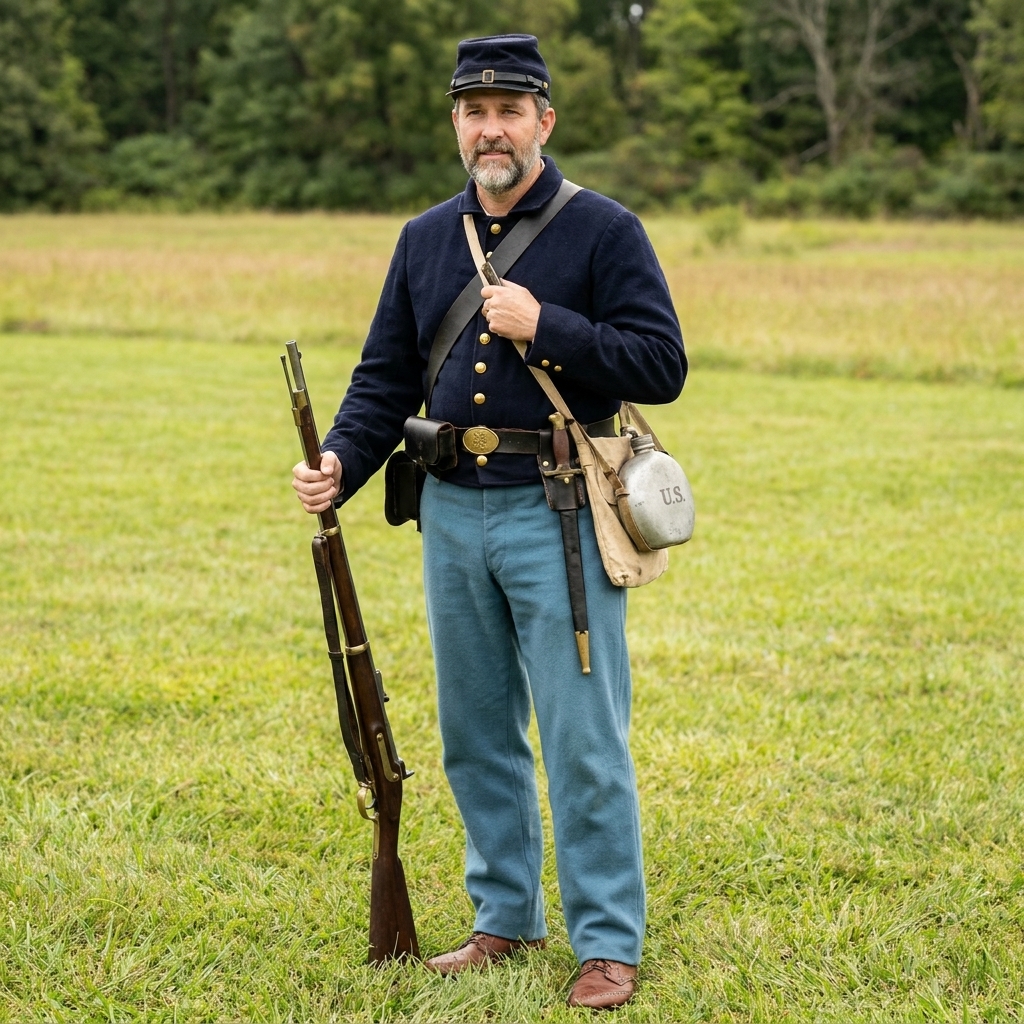
Any discussion of “standard issue” needs a footnote right up front. Both armies had regulations, contracts, and depots that tried to make soldiers look alike. Real life did not always cooperate. Men lost gear on the march, swapped items with comrades, bought replacements from sutlers, or wore captured clothing. Confederate quartermasters issued what they could obtain, which often meant a patchwork of state-made and depot-made items. Even the Union, with deeper pockets and factories, could issue mismatched lots that varied in shade and quality.
So when I say “typical,” I mean what you most often see in quartermaster records, surviving artifacts, and period photographs. If you are planning a battlefield visit and want to picture a line of men moving through the trees, this gets you close to what the average private experienced.
For more context on daily routines, rations, and camp life that shaped how gear was used, see our Civil War life guide.
Cloth and color
Union: indigo-dyed wool and mass production
Union enlisted uniforms were anchored by dark blue wool for the coat and sky blue wool for trousers. The fabric was typically wool flannel or kersey, made in large northern mills and cut in bulk. That industrial capacity matters. It meant the Union could replace worn-out clothing more reliably, and it meant “blue” stayed, more or less, within a recognizable family of shades.
Union coats for enlisted men were most often the sack coat, a simple, short, dark blue wool coat with four buttons. It was not tailored, but it was practical. The regulation frock coat existed and was issued, especially earlier in the war, but the sack coat became the working man’s uniform on campaign.
Confederate: gray on paper, variety in practice
Confederate regulations called for gray. What soldiers wore ranged from true gray to a warm brownish “butternut,” and everything between. Natural dyes, inconsistent dye lots, and the South’s limited access to chemicals and imported dyestuffs made color drift common. Add in locally produced cloth and you get a look that can seem almost “non-uniform” to modern eyes.
As the Confederate supply system matured, major depot operations including Richmond and Atlanta turned out large runs of more standardized jackets and trousers. Columbus, Georgia also became an important manufacturing center. Still, the baseline truth remained. Confederate uniforms were often more variable in cut, shade, and durability.

Coats and jackets
Union enlisted coat: the sack coat
The Union sack coat was simple and roomy, meant for mass production and movement. It layered well over a flannel shirt and could be worn buttoned tight against wind. It also had a reputation for being a little shapeless. Soldiers cared less about silhouette than about whether it held together after a week of rain and mud.
Confederate enlisted coat: the short jacket
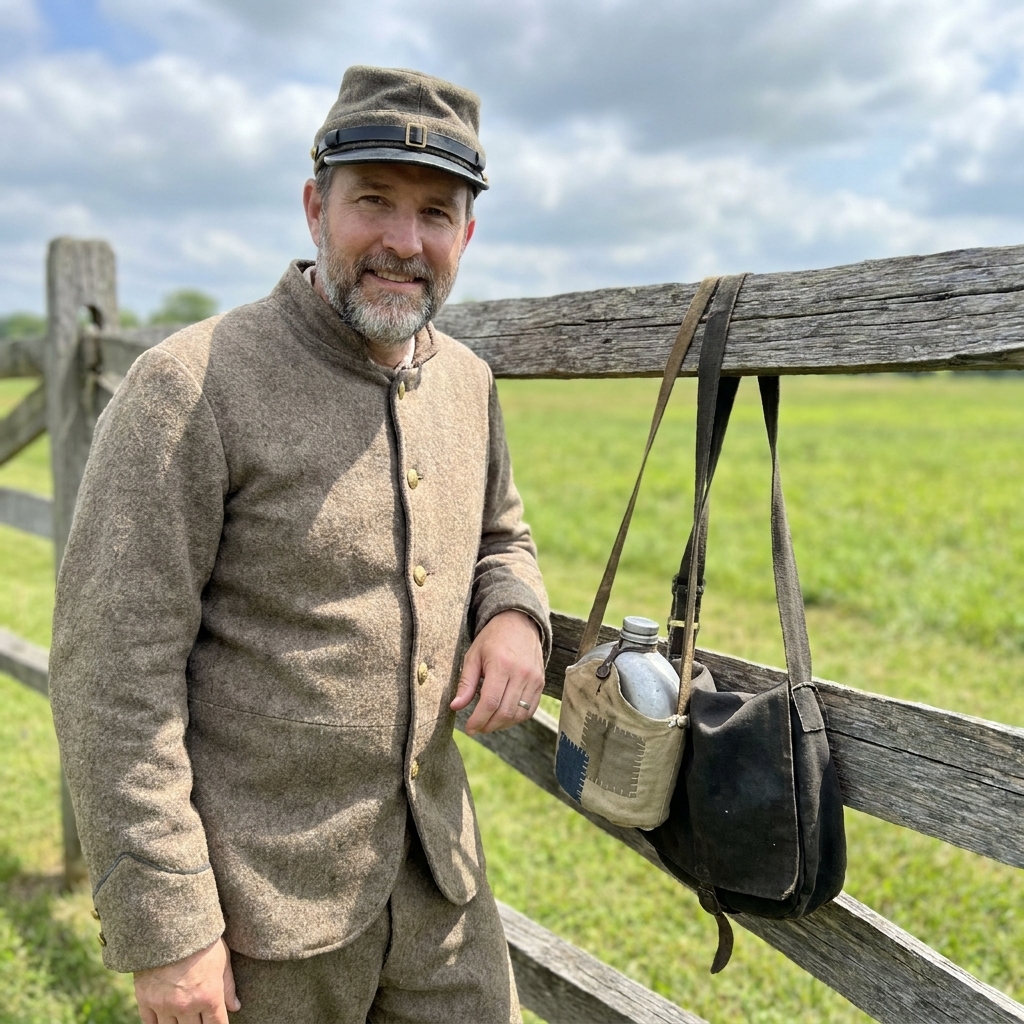
The Confederate shell jacket, usually a short waist-length jacket, is one of the most recognizable pieces of Southern enlisted clothing. It conserved cloth and could be produced with fewer materials than a longer coat. It also worked well when crawling, kneeling, or loading a musket from awkward positions.
On an open ridge with a stiff wind, the drawbacks show up fast. That is why men prized extra layers when they could get them, especially later in the war when blankets and overcoats could be scarce.
Headgear
Union: forage caps, Hardee hats, and regulation pressure
The forage cap is the classic Union look: a low, flat-topped cap with a short visor. It was cheap to make, reasonably compact, and looked “soldierly” in a way the army liked. Some units wore Hardee hats or other dress hats, but on long campaigns, the forage cap dominated photographs and surviving examples.
Confederate: wide-brim hats and what held up
Confederate soldiers are often pictured in broad-brimmed hats, and for good reason. Wide brims kept off sun and rain, and hats could be purchased privately, brought from home, or issued when available. Caps existed in the Confederate system too, but hats were extremely common in the ranks.
That brim was not just for looks. After hours on the road, shade over the eyes becomes comfort, and comfort becomes endurance.
Shirts and underlayers
Both armies issued shirts, often flannel, in muted colors. Many men also wore civilian shirts from home. Here the difference was less about regulation and more about resupply and laundering. The Union generally had more dependable access to replacements, while Confederates were more likely to mend, patch, and keep wearing a shirt long after it should have been retired.
One overlooked reality is how underlayers affected health. A shirt that stayed damp for days contributed to chills, skin irritation, and misery. In camps and trenches, misery had a way of becoming sickness.
If you are interested in how trenches and constant damp changed what men wore and what survived, our field piece on Petersburg’s trenches helps set the scene.
Trousers and suspenders
Union trousers
Union enlisted trousers were typically sky blue wool, often reinforced at stress points depending on contract quality. Even in the best-supplied army, trousers wore out fast. Knees went first. Seats went next. Many soldiers relied on suspenders, issued or privately obtained, to keep trousers up when waistbands stretched and buttons popped.
Confederate trousers
Confederate trousers varied more widely. Some depot-made trousers were sturdy. Others were made from coarser cloth and wore thin quickly. When you read soldiers’ letters complaining about raggedness, they are not performing for sympathy. They are describing a real tactical problem. Torn trousers and failing waistbands make marching harder and sleeping colder.
Footwear
Union: brogans in big numbers
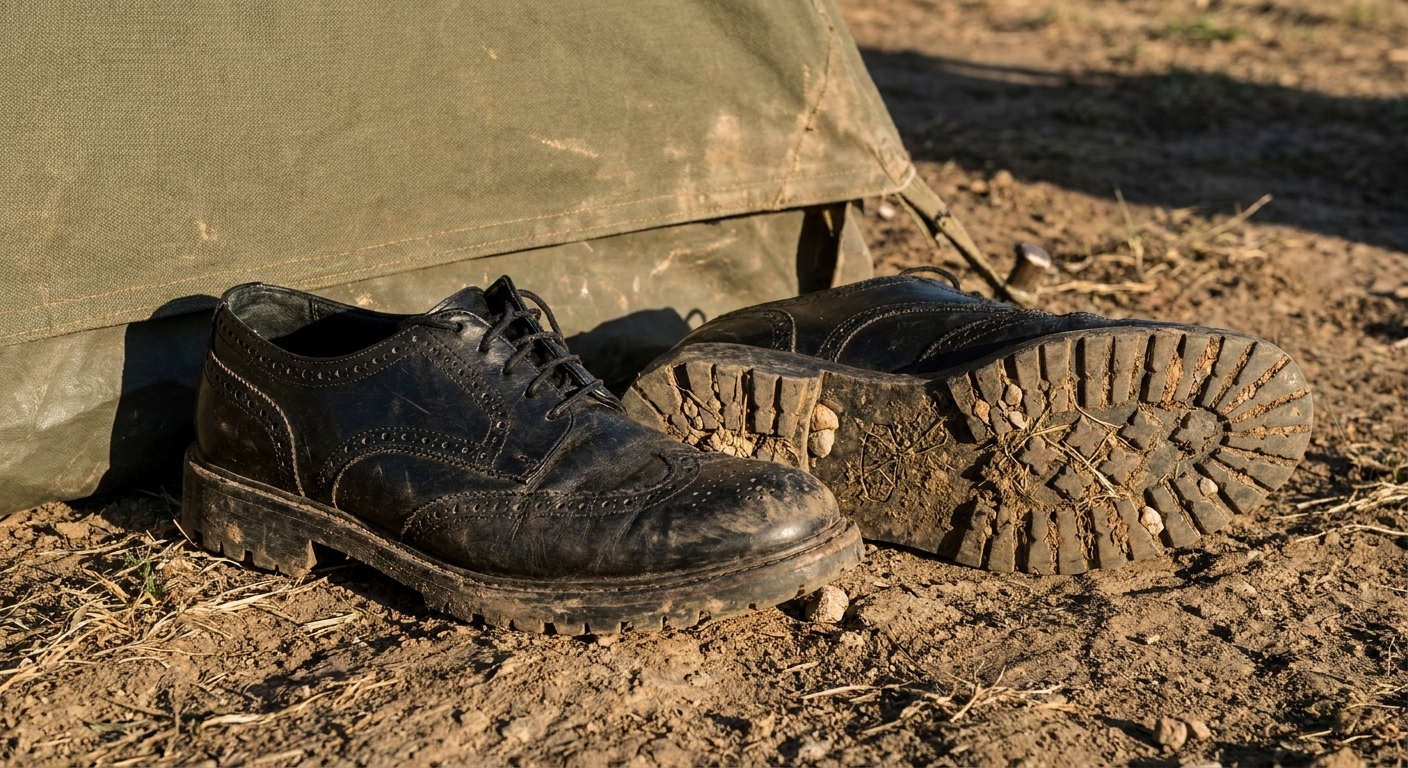
The typical Union enlisted shoe was the brogan, a low-ankle leather shoe with a simple shape that could be produced in quantity. Many were made on “straight” lasts, meaning there was little difference between left and right. Soldiers often had to break them in and sometimes swap shoes from foot to foot to even out wear. That could mean bloody heels early on, even in a well-supplied army.
Confederate: a mix of issue shoes and hard times
The Confederacy issued shoes, including depot-made brogans, but shortages were chronic. In some armies and periods, especially during hard marching and after long campaigns, men went barefoot or near-barefoot more often than the popular image admits. Even when shoes existed, size runs were inconsistent. A man might accept a poor fit rather than none at all.
When you walk even a short battlefield trail and feel the ground change from grass to rock to mud, you start to grasp why soldiers obsessed over footwear. Bad shoes turned good marching days into misery and made straggling more likely.
If walking the ground is your way into the past, you may enjoy our practical advice on planning routes and pacing in plan a battlefield day.
Belts, buckles, and leatherwork
Leather gear is where the Union and Confederate contrast becomes almost tactile. The Union could contract for enormous quantities of standardized leather accoutrements: waist belts with US buckles, cartridge box slings, cap pouches, bayonet scabbards, and harness. Items still broke, but the system could replace them.
Confederate leatherwork was more improvisational. Some soldiers had excellent, depot-made gear. Others carried locally produced items, repaired pieces, or captured Union leather. You also see variations like painted cloth gear or accoutrements made with whatever material could be found when leather was scarce.
The cartridge box and ammunition
On paper, both sides sought the same thing. A soldier needed ammunition protected from weather and close at hand. Cartridge boxes generally held paper cartridges and percussion caps were carried in a cap pouch. In practice, the Union’s more consistent leather supply meant more uniformity in box design and construction.
Confederate cartridge boxes range from well-made to plainly rough, depending on where and when they were produced and what materials were available. Captured Union cartridge boxes were prized for good reason. A box that kept cartridges dry could be the difference between firing when it mattered and fumbling with damp paper.
For most infantrymen, the load looked familiar on either side: musket, sling, cartridge box, cap pouch, bayonet and scabbard. The exact long arm could vary by unit and theater, with a mix of Springfields, Enfields, and other arms. In the line, though, the gear problem stayed the same. Keep the cartridges usable and the steel close.
Haversacks and canteens
Union
Union soldiers commonly carried a tarred cloth haversack for rations and small items, and a canteen, often the classic smooth-side or corrugated tin model covered in cloth. The cover reduced glare and offered a bit of insulation. The strap was usually cotton webbing or leather depending on contract.
Confederate
Confederate soldiers carried many of the same types of items, but with more variety. Canteens might be tin, wood, or captured Federal models. Haversacks could be issued, homemade, or replaced with whatever bag was available. I have seen period descriptions that read like a man listing the contents of his kitchen pantry stuffed into a sack, because that is what it was. Survival gear, not fashion.
Blankets, overcoats, and shelter
Union: more consistent issue
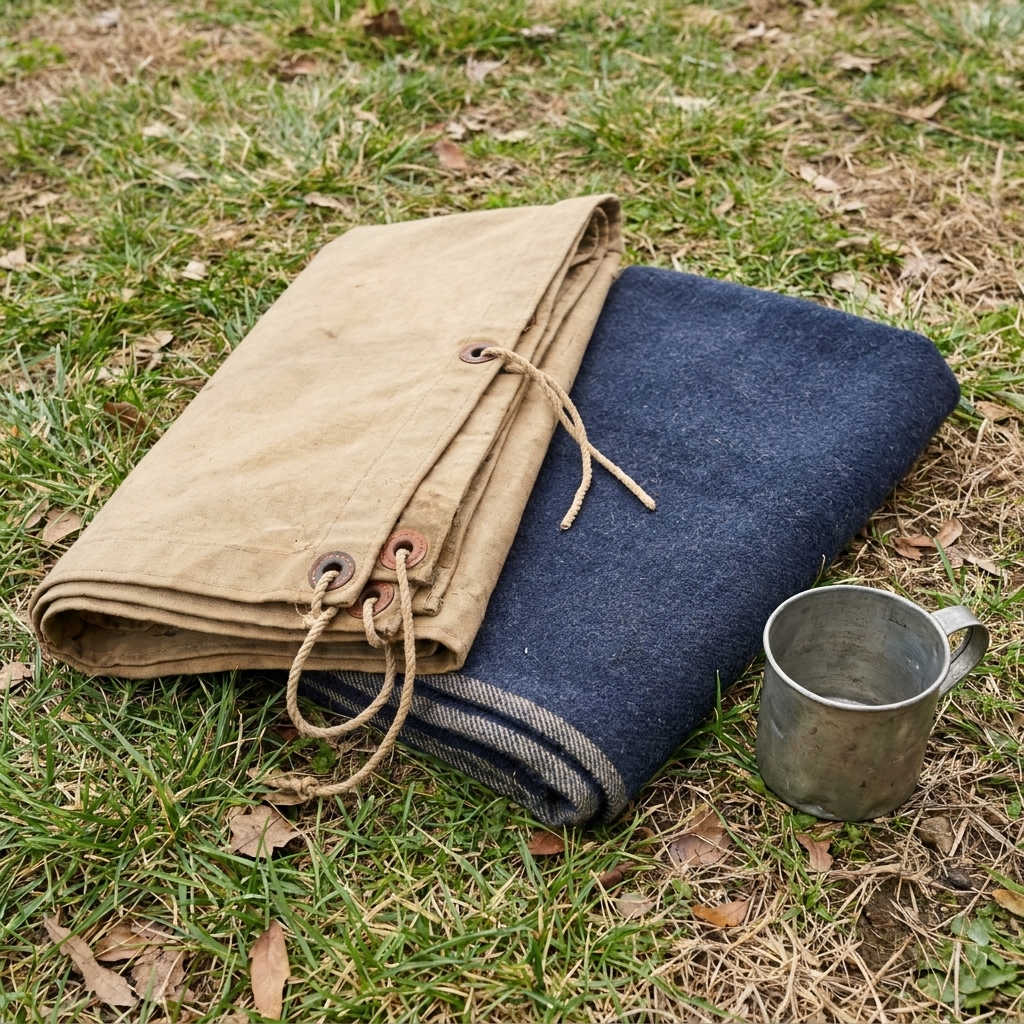
Union soldiers were commonly issued wool blankets, and many received greatcoats, especially in colder seasons. Shelter halves became increasingly common in the Union by the mid-to-late war, though practices still varied by army and campaign and many men improvised with whatever kept rain off. Even then, men slept cold. But the Union system was better positioned to replace worn blankets and issue cold-weather gear in quantity.
Confederate: shortages, improvisation, and reliance on home
Confederate armies struggled more with blankets and overcoats, particularly as the war ground on. Men relied on quilts from home, captured blankets, or whatever the quartermaster could scrounge. When winter weather hit hard, the lack of adequate bedding showed up in sickness rates and morale.
It is hard to overstate the importance of a single blanket. Stand on a battlefield ridge in late fall with a wind pushing right through your jacket, and you can imagine what a soldier felt with nothing but thin cloth between his bones and the night.
Backpacks and bedrolls
Regulations prescribed knapsacks and straps. Soldiers often had other ideas. Many veterans, North and South, learned to travel lighter. They rolled a blanket, tied it with straps or cord, and marched. Union soldiers are frequently associated with the double-bag knapsack, and it was common, especially early on. But plenty of men discarded packs on hard campaigns when speed and sore shoulders mattered more than regulation.
The difference again circles back to supply. When replacements are available, you are more likely to carry issued equipment and keep it serviceable. When replacements are uncertain, you simplify, repair, and improvise.
Insignia and identification
One point that surprises first-time visitors is how little of the “identity system” shows at distance. Yes, there were branch colors, buttons, and rank chevrons. Union corps badges, when worn, could help men sort themselves out in the churn of an army on the move. Confederate units had their own state patterns and distinctions early on, and plenty of pride stitched into small details.
But in the field, grime and weather did their work. Cloth faded, tape frayed, and anything bright tended to dull fast. Up close, those details mattered. At musket range, what mattered more was the line, the flags, and the officer’s voice cutting through smoke.
Personal items
In the haversack, knapsack, or pockets, the two armies begin to look more alike. Soldiers on both sides carried combinations of:
- Eating tools: tin cups, plates, spoons, and sometimes private utensils
- Sewing kits: needles, thread, spare buttons, bits of cloth for patching
- Hygiene items: combs, soap when available, toothbrushes for some
- Writing materials: paper, envelopes, pencils, and treasured letters from home
- Small comforts: tobacco, pipes, playing cards, religious tracts, pocket Bibles
When you read diaries, you realize how often these “small” things became lifelines. A pencil stub meant a letter could go out. A needle meant trousers could be patched before a march. A pipe meant ten minutes of quiet after a day that felt like it would not end.
Quick comparison
| Category | Union typical issue | Confederate typical reality |
|---|---|---|
| Outer coat | Dark blue sack coat (common) | Short gray shell jacket (common), many variations |
| Trousers | Sky blue wool trousers | Gray or brownish trousers, wide range of cloth and cut |
| Headgear | Forage cap common, hats also seen | Wide-brim hats very common, caps also used |
| Footwear | Brogans in large supply, still hard on feet | Mixed issue and private shoes, shortages in some periods |
| Leather gear | More standardized belts, boxes, and slings | More varied and often repaired, captured gear common |
| Cold-weather gear | Blankets and greatcoats more consistently available | More reliance on home, capture, and improvisation |
Myths worth retiring
Myth 1: Confederates all wore gray
Gray was the aim, not the guaranteed result. Butternut and brown shades were common, especially with locally produced cloth and variable dyes.
Myth 2: Union gear was always high quality
The Union had scale, not perfection. Contractors sometimes cut corners. Shoes pinched, cloth varied, and issued items could fail. The key difference was replacement and consistency over time.
Myth 3: Standard issue means identical appearance
Two men in the same regiment could look different within months of campaigning. Sun faded cloth. Rain shrank wool. Repairs changed shapes. War is hard on fabric.
Seeing it in the field
If you want to feel these differences without buying a stitch of wool, pick a battlefield with mixed terrain and walk it slowly. A shaded woodline, a wet low spot, a rocky rise, an exposed field. You will notice how quickly your own attention turns to the same basics soldiers wrote about: footing, water, weight, wind.
For practical planning and what to look for on site, start with our battlefield travel guide. If you are taking children along, our tips in keeping kids engaged on a battlefield trip can help turn “old stuff” into real human stories.
Gear was never just gear
Union blue and Confederate gray have become symbols. Standing on quiet ground where the guns once sounded, I try to remember that each coat and shoe was also a problem to solve. How do I keep dry. How do I keep moving. How do I keep my feet. How do I carry enough to live, but not so much I cannot march.
That is the real comparison. The Union generally had a steadier flow of cloth, leather, and replacements. The Confederacy, often short of all three, leaned on ingenuity, repair, and whatever could be drawn from home, local workshops, and captured stocks. Both sides endured discomfort. One side more often endured scarcity.
And when you picture two lines forming in the morning haze, remember that the men inside those uniforms were thinking less about color and more about the pinch of a shoe, the weight of a cartridge box, and whether their blanket would be there when the sun went down.