|
|
|
|
|
|
I wish, Mr. President, to express the feelings with which I vote for the secession of Alabama from the Government of the United States; and to state, in a few words, the reasons that impel me to this act. I feel impelled, Mr. President, to vote for this Ordinance by an overruling necessity. Years ago I was convinced that the Southern States would be compelled either to separate from the North, by dissolving the Federal Government, or they would be compelled to abolish the institution of African Slavery. This, in my judgment, was the only alternative; and I foresaw that the South would be compelled, at some day, to make her selection. The day is now come, and Alabama must make her selection, either to secede from the Union, and assume the position of a sovereign, independent State, or she must submit to a system of policy on the part of the Federal Government that, in a short time, will compel her to abolish African Slavery. Mr. President, if pecuniary loss alone were involved in the abolition of slavery, I should hesitate long before I would give the vote I now intend to give. If the destruction of slavery entailed on us poverty alone, I could bear it, for I have seen poverty and felt its sting. But poverty, Mr. President, would be one of the least of the evils that would befall us from the abolition of African slavery. There are now in the slaveholding States over four millions of slaves; dissolve the relation of master and slave, and what, I ask, would become of that race? To remove them from amongst us is impossible. History gives us no account of the exodus of such a number of persons. We neither have a place to which to remove them, nor the means of such removal. They therefore must remain with us; and if the relation of master and slave be dissolved, and our slaves turned loose amongst us without restraint, they would either be destroyed by our own hands-- the hands to which they look, and look with confidence, for protection-- or we ourselves would become demoralized and degraded. The former result would take place, and we ourselves would become the executioners of our own slaves. To this extent would the policy of our Northern enemies drive us; and thus would we not only be reduced to poverty, but what is still worse, we should be driven to crime, to the commission of sin; and we must, therefore, this day elect between the Government formed by our fathers (the whole spirit of which has been perverted), and POVERTY AND CRIME! This being the alternative, I cannot hesitate for a moment what my duty is. I must separate from the Government of my fathers, the one under which I have lived, and under which I wished to die. But I must do my duty to my country and my fellow beings; and humanity, in my judgment, demands that Alabama should separate herself from the Government of the United States. If I am wrong in this responsible act, I hope my God may forgive me; for I am not actuated, as I think, from any motive save that of justice and philanthropy!
|
Sources:
Library of Congress
"The History and Debates of the Convention of the People of Alabama
," William R. Smith (Montgomery, Ala: White, Pfister, & Co, 1861;
reprint Spartanburg, SC: Reprint Company Publishers, 1975), pp. 93-94
| Search AmericanCivilWar.com |
| Enter the keywords you are looking for and the site will be searched and all occurances of your request will be displayed. You can also enter a date format, April 19,1862 or September 1864. |
American Civil War Exhibits
Civil War Timeline
Documents of the Civil War
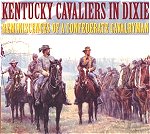 Kentucky Cavaliers in Dixie Reminiscences of a Confederate Cavalryman Mosgrove was born in Kentucky, in 1844, and enlisted in the Fourth Kentucky Cavalry Regiment on September 10, 1862. His eyewitness account illuminates the western theater of the Civil War in Kentucky, east Tennessee, and southwest Virginia |
Kindle Available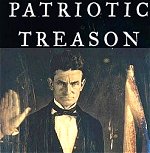 Patriotic Treason John Brown and the Soul of America The life of the first citizen committed to absolute racial equality. His friendships in defiance of the culture around him, He turned his twenty children into a dedicated militia. He collaborated with black leaders such as Frederick Douglass, Martin Delany, and Harriet Tubman to overthrow slavery. |
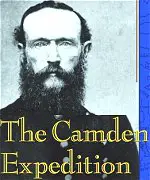 The Camden Expedition of 1864 and the Opportunity Lost by the Confederacy to Change the Civil War The Confederacy had a great opportunity to turn the Civil War in its favor in 1864, but squandered this chance when it failed to finish off a Union army cornered in Louisiana because of concerns about another Union army coming south from Arkansas. The Confederates were so confused that they could not agree on a course of action to contend with both threats, thus the Union offensive advancing from Arkansas saved the one in Louisiana and became known to history as the Camden Expedition. |
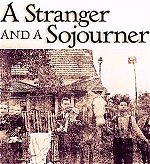 A Stranger And a Sojourner: Peter Caulder, Free Black Frontiersman in Antebellum Arkansas An illiterate free black man, defied all generalizations about race as he served with distinction as a marksman in the U.S. Army during the War of 1812, repeatedly crossed the color line, and became an Arkansas yeoman farmer, thriving and respected by white neighbors until he fell victim of new discriminatory legislation on the eve of the Civil War |
