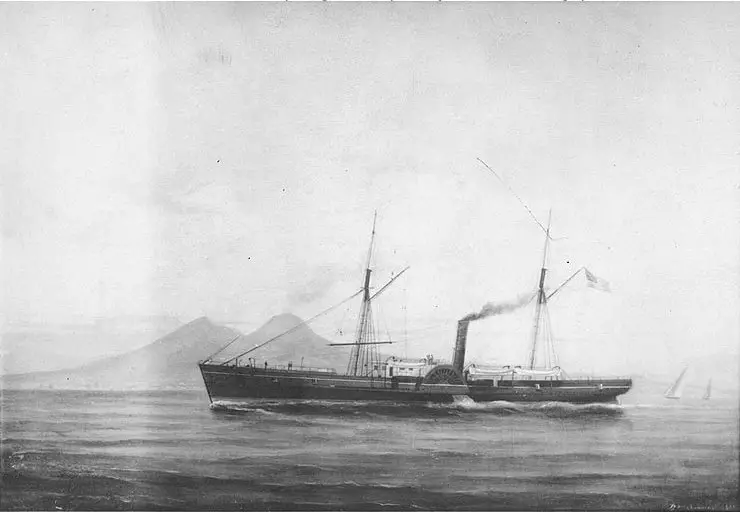
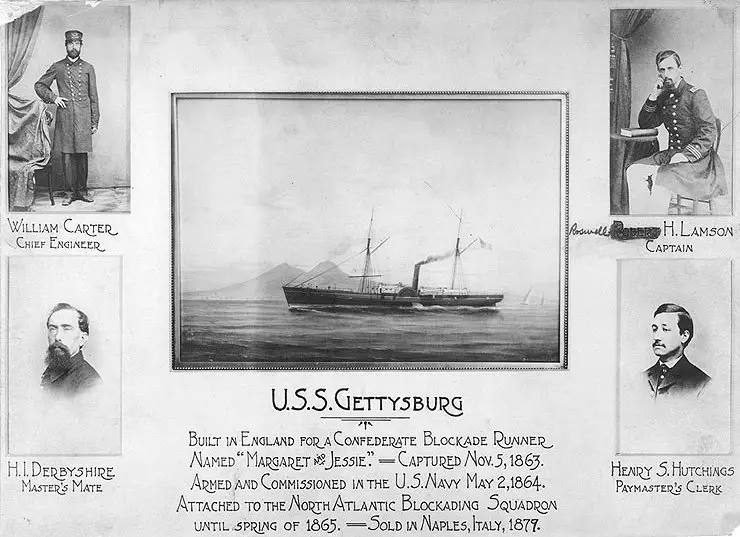
USS Gettysburg (1864-1879).
|
 War, Technology, and Experience aboard the USS Monitor The experience of the men aboard the Monitor and their reactions to the thrills and dangers that accompanied the new machine. The invention surrounded men with iron and threatened their heroism, their self-image as warriors, even their lives Kindle Available  Naval Strategies of the Civil War: Confederate Innovations and Federal Opportunism Compare and contrast the strategies of the Southern Secretary of the Navy, Mallory, against his rival in the North, Welles. Mallory used technological innovation and the skill of individuals to bolster the South's seapower against the Union Navy's superior numbers 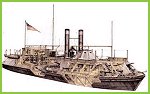 Union River Ironclad 1861-65 At the start of the American Civil War, neither side had warships on the Mississippi River. In what would prove the vital naval campaign of the war, both sides fought for control of the river. While the Confederates relied on field fortifications and small gunboats, the Union built a series of revolutionary river ironclads |
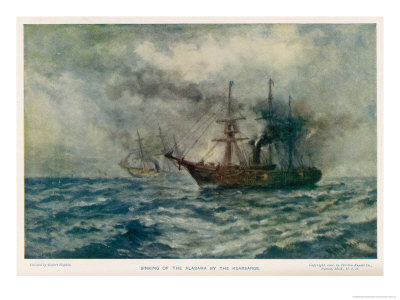 Engagement Between the Federal Steam-Sloop Kearsarge and the Confederate War-Steamer Alabama 24 in. x 18 in. Buy at AllPosters.com Framed Mounted |
|
 Civil War Musket Wood & Steel Frontier Rifle Designed After The Original Rifle  Civil War Soldier 102 Piece Playset
|
Civil War Ships and Battles Civil War Submarines RAM Ships Civil War Naval Timeline American Civil War Exhibits State Battle Maps Civil War Summary Civil War Timeline Women in the Civil War Battles by Campaign |
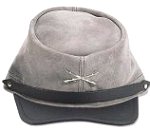 Civil War Confederate Suede Grey Kepi Hat 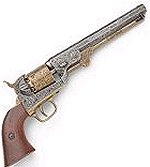 Civil War Model 1851 Naval Pistol |
Kindle Available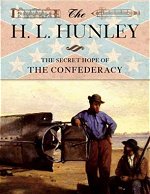 The H. L. Hunley The Secret Hope of the Confederacy On the evening of February 17, 1864, the Confederacy H. L. Hunley sank the USS Housatonic and became the first submarine in world history to sink an enemy ship. Not until World War I "half a century later” would a submarine again accomplish such a feat. But also perishing that moonlit night, vanishing beneath the cold Atlantic waters off Charleston, South Carolina, was the Hunley and her entire crew of eight |
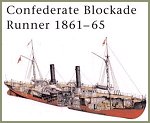 Confederate Blockade Runner 1861-65 The blockade runners of the Civil War usually began life as regular fast steam-powered merchant ships. They were adapted for the high-speed dashes through the Union blockade which closed off all the major Southern ports, and for much of the war they brought much-needed food, clothing and weaponry to the Confederacy |
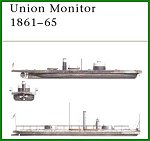 Union Monitor 1861-65 The first seagoing ironclad was the USS Monitor, and its profile has made it one of the most easily recognised warships of all time. Following her inconclusive battle with the Confederate ironclad Virginia on March 9, 1862, the production of Union monitors was accelerated. By the end of the year a powerful squadron of monitor vessels protected the blockading squadrons off the Southern coastline, and were able to challenge Confederate control of her ports and estuaries |
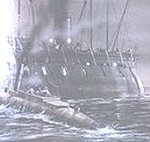 Confederate Submarines and Torpedo Vessels 1861-65 Interesting information and many excellent illustrations. It addresses the CSA David class torpedo boats and the Hunley (and its predecessors), as well as Union examples such as the Alligator and the Spuyten Duyvil |
 Halls of Honor The U.S. Navy Museum takes you on an informed and entertaining romp through one of North America s oldest and finest military museums. The museum has been in continuous operation at the Washington Navy Yard since the American Civil War |
 Raise The Alabama She was known as "the ghost ship." During the Civil War, the CSS Alabama sailed over 75,000 miles and captured more than 60 Union vessels. But her career came to an end in June of 1864 when she was sunk by the USS Kearsarge off the coast of Northern France |
 The Blue and the Gray The Complete Miniseries The Civil War proved a backdrop for this 1982 miniseries. Complete and uncut three disc set. Two families divided by the War Between the States. A Southerner caught when he becomes a war correspondent for the Northern newspaper. He finds himself where history's in the making from the Battle of Bull Run to Abraham Lincoln's assassination |
 Blue Vs. Gray - Killing Fields Relive the most vicious fighting of the Civil War, in which General Ulysses S. Grant forcibly reversed the tide of the conflict by paying with the blood of thousands. It was a desperate time for the Union |
Sources:
U.S. National Park Service
U.S. Library of Congress
US Naval Archives
|
Battle of Shiloh Civil War Map First Manassas Civil War Pictures Civil War Cooking Gettysburg Civil War Ships |