
American Civil War
Naval Timeline 1861
|
Fort Sumter fired on by Confederate batteries -- the conflict begins. 19 April President Lincoln issued proclamation declaring blockade of Southern ports from South Carolina to Texas. 20 April Norfolk Navy Yard partially destroyed to prevent Yard facilities from falling into Confederate hands and abandoned by Union forces. 24 May Commander S. C. Rowan, U.S.S Pawnee , demanded the surrender of Alexandria, Virginia; an amphibious expedition departed Washington Navy Yard and occupied the town. 3 August John LaMountain made first ascent in a balloon from Union ship Fanny at Hampton Roads to observe Confederate batteries on Sewell's Point, Virginia. 29 August Union forces under Flag Officer S. H. Stringham and General B. F. Butler received the unconditional surrender of Confederate-held Forts Hatteras and Clark, closing Pamlico Sound. 1 October Confederate naval forces, including CSS Curlew , Raleigh , and Junaluska , under Flag Officer W. F. Lynch, CSN, captured steamer Fanny (later CSS Fanny ) in Pamlico Sound with Union troops on board. Naval forces under Flag Officer S. F. Du Pont captured Porr Royal Sound. 8 November USS San Jacinto , Captain C. Wilkes, stopped British mail steamer Trent in Old Bahama Channel and removed Confederate Commissioners James Mason and John Slidell. 11 November Thaddeus Lowe made balloon observation of Confederate forces from Balloon-Boat G. W. Parke Curtis anchored in Potomac River. 12 November Fingal (later CSS Atlanta ), purchased in England, entered Savannah laden with military supplies -- the first ship to run the blockade solely on Confederate government account. 21 December Congress enacted legislation providing for the Medal of Honor. |
Kindle Available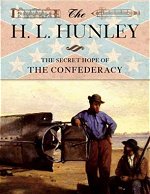 The H. L. Hunley The Secret Hope of the Confederacy On the evening of February 17, 1864, the Confederacy H. L. Hunley sank the USS Housatonic and became the first submarine in world history to sink an enemy ship. Not until World War I "half a century later” would a submarine again accomplish such a feat. But also perishing that moonlit night, vanishing beneath the cold Atlantic waters off Charleston, South Carolina, was the Hunley and her entire crew of eight Kindle Available 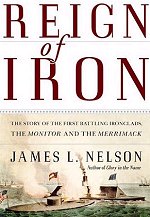 Reign of Iron: The Story of the First Battling Ironclads, the Monitor and the Merrimack The first ironclad ships to fight each other, the Monitor and the Virginia (Merrimack), were the unique products of American design genius |
Civil War Ships and Battles
Civil War Naval Timeline
United States Navy DVDs
Civil War Submarines
Young Reader Selections
Civil War Summary
DVD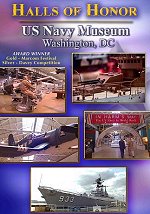 Halls of Honor The U.S. Navy Museum takes you on an informed and entertaining romp through one of North America s oldest and finest military museums. The museum has been in continuous operation at the Washington Navy Yard since the American Civil War |
DVD Raise The Alabama She was known as "the ghost ship." During the Civil War, the CSS Alabama sailed over 75,000 miles and captured more than 60 Union vessels. But her career came to an end in June of 1864 when she was sunk by the USS Kearsarge off the coast of Northern France |
 Ironclads and Big Guns of the Confederacy : The Journal and Letters of John M. Brooke Information about the Confederate Navy's effort to supply its fledgling forces, the wartime diaries and letters of John M. Brooke tell the neglected story of the Confederate naval ordnance office, its innovations, and its strategic vision. |
 Confederate Phoenix The CSS Virginia The CSS Virginia of the Confederate States Navy destroyed two of the most formidable warships in the U.S. Navy. Suddenly, with this event, every wooden warship in every navy in the world became totally obsolete |
 Midshipman in Gray: Selections from Recollections of a Rebel Reefer |
Kindle Available Wolf of the Deep: Raphael Semmes and the Notorious Confederate Raider CSS Alabama In July 1862, the Confederate captain Raphael Semmes received orders to report to Liverpool, where he would take command of a secret new British-built steam warship. His mission: to prey on Union commercial vessels and undermine the North's ability to continue the war |
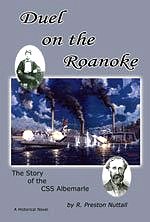 Duel on the Roanoke - The True Story of the CSS Albemarle A 158-foot Confederate ironclad ship built in a cornfield 90 miles up North Carolina's Roanoke River, under the direction of an 18-year-old boy, and the deadly cat-and-mouse game between the two opposing captains. |
 Ironclad of the Roanoke Gilbert Elliott's Albemarle The story of a Confederate Ironcald that was a powerful force until sunk by a Union Torpedo Boat after its brief stormy life. Ironic in the fact it was built in a Cornfield. Confederate Ingenunity at it finest! |
