10 Striking Atlanta Campaign Monuments

Silas Weaver
Silas Weaver has spent decades exploring historic battlefields, reading primary journals, and tracking down the lesser-known stories of the American Civil War. His lifelong passion for 19th-century history comes through in his engaging accounts of the places, people, and lingering questions of the era. He believes that walking the actual grounds where history happened is the best way to truly connect with the past.
I have driven the Atlanta Campaign corridor more times than I can count, usually with a thermos riding shotgun and red Georgia clay already dusting the floor mats. What keeps pulling me back is not just the tactical story, though there is plenty of that. It is the way memory got set in stone and bronze, often on the very ridges and creek bottoms where men once tried to make themselves small.
The monuments around Atlanta are not all alike. Some are grand and sculptural. Some are spare, almost stubbornly plain. A few feel like they were placed to command a view, and others sit low where you have to step close, lower your voice, and read.
Here are ten of the most striking monuments and memorial features I recommend seeking out, chosen for emotional punch, craftsmanship, and the way each one helps you understand the fighting around Atlanta. A quick note on my definition: I am using “Atlanta Campaign corridor” the way a traveler experiences it, meaning the main May to September 1864 battlefields plus a couple of Atlanta area sites tied to the railroad war that followed.
1) Illinois Monument at Cheatham Hill
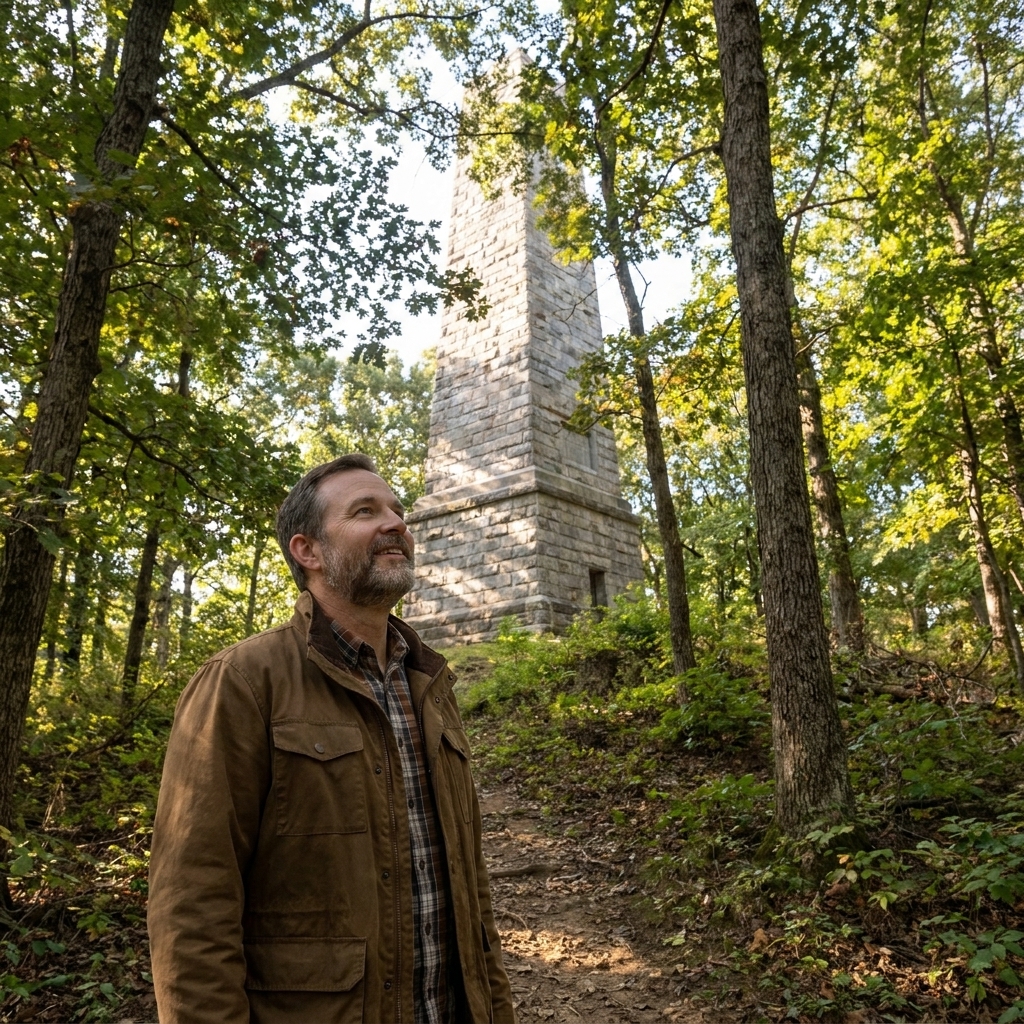
If you want a single monument that matches the scale of the story, this is the one. The Illinois Monument stands in the Cheatham Hill area of Kennesaw Mountain National Battlefield Park, in the same general ground as the Dead Angle earthworks where the June 27, 1864 assaults ran into a wall of fire at close range. On some maps and in some older write-ups you may see it styled as the Illinois State Monument, but on the ground most visitors know it by the simpler name.
What I like about it is how it refuses to whisper. It rises with a confident heaviness, as if it was built to be spotted through heat shimmer and remembered years later by someone who stood here sweating through a Georgia summer.
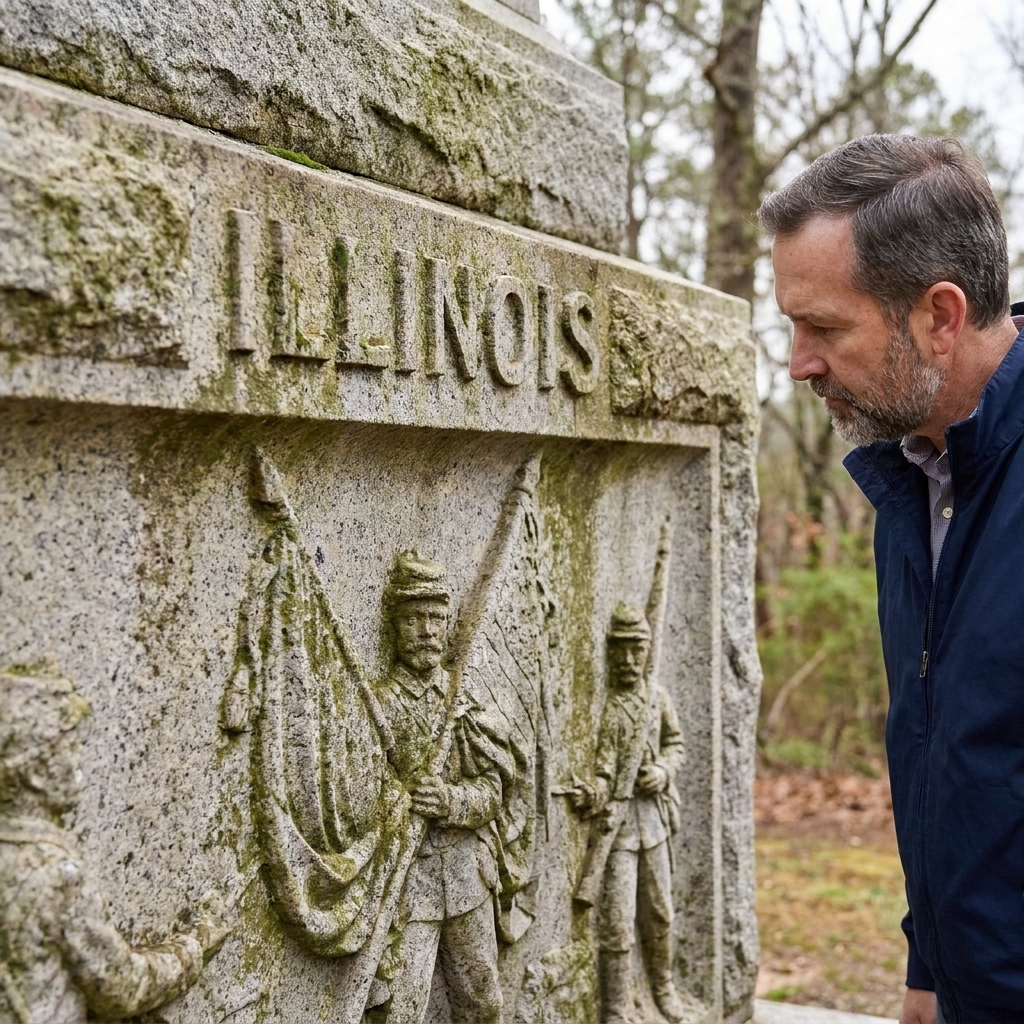
- What you are looking for: A large Illinois monument in the Cheatham Hill trail area, close to the Dead Angle sector.
- Why it hits: Monumental scale in the campaign’s most claustrophobic kind of fighting.
- Look for: How the monument pulls your eyes up, then drops them back down to the tight terrain and timber.
2) Unit tablets at Cheatham Hill
Cheatham Hill is one of those places where the ground still feels tense. Along the paths near the Dead Angle, you will find unit position tablets that put names and numbers on yards of ground that cost dearly. The specific units and materials vary by tablet, and not every stop is cast-iron, but the effect is the same when you are standing where a regiment once tried to live through a few impossible minutes.
What makes these striking is not fancy ornamentation. It is placement and proximity. You do not have to imagine what “too close” meant here. You can pace it off, then look up and realize the woods are still close enough to swallow sound.
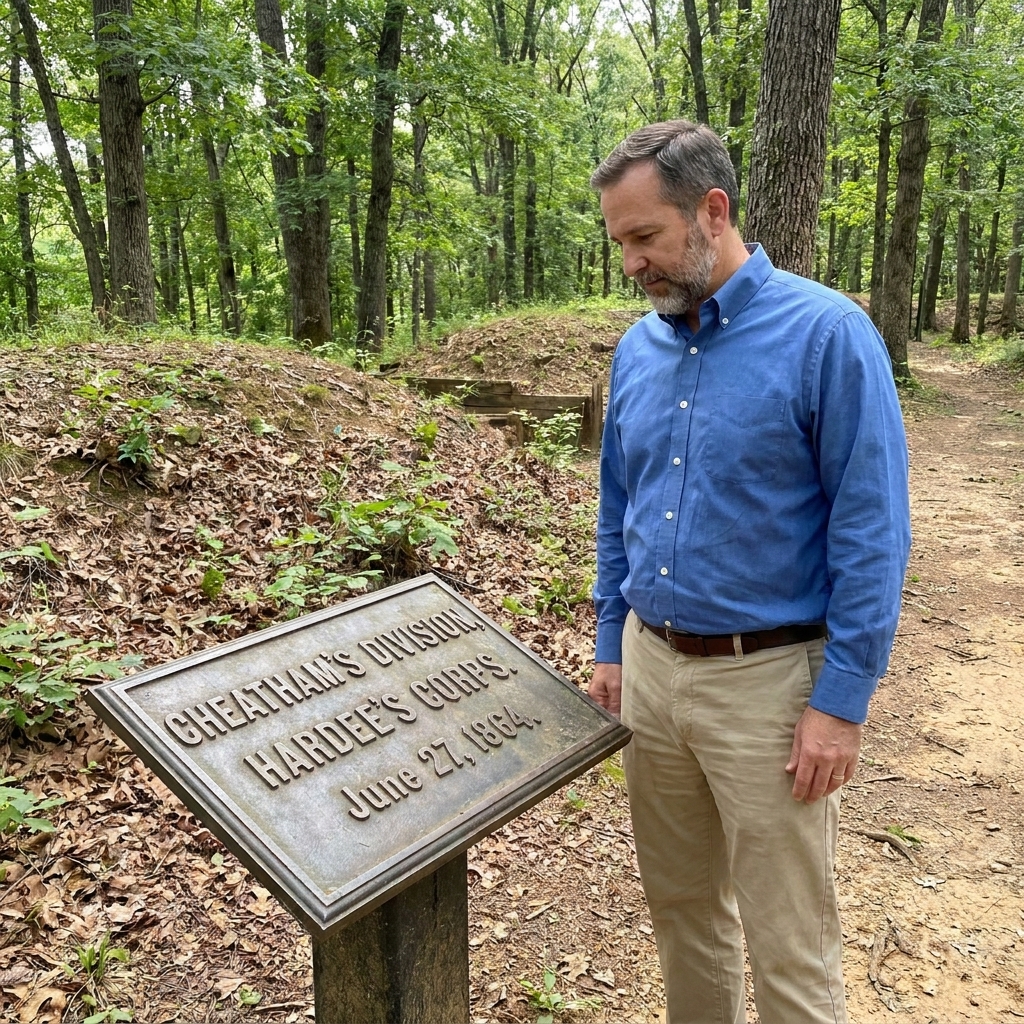
- What you are looking for: The unit position tablets clustered along the Cheatham Hill and Dead Angle paths.
- Why it hits: You are standing in the problem the soldiers could not solve.
- Look for: Sightlines into the woods and the subtle rise and fall that still shapes what you can and cannot see.
3) Entrenchments at Cheatham Hill
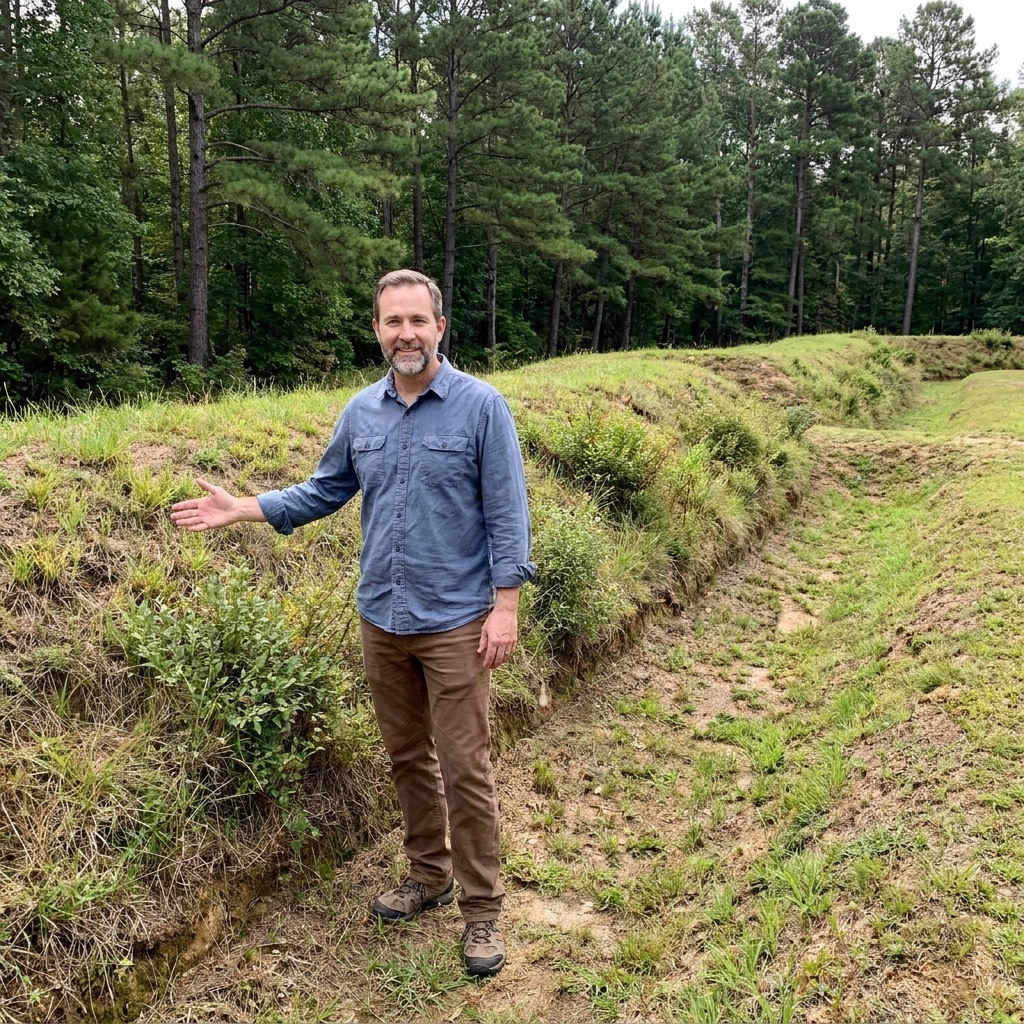
Some of the most honest “monuments” in the Atlanta Campaign are not statues at all. At Kennesaw Mountain’s Cheatham Hill sector, the preserved entrenchments, rifle pits, and earthen works are the kind of memorial you feel in your knees when you step up to them.
These are not decorative. They are work. Dirt thrown up in a hurry, packed and shaped by men who knew exactly what was coming. When I bring first-time visitors here, this is where their voices get quiet.
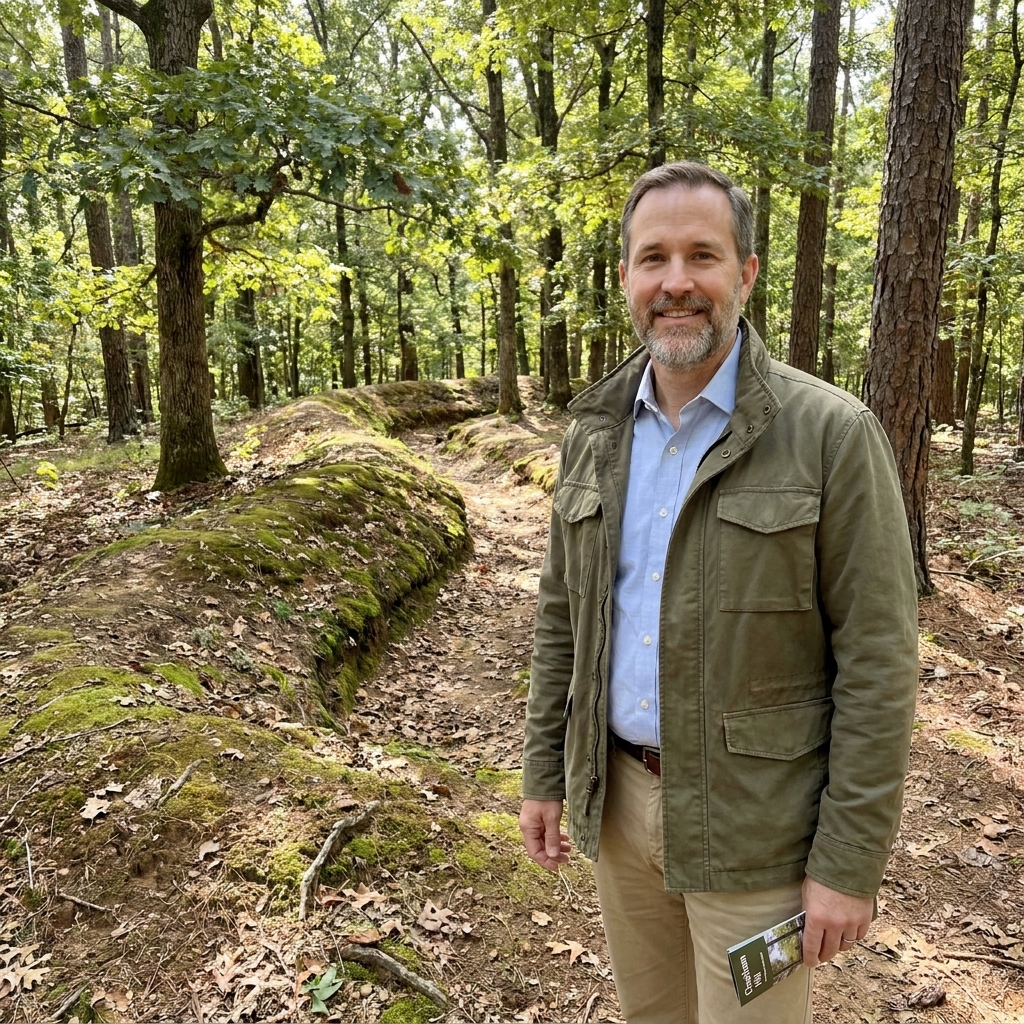
- What you are looking for: Preserved lines of entrenchments near the Dead Angle paths.
- Why it hits: Minimal stone, maximum immediacy.
- Look for: Angles that create cover and the way the line bends to follow the ground.
4) Kennesaw summit panels
If Cheatham Hill is tight and close, the summit is wide open and windy. Up there, you get the rare gift of seeing why commanders fought so hard for high ground in a landscape that can otherwise feel like endless timber and rolling ridges.
At the top, the most useful memorial features are the summit wayside panels and the orientation-style map that helps you read the view. Whether it is a freestanding table or a railing-mounted panel on the day you visit, the job is the same. The text does not try to replace the horizon. It leans into it. The sign becomes a pointer, and the ridgelines become your map, with Atlanta sitting out there on a clear day like a reminder of what all this marching was aimed at.
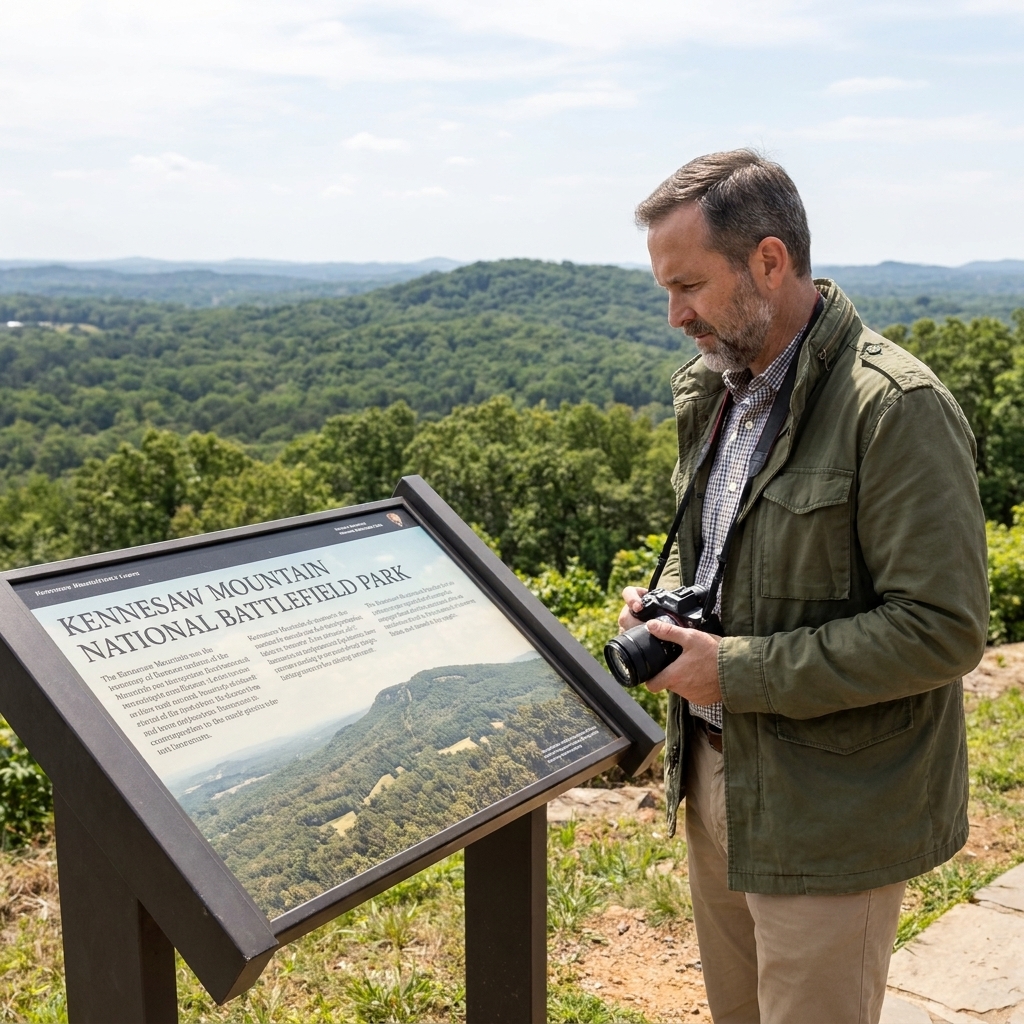
- What you are looking for: Summit overlook wayside panels and an orientation map feature that ties labels to the visible terrain.
- Why it hits: It teaches you terrain in one long look.
- Look for: How the placement turns your body toward likely avenues of approach and defense.
5) New Hope Church stop
New Hope Church is where the campaign’s rhythm changes from long marches to grinding contact. Late May 1864 brought repeated attacks and constant line shifting in the woods, the kind of fighting that does not resolve cleanly in a single dramatic moment.
This is not a landscape of towering state monuments. It is a landscape of markers and interpretive stops around the church site itself. Your most reliable “findable” anchor is the New Hope Church battlefield wayside and marker cluster at the church grounds, which is where most visitors naturally begin before branching out to nearby interpretive points along the road corridor. It is a place where you have to do something harder than admiring: reconstructing.
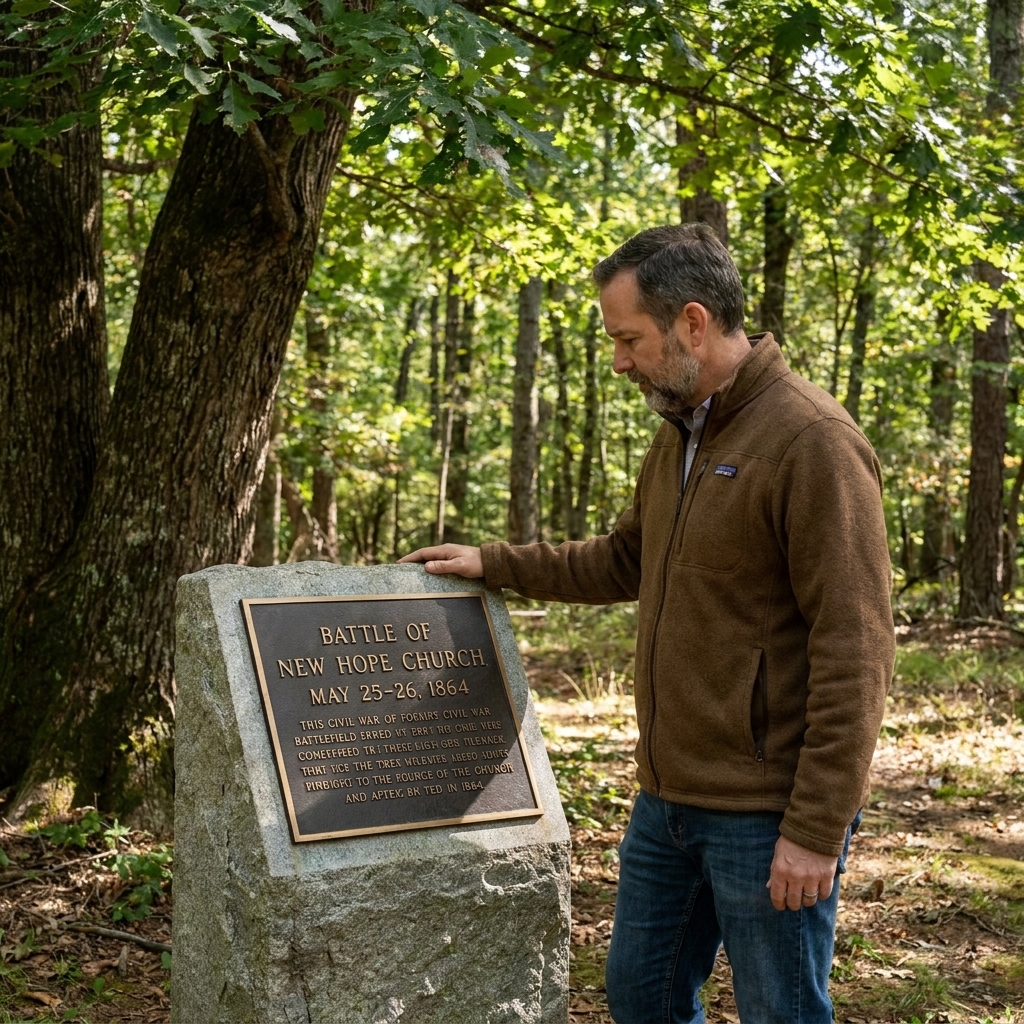
- What you are looking for: The New Hope Church marker and the cluster of interpretive panels placed at the church grounds.
- Why it hits: Plain language in a place where the fighting was anything but plain.
- Look for: References to repeated attacks and shifting lines rather than a single neat breakthrough.
6) Pickett’s Mill earthworks
Pickett’s Mill is not about grand sculpture. It is about ground truth. The preserved breastworks and trench-like earthen lines along the trail system do most of the talking, with markers there to nudge you toward the key ground without overexplaining.
When you stand on a line of works that still holds its shape, you realize the memorial is the dirt itself, shaped by hands working under threat. That is a different kind of artistry, and the Atlanta Campaign teaches it especially well.
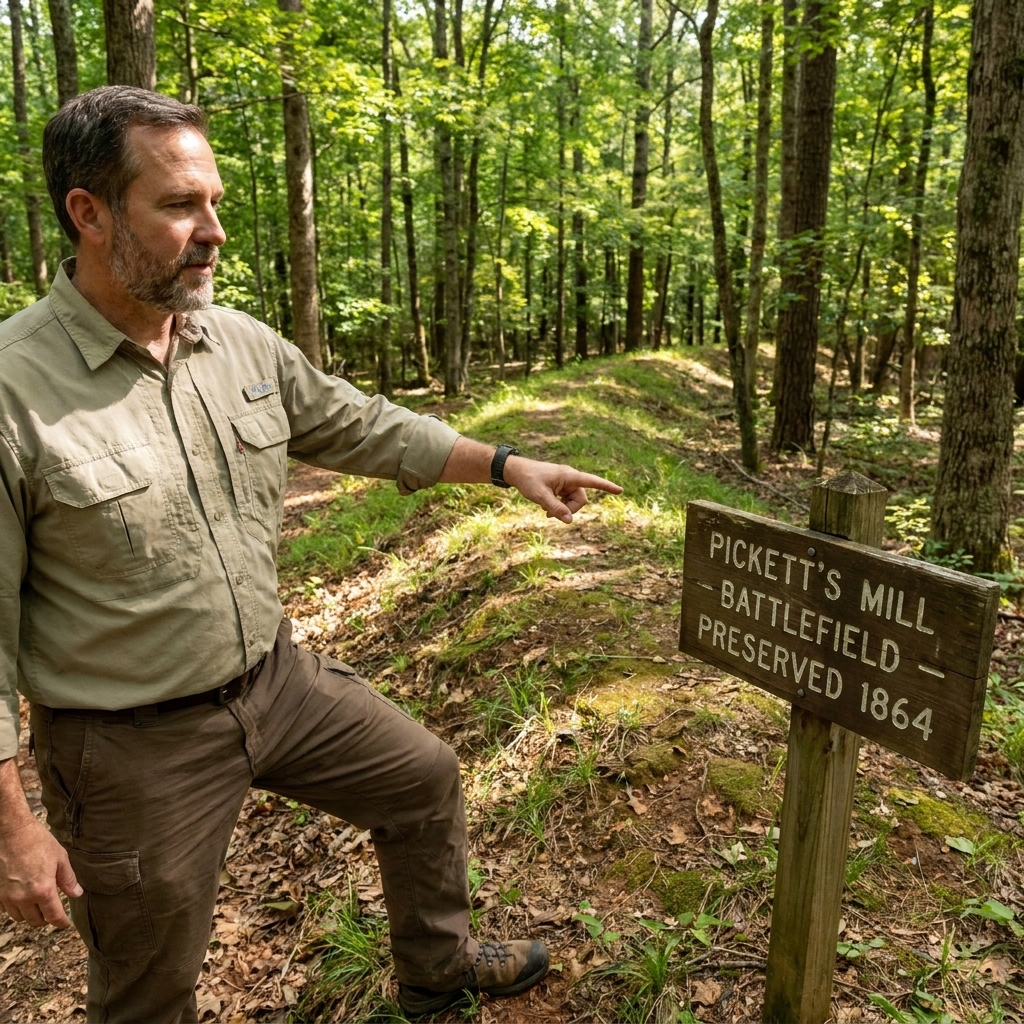
- What you are looking for: Preserved earthworks along the main trail loop, paired with interpretive markers.
- Why it hits: It feels unmediated, like the battle just stepped out of view.
- Look for: How the woods still function like concealment and how quickly sightlines collapse.
7) Allatoona Pass earthworks
Allatoona Pass sits a little to the northwest of Atlanta proper, and I include it with asterisk honesty. The famous fight here happened on October 5, 1864, after Atlanta fell, during the railroad war that followed the campaign’s main summer battles.
It still belongs on a traveler’s Atlanta corridor list because it shows what the whole summer of maneuver was always circling around: railroads, supply, and choke points you could not ignore. The defensive works and the railroad cut do most of the explaining for you. Interpretive signage is placed where it can do the most good.
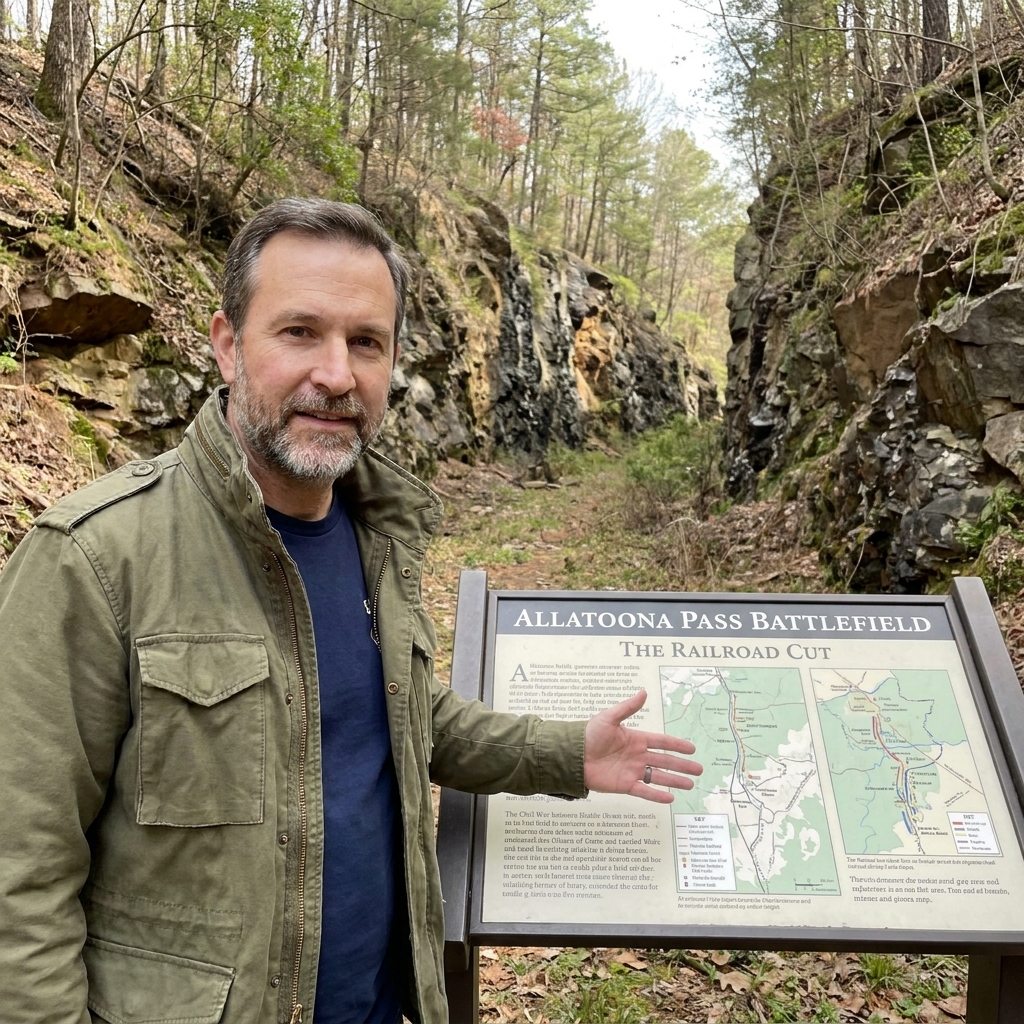
- What you are looking for: Earthworks and interpretive signage positioned around the railroad cut and key positions.
- Why it hits: The ground itself explains why men fought and died right here.
- Look for: Lines of fire across the cut and how little room there is to maneuver.
8) Resaca cemetery
Resaca can surprise first-time visitors. The battlefield is broad, and the fighting ran across ridges and timber, not a single neat line. One of the surest anchors on that big landscape is the Confederate cemetery at Resaca, a quiet place that makes the campaign feel suddenly personal.
I tend to linger here longer than I plan to. The stones do not need to be dramatic to be heavy. They do the job that battle maps cannot, reminding you that the early campaign bloodshed mattered, even when it came wrapped in maneuver and confusion. Interpretive tablets on the broader battlefield help stitch the larger field back together, so the cemetery is not just an ending point, but a way to re-enter the story.
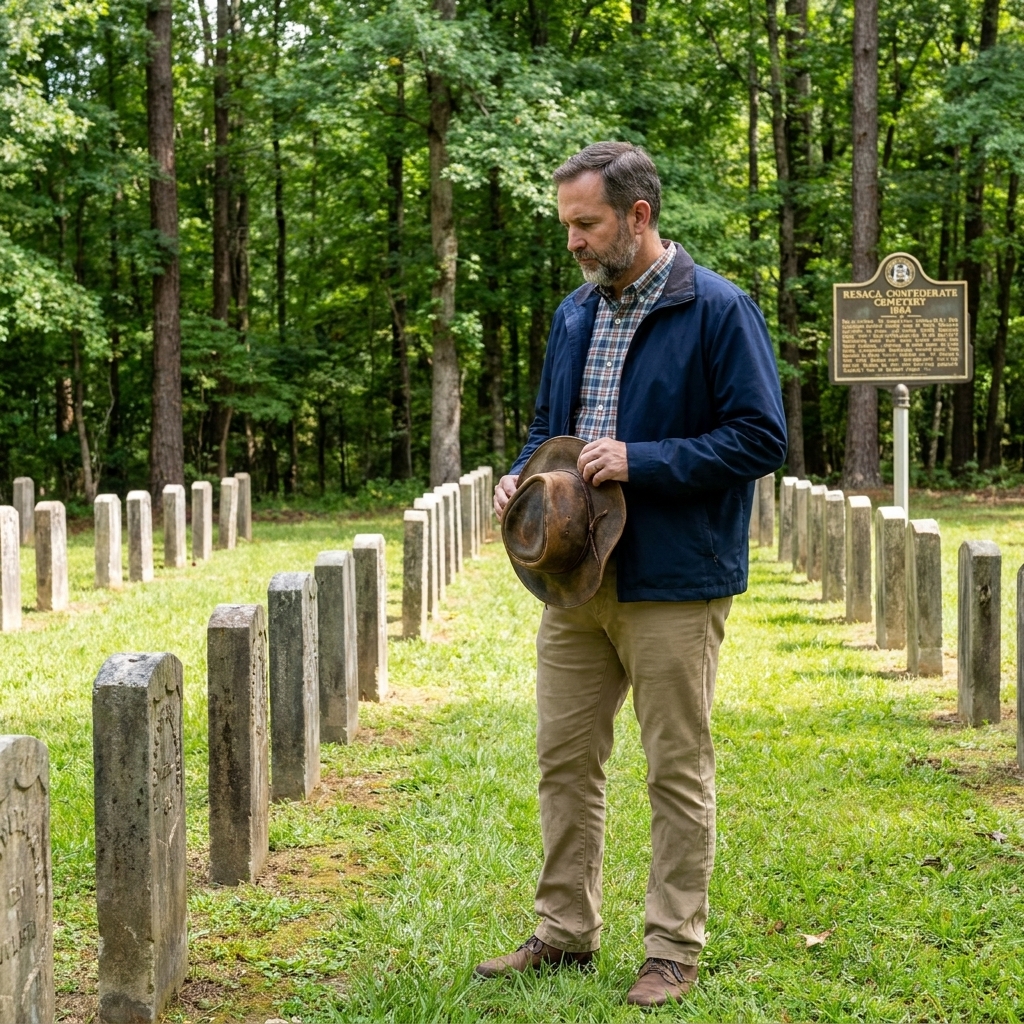
- What you are looking for: The Confederate cemetery at Resaca as a human-scale stopping point within a sprawling battlefield.
- Why it hits: It turns a big field of action into a personal reckoning.
- Look for: How quickly the landscape swallows distance once you step away from the marked points.
9) Peachtree Creek markers
Peachtree Creek is where Atlanta’s immediate defenses start to feel close. You can almost sense the city pulling like gravity. The challenge is that the battlefield is fragmented across modern development, so what survives for most visitors is scattered. In many spots, what you can reliably count on is a historical marker rather than a preserved field.
I still like visiting a creek corridor park in the area, even when the interpretation is limited, because it gets you down into the kind of broken terrain that shaped the fight. Think of a stop like Tanyard Creek Park as a “feel the ground” detour, not as a guaranteed interpretive exhibit. For the story itself, prioritize any clearly identified Peachtree Creek historical marker you can find on-site during your visit, then use the creek and the slopes to make the words real.
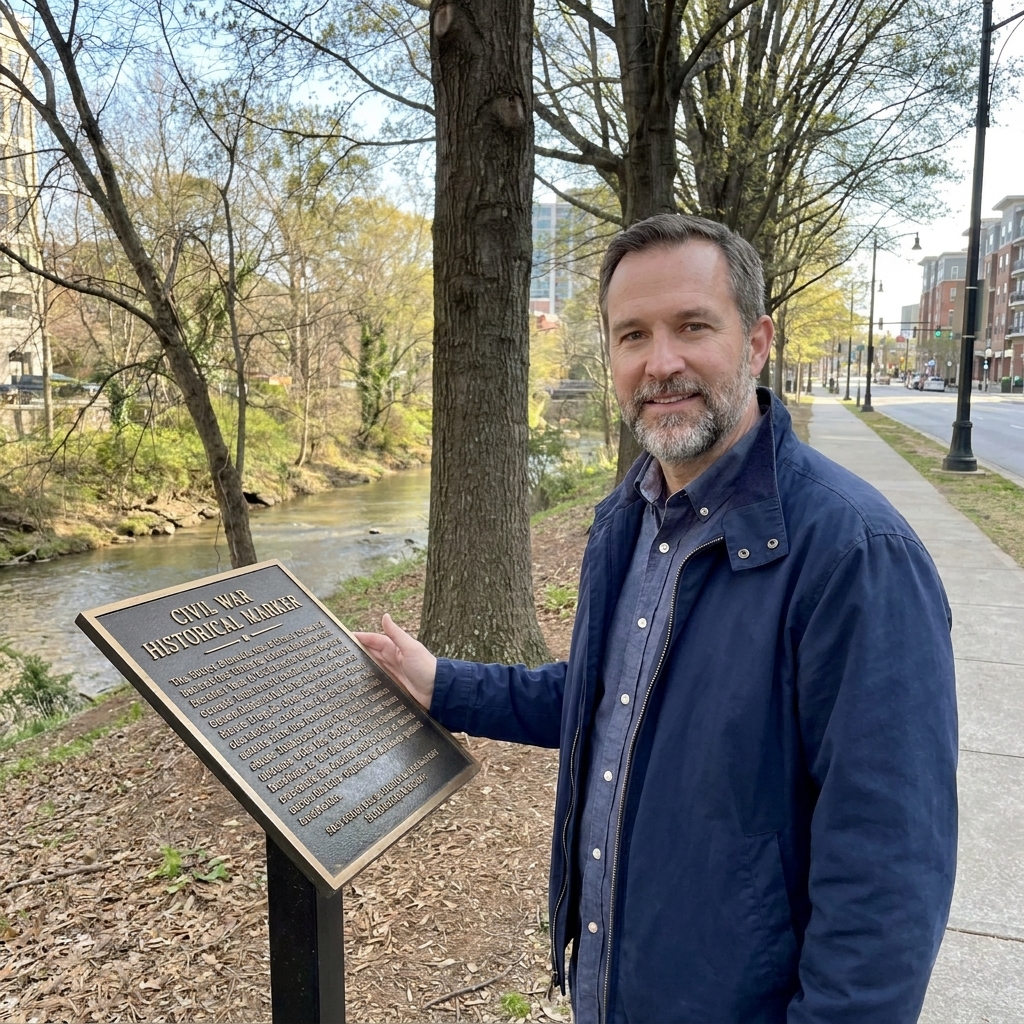
- What you are looking for: Visitor-accessible Peachtree Creek historical markers and any interpretive points that survive in remaining green space.
- Why it hits: Memory holding its ground inside a living city.
- Look for: How the text tries to reattach a battle to land that has been reshaped.
10) Jonesboro cemetery
If you want to understand how Atlanta fell, you have to take Jonesboro seriously. The late August and early September fighting south of the city threatened the rail lifeline that kept Atlanta viable. One of the most direct places to feel the weight of the endgame is the Confederate cemetery associated with Patrick R. Cleburne at Jonesboro, a plainspoken site that fits the story: rail lines targeted, positions turned, and a city’s fate decided south of town.
What I appreciate most at Jonesboro is the way remembrance can emphasize outcome without gloating. That kind of restraint feels earned. Depending on where you start your visit, you may find the clearest rail-and-supply interpretation at other marked points around the Jonesboro battlefield area rather than right at the cemetery gate, so give yourself room to connect those dots.
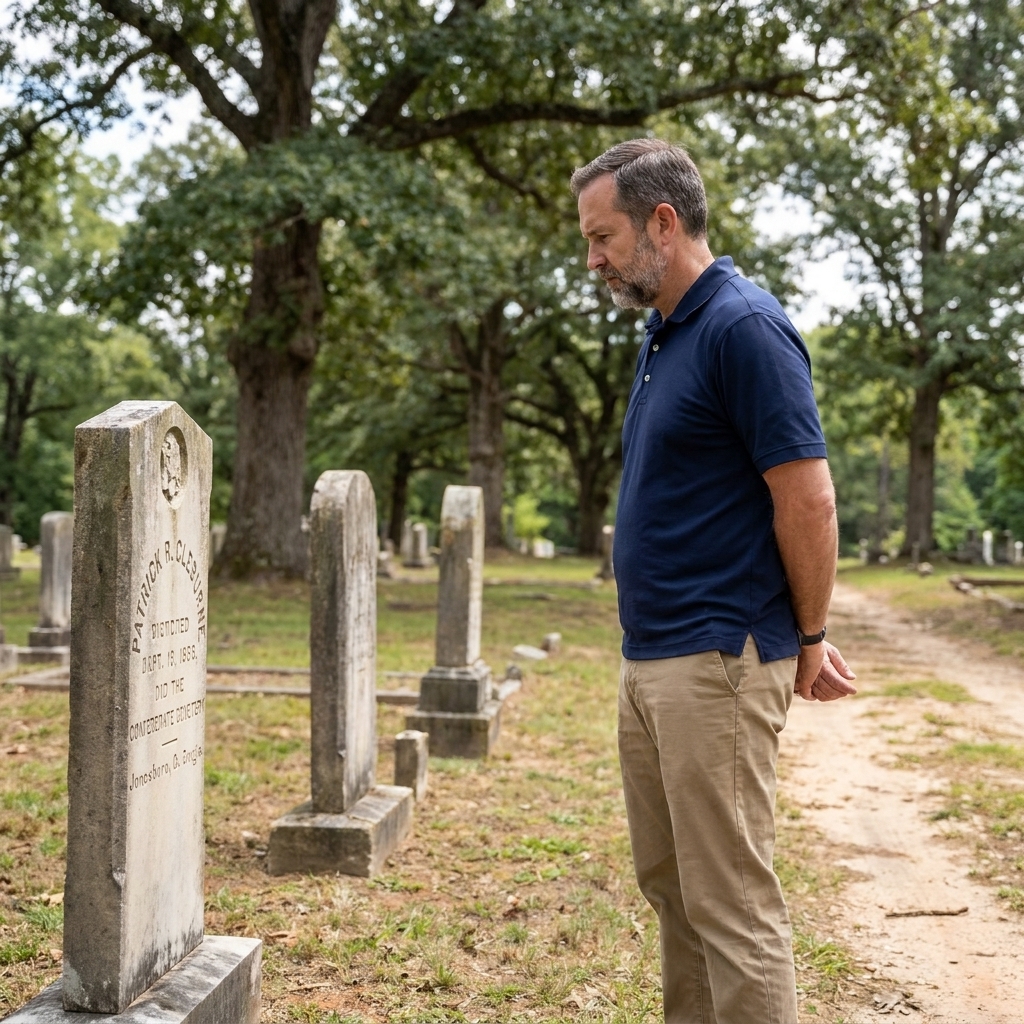
- What you are looking for: The Cleburne-associated Confederate cemetery at Jonesboro, plus nearby battlefield markers that explain why the railroads mattered.
- Why it hits: It marks the moment the campaign’s logic finally closes.
- Look for: Mentions of railroads, supply, and maneuver, not only casualty totals.
How to see them well
I have learned to slow down at monuments, because they were built by people who did not have the luxury of forgetting. If you want to get more than a photo, try this on your next Atlanta Campaign stop:
- Read the whole thing, twice. First for facts. Second for what it chooses to emphasize.
- Take ten steps back, then ten steps closer. Many memorials are designed to change as your distance changes.
- Turn around. Monuments and markers are often positioned to face the direction of attack or key ground. The view behind you is part of the story.
- Keep the human scale in mind. If you want a reminder of what soldiers carried and endured, our piece on Civil War soldier rations is a good companion read before you hit the road.
If you are building a weekend around these sites, start with our Battlefield Travel guide and the practical checklist in Plan a Civil War battlefield day. The Atlanta area can mean heat, sudden thunderstorms, and long walks on uneven ground.
What is missing
This list is not meant to be the final word, and it is not a complete catalog. The Atlanta Campaign has a wide scatter of unit tablets, state markers, and small plaques that can stop you in your tracks, sometimes when you least expect it in a patch of shade near a road. If you have a favorite monument or marker from these battlefields that you think belongs in the top tier, I would be glad to hear about it through our contact page.