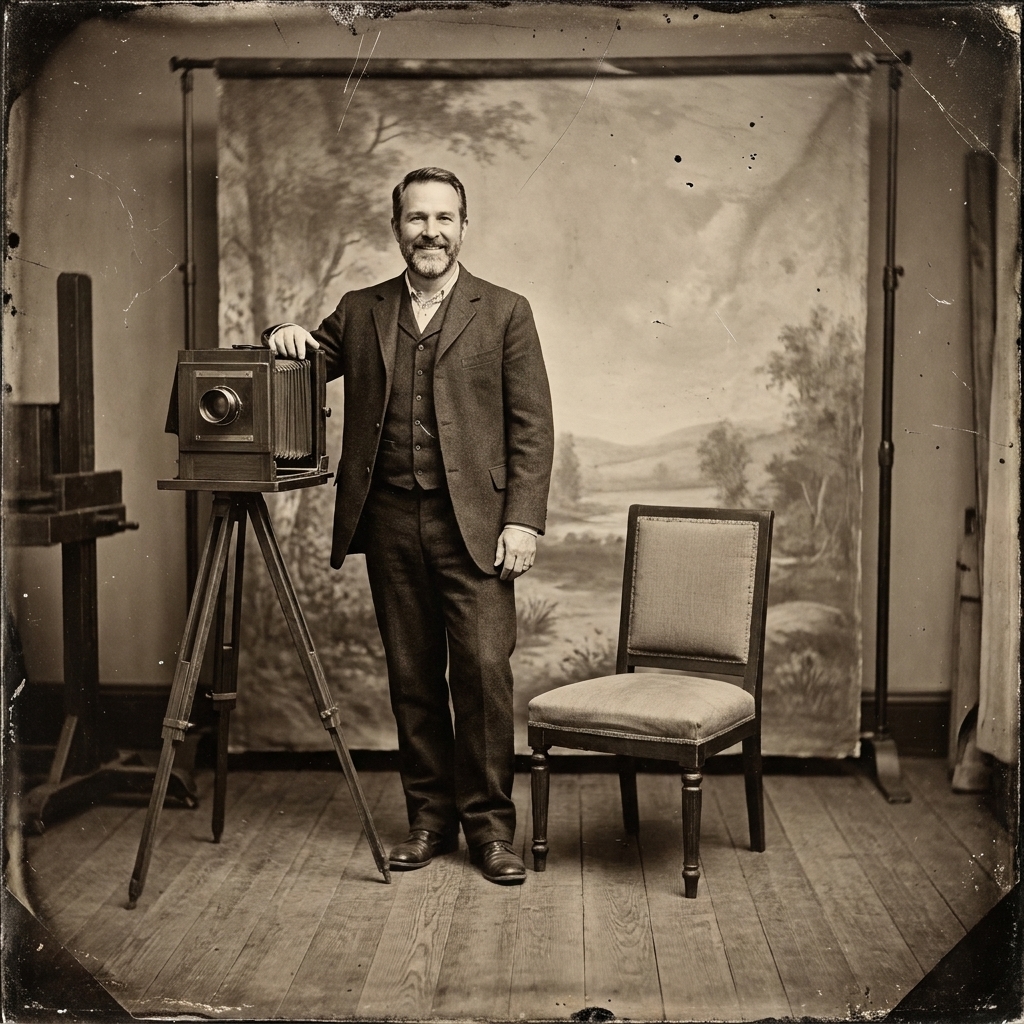
Posing for the Folks Back Home: Tintypes in Civil War Camps

Silas Weaver
Silas Weaver has spent decades exploring historic battlefields, reading primary journals, and tracking down the lesser-known stories of the American Civil War. His lifelong passion for 19th-century history comes through in his engaging accounts of the places, people, and lingering questions of the era. He believes that walking the actual grounds where history happened is the best way to truly connect with the past.
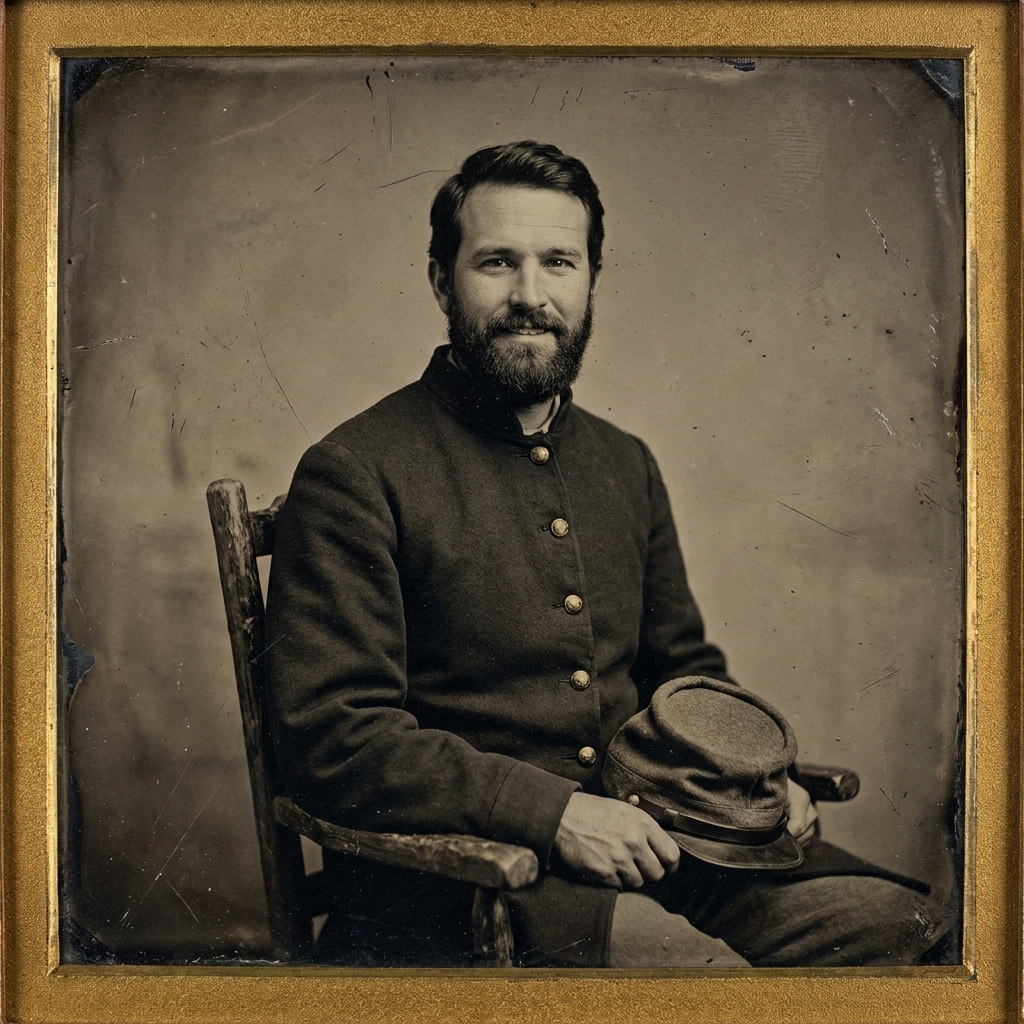
The first time I held an original wartime tintype, I was standing in a small local-history room not far from Gettysburg, the kind with creaking floors and a volunteer behind the desk who knows every family name on the wall. The little iron plate was no bigger than my palm. A young soldier stared out of it like he was still waiting for someone to speak. He had a tidy jacket, a borrowed confidence, and that fixed look that comes from trying not to blink while your whole future hangs in the balance.
We talk a lot about marches and muskets. But in the Civil War, there was another tool of war that rarely shows up in our battlefield storytelling: the camera. Soldiers posed for the folks back home because a photograph could do what a letter could not. It proved you were still alive. It let a wife study your face by lamplight. It gave parents something to keep if the worst news arrived. And in a conflict that swallowed men by the tens of thousands, that little portrait could become a family’s most precious relic.
What a tintype was
Despite the name, a tintype was not made on tin. The image was created on a thin sheet of iron, usually lacquered or japanned dark and often marketed with “tin” language because that word sounded familiar and practical. That dark surface mattered because the photograph itself was a direct positive. There was no negative to file away for later printing.
So if you wanted another copy, you generally had to do it the hard way: by rephotographing the original. For most soldiers and families, that meant the plate you carried away from the photographer’s tent was the one that mattered. It was the original, and often the only one.
That is one reason tintypes worked so well for an army on the move. They were comparatively tough. Glass ambrotypes could crack, and paper prints were easily creased or stained. A tintype could survive a saddlebag, a knapsack, a damp pocket, and even, now and then, a rough life after the war.
If you are new to the period’s photo terms, here is the quick distinction. Daguerreotypes were made on polished metal and tended to feel more formal and delicate. Ambrotypes were images on glass, usually viewed against a dark backing. Tintypes were iron plates, and they earned their reputation as the durable, working person’s portrait.
If you have ever visited a battlefield in winter and felt how quickly your fingers stiffen, you can appreciate the appeal. Wartime photography was a practical business, and tintypes were practical pictures.
To place tintypes in the larger world of wartime images, our overview page Guide to Civil War Life is a good starting point for how ordinary routines and new technologies shaped the home front and the camp.
The camp studio
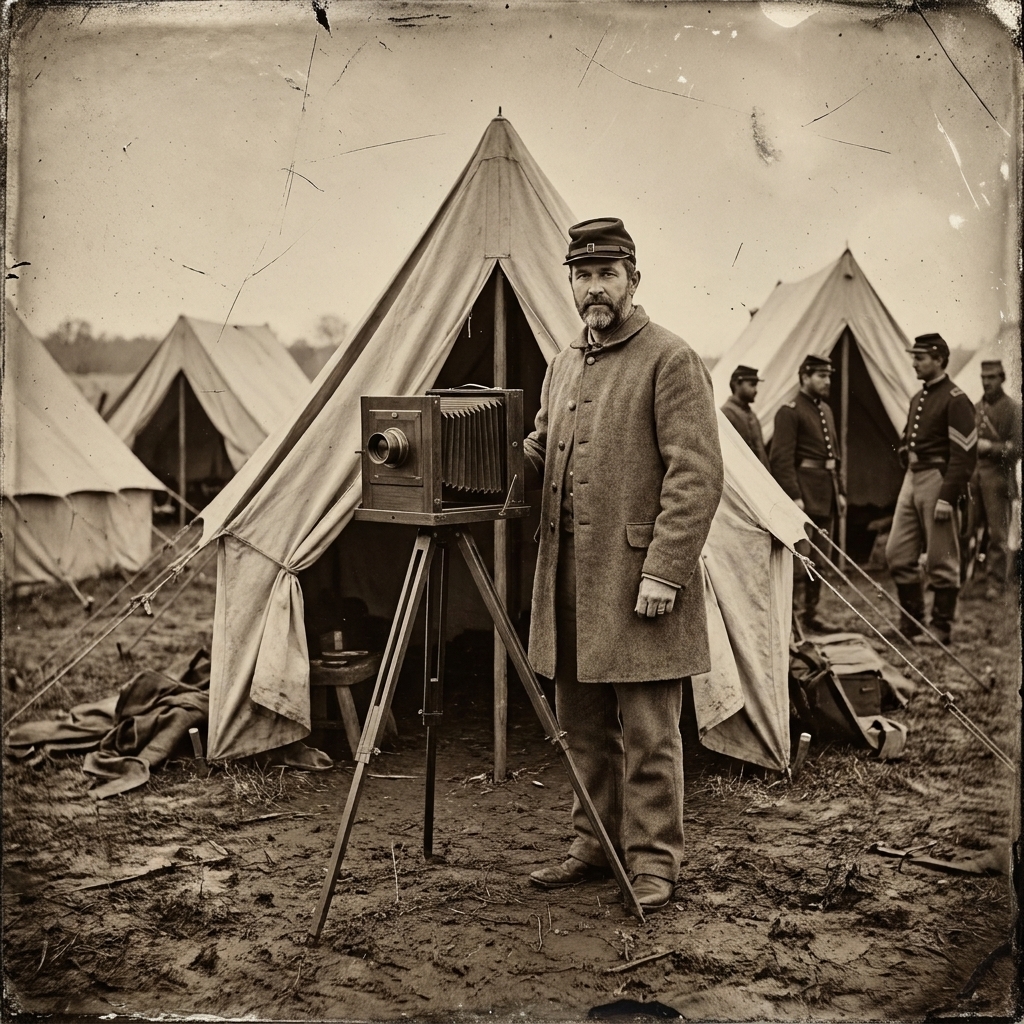
When armies settled into camp, photographers followed. Some were established professionals. Others were itinerant operators who knew a chance when they saw it. The setup could be surprisingly simple: a tent or wagon with a skylight, a backdrop, a posing chair, a head brace to keep you still, and a small darkroom space where the plate could be coated and developed.
The tintype process belonged to the “wet-plate” family of photography. In plain terms, it meant the plate had to be prepared, exposed, and developed while still wet, before the collodion dried. That demanded speed, decent light, and a steady hand.
The basic rhythm looked like this:
- Coat the plate with collodion, then sensitize it in a bath of silver nitrate.
- Expose the plate in the camera while it is still damp, sometimes for just a couple seconds, sometimes longer depending on light, lens, and chemistry.
- Develop and fix the image right away, then wash and varnish it for protection.
From the sitter’s perspective, the hardest part was the stillness. Soldiers joked about “having their likeness taken,” but the act could be uncomfortable. You sat upright. You held your breath. You tried not to blink. And if the light was poor, the exposure stretched longer. That is why so many faces in tintypes look solemn. Some of it is style, yes. But some of it is simply the discipline of not moving.
Cost and payment
Prices varied by place and moment, but tintypes earned their reputation as the working man’s portrait. In many wartime settings, a small tintype might cost something like a few tens of cents, with larger plates, better presentation, or protective cases costing more. Photographers also offered multiples or paired images meant to be exchanged between friends or sweethearts.
It is easy, reading numbers on a page, to forget what “cheap” meant to a private soldier. Enlisted men were paid monthly, and pay could be delayed. Bounties and prize money were uneven. A tintype might compete with tobacco, extra food, writing paper, or a warm pair of socks.
And yet men paid for the picture anyway. That choice tells you how the photograph sat in the emotional economy of the war. A portrait was not a luxury in the usual sense. It was a form of reassurance, a small defense against being forgotten, and sometimes a quiet preparation for loss.
In the same way soldiers spent a little coin on distractions to keep themselves human, they spent on photographs. If you are curious about that broader camp-world, see Base-ball, Dice, and Music: 7 Camp Pastimes.
How soldiers chose to look
One of the most revealing things about Civil War tintypes is how carefully soldiers constructed themselves. In camp, a man might be filthy from picket duty. In the studio, he became the version of himself he wanted his family to remember.
Uniforms that did not quite fit
Sometimes the coat was new. Sometimes it was not his. Photographers kept jackets, hats, even swords on hand because a uniform read clearly to the eye. A civilian suit might say “boy from home.” A uniform said “soldier,” and that identity mattered in a time when service, honor, and sacrifice were being argued around nearly every kitchen table in the country.
If you want to look closer at the visual language of wartime clothing, Union Blue vs Confederate Gray helps explain why the colors, fabrics, and differences were more complicated than the old myths suggest.
Weapons as statements
Guns and sabers show up often, especially in soldier portraits made near recruiting stations or larger encampments. A musket across the knees or a revolver on the table was not only a prop. It was a declaration: I am equipped, I am ready, I belong.
Of course, anyone who has read enough soldier diaries knows the gap between appearance and reality. A man might pose with a fine sidearm and then march tomorrow with sore feet and an empty stomach. Still, the pose mattered. It sent a message to the people who would worry over him.
For more on how those weapons and mounts shaped identity, see Swords, Revolvers, and Steeds.
Friendship portraits
Some of the most moving tintypes are not of lone soldiers at all. They show two friends shoulder to shoulder, arms lightly touching, a hand resting on a comrade’s chair. These images were a kind of proof of belonging. If a man fell, his friend might be the one to send the portrait home, or to write the letter no one wants to receive.
The weight of a small plate
When you read letters from the period, you see how often soldiers and families asked for “a likeness.” That word comes up again and again. The photograph was not just a record. It was a stand-in for presence.
In many households, a tintype became something people handled daily. It might sit in a small case on a mantel. It might be tucked in a Bible, slipped into a letter bundle, or pinned inside a keepsake box. Wives carried them. Mothers kept them close. Children grew up with a face they could study even if the man never returned.
And soldiers carried photographs too. A tintype of a sweetheart, sometimes in a simple paper sleeve, might ride in a breast pocket until the edges wore bright. When we talk about what men took into battle, we tend to list hard objects. But plenty of them carried a soft, private piece of home.
From camp to battlefield
There is an unspoken logic in many wartime portraits. A soldier sits straight, eyes forward, as if posing for a future that might not happen. He is making a claim on memory.
Families understood that logic too. In an age before standardized identification tags, and long before modern casualty notification, a photograph could become part of the grim work of recognition. Even when it did not serve that purpose, it served another. It gave a face to grief, and a focus for mourning.
That does not mean every man sat for a tintype thinking he would die. Many expected to come home. Many were young and confident and bored and simply wanted something to mail. But the war taught people to think in contingencies. A photograph was one of them.
How tintypes changed wartime life
The Civil War was the first American conflict widely experienced through photography. Not just the famous battlefield views and posed scenes of officers, but everyday portraits of ordinary soldiers. Tintypes helped create a new kind of wartime intimacy, where the home front could look directly into the eyes of the men at the front.
That shift had a few lasting effects:
- It standardized the image of “the soldier.” Certain poses, props, and backdrops became familiar, almost like a shared visual language across regiments.
- It tightened the bond between home and camp. Letters were still the main artery, but photographs added a powerful second channel.
- It democratized portraiture. Working-class men who would never have commissioned an oil painting could still leave behind a clear, personal likeness.
When I walk a battlefield today, I often think about that. We stand at a quiet fence line or a wooded trail and imagine a faceless mass. Tintypes remind us it was not a mass. It was individuals. Somebody’s son. Somebody’s husband. Somebody who once sat in a chair, stared into a lens, and tried not to blink.
If you are planning to visit sites where these stories feel especially close, our Guide to Battlefield Travel can help you think through timing, pacing, and what to look for beyond the big monuments.
What to look for
Many families still have tintypes tucked away, and they also turn up in antique stores, estate sales, and local museums. If you come across one, here are a few practical things to notice.
Case, sleeve, or mount
Some tintypes were mounted in small cases similar to ambrotypes, with a mat and protective cover. Others were slipped into paper sleeves, sometimes with a photographer’s imprint. Either can offer clues about when and where it was made.
Edges and corners
Bends, rust, and flaking varnish are common. A little wear is normal. Heavy corrosion can obscure the image. If it is a family piece, consider consulting a photograph conservator before attempting any cleaning. Home fixes often do more harm than good.
Backdrops and props
A painted column, a patterned carpet, a particular chair, or a military prop can sometimes help place the portrait within a regional photography style. Even without a name on the back, these details can help you ask better questions.
Uniform details, with caution
Buttons, insignia, hats, and weapons can point you toward a branch or era of the war, but wartime supply was messy. Men mixed issued items with purchased gear, and photographers provided props. Use uniform clues as leads, not final answers.
Sizes you might hear
You will sometimes see tintypes described by plate size, with terms like “sixth plate” or “ninth plate.” The wording can sound technical, but it usually just means the photographer cut standard material into common fractions. The takeaway is simple: tintypes came in a range of sizes, from tiny keepers made for pockets to larger plates meant to be displayed.
Common questions
Are tintypes always reversed?
Often, yes. Because the image is a direct positive made in the camera, the result can appear laterally reversed. That means letters on a belt plate or the direction a buttoned jacket overlaps might look wrong compared to what you expect.
There are exceptions. Some plates were flipped during mounting or cased in a way that corrected the reversal, so it is best to treat it as a common clue, not a rule.
How long did a soldier have to sit still?
It depended on light and equipment. In strong daylight, exposures could be just a few seconds. In weaker light, longer. Even a short exposure feels long when you are trying not to breathe too visibly. That is one reason studio stands and head braces appear in period accounts and surviving images.
Did soldiers mail tintypes home safely?
They did their best. Many were mailed in paper sleeves inside letters. Others were sent in small cases or wrapped carefully. Plenty survived. Plenty also cracked, bent, or disappeared along the way. In that sense, the survival of any particular tintype is part of its story.
Were these photos only for Union soldiers?
No. Confederate soldiers sat for tintypes too, though access to materials and photographers varied as the war dragged on and shortages deepened. Wherever armies gathered and civilians could reach them, cameras tended to appear.
Walking the ground
I have spent so many mornings on battlefields with a thermos of coffee cooling beside me, watching fog lift out of a low valley. The land has a way of swallowing sound. It is easy to let the war become abstract.
Tintypes fight that abstraction. They bring the war back to eye level. A soldier did not pose for history books. He posed for the folks back home, for the people who knew his laugh and recognized his hands. The miracle is that, a century and a half later, we can still meet his gaze.
And if you ever find yourself photographing battlefields today, trying to capture something honest without turning the past into scenery, you might enjoy 7 Stunning Vantage Points for Civil War Battlefield Photography. It is not about pretending our camera is theirs. It is about learning to look carefully, which is what those old tintypes still demand.