Civil War Army Organization

 
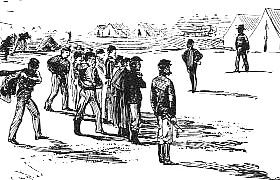
Morning roll call
Morning roll call by Charles Reed
(Hardtack & Coffee)
Understanding the terms used for military organizations can be just as difficult as remembering who fought the Battle of Gettysburg, so the historian must understand the terms for military units, why they were named as they were, and how the armies were organized. Civil War armies were organized according to military manuals written long before the first shot was fired. Remarkably, the same officer wrote the manual for both sides! William J. Hardee wrote his book on infantry tactics in the 1850's and then re-wrote the manual for Confederate use when he resigned from the United States Army and joined the Confederacy. The War Departments of North and South made several adjustments to their respective military departments and army organizations throughout the war, but the basic organization remained the same. The two armies that fought at Gettysburg were organized in a similar fashion and had a similar command structure. The "Army of the Potomac" was the primary Union army in the eastern theater of the war and the "Army of Northern Virginia" was the main Confederate force.

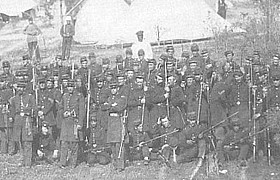
A Union regiment at ease
Members of a regiment at ease.
(Miller's Photographic History)
The primary unit which volunteers were assigned to was called a regiment, which was commanded by a colonel. A regiment was made up of ten companies, each company commanded by a captain and two lieutenants. A company was often filled with men from a single town or county and they elected their officers. Once all ten companies had been organized, they were assigned to a regiment and given a specific number by the state where they lived. For example, the 69th Pennsylvania Volunteer Infantry was raised in the city of Philadelphia. The 7th North Carolina Volunteer Infantry had ten companies that came from many different parts of that state. Most of the organizations that were organized in 1861 and 1862 were called "volunteer" regiments because the men had enlisted on their own accord and were not ordered into service. An infantry regiment numbered over 1,000 officers and men at full strength, but disease, disabilities, and battle casualties reduced these numbers very rapidly. There were some regiments at the Battle of Gettysburg that numbered barely 200 officers and men. Regiments usually acted as a single unit though companies would often be sent off to perform special duty such as skirmishing with the enemy, guard duty, or scouting.

In the North, regiments were raised or authorized by each state government that organized, clothed, fed and armed the regiments until they could be turned over to the Federal government for service. Many regiments were enrolled for three or six months until after the summer of 1861, when they were mustered into service for an average of three years. By 1863, New York and Pennsylvania had each provided over 170 regiments of infantry to the Union cause with Ohio, Indiana, Massachusetts, Connecticut, Maine, and Illinois close behind. The Army of the Potomac was filled with regiments representing every Union state except Kentucky, Kansas and Missouri.

One exception to the three-years regiments was the militia or emergency regiments. When the Confederate Army invaded Pennsylvania, Governor Andrew Curtin declared a state of emergency and ordered the state militia to be called into service. These new soldiers were hastily formed into emergency regiments and sent to defend the state capitol at Harrisburg or other vital towns and railroads. Since they were in service only to defend the state, they were not considered to be a part of the Army of the Potomac.

Southern states raised and supplied the Confederate armies with volunteer regiments as well. State governments also authorized regiments of artillery, cavalry, and infantry, appointed officers, clothed and equipped each organization, and then decided which units would go out of the state to join the southern armies being organized at Richmond, in Mississippi, and in Tennessee. By 1863, the majority of Confederate regiments had been in service since 1861 and were still composed of mostly volunteer soldiers, though the first "conscripts" or men required by state law to serve in the military defense of a state, had begun to appear. Every state in the south furnished Confederate infantry, cavalry regiments, and artillery organizations to the Army of Northern Virginia.

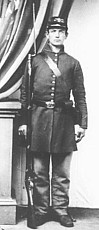
Private Jones, 2nd NH
Infantry Soldier
(Gettysburg NMP)
There were three main branches of service in a Civil War army: infantry, artillery, and cavalry. The Infantry were foot soldiers, the central part of an army. Infantry regiments were organized into a group of several regiments called a brigade, which was assigned to a larger organization, and up and up until it reached the army level. In the Army of the Potomac, every regiment belonged to a brigade, which belonged to a division, which was part of a corps. Three brigades were assigned to a division and three divisions made up a corps. The organization chart looked like this:

ARMY- composed of several corps, commanded by a general
CORPS- composed of three divisions, commanded by a general
DIVISION- composed of three to four brigades, commanded by a general
BRIGADE- composed of four to six regiments, commanded by a general
REGIMENT- composed of ten companies, commanded by a colonel
COMPANY- 100 officers and men, commanded by a captain.

To help identify the regiment, division and corps that troops belonged to, Union generals ordered the soldiers to wear a regimental number on their caps with a corps badge. The corps badge was a small flannel cloth badge cut into different shapes and were either red, white, or blue. The Army of Northern Virginia was also divided into brigades, divisions, and corps, but Confederate soldiers had no corps badges.

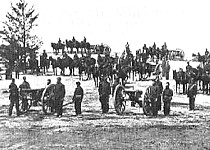
An artillery battery
Union Artillery.
Artillery regiments were divided into companies and each company was called a battery. A battery consisted of over 100 soldiers, armed with six cannon per battery. A battery was a complicated organization. Soldiers designated as drivers rode the horses that pulled the cannons and caissons, and wagons. Gunners were assigned to serve the cannons, maintain and repair the guns and carriages. An additional six to ten soldiers were assigned as specialists to repair the cannons and carriage parts, repair or replace tools, maintain the ammunition and fuzes, and a blacksmith to look after the horses. There were as many as three officers necessary to direct the battery while in action. The typical Union battery required 90 horses to pull the guns, caissons, and battery wagons and as well as three horses for the officers. The gunners of the battery usually walked unless they had to get to a point very rapidly, then they rode on the cannon limber or caisson. A battery assigned to the cavalry needed three times as many horses, one for every man so it could move as rapidly as the cavalry regiments. Confederate batteries were smaller, some having only four cannon. Because of a shortage of horses in the South, guns and caissons were pulled by teams of four horses instead of six. Artillery service was very hard on horses and many were lost in battle. Batteries were assigned independently from their regiments to specific artillery brigades (Union) or battalions (Confederate) or to the artillery reserve of an army.

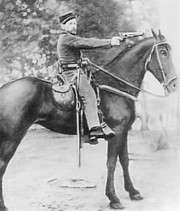
A Michigan cavalryman
A Union Cavalryman
(Gettysburg NMP)
A Cavalry regiment was organized into three battalions, each composed of four companies that were sometimes referred to as "troops". (One company equalled one troop.) A cavalry regiment was expensive to maintain while in service because of the amount of equipment carried by each cavalryman (carbine, saber, pistol, belt set, saddle, blanket, and other equipment for the soldier's mount), the number of horses needed, and the amount of feed, horse equipments and medical care required for the animals. A cavalryman had to carry not only enough food and water for himself, but he also had to carry a comb, canvas water bucket, a grain bag and other items for his horse. If a soldier's horse became ill or was lost, then he was was on foot until a new horse could be obtained, which was more difficult for a Confederate cavalryman than the Union trooper. Most Confederate cavalrymen had to provide their own horses, which they brought from home. If their horses were killed or went lame, the soldier had to rely on his folks at home to provide him with another mount or capture one from a hapless Union cavalryman.

All three of these branches combined to make an army, which also had quartermaster, engineer, signal units, and men called "teamsters" who drove supply wagons. An army on the march was alway followed by miles and miles of wagons organized into trains, loaded with food, ammunition, and medical supplies.


The Big Book of the Civil War: Fascinating Facts
About the Civil War, Including Historic Photographs, Maps, and Documents


The Journal of James Edmond Pease: A Civil War Union Soldier, Virginia, 1863
James was only 15 when he joined, but he was able to get in. Nobody really liked him cause he was unlucky. One day in the confusion he charged ahead of his company and scared off all the Confederates single handed. After that, he became well liked by most people and soon rose to Corporal. By the end of the war he rose up to Second Lieutenant.


Behind the Blue and Gray: The Soldier's Life in the Civil War
Civil War reading can be very dry, but not this book. Delia Ray takes us on a soldiers journey beginning with enlistment and ending with a soldiers life after the war, using quotes from actual letters and diaries strategically placed throughout the book.

72 Piece Civil War Army Men
Play Set 52mm Union and Confederate Figures, Bridge, Horses, Canon
  • 48 Union and Confederate Soldiers up to 2-1/8 inches tall
  • 4 Horses, 4 Sandbag Bunkers, 6 Fence Sections, 3 Cannon, 3 Ammo Carts
  • Bridge, Small Barracks
  • Scale: About 1/35th
Kids Zone Exhibits
Civil War Timeline
State Battle Maps
Civil War Picture Album
Civil War Maps
Civil War Exhibits
Civil War Cooking
Women in the War
Young Reader Books
Civil War Store

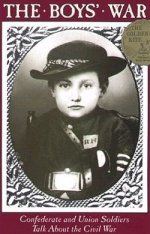
The Boys War
With the many boys who fought in the civil war most of them lied about their age. A lot of them wrote letters or had a diary. Johnny Clem had run away from his home at 11. At age 12 he tried to enlist but they refused to let him join because he was clearly too young. The next day he came back to join as a drummer boy.
American Civil War Young Reader Book Titles

Allen Jay and the Underground Railroad
Allen Jay and the Underground Railroad is the retelling of a man's recollections of his first experience helping an escaped slave. The book brings the underground railroad down to the level primary students can comprehend. This book makes for wonderful discussions regarding overcoming one's fears, going against the norm and doing what you believe to be morally correct.

The Glory Cloak: A Novel of Louisa May Alcott and Clara Barton
From childhood, Susan Gray and her cousin Louisa May Alcott have shared a safe, insular world of outdoor adventures and grand amateur theater -- a world that begins to evaporate with the outbreak of the Civil War. Frustrated with sewing uniforms and wrapping bandages, the two women journey to Washington, D.C.'s Union Hospital to volunteer as nurses.

The Civil War for Kids
History explodes in this activity guide spanning the turmoil preceding secession, the first shots fired at Fort Sumter, the fierce battles on land and sea, and finally the Confederate surrender at Appomattox. Making butternut dye for a Rebel uniform, learning drills and signals with flags, decoding wigwag, baking hardtack, reenacting battles, and making a medicine kit bring this pivotal period in our nation's history to life.

Eye Witness Civil War
Eyewitness Civil War includes everything from the issues that divided the country, to the battles that shaped the conflict, to the birth of the reunited states. Rich, full-color photographs of rare documents, powerful weapons, and priceless artifacts plus stunning images of legendary commanders, unsung heroes, and memorable heroines

If You Lived at the Time of the Civil War
All of the "If you Lived at the Time of..." books are great for kids, and also a nice, quick read for adults! What I like about them is their layout, which is easy for readers to follow. Each page begins with a question, "Would you have seen a battle in the South?" for example. Nicely drawn illustrations accompany each answer.

Day Of Tears
Through flashbacks and flash-forwards, and shifting first-person points of view, readers will travel with Emma and others through time and place, and come to understand that every decision has its consequences, and final judgment is passed down not by man, but by his maker.

Night Boat To Freedom
Night Boat to Freedom is a wonderful story about the Underground Railroad, as told from the point of view of two "ordinary" people who made it possible. Beyond that, it is a story about dignity and courage, and a devotion to the ideal of freedom.

Epic Battles of the Civil War
Historical Comics Marvel, First Bull Run

First major batle of the War. The union army marched from Washington, D.C. with the expectation that following this battle they would proceed to Richmond Virginia, and end the war. Instead, the Union Army was defeated

Turn Homeward, Hannalee
During the closing days of the Civil War, plucky 12-year-old Hannalee Reed, sent north to work in a Yankee mill, struggles to return to the family she left behind in war-torn Georgia. "A fast-moving novel based upon an actual historical incident with a spunky heroine and fine historical detail."--School Library Journal.

My Brothers Keeper
Virginia Dickens is angry. Her father and brother Jed have left her behind while they go off to Uncle Jack's farm to help him hide his horses from Confederate raiders. It's the summer of 1863 and Pa and Jed believe 9-year-old Virginia will be out of harm's way in the sleepy little town of Gettysburg, Pennsylvania.

Abe Lincoln: The Boy Who Loved Books
Children of all ages will enjoy reading this book and realizing that a love of books, as Abraham Lincoln did, can change a persons life and move him or her to become a great person

The President Is Shot!: The Assassination of Abraham Lincoln
Grade 6-10 --Description of the violent end to Lincoln's life. Holzer provides the Civil War context of the event and then details April 14 and 15, 1865. Why Murder Lincoln?, to demonstrate that this president was not always the universally beloved icon that students see him as today.

Donnybrook: The Battle of Bull Run, 1861
One of the better overviews of the campaign and battle of First Manassas or Bull Run. The book is very easy to read and is broken down in manageable chunks, with the events before and after the battle.

Drummer Boy at Bull Run
You get to know two families during the Civil War. It focuses on the two teens Jeff and Leah who go through struggles with their friendship as Jeff's family joins the confederacy.

The Civil War Songbook
This collection of "War Between the States" music has been the standard one in the re-enacting circuit for many years now. The sheet music is published just as it was originally and it contains some of the best known classic songs.

Cherry Ames Boxed Set
Student Nurse, Senior Nurse, Army Nurse & Chief Nurse

With a heart of pure gold and a true yearning to make a difference in the world, eighteen-year-old Cherry Ames leaves her hometown and enters nursing school, embarking on a lifetime of adventures.

American Civil War DVD Movie Titles

Blue Vs. Gray - Killing Fields
Relive the most vicious fighting of the Civil War, in which General Ulysses S. Grant forcibly reversed the tide of the conflict by paying with the blood of thousands. It was a desperate time for the Union

Ride With The Devil
The bloody feud among neighbors in the border state of Missouri. In this war zone the destinies of several young Southern bushwhackers as they experience the violence and the seasons

Civil War Journal - The Conflict Begins
These four programs from the History Channel series Civil War Journal cover critical aspects of the early days of the war.

The Civil War - A Film by Ken Burns
Here is the saga of celebrated generals and ordinary soldiers, a heroic and transcendent president and a country that had to divide itself in two in order to become one

History Channel Presents
The Civil War

From Harper's Ferry, Fort Sumter, and First Bull Run to Shiloh, Antietam, and Gettysburg. The most legendary Civil War battles in brilliant detail. A selection of the soldiers and legendary leaders.

Brother Against Brother: The American Civil War
Fort Sumter, to the Confederate surrender at Appomattox, Features battle reconstructions and depictions of army life, eyewitness accounts, period photographs and engravings, plus commentary and analyses.

Civil War Journal
Collector's Edition 4-DVD Set

Made exclusively for Books Are Fun. Discs include: · Stonewall Jackson · Sherman and the March to the Sea · West Point Classmates-Civil War Enemies · Robert E. Lee · Battle of 1st Bull Run · The 54th Massachusetts · John Brown s War · Destiny at Fort Sumter

The Blue and the Gray
The Complete Miniseries

The Civil War proved a backdrop for this 1982 miniseries. Complete and uncut three disc set. Two families divided by the War Between the States. A Southerner caught when he becomes a war correspondent for the Northern newspaper. He finds himself  where history's in the making from the Battle of Bull Run to Abraham Lincoln's assassination


Civil War Historic 1000-piece Puzzle
The famous faces and fearsome facts of the Civil War are captured in this 1,000-piece cardboard puzzle for Civil War buffs and serious puzzle fans.

22 Piece Civil War Gettysburg General Robert E Lee Headquarters
Plastic Army Men Playset with 54mm 1/32nd Union and Confederate Soldier Figures, Building, Cannon

Civil War Stratego
  • Wood playing pieces! This is the first time the game will feature wood pieces in approximately four decades.
  • Wood pieces will represent all levels of both the Union and Confederate Armies
  • Colorful game board will depict a classic Civil War battlefield (i.e., Antietam).
  • A collectible for the avid Civil War enthusiast.
  • Recommended Age Range 8 and up

Burnside Bridge Plastic Army Men
Playset 2.5 feet long with TEN 2inch
Great looking bridge play set with 5 Union and 5 Confederate Soldier Figures. Bridge comes unassembled with 22 pieces and snaps and slides together easily

House Divided Board Game
  • 2-player board game
  • Takes about an hour to play
  • 160 thick and large colorful playing pieces which represent the Armies
  • Great for Civil War buffs
  • Beautiful components

Monitor 21" Civil War Ship Wood Model Fully Assembled
  • Dimensions 21" Long x 5" Wide x 3" High
  • Meticulously painted to the actual Monitor
  • Museum quality model. Fully assembled and ready to display.
  • The model rests perfectly on a polished marble base and 4 arched dolphins
  • Built with rare, high quality rosewood.


American Civil War Poker Playing Cards
Playing Cards commenmorating the AMERICAN CIVIL WAR, featuring great portraits of statesmen, generals and fighting men, as well as graphics scenes of battle in color. Evocative images from the Library of Congress are featured on all 54 cards

20 piece Civil War Artillery Playset
Civil War Artillery Set: 20 piece set includes 12 Artillery Crew Figures in Blue and Gray that stand up to 58mm tall, 4 Parrott Rifle Gun Cannon about 4 inches long, and 4 Cannonball stacks

Robert E Lee CSA
12 inch Action Figure by Dragon

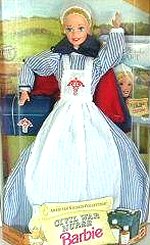
Civil War Nurse Barbie
Part of the American Stories Collection. She comes with her own storybook and wears a costume of the times. Go back to Gettysburg, (1863), where Barbie tends to the wounded soldiers. She comes with a nurse's cape, cap, bag, stand and small storybook.

Civil War chess set
Painted civil war chess set. Dimensions: Chess set pieces: 3-1/4" King's; 1-1/8" bases

Civil War Union Cavalry: 25 Piece Set
  • 13 Union Soldier Figures
  • 11 Brown Horses 2-5/8 inches tall
  • 1 White Horse Laying Down
  • Scale: Approximately 1/32nd
  • Packaging: Plastic Bag with Header Card

Source:
National Park Service
Gettysburg National Military Park
Gettysburg, PA


Search
AmericanCivilWar.com
 
Enter the keywords you are looking for and the site will be searched and all occurrences of your request will be displayed. You can also enter a date format, April 19,1862 or September 1864.