|
|
|
|
Kids Zone Exhibits
Ships and Naval Battles
Civil War Summary
Civil War Cooking
Civil War Exhibits
Women in the War
Timeline of the Civil War
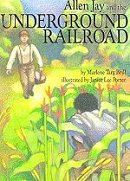 Allen Jay and the Underground Railroad Allen Jay and the Underground Railroad is the retelling of a man's recollections of his first experience helping an escaped slave. The book brings the underground railroad down to the level primary students can comprehend. This book makes for wonderful discussions regarding overcoming one's fears, going against the norm and doing what you believe to be morally correct. |
Kindle Available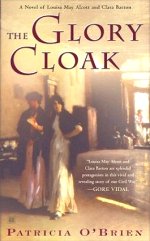 The Glory Cloak: A Novel of Louisa May Alcott and Clara Barton From childhood, Susan Gray and her cousin Louisa May Alcott have shared a safe, insular world of outdoor adventures and grand amateur theater -- a world that begins to evaporate with the outbreak of the Civil War. Frustrated with sewing uniforms and wrapping bandages, the two women journey to Washington, D.C.'s Union Hospital to volunteer as nurses. |
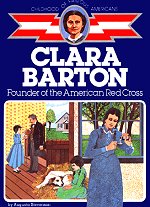 Clara Barton Founder of the American Red Cross Young Clara Barton is shy and lonely in her early days at boarding school. She is snubbed by the other girls because she doesn't know how to talk to them. But when she gets an opportunity to assist the local doctor, her shyness disappears, and Clara begins to discover her true calling as a nurse. |
Kindle Available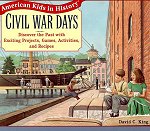 Civil War Days: Discover the Past with Exciting Projects, Games, Activities, and Recipes Dozens of projects and activities that will take you back to the days of the American Civil War Travel back to 1862 and spend a year with the Wheelers, an African American family in New York City, and the Parkhursts, a white family in Charleston, South Carolina, Eleven-year-old Emily Parkhurst and twelve-year-old Timothy Wheeler are eager to share the fun, adventure, and hard work of their daily lives. Along the way, they'll show you how to play the games they play and make the toys and crafts they make. |
Kindle Available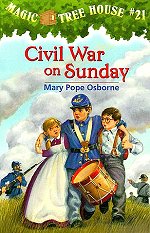 Civil War on Sunday Mary Pope Osborne's tremendously popular Magic Tree House series launches into a new realm, as Jack and Annie are challenged to save Camelot. Young readers will effortlessly learn the basics of Civil War history, while losing themselves in another gripping tale that has turned many a nonreader into a bookworm. (Ages 5 to 8) |
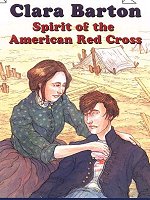 Clara Barton: Spirit of the American Red Cross Ready To Read - Level Three Clara Barton was very shy and sensitive, and not always sure of herself. But her fighting spirit and desire to help others drove her to become one of the world's most famous humanitarians. Learn all about the life of the woman who formed the American Red Cross. |
Kindle Available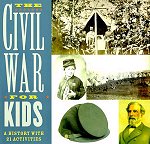 The Civil War for Kids History explodes in this activity guide spanning the turmoil preceding secession, the first shots fired at Fort Sumter, the fierce battles on land and sea, and finally the Confederate surrender at Appomattox. Making butternut dye for a Rebel uniform, learning drills and signals with flags, decoding wigwag, baking hardtack, reenacting battles, and making a medicine kit bring this pivotal period in our nation's history to life. |
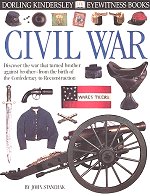 Eye Witness Civil War Eyewitness Civil War includes everything from the issues that divided the country, to the battles that shaped the conflict, to the birth of the reunited states. Rich, full-color photographs of rare documents, powerful weapons, and priceless artifacts plus stunning images of legendary commanders, unsung heroes, and memorable heroines |
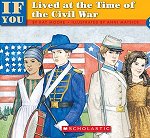 If You Lived at the Time of the Civil War All of the "If you Lived at the Time of..." books are great for kids, and also a nice, quick read for adults! What I like about them is their layout, which is easy for readers to follow. Each page begins with a question, "Would you have seen a battle in the South?" for example. Nicely drawn illustrations accompany each answer. |
 Day Of Tears Through flashbacks and flash-forwards, and shifting first-person points of view, readers will travel with Emma and others through time and place, and come to understand that every decision has its consequences, and final judgment is passed down not by man, but by his maker. |
Kindle Available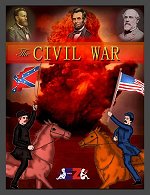 The Civil War Introduces young readers to the harrowing true story of the American Civil War and its immediate aftermath. A surprisingly detailed battle-by-battle account of America's deadliest conflict ensues, culminating in the restoration of the Union followed by the tragic assassination of President Lincoln |
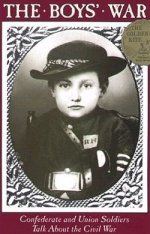 The Boys War With the many boys who fought in the civil war most of them lied about their age. A lot of them wrote letters or had a diary. Johnny Clem had run away from his home at 11. At age 12 he tried to enlist but they refused to let him join because he was clearly too young. The next day he came back to join as a drummer boy. |
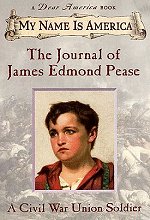 The Journal of James Edmond Pease: A Civil War Union Soldier, Virginia, 1863 James was only 15 when he joined, but he was able to get in. Nobody really liked him cause he was unlucky. One day in the confusion he charged ahead of his company and scared off all the Confederates single handed. After that, he became well liked by most people and soon rose Corporal. He showed his bravery when he spent a week in enemy territory. By the end of the war he rose up to Second Lieutenant. |
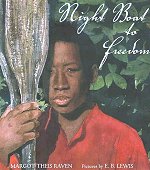 Night Boat To Freedom Night Boat to Freedom is a wonderful story about the Underground Railroad, as told from the point of view of two "ordinary" people who made it possible. Beyond that, it is a story about dignity and courage, and a devotion to the ideal of freedom. |
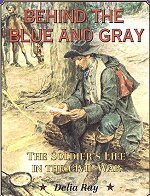 Behind the Blue and Gray The Soldier's Life in the Civil War Civil War reading can be very dry, but not this book. Delia Ray takes us on a soldiers journey beginning with enlistment and ending with a soldiers life after the war, using quotes from actual letters and diaries strategically placed throughout the book. |
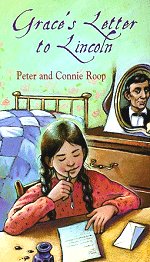 Grace's Letter to Lincoln Many important details of the time period help to make the reader understand what life was like then. It also includes photos of the actual letters written between Grace and Mr. Lincoln |
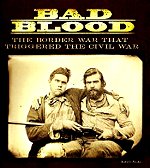 Bad Blood: The Border War That Triggered the Civil War In the years leading up to the Civil War, a bloody conflict between slaveholders and abolitionists focused the nation's eyes on the state of Missouri and the territory of Kansas. Told through the actual words of slave owners, free-staters, border ruffians, and politicians, Bad Blood presents the complex morality, differing values, and life-and-death decisions faced by those who lived on the Missouri-Kansas border |
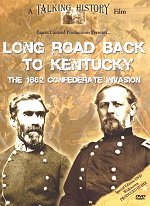 Long Road Back to Kentucky: The 1862 Confederate Invasion The often-overlooked Western campaign of the war with a specific emphasis on Kentucky's involvement in the American Civil War. |
 History's Mysteries: Family Feud: The Hatfields And McCoys Millions of dollars worth of timber and coal rich land were at stake, the courts were involved and once the national press got wind of what was happening, the backwoods folk found that their fight was being followed nationwide |
 The Civil War - A Film by Ken Burns Here is the saga of celebrated generals and ordinary soldiers, a heroic and transcendent president and a country that had to divide itself in two in order to become one |
 Rebel Sabres / The Battle of Brandy Station 1863 Through dramatic reconstructions and eye-witness accounts, this documentary explores the 1863 Battle Of Brandy Station. |
 Women And The Civil War The many contributions of women in both the North and South are presented in this program describing their roles on and near the momentous battles of the American Civil War |
 Biography - Abraham Lincoln Preserving the Union Abe Lincoln's presidency in detail. The emotional tragedy and the humorus side of the man. His thoughts on the early commanders and dicussions with Historians. Pictures and details hard to find in other historical documentaries. |
 American Experience - Abraham and Mary Lincoln: A House Divided Abraham Lincoln's legacy as the Great Emancipator reshaped the nation while his tragic death left Mary reclusive and forgotten. |
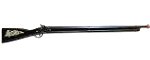 Civil War Musket Wood & Steel Frontier Rifle Designed After The Original Rifle, This Civil War Musket replica has been designed after the original rifle of its era. Measures approximately 37 inches long. Each is constructed with a solid one-piece wood stock, painted steel barrel and die-cast parts. |
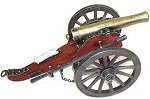 Civil War Cannon Collectible Models and childrens playsets Miniature Collectible Civil War Cannon12 pound Civil War field cannon replica weapon collectible is a detailed 1/12th scale military caisson replica weapon collectible as used throughout the Civil War Childrens Cannon Set. Includes 6 gray cannon with black wheels that measure 4.5 inches long |
 Professor Noggin's Civil War Trivia Game
|
 Civil War Soldier 102 Piece Playset
|
||||||
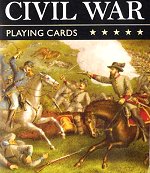 American Civil War Poker Playing Cards Playing Cards commenmorating the AMERICAN CIVIL WAR, featuring great portraits of statesmen, generals and fighting men, as well as graphics scenes of battle in color. Evocative images from the Library of Congress are featured on all 54 cards |
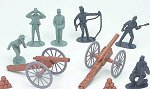 20 piece Civil War Artillery Playset Civil War Artillery Set: 20 piece set includes 12 Artillery Crew Figures in Blue and Gray that stand up to 58mm tall, 4 Parrott Rifle Gun Cannon about 4 inches long, and 4 Cannonball stacks |
 Civil War Figures by IMEX 1/72 Scale. American Civil War Union and Confederate Artillery, Cavalry, and Infantry Set with Base, produced by IMEX. Finely detailed parts are molded in gray (Confederate) and bright blue (Union). |
 House Divided Board Game
|
||||||
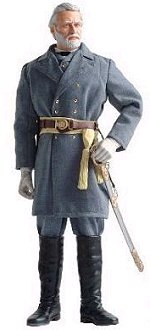 Robert E Lee CSA 12 inch Action Figure by Dragon |
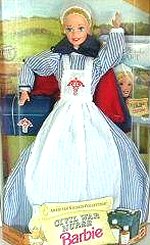 Civil War Nurse Barbie Part of the American Stories Collection. She comes with her own storybook and wears a costume of the times. Go back to Gettysburg, (1863), where Barbie tends to the wounded soldiers. She comes with a nurse's cape, cap, bag, stand and small storybook. |
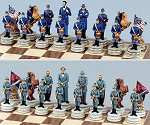 Civil War chess set Painted civil war chess set. Dimensions: Chess set pieces: 3-1/4" King's; 1-1/8" bases |
 Civil War Union Cavalry: 25 Piece Set
|
National Park Service
Gettysburg National Military Park
97 Taneytown Road
Gettysburg, PA 17325

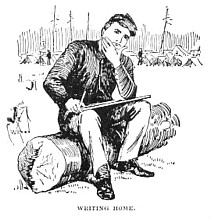
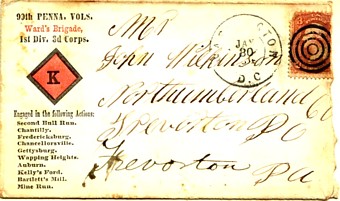
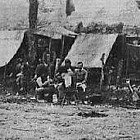 Soldiers in every war our nation has fought in have written home from the battle front. As you can see, soldiers wrote many letters throughout the Civil War, sometimes telling their friends and people at home information that the military wanted to be kept secret. It was soon after America's entry into World War I that soldiers' letters were censored by army officials who cut out parts of letters which may give away military secrets or, if the letters fell into the wrong hands, would provide pertinent information on troop locations. Censorship reached a new height during World War II. GI's could only write in generalities and not refer to their location or unit. Even the "XXXXX"'s for love and kisses would be cut out of the letter, as it might be mistaken for some sort of code! During the Vietnam conflict, soldier's letters were not as heavily censored and the soldiers wrote home about their experiences, their friends, and what they had seen.