Blue Springs Tennessee

American Civil War
October 10, 1863

Union Major General Ambrose E. Burnside, commander of the Department of the Ohio, undertook an expedition into East Tennessee to clear the roads and passes to Virginia, and, if possible, secure the saltworks beyond Abingdon. In October, Confederate Brig. General John S. Williams, with his cavalry force, set out to disrupt Union communications and logistics. He wished to take Bull's Gap on the East Tennessee & Virginia Railroad.

On October 3, while advancing on Bull's Gap, he fought with Brig. General Samuel P. Carter's Union Cavalry Division, XXIII Army Corps, at Blue Springs, about nine miles from Bull's Gap, on the railroad. Carter, not knowing how many of the enemy he faced, withdrew. Carter and Williams skirmished for the next few days.

On October 10, Carter approached Blue Springs in force. Williams had received some reinforcements. The battle began about 10:00 am with Union cavalry engaging the Confederates until afternoon while another mounted force attempted to place itself in a position to cut off a Rebel retreat. Captain Orlando M. Poe, the Chief Engineer, performed a reconnaissance to identify the best location for making an infantry attack.

At 3:30 pm, Brig. General Edward Ferrero's 1st Division, IX Army Corps, moved up to attack, which he did at 5:00 pm. Ferrero's men broke into the Confederate line, causing heavy casualties, and advanced almost to the enemy's rear before being checked. After dark, the Confederates withdrew and the Federals took up the pursuit in the morning. Within days, Williams and his men had retired to Virginia.

Burnside had launched the East Tennessee Campaign to reduce or extinguish Confederate influence in the area; Blue Springs helped fulfill that mission.

Result(s): Union victory

Location: Greene County

Campaign: East Tennessee Campaign (1863)

Date(s): October 10, 1863

Principal Commanders: Major General Ambrose E. Burnside [US]; Brig. General John S. Williams [CS]

Forces Engaged: Department of the Ohio [US]; 1st Tennessee Volunteer Cavalry Regiment, 4th Kentucky Cavalry Regiment, and some home guard troops and artillery [CS]

Estimated Casualties: 316 total (US 100; CS 216)


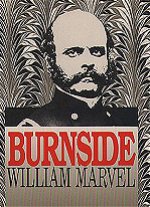
Burnside
Ambrose Burnside, the Union general, was a major player on the Civil War stage from the first clash at Bull Run until the final summer of the war. He led a corps or army during most of this time and played important roles in various theaters of the war.
Confederate Toy Soldiers
Playsets of Confederate and Union Soldiers. Sets come in pieces of 30 to 100.  Artillery Cavalry foot soldiers and cannon sets
Tennessee State Battle Map
State Battle Maps
American Civil War Exhibits
Campaigns of the War
Civil War Summary
Documents of the Civil War
Confederate Commanders
Union Generals
Civil War Timeline
Women Civil War Soldiers
Ships and Naval Battles
Confederate Supplies
Civil War Store
Shelby Foot 3 Volume Civil War Set
The Civil War: A Narrative
3 Volume Set : Foote

This trilogy of books on the Civil War is not only a piece of first-rate history, but also a marvelous work of literature. Many know Foote for his prominent role as a commentator on Ken Burns's PBS series about the Civil War. These three books, however, are his legacy
American Civil War Book Titles

From Manassas to Appomattox: General James Longstreet
According to some, he was partially to blame for the Confederate defeat at Gettysburg; according to others, if Lee had followed Longstreet's advice, they would have won that battle. He has been called stubborn and vain; and he has been lauded as one of the greatest tacticians of the Civil War

The Railroads of the Confederacy
The story of the first use of railroads on a major scale in a major war. A complex and fascinating tale, with the railroads of the American South playing the part of tragic hero in the Civil War: at first vigorous though immature; then overloaded, driven unmercifully, starved for iron; and eventually worn out

The Northern Railroads in the Civil War, 1861-1865
Account of the impact of the railroads on the American Civil War and vice versa. How the North was helped to victory through its effective use of the rails, also how the war changed the way railroads were built, run and financed after the war.

Six Armies in Tennessee: The Chickamauga and Chattanooga Campaigns
The Federal success along the river opened the way for advances into central and eastern Tennessee, which culminated in the bloody battle of Chickamauga and then a struggle for Chattanooga. Chickamauga is usually counted as a Confederate victory, albeit a costly one

Rock of Chickamauga: The Life of General George H. Thomas
Union General George Thomas was one of the five men most important in the North's victory. Military historians consider him one of the best defensive generals ever, a man who would have stood out in any war

The Bridge Burners: A True Adventure of East Tennessee's Underground Civil War
The railroad that proved such a peacetime boon would become a point of conflict only three years later
A Very Violet Rebel Ellen Renshaw Diary
A Very Violent Rebel: The Civil War Diary of Ellen Renshaw House
The Siege of Knoxville (November 1863) is covered and Sutherland's footnotes make for good history

Where the South Lost the War: An Analysis of the Fort Henry-Fort Donelson Campaign
The war probably could have been over in 1862 had Lieutenant Phelps destroyed the bridge at Florence. Not doing so provided a retreat for A. S. Johnston to move his men to Corinth and then to Shiloh

Women in the War
Civil War Cooking
Civil War Submarines
Kids Zone Causes of the War


Sources:
U.S. National Park Service
U.S. Library of Congress.