
Women in Disguise: Female Soldiers of the Civil War

Silas Weaver
Silas Weaver has spent decades exploring historic battlefields, reading primary journals, and tracking down the lesser-known stories of the American Civil War. His lifelong passion for 19th-century history comes through in his engaging accounts of the places, people, and lingering questions of the era. He believes that walking the actual grounds where history happened is the best way to truly connect with the past.
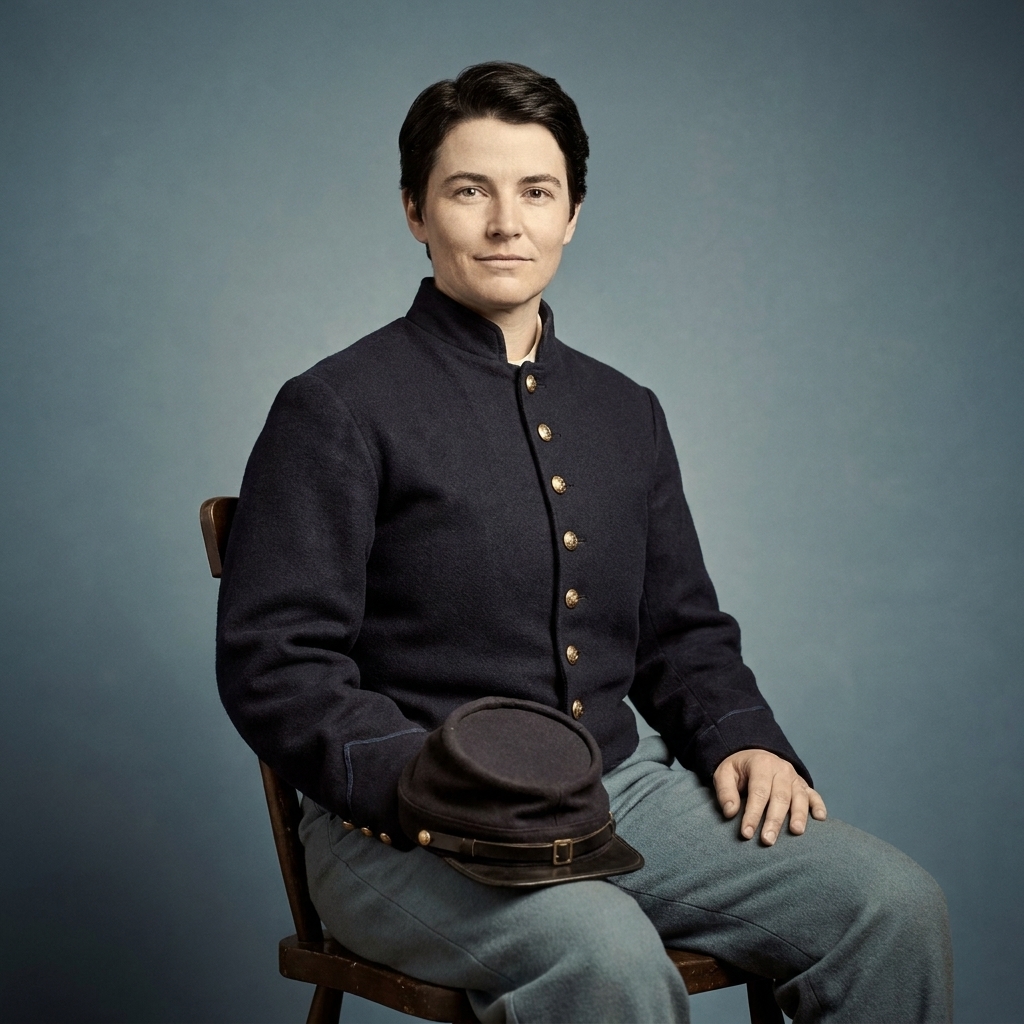
I still remember the first time I heard it, not in a lecture hall but out on a windy ridgeline where the grass kept its own counsel. A ranger mentioned, almost offhand, that not every soldier who marched past this line of trees was the man the muster roll assumed. The idea stuck to me the way battlefield dust sticks to boots. Not because it is a novelty, but because it forces you to picture the war at arm’s length: the stink of wet wool, the ache of a full pack, the jokes that never quite land when you are trying not to be noticed.
During the Civil War, at least several dozen cases are documented in the surviving record, and historians commonly estimate the real number ran into the hundreds across both armies. Some fought in major engagements. Some endured the grind of camp life for long stretches without being discovered. Their stories survive in enlistment papers, pension files, newspaper accounts, and the recollections of men who only realized later what had been happening in the next tent over.
This is not a tale of a few outliers. It is a window into how the armies worked, what they failed to see, and what it cost to live every day with your identity held tight like contraband.
Why enlist at all?
When you read the surviving accounts, the motives rarely come as a single clean answer. They come layered, like sediment.
- Patriotism and politics: Some were deeply committed to the Union or Confederate cause and wanted to fight, not simply support from the home front.
- Money and independence: Soldier pay could be more reliable than domestic work, and enlistment offered a kind of mobility many women did not otherwise have.
- Family ties: A number followed a husband, brother, or sweetheart. Sometimes it was devotion. Sometimes it was protection. Sometimes it was both.
- Escape: The war offered a door out of difficult circumstances: poverty, abusive homes, limited prospects, or a life that felt already decided.
- A calling for adventure: A few sources are blunt about it. The war was terrible, but it was also the biggest event of their lifetime, and they wanted to step into it.
To understand these choices, it helps to remember how total the conflict felt to many Americans. If you want a broader grounding in the rhythms and realities of the era beyond the battlefield, our Civil War Life guide is a good companion read.
How could someone enlist undetected?
Modern readers often assume armies were thorough about identification. Civil War enlistment, especially early on, could be surprisingly casual: recruiting offices were under pressure to fill quotas, medical exams varied widely, and paperwork was not always consistent. In a world without standardized IDs, a new name and a steady posture could carry you farther than you might expect.
The mechanics of disguise
- Clothing: Men’s clothing in the 1860s had enough looseness to help conceal a body, particularly with layers. Uniform coats and sack coats did a lot of work.
- Hair: Cutting hair short was a common first step, and it also served as a kind of psychological point of no return.
- Voice and manner: Many accounts mention lowering the voice, adopting masculine gestures, and learning the talk of camp well enough not to draw attention.
- Distance from home: Enlisting away from one’s community reduced the chance of recognition.
Even with all that, the real secret was not the uniform. It was consistency. The armies were crowded, dirty, loud, and exhausting. People notice less when everyone is half asleep and aching.
Life in camp
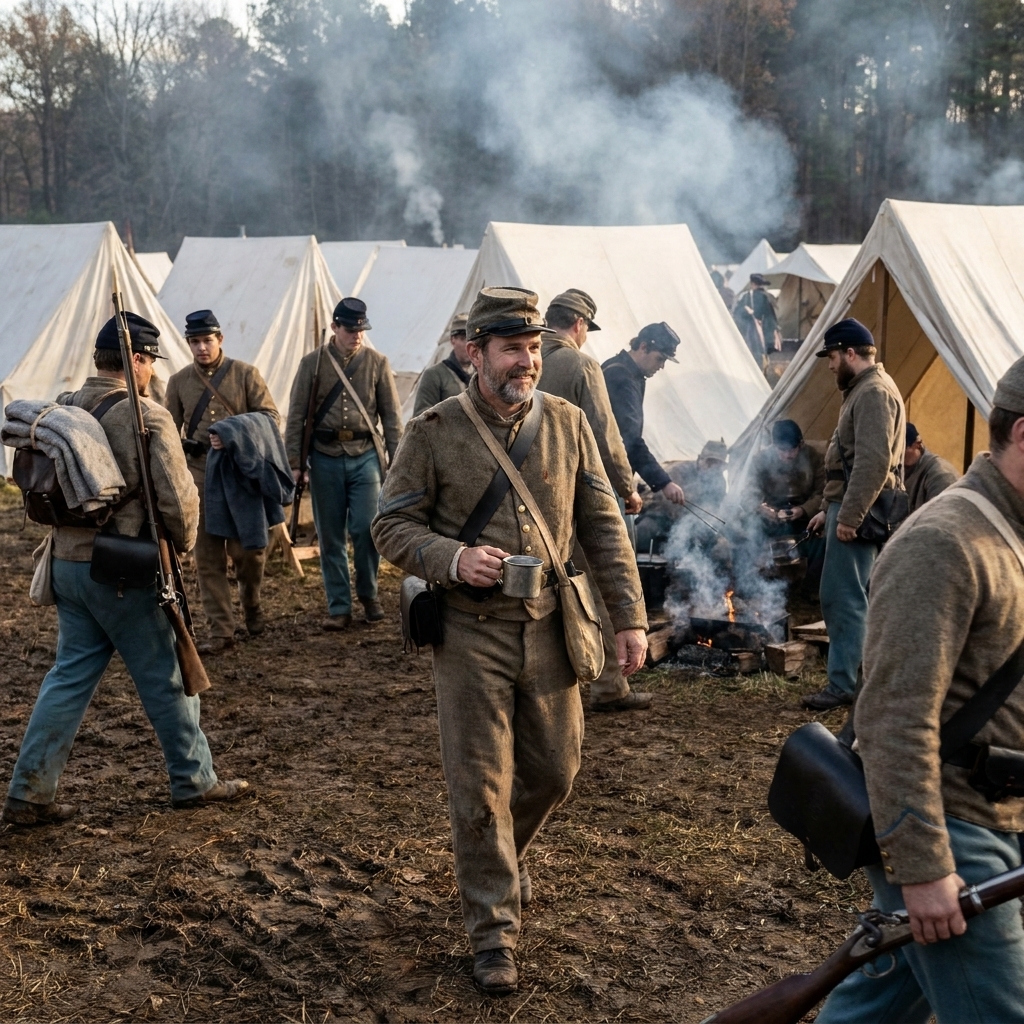
If you want to know how someone could remain undiscovered, do not start with battle. Start with camp. Camp is where your guard drops, where the routines repeat, and where the smallest mistake can unravel everything.
Sleep, clothing, privacy
Tent life was intimate. Men slept close, sometimes pressed together for warmth whether they wanted to or not. Changing clothes was often done in plain view. For disguised soldiers, privacy became a daily strategy.
- Choosing moments carefully: Changing at odd hours, turning away, or slipping behind a tent line.
- Keeping to oneself: A reputation for being quiet or “unfriendly” could actually function as protection.
- Using the chaos: Rainstorms, night marches, and hurried moves were cover. So was the general indifference that comes with fatigue.
Bathing, lice, wool
Bathing was irregular in any regiment. Many soldiers went weeks with little more than a face wash when water was available. That grim reality could help someone stay hidden, but it also made health problems worse. Skin irritation, infections, and lice were common for everyone, and harder to manage when you could not safely undress or ask for help.
Food and grind
Whatever brought someone into the ranks, the day-to-day reality was the same hard bread and hard miles. When I think about the strain of keeping up appearances, I think about the simplest tasks: standing in line for rations, shouldering a musket, boiling coffee over a low fire, and never letting your hands shake when someone jokes too close to the truth.
If you want a clearer sense of what those meals looked like, see what Civil War soldiers ate on the march.
On the march
Marching was the great equalizer. Blisters did not care about identity. A full pack did not care about secrecy. Soldiers fell out of ranks for the same reasons: sore feet, diarrhea, fever, exhaustion, or boots that turned into instruments of torture.
Keeping pace, keeping cover
Many disguised soldiers succeeded because they were capable soldiers. The war required stamina, but it also required a tolerance for discomfort that, frankly, a lot of teenagers and farm boys had never been asked to find in themselves before 1861. The accounts that survive often describe these soldiers as steady, dependable, and not prone to complaint. That description could be praise, but it could also be camouflage.
In battle
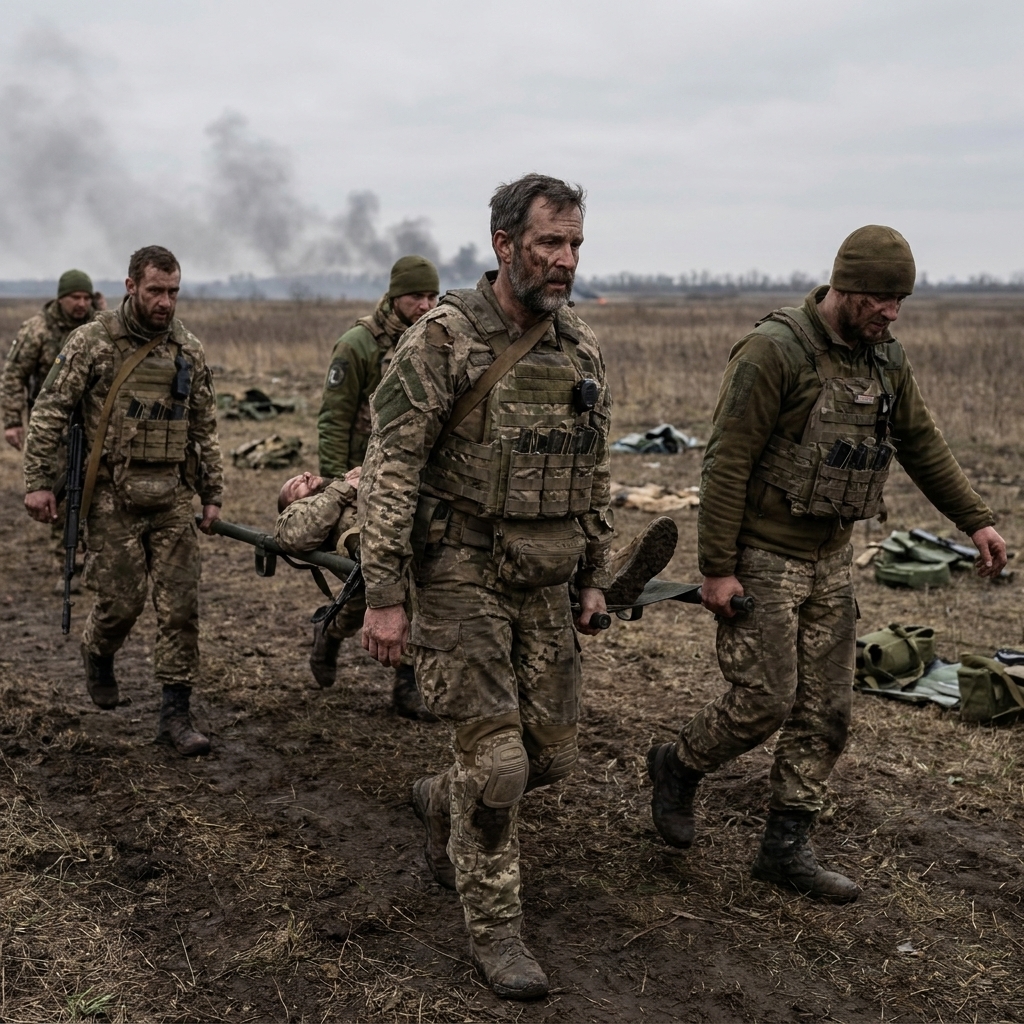
Combat created two opposite conditions at once. It increased the chances of discovery because wounds required treatment. But it also flooded everything with confusion, smoke, blood, noise, and urgency. In that environment, a soldier was a soldier until proven otherwise.
The medical danger
The greatest immediate risk was injury. A trip to the field hospital could expose what months of careful routine had hidden. Some avoided treatment as long as possible. Others were discovered only after death, when comrades prepared the body. These are the harshest lines in the record, and I never read them without pausing.
Prison camps and searches
Capture also raised the stakes. Prison processing, searches, and the close quarters of stockades could make concealment more difficult. Accounts suggest exposure could mean humiliation and real danger, especially in an already brutal prison system.
Names we can point to
Because so much went unrecorded, it is worth naming a few individuals whose stories are comparatively well documented, while remembering they stand in for many more whose paper trails vanished.
It is also worth saying upfront that the same set of facts can point in different directions. Some people appear to have adopted a male identity primarily as a wartime necessity. Others lived for years, even decades, as men, and the historical record does not always give us clean language for that. The best approach is to describe what the sources show, and to avoid forcing any single modern label onto every life.
Sarah Emma Edmonds
Edmonds served in the Union Army under the name Franklin Thompson and later wrote about her experiences. Like many veterans’ narratives, her account mixes vivid firsthand detail with claims historians still debate, but it remains one of the best known windows into the phenomenon and into wartime memory itself.
Frances Clayton
Clayton, who reportedly served in the Union ranks, appears in period newspaper coverage and later retellings. Her story, like many, sits at the crossroads of documentation and legend. That is not a reason to dismiss it. It is a reason to read carefully, compare sources, and notice what each generation wanted the story to mean.
Jennie Hodgers (Albert Cashier)
Hodgers served in the 95th Illinois Infantry under the name Albert Cashier and lived much of their postwar life as Cashier. The surviving record here opens a wider conversation about identity, how communities respond, and how easily official systems flatten complicated lives into a single label.
For readers who like to zoom out from individual lives to the machinery of campaigns, our broader Battles guide can help place these stories on the larger map without losing the human scale.
How were they discovered?
Most discoveries were not the result of clever detective work. They were accidents, the kind that happen to any soldier sooner or later.
- Wounds and medical exams: The most common trigger, especially after a major engagement.
- Illness: Fevers and dysentery could force a soldier into care, where privacy disappeared.
- Suspicion in close quarters: A tentmate noticing bandaging, a reluctance to undress, or a body shape under wet clothing.
- Administrative problems: Confusion over pay, desertion accusations, or identity questions when transferring units.
Just as telling is how often they were not discovered. That fact alone tells you something about mid-19th-century assumptions. Many men simply did not imagine a woman could be beside them in line of battle, so they did not look for it.
What happened after exposure?
The outcomes varied. Some were discharged quietly. Some were treated as curiosities by newspapers hungry for a good story. A few were allowed, at least for a time, to remain attached to the army in noncombat roles. And some, once exposed, chose to enlist again under a new name, which tells you how strong the pull could be, whether it was conviction, necessity, or something harder to define.
It is also worth saying plainly: the record tends to preserve the dramatic moments, the reveal, the scandal, the courtroom-style headlines. It preserves far less of the slow, inward cost. Imagine living with constant vigilance, knowing a careless motion could turn comrades into accusers.
Myths and evidence
This topic attracts tall tales the way a campfire attracts moths. Some period newspapers sensationalized these stories, and later writers sometimes embroidered them further. When you are sorting the sturdy from the flimsy, a few signposts help:
- Look for paperwork: Muster rolls, service records, and pension files can ground a story.
- Value consistency: Details that line up across time and across different witnesses tend to hold better.
- Notice what the source wants: A recruitment poster, a scandal sheet, and a veteran’s memoir all have motives.
One more complication: the paper trail is not equally thick everywhere. Union service and pension records often left a deep bureaucratic footprint. Confederate records and postwar support systems were more fragmented and frequently state-level, which can make some lives harder to trace with the same confidence.
Sometimes the best historical answer is also the most honest one: we can say this much with confidence, and beyond that the fog thickens.
Feel it under your feet
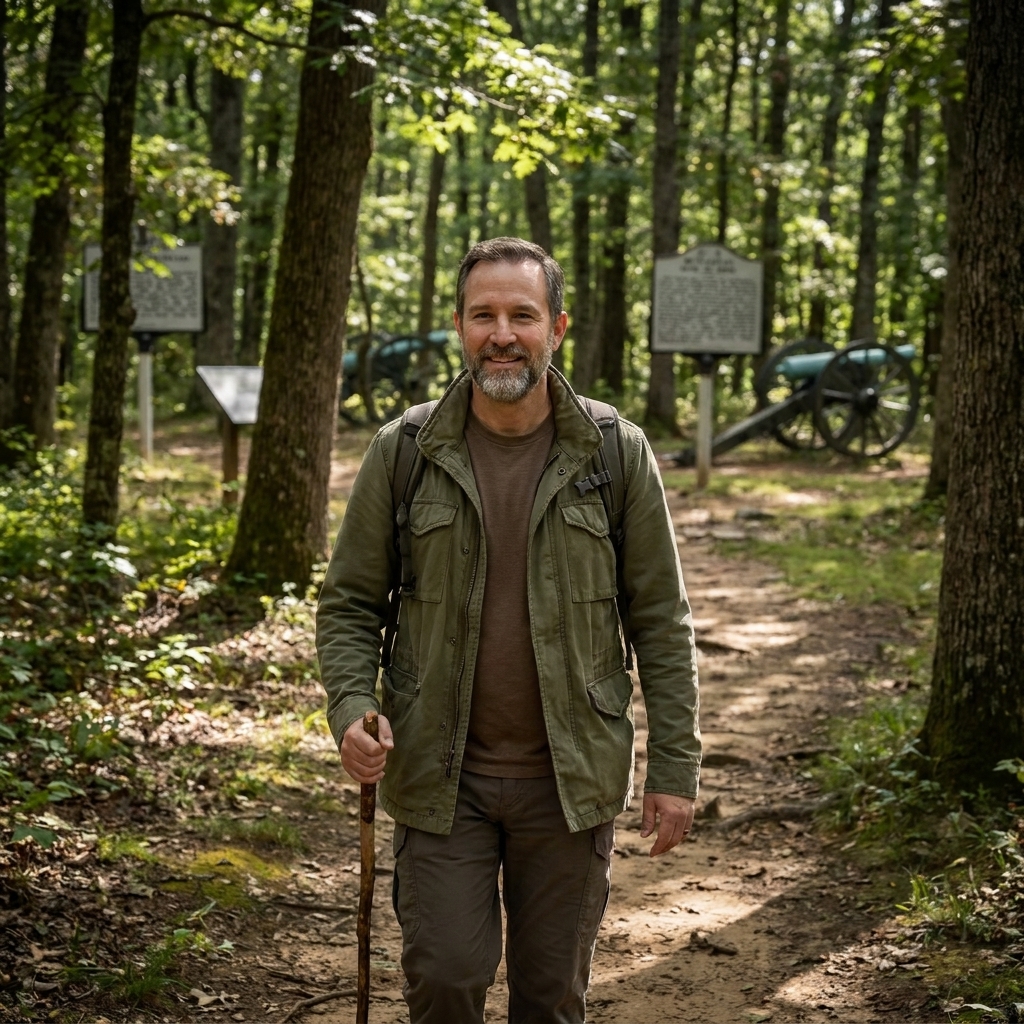
I have always believed that some history only clicks when you are standing where it happened. If you want places that help you imagine the daily soldier experience, look for preserved landscapes that still show the relationship between ground, cover, and distance.
- Chickamauga Battlefield offers dense woods where visibility collapses and units can vanish into timber.
- Petersburg can help you think about endurance, routine danger, and the long grind where daily life mattered as much as heroics.
- For planning help, start with how to plan a battlefield day, especially if you want time to read markers slowly and follow the landscape instead of rushing monument to monument.
FAQ
How many women fought disguised as men?
We cannot give a precise number because many were never discovered and records are incomplete. Several dozen cases are clearly documented, and historians commonly estimate the real number was likely in the hundreds.
Did officers know and ignore it?
In some cases, suspicion likely existed and was quietly set aside, especially if the soldier did the work and kept out of trouble. But there is no single pattern. Some officers discharged discovered soldiers immediately. Others treated it as a curiosity or a nuisance.
Were any officially recognized?
A few received recognition in their lifetimes, often through newspaper attention more than formal military honors. Postwar, some sought pensions or public acknowledgment with mixed results, depending on documentation and local attitudes.
Were these soldiers always women in the modern sense?
The 19th-century record uses the language of its time, and it often collapses complex lives into a simple category. Some individuals lived for decades under a male identity. Others returned to women’s clothing after the war. The safest approach is to describe what the sources show, avoid forcing modern labels where the evidence cannot support them, and treat each life as its own case.
What it changes
When you picture a Civil War encampment, it is easy to see only what the army intended: rows of tents, lines of muskets, names on a roster. The disguised soldiers who served remind us that the war was also a human system full of blind spots, improvisation, and private determination.
They also remind us of something quieter. The Civil War was fought by people trying to survive their own days, not just history’s big moments. Some carried secrets that would have shattered their place in the ranks. And still, they marched, they worked, they fought, and they slept on the same cold ground as everyone else.
If you would like more pieces that lean into the textures of soldier life, you might enjoy camp pastimes and the basics of Union blue vs. Confederate gray, not as trivia, but as the material culture that shaped what a disguised soldier had to navigate hour by hour.