|
|
|
Kindle Available Robert E. Lee This book not only offers concise detail but also gives terrific insight into the state of the Union and Confederacy during Lee's life. Lee was truly a one of kind gentleman and American, and had Virginia not been in the south or neutral, he ultimately would have led the Union forces 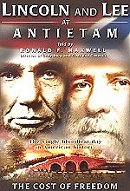 Lincoln and Lee at Antietam: The Cost of Freedom Lincoln and Lee at Antietam covers the entire struggle of the Antietam Campaign. The political concept about why Lincoln needed a Union victory and Lee's need to take the war north were covered as well as the battle.DVD  The Last Days of the Civil War - Biography: Abraham Lincoln & Robert E. Lee, Civil War Journal: Jefferson Davis In-depth profiles that series--illuminate the personalities at the heart of the conflict: Abraham Lincoln, Jefferson Davis, and Robert E. Lee DVD 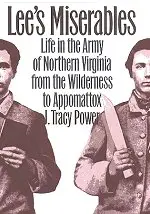 Lee's Miserables: Life in the Army of Northern Virginia from the Wilderness to Appomattox The words of the soldiers themselves provide a view of the army's experiences in camp, on the march, in combat, and under siege—from the battles in the Wilderness to the final retreat to Appomattox. 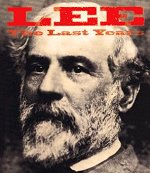 Lee The Last Years After his surrender at Appomattox, Robert E. Lee lived only another five years - the forgotten chapter of an extraordinary life. These were his finest hours, when he did more than any other American to heal the wounds between North and South |
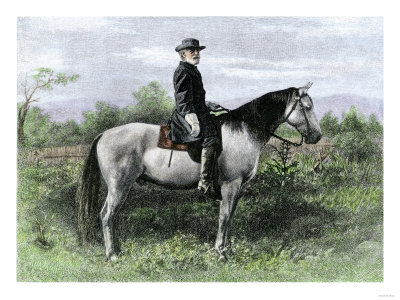
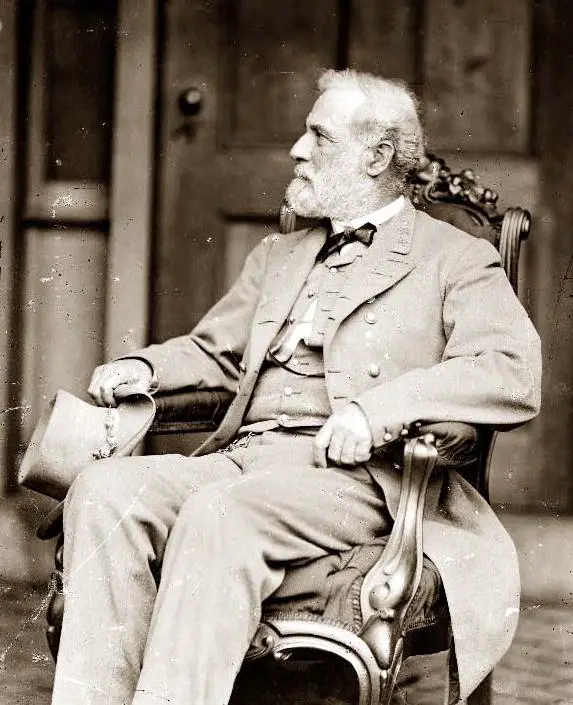
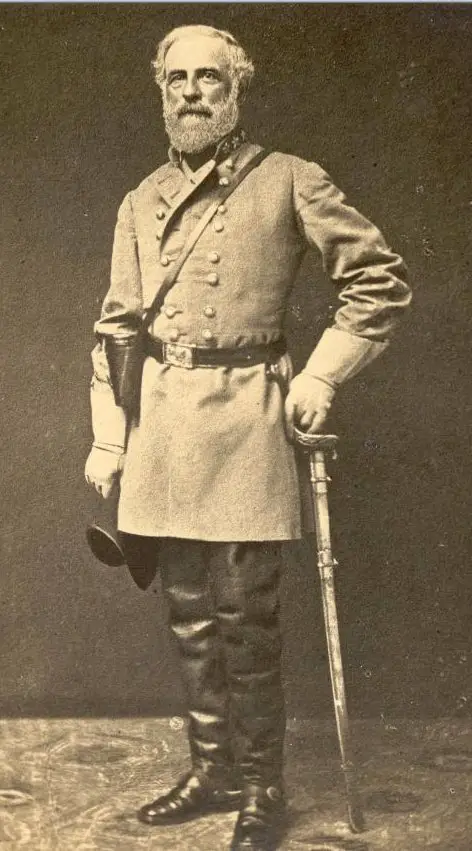
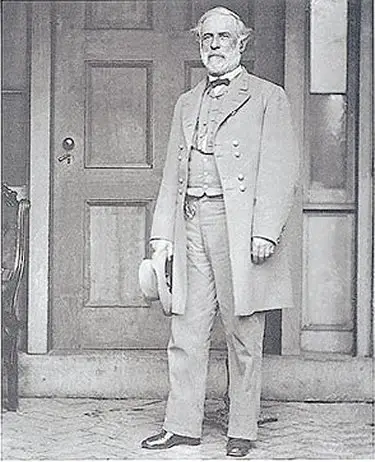
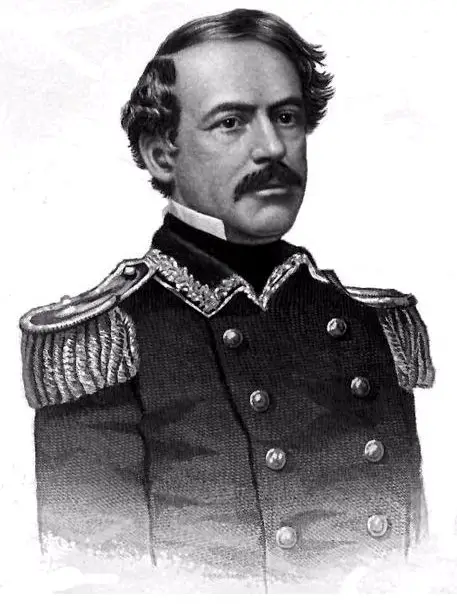
Robert Edward Lee was born on January 19, 1807, at "Stratford" in Westmoreland County, Virginia. He was the fifth child born to Henry "Light-Horse Harry" Lee and his second wife, Ann Hill (Carter) Lee. He grew up in an area where George Washington was still a living memory. Robert had many ties to Revolutionary War heroes. Educated in the Alexandria, Virginia, schools, he obtained appointment to West Point in 1825. In 1829, Robert E. Lee graduated second in On June 30, 1831, he married Mary Ann Randolph Custis. They had seven children. All three of their sons served in the Confederate army. George Washington Custis and William Henry Fitzhugh ("Rooney") attained the rank of Major General and Robert E. Lee, Jr., that of Captain. The latter served as a private in the Rockbridge Artillery at the Battle of Antietam. During the Mexican War, Robert E. Lee was promoted to Colonel due to his gallantry and distinguished conduct in performing vital scouting missions. In 1852, he became Superintendent of the Military Academy. In 1855, Secretary of War Jefferson Davis transferred Lee from staff to line and was commissioned Lieutenant Colonel 2nd Cavalry. He was then sent to West Texas, where he served from 1857-1861. In February of 1861, General Winfield Scott recalled Lee from Texas when the lower South seceded from the Union. Politically, Robert E. Lee was a Whig. Ironically, he was attached strongly to the Union and to the Constitution. He entertained no special sympathy for slavery. When Virginia withdrew from the Union, Lee resigned his commission rather than assist in suppressing the insurrection. His resignation was two days following the offer of Chief of Command of U.S. forces under Scott. He then proceeded to Richmond to become Commander-in-Chief of the military and naval forces of Virginia. When these forces joined Confederate services, he was appointed Brig. Gen. in the Regular Confederate States. Lee returned to Richmond in March of 1862 to become military advisor to President Davis. Whenever he had a plan, General Lee took the initiative and acted at once. Cutting off supplies and reinforcements executed by Jackson at Seven Pines was a successful Confederate venture. He also stopped McClellan's threat to Richmond during the Seven Days Battle (June 26-July 2, 1861). At the Battle of Second Manassas, Lee defeated Pope. At the Battle of Antietam, his Northern thrust was checked by McClellan; however, he repulsed Burnside at Fredericksburg in December of 1862. In May of 1863, Gen. Lee defeated Gen. Hooker at Chancellorsville, but was forced onto the strategic defensive after Gettysburg in July. On April 9, 1865, Lee surrendered to Ulysses S. Grant at the village of Appomattox Court House. After the surrender, Lee returned to Richmond. He assumed the presidency of Washington College (now Washington and Lee University). His example of conduct for thousands of ex-Confederates made him a (1807-1870) Confederate general, born in Stratford, VA. He trained at West Point, and in the Mexican War became chief engineer of the central army in Mexico (1846). He commanded the US Military Academy (1852--5), was a cavalry officer on the Texan border (1855--9), and in 1861 was made commander-in-chief of the Virginia forces. He was in charge of the defences at Richmond, and defeated Federal forces in the Seven Days' Battles (1862). His strategy in opposing General Pope, his invasion of Maryland and Pennsylvania, and other achievements are central to the history of the war. In 1865, he surrendered his army to General Grant at Appomattox Courthouse. After the war, he became President of Washington College at Lexington. The son of a Revolutionary War hero, Robert E. Lee was a model cadet. So much so, in fact, that he was dubbed the "Marble Statue" for his nearly perfect record while at the academy. He was always ranked first or second in his class and never earned a single demerit during his four years at West Point. After serving with distinction in the Mexican-American War, he went on to distinction in his native Virginia. At the onset of the Civil War, he resigned his commission in the US Army and took command of the Army of Northern Virginia. His string of victories throughout that war earned him praise on both sides of the Mason-Dixon Line and he has since earned a well-earned reputation for excellence in the art of war. Lee's surrender to Ulysses Grant at Appomattox Court House ended the Civil War and he was finally pardoned of all wrong doing by President Jimmy Carter.
|
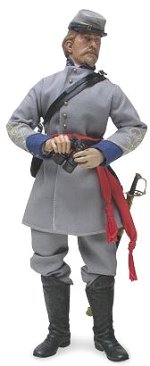 Army of Northern Virginia 12 inch Figure |
Civil War Exhibits Jefferson Davis Confederate President Confederate Commanders State Battle Maps Women In The War Young Reader Selections Civil War Timeline Documents of the War Civil War Picture Album Kids Zone Causes of the Civil War |
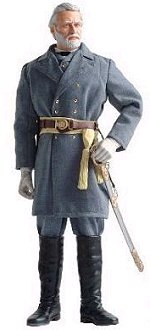 Robert E Lee CSA 12 inch Action Figure by Dragon |
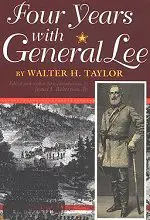 Four Years With General Lee Walter Taylor was staff officer to General Robert E. Lee. His book first appeared in 1877. For many years a standard authority on Confederate history, it is the source for dozens of incidents that have now become a part of every biography of Lee. |
Kindle Available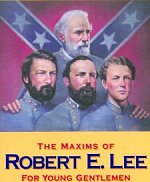 The Maxims Of Robert E. Lee For Young Gentlemen: Advice, Admonitions, and Anecdotes on Christian Duty and Wisdom from the Life of General Lee All his life, Robert E. Lee relied upon his faith for strength and guidance not only in troubled times, but also as the foundation upon which he based all of his dealings with others. |
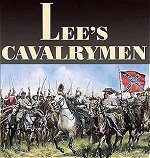 Lee's Cavalrymen: A History of the Mounted Forces of the Army of Northern Virginia, 1861-1865 The cavalry of the Army of Northern Virginia its leadership, the military life of its officers and men as revealed in their diaries and letters, the development of its tactics as the war evolved, and the influence of government policies on its operational abilities. All the major players and battles are involved |
Kindle Available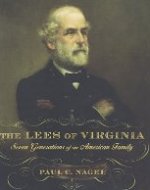 The Lees of Virginia: Seven Generations of an American Family There are few American families that feature such a collection of characters, both heroic and ignoble, who have made such a mark on history as the Lees. In The Lees of Virginia, Paul Nagel chronicles seven generations of Lees, covering over two hundred years of accolades and scandals |
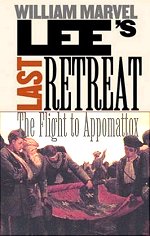 Lee's Last Retreat The Flight to Appomattox Lee's troops were more numerous and far less faithful to their cause than has been suggested. Lee himself made mistakes in this campaign, and defeat wrung from him an unusual display of faultfinding |
Kindle Available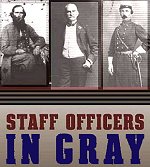 Staff Officers in Gray: A Biographical Register of the Staff Officers in the Army of Northern Virginia Profiles some 2,300 staff officers in Robert E. Lee's famous Army of Northern Virginia. A typical entry includes the officer's full name, the date and place of his birth and death, details of his education and occupation, and a synopsis of his military record. Two appendixes provide a list of more than 3,000 staff officers who served in other armies of the Confederacy and complete rosters of known staff officers of each general |
Kindle Available The Class of 1846: From West Point to Appomattox: Stonewall Jackson, George McClellan, and Their Brothers No single group of men at West Point has been so indelibly written into history as the class of 1846. The names are legendary: Thomas "Stonewall" Jackson, George B. McClellan, Ambrose Powell Hill, Darius Nash Couch, George Edward Pickett, Cadmus Marcellus Wilcox, and George Stoneman |
 Lee Vs. McClellan: The First Campaign An interesting account of the struggle for western Virginia in 1861. It follows that year's rolls of Generals McClellan and Lee; the former using the successes of the campaign to further his reputation and career, and the latter struggling to straighten out a quagmire and failing to do so |
Kindle Available Cold Harbor Grant and Lee May 26-June 3, 1864 |
In his gripping fourth volume on the spring 1864 Overland campaign--which pitted Ulysses S. Grant against Robert E. Lee for the first time in the Civil War--Gordon Rhea vividly re-creates the battles and maneuvers from the North Anna stalemate through the Cold Harbor offensive. Once again Rhea's tenacious research elicits stunning new facts from the records of a phase oddly ignored or mythologized by historians. The Cold Harbor of these pages differs sharply from the Cold Harbor of popular lore.
We see Grant, in one of his most brilliant moves, pull his army across the North Anna River and steal a march on Lee. In response, Lee sets up a strong defensive line along Totopotomoy Creek, and the battles spark across woods and fields northeast of Richmond. Their back to the Chickahominy River and on their last legs, the rebel troops defiantly face an army-wide assault ordered by Grant that extends over three days.Rhea gives a surprising new interpretation of the famous battle that left seven thousand Union casualties and only fifteen hundred Confederate dead or wounded. Here, Grant is not a callous butcher, and Lee does not wage a perfect fight. Every imaginable primary source has been exhausted to unravel the strategies, mistakes, gambles, and problems with subordinates that preoccupied two exquisitely matched minds. In COLD HARBOR, Rhea separates fact from fiction in a charged, evocative narrative. He leaves readers under a moonless sky, Grant pondering the eastward course of the James River fifteen miles south of the encamped armies. |
DVD Jefferson Davis An American President One of the most outstanding statesmen of the United States during the first 60 years of the 19th century, he sacrificed everything to defend the South's position regarding the rights of the states and conservative constitutional interpretation. Against staggering odds he led the South and held it together in the bloody Civil War or War Between the States |
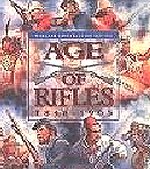 Wargame Construction Age of Rifles 1846 - 1905 Game lets you design and play turn-based strategic battles. You can create scenarios betwen years 1846 and 1905. You have complete control over all the units, and can customize their firepower, movement points, strength, aggressiveness, etc. Supports 1 or 2 players |
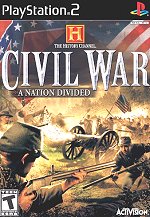 History Channel Civil War A Nation Divided Rally the troops and organize a counterattack -- Your strategic decision and talent as a commander will decide if the Union is preserved or if Dixie wins its independence |
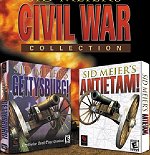 Sid Meier's Civil War Collection Take command of either Confederate or Union troops and command them to attack from the trees, rally around the general, or do any number of other realistic military actions. The AI reacts to your commands as if it was a real Civil War general, and offers infinite replayability. The random-scenario generator provides endless variations on the battles |
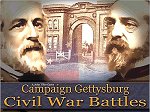 Campaign Gettysburg: Civil War Battles Campaign Gettysburg is simply the best of all the HPS Civil War games. While all of those are very good in their own right they simply do not compete with the level of detail presented here. Hundreds of scenarios and multiple OOBs are only the start, the best thing is the campaign game |
|
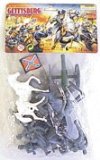 Gettysburg Playset 12 to 26 piece soldier play sets. Ages 6 and Up |
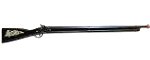 Civil War Musket Wood & Steel Frontier Rifle Designed After The Original Rifle, This Civil War Musket replica has been designed after the original rifle of its era. Measures approximately 37 inches long. Each is constructed with a solid one-piece wood stock, painted steel barrel and die-cast parts. |
|
12 Inch Action Figures 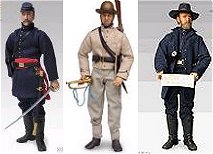 |

 the class without a single demerit against his name. He was commissioned a brevet 2nd Lieutenant of Engineers.
 legend even before his death on October 12, 1870. General Robert E. Lee is buried at Lexington, Virginia.