Kindle Available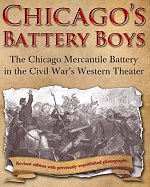 CHICAGO'S BATTERY BOYS Organized in 1862 as part of John McClernand's 13th Corps, the battery participated in the arduous Vicksburg campaign. The artillerists performed well everywhere, Chickasaw Bluffs, Port Gibson, Champion Hill, Big Black River, and the siege of Vicksburg |
Corydon Indiana
American Civil War
|
Kindle Available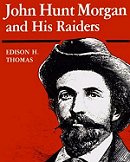 John Hunt Morgan and His Raiders The "Thunderbolt of the Confederacy" John Hunt Morgan from Tompkinsville, Kentucky to Greeneville, Tennessee. |
|
 The Partisan Rangers of the Confederate States Army: Memoirs of General Adam R. Johnson The capture of Newburg, Indiana, with only twelve men and two joints of stovepipe mounted on the running gear of a wagon. This episode won him a nickname of "Stovepipe." He was promoted to Brigadier General in June 1864 |
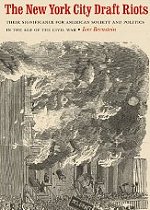 The New York City Draft Riots: Their Significance for American Society and Politics in the Age of the Civil War For five days in July 1863, at the height of the Civil War, New York City was under siege. Angry rioters burned draft offices, closed factories, destroyed railroad tracks and telegraph lines, and hunted policemen and soldiers. Before long, the rioters also turned their murderous wrath against the black community |
 A Battlefield Atlas of the Civil War Informative text enhanced 24 three-color maps and 30 black/white historical photographs. |
 The Official Virginia Civil War Battlefield Guide Virginia was host to nearly 1/3rd of all Civil War engagements. This guide covers them all like a mini-history of the war. This guide organizes battles chronologically. Each campaign has a detailed overview, followed by concise descriptions of the individual engagements |
Kindle Available The Maps of First Bull Run: An Atlas of the First Bull Run (Manassas) Campaign, including the Battle of Ball's Bluff, June-October 1861 |
Kindle Available Civil War in the Indian Territory When the war broke out, both sides wanted the Five Civilized Tribes, led by the Cherokees, and each got around half. The Confederacy sent Brigadier General Albert Pike to recruit them, and he did a pretty good job. A strange, brilliant, man, Pike's career as a General is a minor footnote in his long life |
 Shiloh and Corinth: Sentinels of Stone The brave deeds performed by soldiers of the North and South. Approximately 93 striking photographs and accompanying histories bring the battlefields to life, from Shiloh and Savannah, Tennessee, to Iuka and Corinth, Mississippi |
Kindle Available One Continuous Fight: The Retreat from Gettysburg and the Pursuit of Lee's Army of Northern Virginia The first detailed military history of Lee's retreat and the Union effort to catch and destroy the wounded Army of Northern Virginia Complimented with 18 original maps, dozens of photos, and a complete driving tour with GPS coordinates of the entire retreat |
 Bloody Roads South: The Wilderness to Cold Harbor, May-June 1864 This chronicles the great 1864 Overland Campaign, forty days that marked the end of the Civil War. In detail the battles in Virginia's Wilderness to the combat at Spotsylvania the trap laid by Lee at the North Anna River, to the killing ground of Cold Harbor |
