|
|
|
Brutal Challenges to the SystemMost African Americans resisted enslavement. They used techniques such as work slow-downs, sabotage, sickness, self-mutilation, or the destruction of property. Whenever possible, individuals attempted to liberate themselves by running away. Some runaways—called maroons—created free communities, such as those that existed in Virginia's Great Dismal Swamp or in the Florida Everglades among the Seminole Indians. Beginning in the seventeenth century, African Americans repeatedly banded together in attempts to overthrow the institution of slavery. Large-scale uprisings included Gabriel's Rebellion, which occurred near Richmond, Virginia, in 1800. The revolt's leader, Gabriel Prosser, reportedly drew inspiration from the Haitian Revolution. The best-known rebellion occurred in 1831 in Southampton County, Virginia. Led by enslaved preacher Nat Turner, some seventy followers destroyed property and murdered more than fifty white men, women, and children within a twenty-four hour period. Following Turner's rebellion many Virginia slaveholders reported insubordinate behavior by their slaves. In retaliation vigilantes murdered innocent blacks. The uprising succeeded in terrorizing white southerners, and as a direct result, southern lawmakers enacted stricter regulations designed to tightly control the activities of enslaved and free African Americans. |
The Underground Railroad Map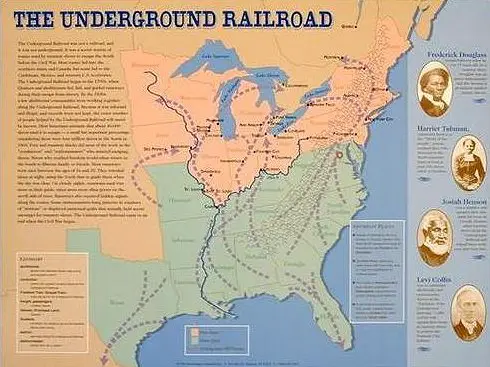 Purchase the Underground Railroad Wall Map |
|
 I've Got a Home in Glory Land: A Lost Tale of the Underground Railroad The Blackburn case was the first serious legal dispute between Canada and the United States regarding the Underground Railroad. The impassioned defense of the Blackburns by Canada's lieutenant governor set precedents for all future fugitive-slave cases Kindle Available  Harriet Tubman: Imagining a Life: A Biography Travel with Tubman along the treacherous route of the Underground Railroad. Hear of her friendships with Frederick Douglass, John Brown, and other abolitionists. Kindle Available  Escape from Slavery This shortened version brings the Narrative of the Life of Frederick Douglass to middle-grade readers. |
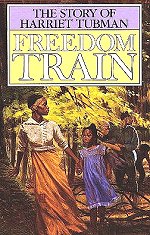 Freedom Train: The Story of Harriet Tubman Harriet escaped North, by the secret route called the Underground Railroad. Harriet didn't forget her people. She risked her life to lead them on the same secret, dangerous journey |
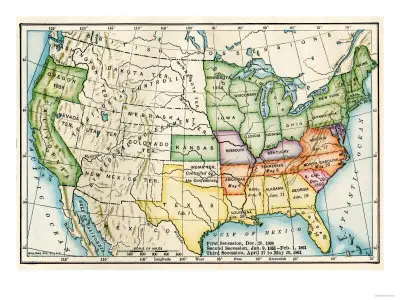 U.S. Map Showing Seceeding States by Date American Civil War, c.1861 24 in. x 18 in. Buy at AllPosters.com Framed Mounted |
xxx |
Slaves traveled along the Underground Railroad, depicted in this painting
|
Kindle Available Standard Catalog of Civil War Firearms Over 700 photographs and a rarity scale for each gun, this comprehensive guide to the thousands of weapons used by Billy Yank and Johnny Reb will be indispensable for historians and collectors. |
Harriet Tubman Civil War Colored Troops Colored Troop Pictures Civil War Exhibits Civil War Summary Civil War Documents Civil War Timeline State Battle Maps Women Soldiers in the Civil War |
 Civil War Soldier 102 Piece Playset
|
Kindle Available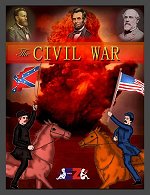 The Civil War Introduces young readers to the harrowing true story of the American Civil War and its immediate aftermath. A surprisingly detailed battle-by-battle account of America's deadliest conflict ensues, culminating in the restoration of the Union followed by the tragic assassination of President Lincoln |
Kindle Available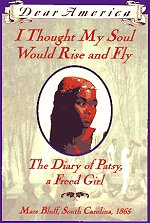 I Thought My Soul Would Rise and Fly: The Diary of Patsy, a Freed Girl, Mars Bluff, South Carolina 1865 Not only is 12-year-old Patsy a slave, but she's also one of the least important slaves, since she stutters and walks with a limp. So when the war ends and she's given her freedom, Patsy is naturally curious and afraid of what her future will hold. |
Kindle Available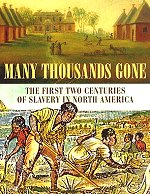 Many Thousands Gone: The First Two Centuries of Slavery in North America The evolution of black society from the first arrivals in the early seventeenth century through the Revolution |
Kindle Available A Yankee Girl at Fort Sumter Tale of a girl and her family from Boston living in Charleston, SC during the months leading up to the beginning of the Civil War by the attack on Fort Sumter. The reader senses the inhunanity of slavery through Sylvia's experiences. |
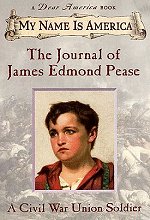 The Journal of James Edmond Pease: A Civil War Union Soldier, Virginia, 1863 James was only 15 when he joined, but he was able to get in. Nobody really liked him cause he was unlucky. One day in the confusion he charged ahead of his company and scared off all the Confederates single handed. After that, he became well liked by most people and soon rose Corporal. He showed his bravery when he spent a week in enemy territory. By the end of the war he rose up to Second Lieutenant. |
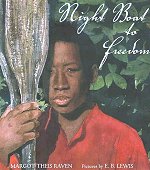 Night Boat To Freedom Night Boat to Freedom is a wonderful story about the Underground Railroad, as told from the point of view of two "ordinary" people who made it possible. Beyond that, it is a story about dignity and courage, and a devotion to the ideal of freedom. |
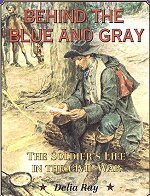 Behind the Blue and Gray The Soldier's Life in the Civil War Civil War reading can be very dry, but not this book. Delia Ray takes us on a soldiers journey beginning with enlistment and ending with a soldiers life after the war, using quotes from actual letters and diaries strategically placed throughout the book. |
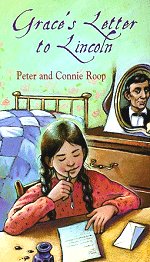 Grace's Letter to Lincoln Many important details of the time period help to make the reader understand what life was like then. It also includes photos of the actual letters written between Grace and Mr. Lincoln |
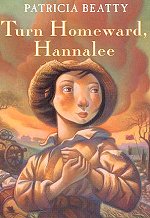 Turn Homeward, Hannalee During the closing days of the Civil War, plucky 12-year-old Hannalee Reed, sent north to work in a Yankee mill, struggles to return to the family she left behind in war-torn Georgia. "A fast-moving novel based upon an actual historical incident with a spunky heroine and fine historical detail."--School Library Journal. |
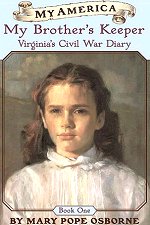 My Brothers Keeper Virginia Dickens is angry. Her father and brother Jed have left her behind while they go off to Uncle Jack's farm to help him hide his horses from Confederate raiders. It's the summer of 1863 and Pa and Jed believe 9-year-old Virginia will be out of harm's way in the sleepy little town of Gettysburg, Pennsylvania. |
Kindle Available I Thought My Soul Would Rise and Fly: The Diary of Patsy, a Freed Girl, Mars Bluff, South Carolina 1865 Not only is 12-year-old Patsy a slave, but she's also one of the least important slaves, since she stutters and walks with a limp. So when the war ends and she's given her freedom, Patsy is naturally curious and afraid of what her future will hold. |
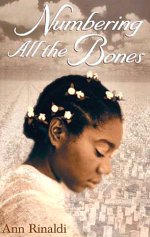 Numbering The Bones The Civil War is at an end, but for thirteen-year-old Eulinda, it is no time to rejoice. Her younger brother Zeke was sold away, her older brother Neddy joined the Northern war effort,. With the help of Clara Barton, the eventual founder of the Red Cross, Eulinda must find a way to let go of the skeletons from her past. |
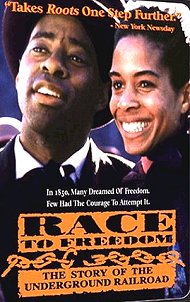 Race To Freedom The movie took me inside the Underground Railroad and showed how people of all walks of life were involved in assisting African-Americans in helping them cross into Canada. |
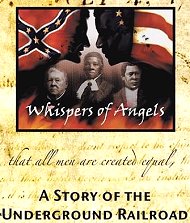 Whispers of Angels Defiant, brave and free, the great abolitionists Thomas Garrett, William Still and Harriet Tubman, along with hundreds of lesser known and nameless opponents of slavery, formed a Corridor of Courage stretching from Maryland's eastern shore through the length of Delaware to Philadelphia and beyond -- making the Underground Railroad a real route to freedom for enslaved Americans before the Civil War. |
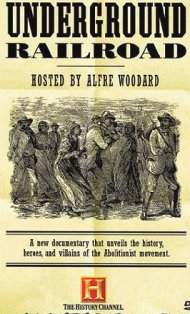 Underground Railroad The Underground Railroad, "the first civil rights movement," was no mere act of civil disobedience. The secret network of guides, pilots, and safe-house keepers (the Railroad's "conductors") was built by runaway slaves who, over the decades, communicated their experiences through songs and secret gestures, and were supported by abolitionists (many of them former slaves) who risked their own freedom to help free the enslaved. The "passengers" risked their lives. |
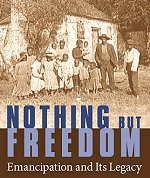 Nothing but Freedom: Emancipation and Its Legacy Insights into the relatively neglected debates over fencing laws and hunting and fishing rights in the post emancipation South, and into the solidarity of the low-country black community |
Kindle Available Many Thousands Gone: The First Two Centuries of Slavery in North America The evolution of black society from the first arrivals in the early seventeenth century through the Revolution |
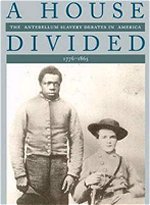 A House Divided: The Antebellum Slavery Debates in America, 1776-1865 An excellent overview of the antebellum slavery debate and its key issues and participants. The most important abolitionist and proslavery documents written in the United States between the American Revolution and the Civil War |
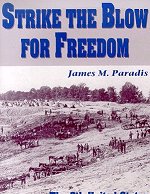 Strike the Blow for Freedom: The 6th United States Colored Infantry in the Civil War The recruitment, training, battles and finally the mustering out of the 6th. The 6th shared some of the same influences that shaped the formation of many military units of that time |
Kindle Available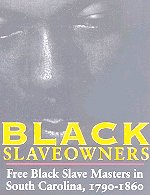 Black Slaveowners: Free Black Slave Masters in South Carolina, 1790-1860 An analysis of all aspects and particularly of the commercialism of black slaveowning debunks the myth that black slaveholding was a benevolent institution based on kinship, and explains the transition of black masters from slavery to paid labor. |
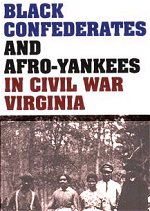 Black Confederates and Afro-Yankees in Civil War Virginia African American life in Virginia, both slave and free, during the civil war, from soldiers who fought in the Confederate and Union armies to those who acted as spies |
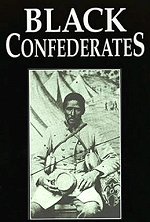 Black Confederates It was illegal for Blacks to carry arms until March of 1865, and numerous Confederate Government documents attest to the illegality of using slaves and free Blacks in that capacity |
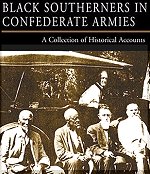 Black Southerners in Confederate Armies Official records, newspaper articles, and veterans' accounts to tell the stories of the Black Confederates. This well researched collection is a contribution to the discussion about the numbers of black Southerners involved and their significant history. |
Kindle Available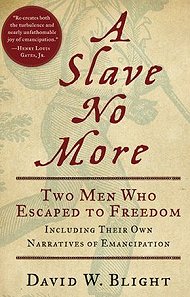 A Slave No More: Two Men Who Escaped to Freedom, Including Their Own Narratives of Emancipation A mere handful are first-person accounts by slaves who ran away and freed themselves. Now two newly uncovered narratives, and the biographies of the men who wrote them, join that exclusive group with the publication |
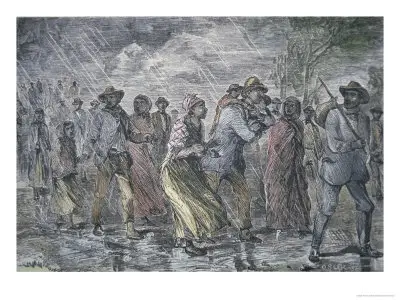 Fugitive Slaves Fleeing from the Maryland Coast to an Underground Railroad Depot in Delaware, 1850 24 in. x 18 in. Buy at AllPosters.com Framed Mounted |
||
Source:
US National Park Service
Library of Congress
Cincinnati Art Museum
|
Battle of Shiloh Civil War Map First Manassas Civil War Pictures Civil War Cooking Gettysburg Civil War Ships |

