Kindle Available John Hunt Morgan and His Raiders The "Thunderbolt of the Confederacy" John Hunt Morgan from Tompkinsville, Kentucky to Greeneville, Tennessee. |
Richmond
|
|
|
|
|
 Struggle for the Heartland: The Campaigns from Fort Henry to Corinth The military campaign that began in early 1862 with the advance to Fort Henry and culminated in late May with the capture of Corinth, Mississippi. The first significant Northern penetration into the Confederate west |
Kindle Available Civil War Curiosities: Strange Stories, Oddities, Events, and Coincidences |
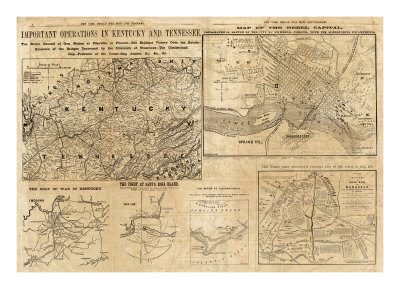 Operations in Kentucky and Tennessee, c.1861 48 in. x 35 in. $169.99 Buy at AllPosters.com Framed |
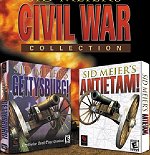 Sid Meier's Civil War Collection Take command of either Confederate or Union troops and command them to attack from the trees, rally around the general, or do any number of other realistic military actions. The AI reacts to your commands as if it was a real Civil War general, and offers infinite replayability. The random-scenario generator provides endless variations on the battles |
Kentucky Civil War Battle Map State Battle Maps Civil War Music Underground Railroad Women Civil War Soldiers Civil War Music Confederate Commanders Union Generals History of Colored Troops Documents of the Civil War Ships and Naval Battles |
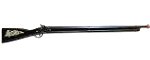 Civil War Musket Wood & Steel Frontier Rifle Designed After The Original Rifle 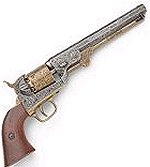 Civil War Model 1851 Naval Pistol Engraved Silver Tone / Gold Tone Finish and Wooden Grips - Replica of Revolver Used by Both USA / Union and CSA / Confederate Forces |
 The Railroads of the Confederacy The story of the first use of railroads on a major scale in a major war. A complex and fascinating tale, with the railroads of the American South playing the part of tragic hero in the Civil War: at first vigorous though immature; then overloaded, driven unmercifully, starved for iron; and eventually worn out |
 The Partisan Rangers of the Confederate States Army: Memoirs of General Adam R. Johnson The capture of Newburg, Indiana, with only twelve men and two joints of stovepipe mounted on the running gear of a wagon. This episode won him a nickname of "Stovepipe." He was promoted to Brigadier General in June 1864 |
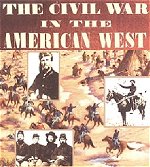 Civil War in the American West An accurate and detailed history of the Western Theater of the Civil War, which was largely forgotten by history. He was one of the first historians to fully understand the impact that California had on the war as he gives an accounting of the Federal raid on the Dan Showalter Ranch in San Bernadino on October 5, 1861. |
Struggle for the Heartland: The Campaigns from Fort Henry to Corinth The military campaign that began in early 1862 with the advance to Fort Henry and culminated in late May with the capture of Corinth, Mississippi. The first significant Northern penetration into the Confederate west |
 The Tale of the Devil: The Biography of Devil Anse Hatfield The story of Hatfield patriarch Devil Anse Hatfield, beginning with his childhood in frontier Appalachia; it also covers his Civil War days as a noted Confederate soldier. |
Kindle Available Kingdom Of The Hollow, The Story Of The Hatfields and McCoys Get to know the many members of the two families and how they live. The descriptions of Kentucky and West Virginia remind us of the remote cabin life of these mountain men and women and how important family can be in such a lifestyle |
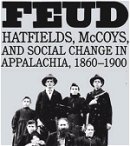 Feud: Hatfields, McCoys, and Social Change in Appalachia, 1860-1900 The legendary feud was not an outgrowth of an inherently violent mountain culture but rather one manifestation of a contest for social and economic control between local people and outside industrial capitalists |
 A Battlefield Atlas of the Civil War Informative text enhanced 24 three-color maps and 30 black/white historical photographs. |
|
Battle of Shiloh Civil War Map First Manassas Civil War Pictures Civil War Cooking Gettysburg Civil War Ships |
