 The Beleaguered City: The Vicksburg Campaign, December 1862-July 1863 Shelby Foote explains all engagements in and around Vicksburg. Every event is descriptively written covering naval strategies along the Mississippi, Yazoo and other rivers which were of importance to naval affairs of each opposing side |
Mississippi Civil War Map of Battles
|
 Mississippi's Civil War A Narrative History A great treatment of wartime Mississippi that includes a lot of social and political material in addition to information on battles. It also includes a lot of great stories, from the dramatic resignation of Jefferson Davis from the U.S. Senate in 1861 to Ulysses S. Grant's drinking habits during the siege of Vicksburg |
 Campaign for Corinth: Blood in Mississippi In 1862 Corinth, was transformed into one of the South's most strategic strongholds. At Corinth, the Mobile and Ohio Railroad crossed the Memphis and Charleston Railroad, creating a crucial nexus for the transport of supplies, material, and men throughout the western Confederacy |
 Vicksburg: 47 Days of Siege First-hand accounts of life during the 47 days Vicksburg was under siege. Ranging from housewives to soliders on both sides, a good idea of what life was like, from ways to pass the time to what to eat, in and around Vicksburg. A large photo album and a glossary |
The Beleaguered City: The Vicksburg Campaign, December 1862-July 1863 Shelby Foote explains all engagements in and around Vicksburg. Every event is descriptively written covering naval strategies along the Mississippi, Yazoo and other rivers which were of importance to naval affairs of each opposing side |
Kindle Available Grant Wins the War Decision at Vicksburg A brilliantly constructed new account,A penetrating analysis of Grant's strategies and actions leading to the Union victory at Vicksburg. Approaching these epic events from a unique and well-rounded perspective, and based on careful research |
 Sherman's Mississippi Campaign Sherman set out from Vicksburg on February 3, 1864, with an army of some 25,000 infantry and a battalion of cavalry. An opportunity to observe how this large-scale raid presaged Shermans Atlanta and Carolina campaigns, revealing the transformation of Shermans strategic thinking |
Kindle Available Vicksburg: The Campaign That Opened the Mississippi Confederate troops surrendered Vicksburg on July 4, 1863 a crucial port and rail depot for the South was lost |
Kindle Available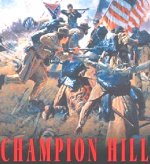 Champion Hill Decisive Battle for Vicksburg The Battle of Champion Hill was the decisive land engagement of the Vicksburg Campaign. The May 16, 1863, fighting took place just 20 miles east of the river city, where the advance of Gen. Ulysses S. Grant's Federal army attacked Gen. John C. Pemberton's hastily gathered Confederates |
 Vicksburg Expedition Guide Annimated movie that details Grants Mississippi campaign which concluded with the seige of Vicksburg. A great background on the importance of this site in the entire war, as well as battles leading up to the Vicksburgh seige. |
 The Darkest Days of the War The Battles of Iuka and Corinth The strategic implications of the battles of Iuka and Corinth, exploring their impact on the fate of the Northern Mississippi Campaign, the fall of Vicksburg and by extension, the fate of the Confederacy. |
Kindle Available The Free State of Jones Mississippi's Longest Civil War The southeastern Mississippi county that was home to a Unionist stronghold during the Civil War and home to a large and complex mixed-race community in the late nineteenth and twentieth centuries |
|
Kindle Available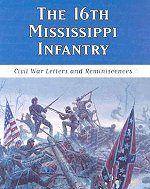 The 16th Mississippi Infantry Civil War Letters and Reminiscences Who better to tell an infrantry man's story then themselves. The hardships of Marches, Poor food and bitter fighting. |
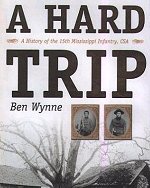 A Hard Trip A History of the 15th Mississippi Infantry The reality of the moment in 1860-61 Mississippi. The thoughts of the men who formed the 15th Mississippi are front and center with good background about the communities the men came from and the reasons they joined the army. |
Kindle Available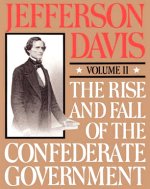 The Rise and Fall of the Confederate Government Jefferson Davis' point of view is essential to understanding the causes of the Civil War. |
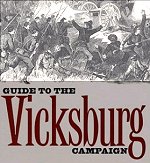 Guide to the Vicksburg Campaign U.S. Army War College Guides to Civil War Battles Army War College Examines an entire campaign, looking at many interlinked battles and joint Army-Navy operations as they played out over seven months and thousands of square miles |
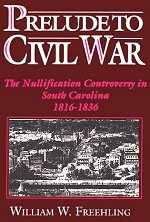 Prelude to Civil War: The Nullification Controversy in South Carolina From 1816 to 1836 planters of the Palmetto State tumbled from a contented and prosperous life to a world rife with economic distress, guilt over slavery, and apprehension of slave rebellion. Compelling details ofhow this reversal of fortune led the political leaders down the path to states rights doctrines |
Kindle Available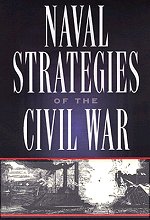 Naval Strategies of the Civil War: Confederate Innovations and Federal Opportunism Compare and contrast the strategies of the Southern Secretary of the Navy, Mallory, against his rival in the North, Welles. Mallory used technological innovation and the skill of individuals to bolster the South's seapower against the Union Navy's superior numbers |
Kindle Available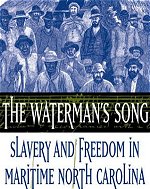 The Waterman's Song: Slavery and Freedom in Maritime North Carolina Chronicles the world of slave and free black fishermen, pilots, rivermen, sailors, ferrymen, and other laborers who, from the colonial era through Reconstruction, plied the vast inland waters of North Carolina from the Outer Banks to the upper reaches of tidewater rivers |
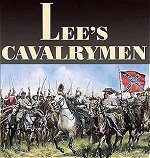 Lee's Cavalrymen: A History of the Mounted Forces of the Army of Northern Virginia, 1861-1865 The cavalry of the Army of Northern Virginia its leadership, the military life of its officers and men as revealed in their diaries and letters, the development of its tactics as the war evolved, and the influence of government policies on its operational abilities. All the major players and battles are involved |
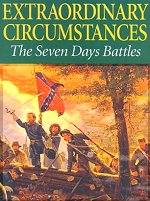 Extraordinary Circumstances The Seven Days Battles One of the most decisive military campaigns in Western history, the Seven Days were fought in the area southeast of the Confederate capitol of Richmond from June 25 to July 1, 1862 |
 This Terrible Sound The Battle of Chickamauga Study of the great bloody battle of Chickamauga that was the last great offensive, although costsly, victory by the Confederates. This is a detailed account of the movements of regiments, brigades, divisions |
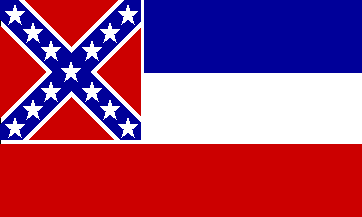
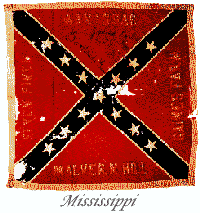
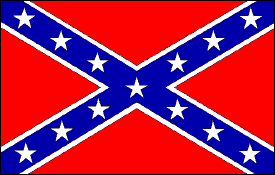
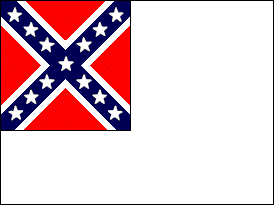
Mississippi State Flag History
|
Kindle Available Standard Catalog of Civil War Firearms Over 700 photographs and a rarity scale for each gun, this comprehensive guide to the thousands of weapons used by Billy Yank and Johnny Reb will be indispensable for historians and collectors.  Reliving the Civil War: A Reenactor's Handbook Excellent information on the reenacting hobby |

Sources:
U.S. National Park Service
U.S. Library of Congress.