|
|
|
|
 The Cavalry at Appomattox A Tactical Study of Mounted Operations During the Civil War's Climactic Campaign, March 27-April 9, 1865 |
|
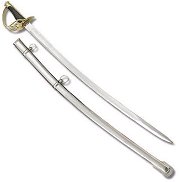 Cavalry Saber This fine replica is 39 inches overall and features a highly polished 33 inch carbon steel blade. Its leather wrapped handle fits the hand perfectly and sports decorative brass accents and a shiny brass pommel. |
Civil War Timeline State Battle Maps Women Soldiers American Civil War Exhibits Civil War Documents General Robert E. Lee General Ulysses S. Grant Civil War Submarines Union Hardtack Recipe Civil War Summary |
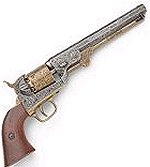 Civil War Model 1851 Naval Pistol Engraved Silver Tone / Gold Tone Finish and Wooden Grips - Replica of Revolver Used by Both USA / Union and CSA / Confederate Forces |
 Nathan Bedford Forrest In Search of the Enigma The lost story of Nathan Bedford Forrest. Forrest was a pivotal character in the war, yet so much of his story has been swept aside in light of General Lee and other figures who were more recognized or perhaps more publicized. This is a must read |
 Joseph E. Johnston A Civil War Biography A biography of the public and private life of General Joseph E. Johnston, one of the most important Southern field commanders during the American Civil War |
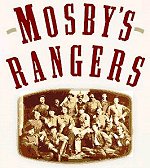 Mosby's Rangers From 1863 to the end, Mosby's raiders were a constant headache for the North. More than 1,000 men served under Mosby, they usually acted in small detachments of several dozen, sacking supply depots, attacking railroads, and harassing federal troops. They seemed to move behind enemy lines almost at will. |
Kindle Available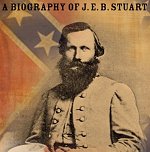 Cavalryman of the Lost Cause A Biography of J. E. B. Stuart James Ewell Brown Stuart was the premier cavalry commander of the Confederacy. He gained a reputation for daring early in the war when he rode around the Union army in the Peninsula Campaign, providing valuable intelligence to General Robert E. Lee at the expense of Union commander George B. McClellan |
Kindle Available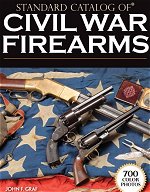 Standard Catalog of Civil War Firearms Over 700 photographs and a rarity scale for each gun, this comprehensive guide to the thousands of weapons used by Billy Yank and Johnny Reb will be indispensable for historians and collectors. |
Kindle Available One Continuous Fight: The Retreat from Gettysburg and the Pursuit of Lee's Army of Northern Virginia The first detailed military history of Lee's retreat and the Union effort to catch and destroy the wounded Army of Northern Virginia Complimented with 18 original maps, dozens of photos, and a complete driving tour with GPS coordinates of the entire retreat |
Kindle Available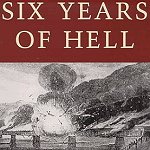 Six Years of Hell Harpers Ferry During the Civil War While Harpers Ferry was an important location during the Civil War, in most Civil War books it's a sideshow of something larger. John Brown's raid, Lee's invasions of 1862 & 1863 as well as Early's 1864 raid are all covered in depth |
Kindle Available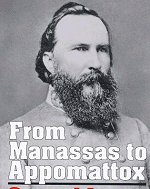 From Manassas to Appomattox: General James Longstreet According to some, he was partially to blame for the Confederate defeat at Gettysburg; according to others, if Lee had followed Longstreet's advice, they would have won that battle. He has been called stubborn and vain; and he has been lauded as one of the greatest tacticians of the Civil War |
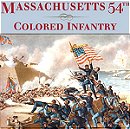 American Experience The Massachusetts 54th Colored Infantry After Lincoln signed the Emancipation Proclamation, the governor of Massachusetts was authorized to raise the first northern black regiment, the Massachusetts 54th colored infantry. |
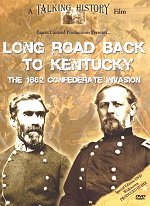 Long Road Back to Kentucky: The 1862 Confederate Invasion The often-overlooked Western campaign of the war with a specific emphasis on Kentucky's involvement in the American Civil War. |
 History's Mysteries: Family Feud: The Hatfields And McCoys Millions of dollars worth of timber and coal rich land were at stake, the courts were involved and once the national press got wind of what was happening, the backwoods folk found that their fight was being followed nationwide |
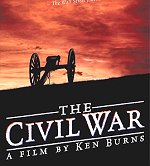 The Civil War - A Film by Ken Burns Here is the saga of celebrated generals and ordinary soldiers, a heroic and transcendent president and a country that had to divide itself in two in order to become one |
|||
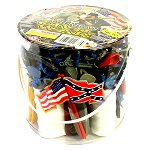 Civil War Soldier 102 Piece Playset
|
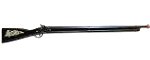 Civil War Musket Wood & Steel Frontier Rifle Designed After The Original Rifle, This Civil War Musket replica has been designed after the original rifle of its era. Measures approximately 37 inches long. Each is constructed with a solid one-piece wood stock, painted steel barrel and die-cast parts. |
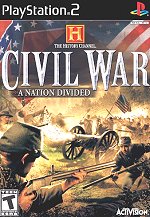 History Channel Civil War A Nation Divided Rally the troops and organize a counterattack -- Your strategic decision and talent as a commander will decide if the Union is preserved or if Dixie wins its independence |
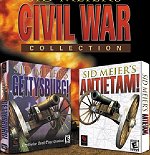 Sid Meier's Civil War Collection Take command of either Confederate or Union troops and command them to attack from the trees, rally around the general, or do any number of other realistic military actions. The AI reacts to your commands as if it was a real Civil War general, and offers infinite replayability. The random-scenario generator provides endless variations on the battles |
| Search AmericanCivilWar.com |
| Enter the keywords you are looking for and the site will be searched and all occurrences of your request will be displayed. You can also enter a date format, April 19,1862 or September 1864. |