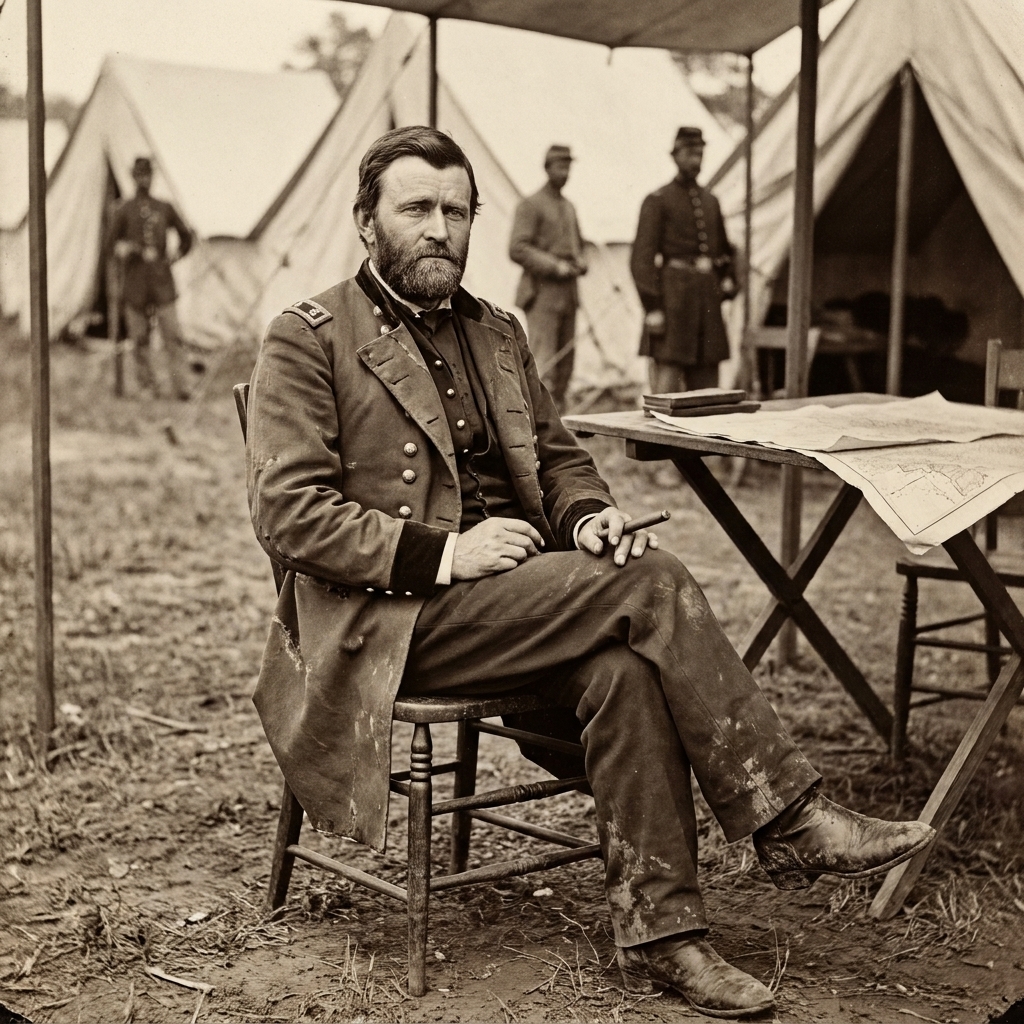
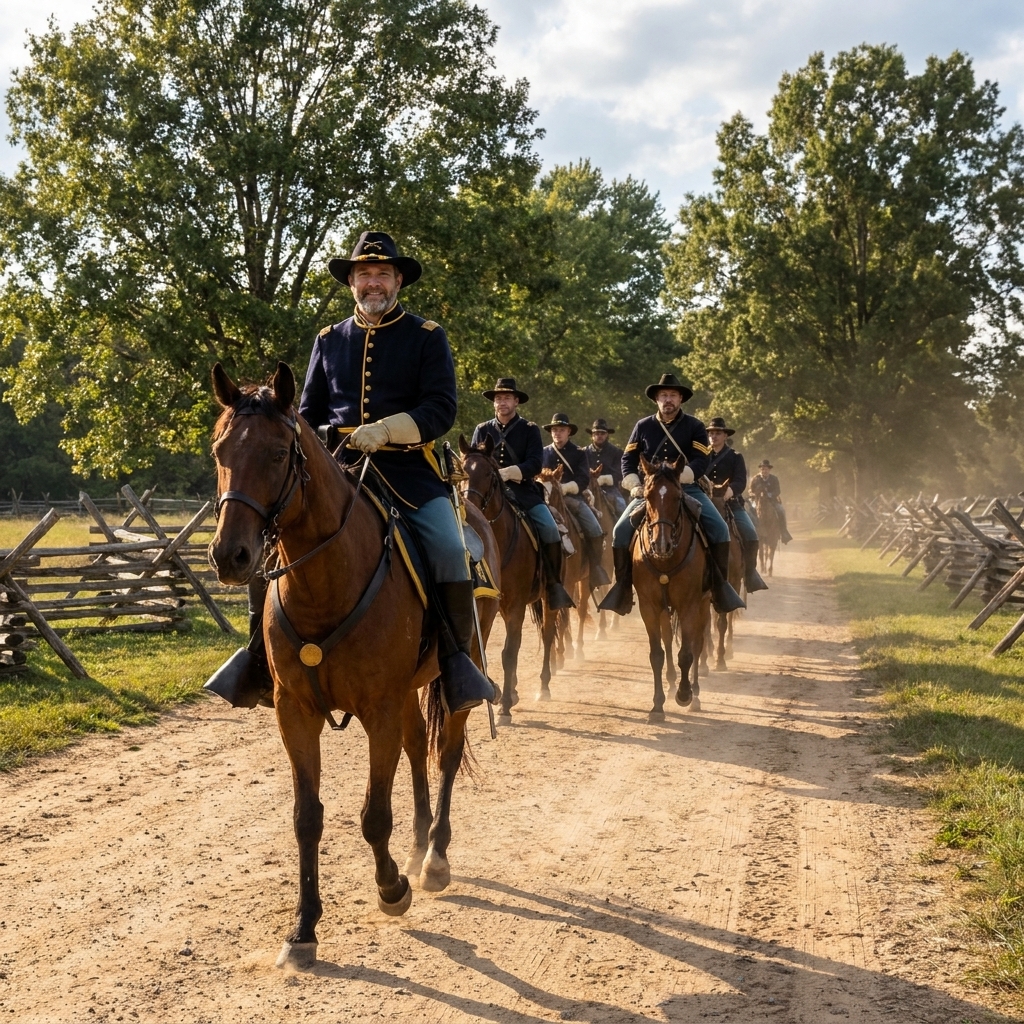
A walkable ranking of Civil War cavalry leaders—Stuart, Forrest, Sheridan, Buford, and Hampton—with the best ground to visit at Brandy Station, Gettysburg, T...
Brandy Station: America’s Biggest Cavalry Battle
Silas Weaver
Silas Weaver has spent decades exploring historic battlefields, reading primary journals, and tracking down the lesser-known stories of the American Civil War. His lifelong passion for 19th-century history comes through in his engaging accounts of the places, people, and lingering questions of the era. He believes that walking the actual grounds where history happened is the best way to truly connect with the past.
Published · Last updated
I still remember the first time I pulled off a Virginia back road and found myself looking across the rolling ground near Fleetwood Hill. It did not feel like the stage for what is often cited as the largest cavalry battle fought in North America. No towering ridgelines, no dramatic stone wall, no obvious “here it happened” cue. Just open country, hedgerows, a few treelines, and that wide, bright Virginia sky.
And yet on June 9, 1863, that quiet landscape shook with hoofbeats, carbine fire, and the kind of close-range chaos you only get when thousands of mounted men collide. Roughly 20,000 cavalrymen fought across a wide spread of roads, fords, and low ridges. The Battle of Brandy Station was not just a spectacular fight. It was the opening crack of thunder before the Gettysburg Campaign, a day when the Union cavalry showed it could go toe to toe with the Confederacy’s vaunted horsemen.
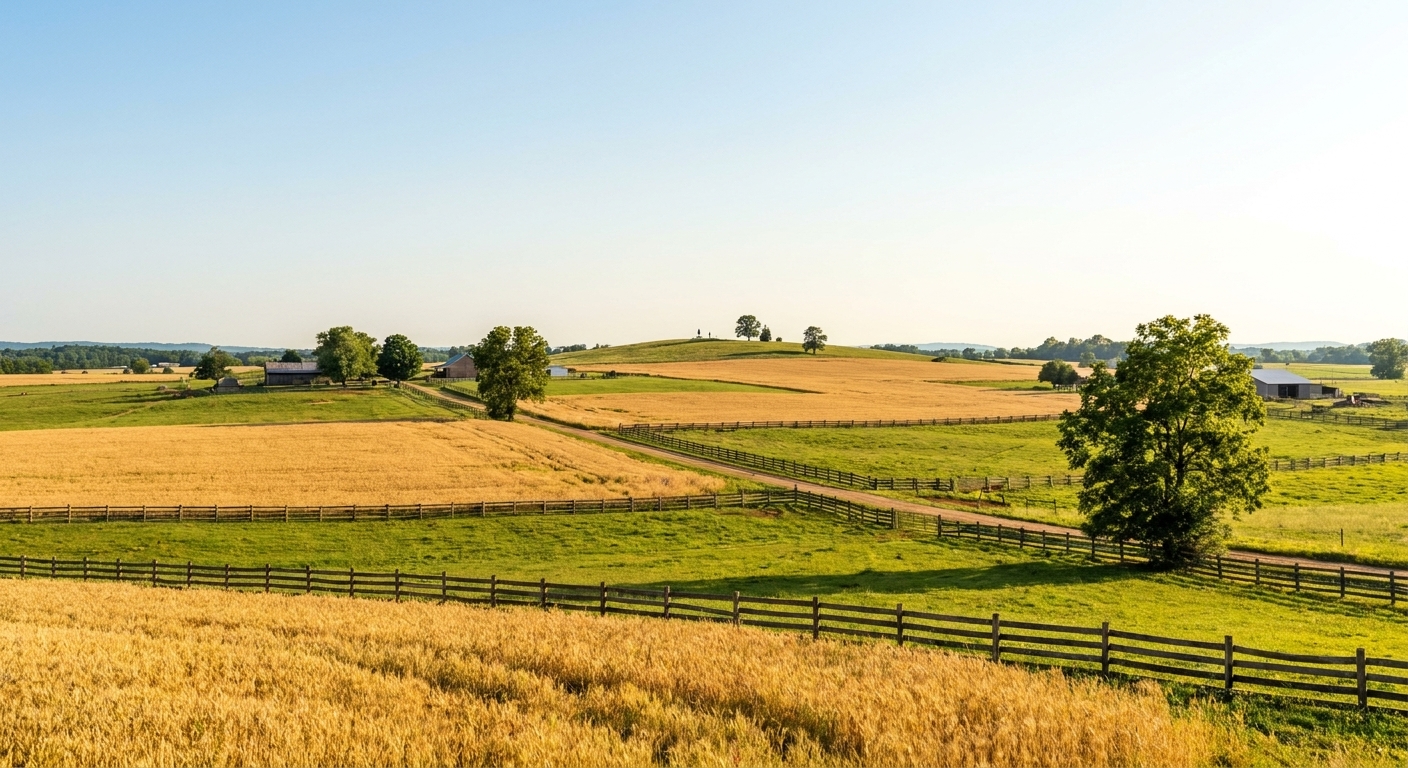
Why Brandy Station mattered
By early June 1863, Robert E. Lee’s army was beginning to shift northwest, probing routes that would soon carry it into the Shenandoah Valley and toward the Potomac. The movement would become the Gettysburg Campaign, but on June 9 it was still taking shape behind a screen of dust, rumor, and cavalry patrols.
Confederate cavalry chief J. E. B. Stuart gathered much of his command around Brandy Station, Virginia, near a rail stop and a web of roads and fords along the Rappahannock River. There were reviews and drills, but those were only the surface. The practical reason for concentrating cavalry there was straightforward: to screen Lee’s movements, scout, and protect key approaches and crossings.
Union cavalry commander Alfred Pleasonton decided to strike with what amounted to a reconnaissance-in-force. He wanted information, and he wanted to rattle Stuart’s screen. That pressure mattered because it came at exactly the moment Lee needed time and concealment.
Brandy Station did not stop Lee’s campaign. But it did change the tone of the mounted war in the East. After this day, the Confederate cavalry’s aura of invincibility looked a little less certain, and Union troopers carried off something hard to measure but easy to feel: confidence.
The armies and key commanders
Brandy Station is a cavalryman’s battle, but it is also a battle of leadership decisions made at speed and in half-glimpsed fragments. A rider appears through smoke, a gun cracks from a fence line, a messenger gallops up with an incomplete report, and suddenly a commander must choose a road.
Union
- Maj. Gen. Alfred Pleasonton: Overall Union cavalry commander, orchestrated a two-pronged crossing of the Rappahannock.
- Brig. Gen. John Buford: Led one wing of the attack. Buford’s steady temperament shows here the way it would later at Gettysburg.
- Brig. Gen. David McM. Gregg: Led the other wing, including the dramatic fighting around Fleetwood Hill.
- Brig. Gen. Hugh Judson Kilpatrick: Aggressive, sometimes reckless, and very much in his element in a swirling mounted fight.
Confederate
- Maj. Gen. J. E. B. Stuart: Confederate cavalry chief, caught off balance by the scale and timing of the Union strike.
- Brig. Gen. Wade Hampton: A hard fighter, key in stabilizing Confederate lines and counterattacks.
- Brig. Gen. W. H. F. “Rooney” Lee: Robert E. Lee’s son, heavily engaged. His presence alone tells you how important this cavalry concentration was to the Confederate high command.
- Brig. Gen. William “Grumble” Jones: A prickly personality with real combat ability, involved in the early, sharp fighting near the river crossings.
If you want a broader sense of how personalities can shape campaigns, I keep coming back to the way pre-war relationships and rivalries followed men into uniform. Our piece Brothers Divided: Pre-War Bonds of Rival Civil War Generals is a good companion read, even for a cavalry fight like this one.
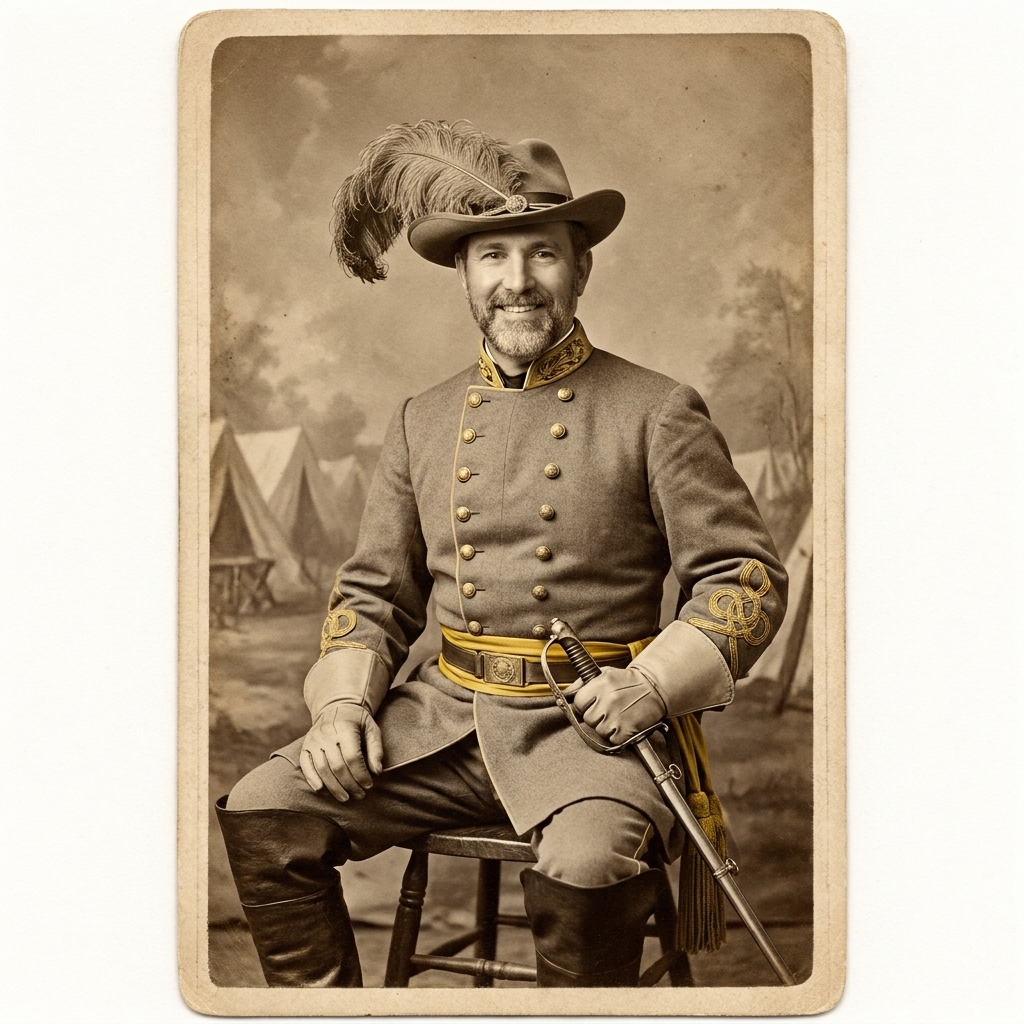
The plan: a bold double crossing
Pleasonton’s idea was simple on paper and risky in practice. He would cross the Rappahannock in two separate thrusts and converge on Stuart’s camps around Brandy Station. Think of it as swinging two doors inward at once and hoping they slam shut at the same time.
- Buford’s wing hit at Beverly Ford, driving toward St. James Church and the heart of the Confederate positions.
- Gregg’s wing crossed farther downstream and came in toward Fleetwood Hill, aiming for the high ground that overlooked the area.
In an age before radios, with dust and smoke choking roads, coordination was never guaranteed. That two-pronged pressure is why Brandy Station feels so big when you trace it on the ground. The fighting did not sit in one neat spot. It wandered, bucked, and surged across miles.
How the battle unfolded
Morning: Beverly Ford and first contact
Buford’s men came over the Rappahannock early and ran straight into stiff resistance. The Confederate cavalry was not expecting a full-scale blow at dawn. Surprise mattered, but it did not decide the day.
What decided the day was the ability of both sides to feed regiments into the fight quickly, to seize a fence line, a rise in the ground, a patch of timber, and hold it just long enough to shift the larger balance.
Near St. James Church, the combat tightened. If you have only seen cavalry portrayed as sweeping saber charges, Brandy Station corrects that. There were charges, yes, but much of the killing work came from carbines and pistols at close range, with men dismounting to use a slight ridge as a firing platform. Then they mounted again to relocate before they were turned.
Midday: Fleetwood Hill becomes the prize
While Buford hammered away, Gregg’s wing angled in toward Fleetwood Hill. This is the ground I always think about first because it is so deceptively gentle. The hill is not a mountain. It is not even a dramatic ridge. But in cavalry warfare, a modest rise can be everything. It offers observation, artillery positions, and the psychological edge of being above your opponent.
Gregg’s approach produced some of the most famous mounted clashes of the war. Regiments collided in bursts of speed and confusion, sabers flashing, horses screaming, officers trying to hold lines that wanted to dissolve into a knot of individual fights. Stuart’s headquarters had been on the hill earlier, and Confederate units scrambled to retake and hold it as Union troopers surged up the slopes.
Afternoon: exhaustion and withdrawal
By late day, neither side had delivered the clean knockout. Pleasonton, having gathered information and tested Stuart’s screen, pulled his cavalry back across the river.
Confederates held the field, but the more interesting result was less tangible. Many observers, then and later, treated the fight as proof that the balance was shifting. The Federal cavalry had arrived as a true fighting arm.
Tactics: why this was cavalry combat
One thing I like to do at Brandy Station is stand still and imagine the decisions that had to be made at the speed of a gallop. Cavalry could move fast, but it also burned strength fast. Horses tire, men tire, and ammunition disappears quicker than you expect when every fence line seems to spit fire back at you.
- Mounted shock action: Charges did happen, especially when a commander sensed a moment of weakness or a chance to seize high ground.
- Dismounted firefights: Carbines made it practical for cavalry to fight like skirmishing infantry, using cover and terrain, then remount to shift.
- Horse artillery and positioning: Fast-moving guns mattered here. A battery placed on a low rise could stiffen a line or punish a road approach in minutes.
- Terrain as a weapon: Fords controlled movement, ridges controlled sightlines, and roads controlled how quickly reinforcements could arrive.
- Information and misinformation: Much of the day hinged on who understood where the enemy was and who was guessing.
If you are curious about the gear and fighting tools that shaped actions like this, our piece Swords, Revolvers, and Steeds gives helpful context for what cavalrymen carried and relied upon.
Brandy Station and the road to Gettysburg
It is tempting to draw a straight line from Brandy Station to Gettysburg, but history rarely cooperates with tidy arrows. Still, this fight mattered because it showed the cavalry contest was changing right when Lee needed an effective screen most.
In the weeks that followed, the mounted war in Virginia and Maryland stayed fierce. Stuart’s later ride around the Union army during the campaign remains one of the most debated decisions of 1863. I will not settle that argument here, but Brandy Station is part of the backdrop. After being surprised and pressured at the Rappahannock, Stuart had every reason to reassert control of the scouting and screening fight.
And on the Union side, commanders like Buford carried forward the hard-earned confidence of June 9. If you have walked the opening day ground at Gettysburg, you have seen what a steady cavalry defense can buy an army.
To frame the campaign arc, it helps to think about how visitors often choose between major fields to start their travels and their reading. We have a good primer on that decision in Gettysburg vs Antietam: Which Battlefield to Visit First?
What you can still see today
Brandy Station rewards patience. The battlefield is spread out, and the most meaningful moments come when you connect pieces of ground into a single mental map.
Fleetwood Hill
This is the anchor. Stand here and look outward, and you will understand why cavalry fought so hard for it. The surrounding countryside opens in broad sweeps, and you can picture messengers pounding along roads, commanders trying to read dust clouds, and batteries looking for a place to unlimber.
Beverly Ford
If you want one named starting point that matches the story, start at Beverly Ford. This is where Buford’s wing shoved across the river and lit the fuse in the early hours. Even a quiet look at the river corridor helps you understand how a crossing funnels men into narrow lanes of movement, then spills them out into open country where formations can finally breathe.
St. James Church area
This ground helps you picture the fight at its most practical: dismounted lines using whatever cover they could find, remounting to push again, and small rises suddenly becoming valuable simply because they were there.
Churches, fence lines, and shallow ridges
Brandy Station is a battle of small terrain. A slight rise becomes cover. A farm lane becomes a corridor for a charge. A line of trees becomes a shield for regrouping. Bring that mindset and you will see more.
For practical tips on turning scattered sites into a coherent visit, our Battlefield Travel guide and Plan a Civil War Battlefield Day both reflect the way I actually travel, with a thermos, a paper map habit I cannot kick, and enough time built in to stop when the ground tells you to stop.
How to read the landscape
When I walk Brandy Station, I try to see it in cavalry terms, not infantry terms. Here are a few questions that help:
- Where is the fastest route? Roads matter, but so do open fields that allow a mounted line to move without bunching.
- Where would I hesitate? Creeks, soft ground, narrow lanes, and fence lines can slow a charge to a crawl.
- What ground lets me see and be seen? Cavalry scouting is about sight as much as speed. A slight hill can act like a lookout.
- Where can I dismount and fight? Treelines and shallow ridges are natural places for carbines to speak.
Once you start looking that way, the battle’s sprawl feels less random. It becomes a chain of choices forced by ground and time.
Quick facts and common questions
Was Brandy Station the largest cavalry battle in North America?
It is often cited that way, and the scale supports the claim. Roughly 20,000 cavalrymen fought there, spread across multiple crossings and several miles of rolling country.
Who won?
Confederates held the field at day’s end after the Union withdrawal. But Pleasonton’s reconnaissance-in-force gathered information and shook up Stuart’s screen. Many accounts also treat it as an important morale marker for the Union cavalry, even if the tactical result was not decisive.
What about infantry and casualties?
Infantry played a limited role compared to the mounted forces, and artillery, especially fast-moving horse artillery, mattered in key moments. Casualty estimates vary by source, but totals are commonly put at roughly 1,000 killed, wounded, and missing combined.
Why is Fleetwood Hill so important?
It is one of the best observation points in the immediate area. In cavalry combat, seeing first often means striking first, and high ground is where commanders try to understand a fight that keeps slipping sideways.
Is Brandy Station worth visiting if I have limited time in Virginia?
If you want to understand the Gettysburg Campaign’s opening moves and the evolution of cavalry in the Eastern Theater, it is worth it. If your trip is more about trenches and siege warfare, you might put your time toward places like Petersburg. We have a field guide to that landscape in Exploring the Trenches of Petersburg.