A practical method for finding where your ancestor’s regiment fought at Shiloh: confirm the unit, mine Official Records after-action reports, triangulate wit...
Find the General Who Commanded Your Ancestor’s Regiment

Silas Weaver
Silas Weaver has spent decades exploring historic battlefields, reading primary journals, and tracking down the lesser-known stories of the American Civil War. His lifelong passion for 19th-century history comes through in his engaging accounts of the places, people, and lingering questions of the era. He believes that walking the actual grounds where history happened is the best way to truly connect with the past.
Published · Last updated
I have lost count of how many times I have stood at the edge of a quiet field, held a photocopy of a muster roll, and realized the name I was chasing was not my soldier at all, but the man above him. A colonel. A brigade commander. A general whose decisions shaped the day your ancestor marched, fought, or went missing.
Family stories often preserve the big names. “Grandpa fought under Grant.” “Our line followed Stonewall Jackson.” Sometimes that is true. Often, it is true only for a few weeks, or true at the army level but not at the moment that mattered most for your ancestor’s company.
This guide is how I do it: a practical, document-first way to trace which Civil War general commanded your ancestor’s regiment, and how to prove it in a way you can cite in your family tree notes without squinting at guesswork.
Start with the one fact you need
Before you chase generals, lock down your ancestor’s unit as precisely as possible. Not just “Pennsylvania infantry,” but the full unit identity.
- Side: Union or Confederate
- State: for most volunteer units
- Unit type: infantry, cavalry, artillery, or U.S. Regulars
- Regiment and company: for example, “11th Pennsylvania Infantry, Company C”
- Service dates if you can get them: even approximate months help
A quick micro-example of why this matters: I have seen “11th Pennsylvania” in family notes when the soldier was actually in an 11th Pennsylvania regiment with a similar nickname, or a separate unit entirely that also gets shortened to “11th PA” on secondary lists. The paperwork rarely lies, but the shorthand often does.
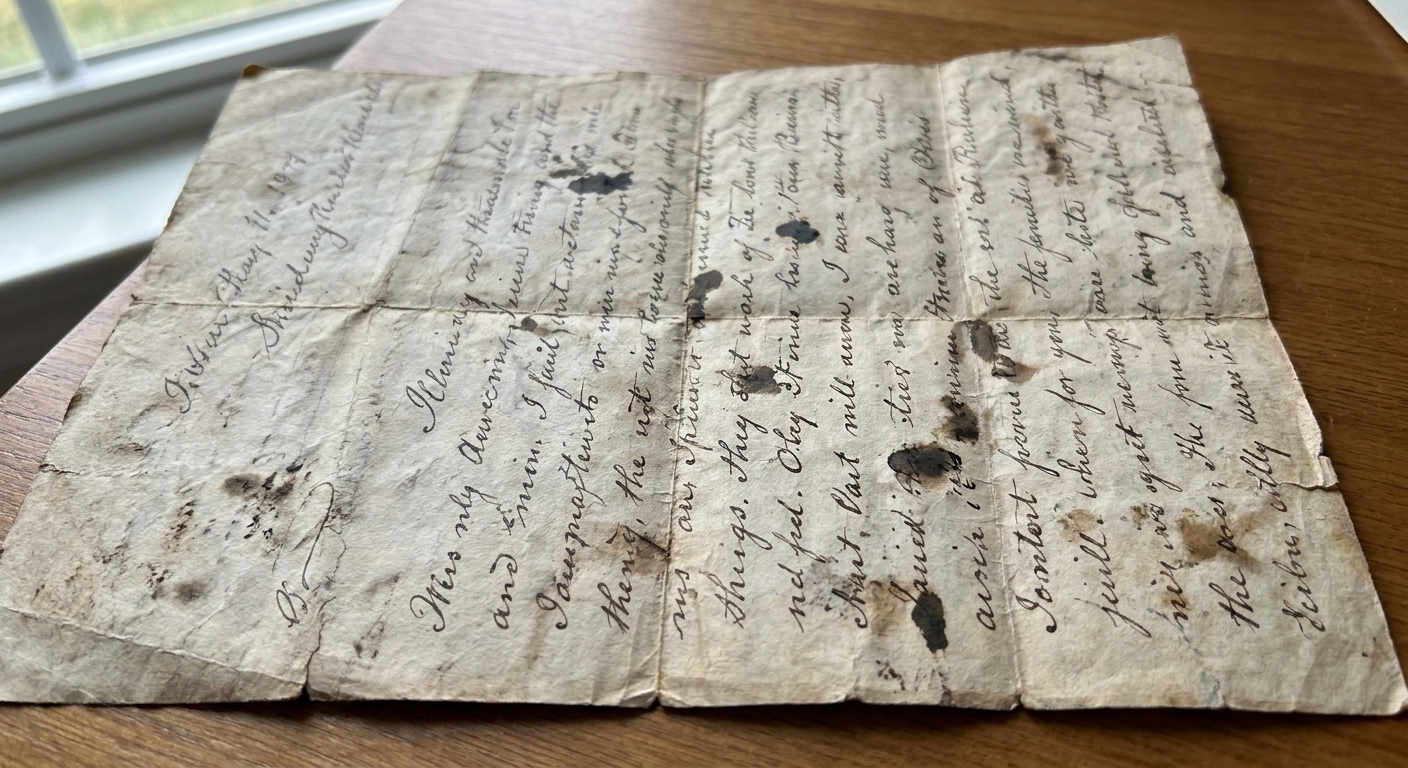
If you are still working out the soldier’s exact regiment, my best advice is to begin with what you can prove from your own papers and build outward. If your ancestor appears in letters or diaries, you may find his unit named in the heading or in the casual shorthand soldiers used. If you are learning to read those documents, see Decoding Civil War Soldier Letters.
Step 1: Pull the service record
Regimental histories and modern summaries are useful, but they can lead you into the weeds fast if your ancestor transferred, was detached, or spent months in hospital.
The cleanest starting point is the service documentation created during and immediately after the war.
For Union soldiers
The standard baseline is the Compiled Military Service Record (CMSR). Pension files are often the richest source for biographical detail, but the CMSR is usually where I start when I am trying to pin down dates, absences, and unit attachments.
The service record often tells you:
- When he was present or absent
- When he was detached (orderly, wagoner, teamster, etc.)
- Hospitalization, capture, or parole status
- Transfers between companies or regiments
One useful entry point is the National Park Service database: Civil War Soldiers and Sailors System. It is a strong place to confirm spellings and basic service, but it is not complete and it does contain occasional duplicates or errors. Treat it as a guidepost, then follow through to the CMSR, pensions, the National Archives, or a state archive.
For Confederate soldiers
Confederate compiled service records exist too, but coverage varies by state and by how records survived. The important thing is the same: confirm unit, company, and service timeline before you assign a commander.
Step 2: Build a command ladder
Once you know the regiment, you can build the chain above it. In the field, a regiment usually sat inside a structure like this:
- Company (captain)
- Regiment (colonel or lieutenant colonel)
- Brigade (brigadier general or colonel)
- Division (major general or brigadier general)
- Corps (major general)
- Army (major general or lieutenant general)
When folks say “which general commanded my ancestor’s regiment,” they usually mean one of two things:
- The brigade commander who directly controlled the regiment tactically
- The division or corps commander whose plans determined where the regiment went
I recommend you identify all three levels (brigade, division, corps) for the time period you care about. Command changed constantly due to wounds, sickness, promotion, or reshuffling.
Step 3: Choose a date window
Here is the trap I see most often: people try to assign one famous general to an ancestor’s entire war.
Instead, pick a specific window and solve that window completely. Good choices are:
- The month your ancestor enlisted
- The date he was wounded or captured
- The battle named in a family letter
- The date he was listed as absent, missing, or killed
If you are planning to connect this to a battlefield visit, start by narrowing to one engagement you can physically walk. I feel strongly that the ground clarifies the paperwork. Our travel guides can help you plan that kind of trip, beginning with Guide: Battlefield Travel and Plan a Civil War Battlefield Day.
Step 4: Use the Official Records
The most citation-friendly way to identify commanders is to use the Official Records of the Union and Confederate Armies, often shortened to the OR. Inside, you will find:
- Orders of battle listing brigades, divisions, and commanders
- After-action reports written by commanders
- Returns and correspondence showing who was in charge and when
A free way to access the OR is Cornell’s digital collection: Official Records (Cornell University Library guide). When you find your regiment inside a brigade listing, you have your answer for that moment in time, with a primary-source backbone.
What you are looking for
- Your regiment’s name inside a brigade list
- The brigade commander’s name attached to that list
- Preferably the same name appearing in orders or reports for the same dates
Write it down exactly as printed and note the series, volume, part, and page. That small habit saves hours later.
When the OR is unclear
Some days and some corners of the war are thinly documented, and sometimes the OR volume you have open is not the one that carries the order of battle you need. When that happens, I work outward in three directions:
- Check a broader date range: look at returns and correspondence a week or two before and after your target date to catch reorganizations and temporary command.
- Check the “administrative” paper trail: departments, districts, and posts often appear in orders when regiments are on garrison or guard duty.
- Use state-level summaries as a tie-breaker: state adjutant general reports and roster summaries can help confirm where a regiment was assigned during quieter stretches, then you can return to the OR with better search terms.
In other words, if the clean order of battle is missing, do not force it. Build the attachment from nearby paperwork, then come back for the names.
Step 5: Cross-check histories
Regimental histories can be wonderful, especially when they quote letters or list movements day by day. They can also be written decades after the fact, sometimes smoothing over confusion and sometimes mixing dates.
I use them as a cross-check:
- If the OR says the regiment belonged to Brigade X under General Y, does the regimental history describe the same brigade attachment?
- Does it mention being shifted temporarily to another brigade for a particular fight?
- Does it mention the brigade commander by name during that battle?
If the sources disagree, do not panic. Disagreement is common during reorganizations, emergencies, or rapid marches. That is when the next step matters most.
Step 6: Watch for three gotchas
1) Temporary command
A brigade might be “commanded by” a colonel for a week because the general was wounded. The OR often reflects this in reports and correspondence. So does battlefield paperwork like morning reports when they survive.
2) Detachments and special duty
Your ancestor may have been present on the rolls but not in the ranks. Detached service can place him under a different commander than the regiment’s brigade general, especially in:
- Wagon trains and supply details
- Engineer and pioneer details
- Provost or guard duty
- Hospitals and convalescent camps
If you are seeing long stretches marked absent sick or in hospital, it helps to understand what field medicine looked like. See Inside a Civil War Field Hospital.
3) Reorganizations and consolidations
Late-war consolidations, merged regiments, and re-numbered units can make it look like a regiment jumped commanders overnight. In many cases, it did. The paperwork is telling you the truth, even if the story feels messy.
Field command vs assignment
One more distinction saves a lot of misattribution.
- Field command is who led your regiment in a campaign or battle, usually inside a brigade and division structure.
- Administrative or geographic assignment is who the regiment reported to while stationed in a department, district, post, or garrison, sometimes far from the main army.
If your soldier spent months guarding rail lines, manning a fort, policing a town, or sitting behind works, the “commanding general” in his records may be a department commander rather than the battlefield general you expected. That is not a technicality. It is the reality of where the regiment lived.
A workflow at my camper table
When I am parked near a battlefield and sorting out a soldier’s chain of command, I do it like this. Consider this a recap of the steps above, but in the order my hands actually do them:
- Confirm regiment and company from a service record or reliable database entry.
- Pick a specific date tied to a known event in his service.
- Find the OR order of battle or returns for that date range.
- Write down brigade, division, corps and the commanders attached to each.
- Verify with at least one second source such as a regimental history or state summary.
- Check for temporary command by reading a few reports around the date, not just one list.
Most of the time, you end with a tidy sentence you can attach to your ancestor’s profile. Here is a carefully stated example at Gettysburg, written the way I keep it in my own notes:
“On July 1, 1863, the 26th North Carolina Infantry served in Pettigrew’s Brigade, Heth’s Division, A.P. Hill’s Third Corps, Army of Northern Virginia. The brigade was commanded that day by Brig. Gen. James Johnston Pettigrew, with division-level direction shifting as commanders were wounded and command responsibilities passed.”
That is the kind of claim you can defend, and the kind that stays readable five years from now when you cannot remember why you believed it.
If you only know the battle
Sometimes all you have is “he fought at Shiloh” or “he was at Antietam.” That is still enough to begin.
- Identify the regiment first, using a service record or soldiers database.
- Then locate the battle’s order of battle and look for the regiment.
- Once you find the brigade listing, you have the immediate general for that moment.
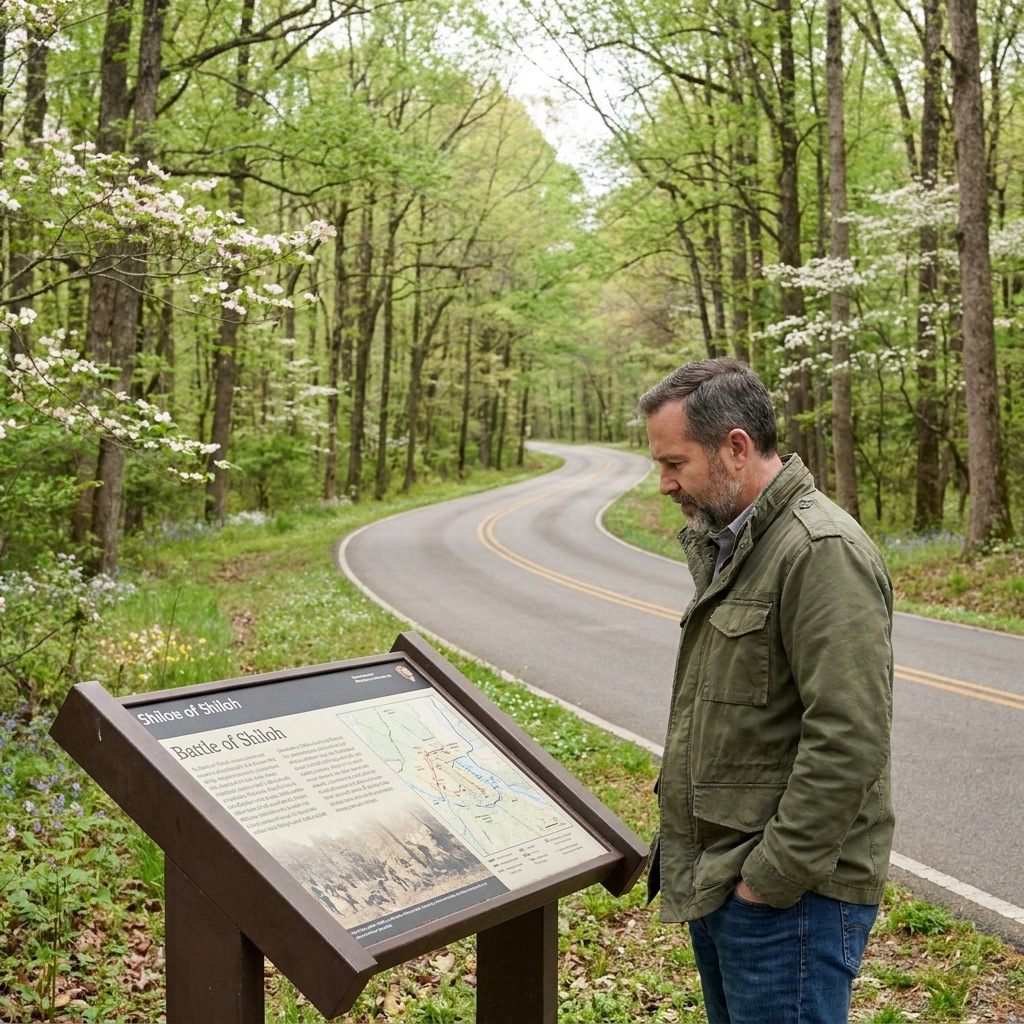
If Shiloh is your family’s touchstone, I have a separate walk-through for building an ancestor’s trail there: Tracing an Ancestor at Shiloh.

Which general matters most
Different generals mattered in different ways. If your goal is to understand what your ancestor experienced in the smoke and noise, start closest to the regiment and move upward only as needed.
- Brigade commander: often the most direct influence on where the regiment attacked, formed line, or held ground.
- Division commander: shapes the day’s sector, the reinforcements, and whether the brigade is thrown in early or held back.
- Corps commander: decides the broad stroke, which can determine whether your ancestor marched thirty miles, fought at dusk, or dug in.
- Army commander: the name most remembered, but often the farthest away from the regiment’s immediate movements.
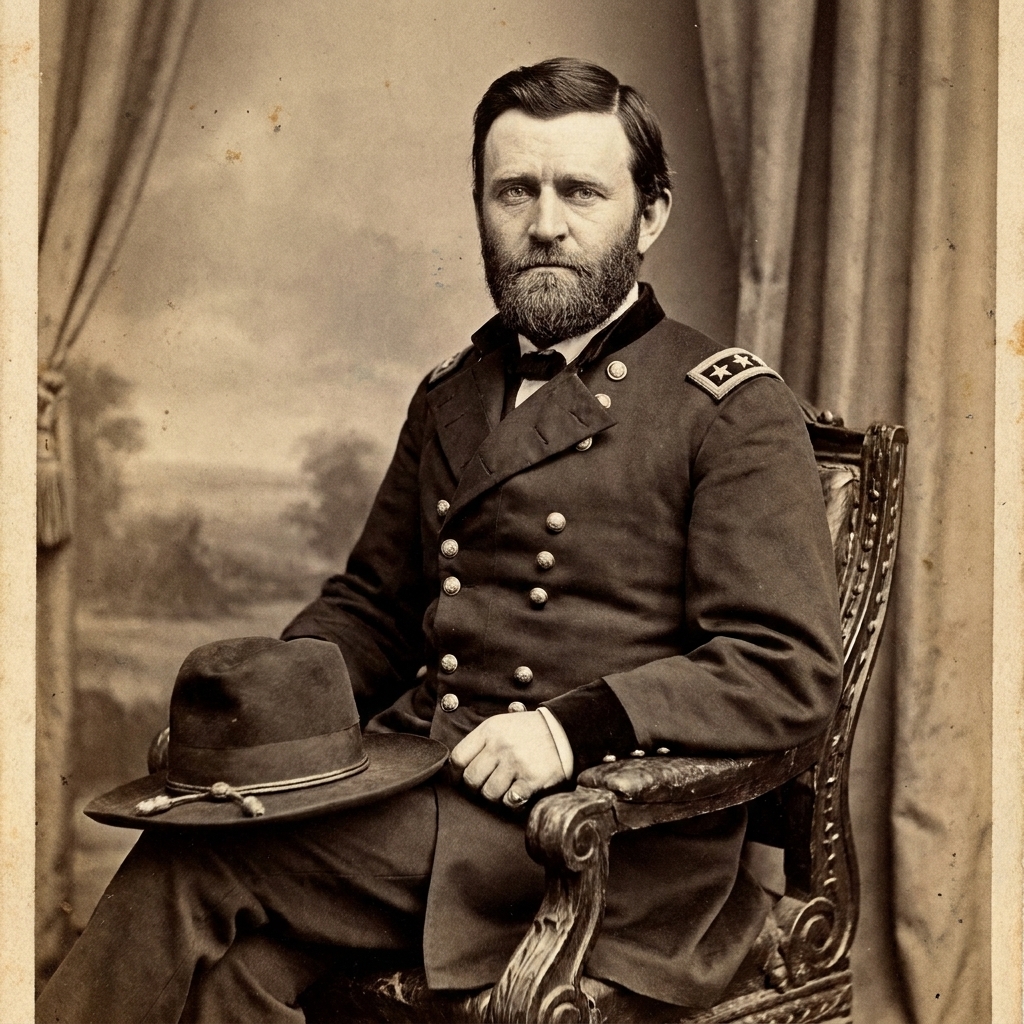
If you enjoy studying how top commanders thought and operated, you might like Grant vs. Lee: Two Command Styles, One War.
Keep your research honest
Do not overstate certainty
Sometimes the best answer is a careful one: “The regiment was assigned to X Brigade, generally commanded by Y, though reports show Z led the brigade during the engagement.” That is not a weakness. That is history.
Keep citations simple
In your notes, record:
- Source (OR series, volume, part, page) or archive collection name
- Date range covered
- The command ladder you identified
Keep the soldier in view
A commander’s name is a doorway, not the whole house. Once you have the general, circle back to the ordinary details that shaped your ancestor’s days: what he ate, how he slept, how he paid for small comforts. I have written on those daily realities in pieces like Civil War Soldier Rations and Sleeping Under the Stars.
Quick FAQ
My ancestor served for years. Will there be more than one commanding general?
Almost certainly, yes. Even if the army commander stayed the same, brigades and divisions shifted constantly. Build your answer around dates.
What if the regiment is not listed where I expect in the Official Records?
Try adjacent dates, check for spelling variants, and look for reorganizations after major battles. Also check whether the regiment was assigned to garrison duty or detached from the main army. If the order of battle is not obvious, shift to returns and correspondence around the same week, then rebuild the attachment from there.
Does a famous general’s name in family lore mean it is wrong?
Not necessarily. It may be true at the army level, or true for one campaign. Your job is to turn “we heard” into “on this date, in this place, here is the chain of command.”
The moment it clicks
When you finally pin the right general to the right date, the war gets smaller in a good way. It stops being a wash of names and begins to feel like a set of human decisions landing on a specific ridgeline, a specific cornfield, a specific crossroads. If you can, go stand there. Bring a thermos. Read the report where that general mentions your ancestor’s brigade. The paper will feel less like paper.