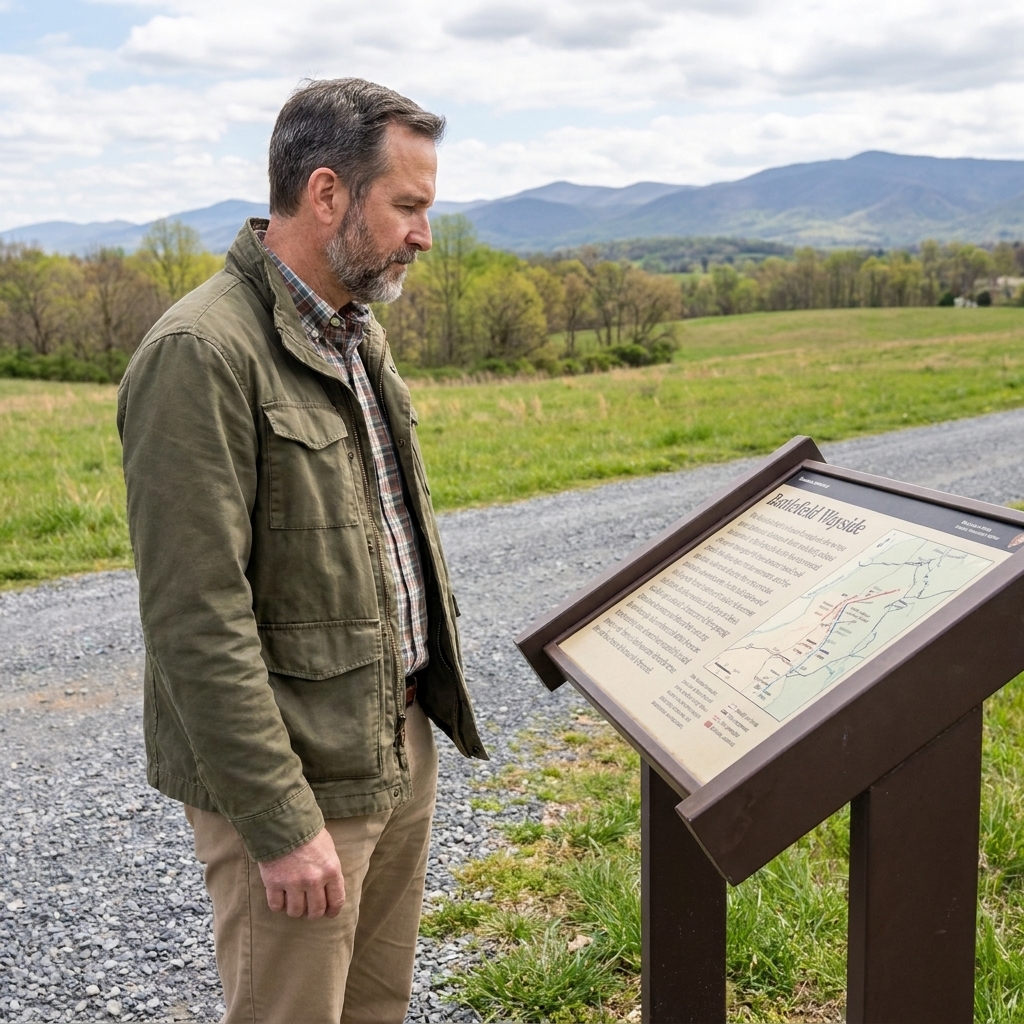
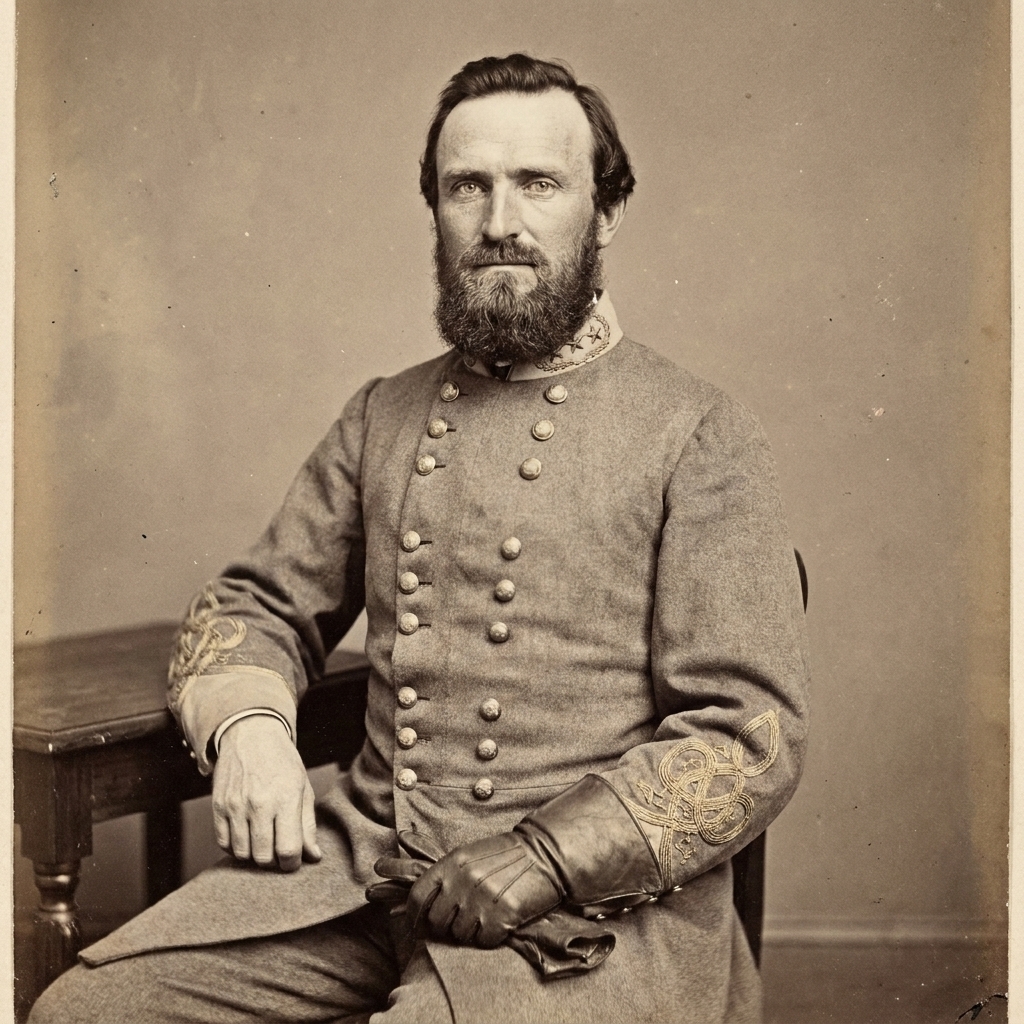
On Henry House Hill at First Bull Run, Jackson became “Stonewall”—but the famous quote is slippery. Weigh the evidence, timing, and why veterans’ memories ha...
First vs. Second Bull Run: Infantry Tactics in One Year

Silas Weaver
Silas Weaver has spent decades exploring historic battlefields, reading primary journals, and tracking down the lesser-known stories of the American Civil War. His lifelong passion for 19th-century history comes through in his engaging accounts of the places, people, and lingering questions of the era. He believes that walking the actual grounds where history happened is the best way to truly connect with the past.
Published
I first walked the old Manassas ground as a kid with dusty sneakers and a head full of Gettysburg stories, and I remember being surprised by how open it felt. Big fields, gentle rises, a little creek you could step across in places. It did not look like a place that could swallow an army. Then I came back years later with better maps and a more patient eye, and the truth settled in: Manassas is a classroom. Not because it is neat or simple, but because the same landscape hosted two battles just over a year apart, and the armies learned, adapted, and bled their way into a sharper kind of war.
First Bull Run, or First Manassas, in July 1861 often reads like a rude awakening. Second Bull Run, or Second Manassas, in late August 1862 feels like that awakening turned into habit. If you want to understand how infantry tactics hardened in one year, you can do it by watching how men moved and fought across the very same roads, ridges, and fence lines.
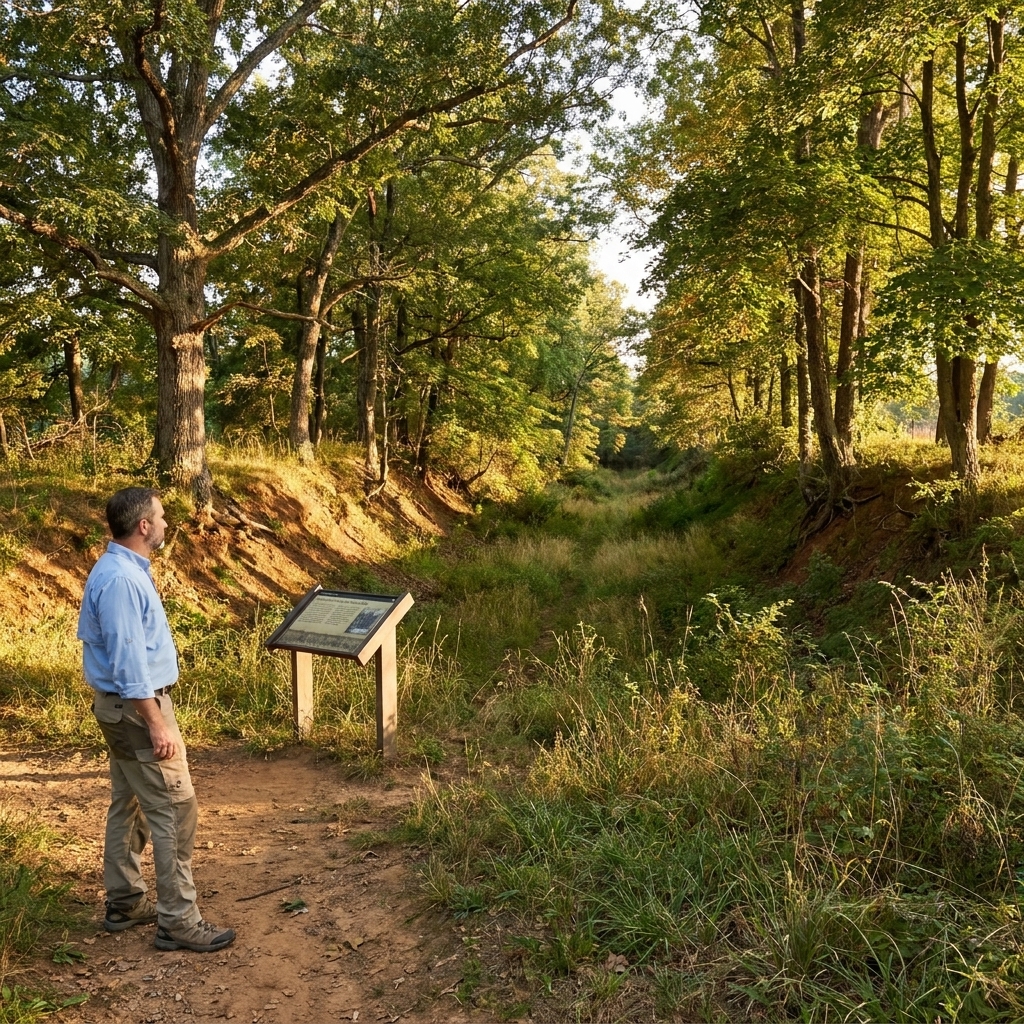
The same ground, different war
Both battles centered on the Manassas area, with the same familiar names on the map: Bull Run, Henry Hill, the Warrenton Turnpike, and a set of crossroads that mattered because roads were lifelines. But the armies arriving in 1862 were not the green crowds of 1861. They were organizations that had marched, camped, and fought in places like the Peninsula, the Shenandoah Valley, and around Richmond.
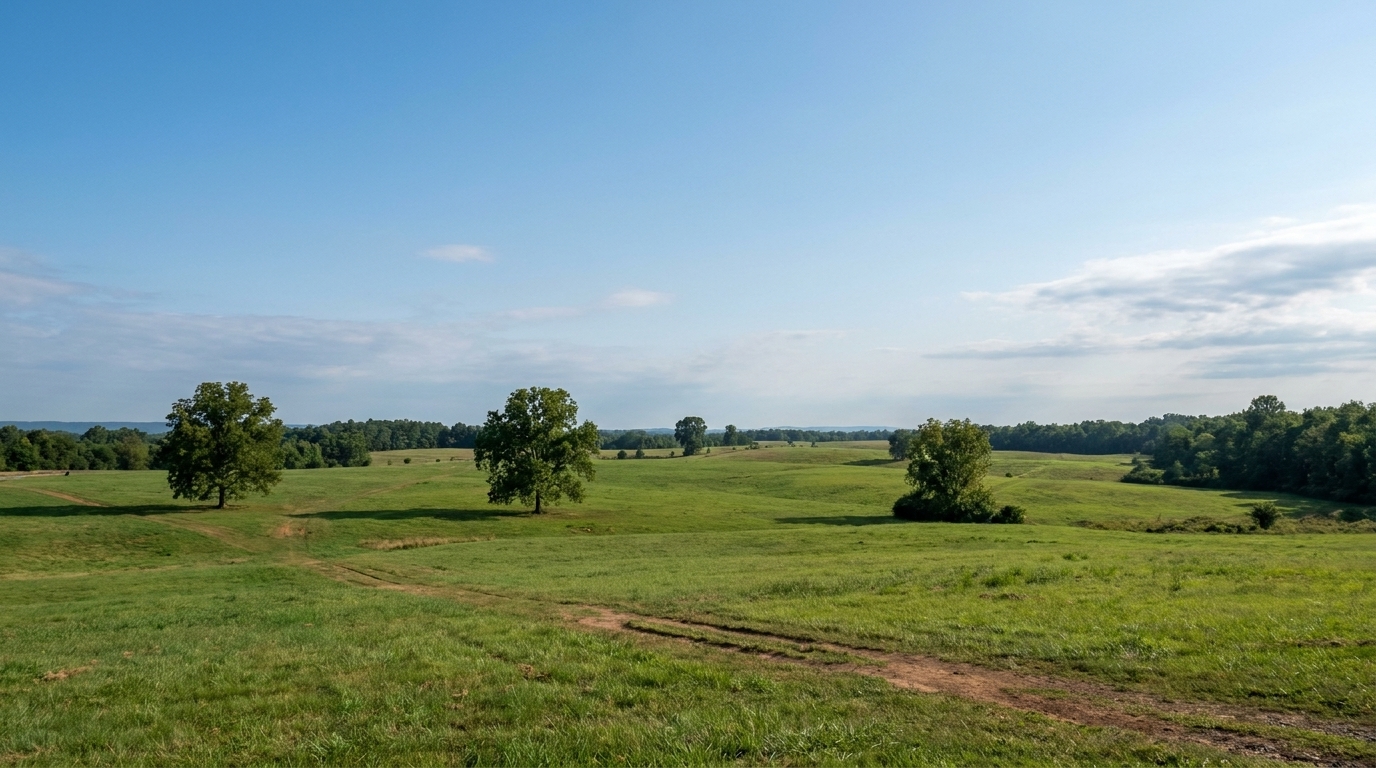
The battlefield itself pushed tactics. Open fields punished dense formations, even at the modest ranges where most musketry was actually effective once smoke and nerves took over. Woodlines hid approach routes. Shallow creeks became chokepoints when thousands of men tried to cross at once. In 1861, commanders often learned those lessons in real time. In 1862, more of them arrived already wary.
If you want a quick refresher on the July 1861 shock that gave Stonewall Jackson his most famous nickname, I have that story here: The truth behind Stonewall Jackson’s nickname at First Bull Run.
First Bull Run (July 21, 1861)
Big formations, thin skirmish screens
In 1861, both sides still leaned heavily on the idea that a battle would be decided by moving brigades in conspicuous lines. Infantry advanced and deployed with a confidence that came from drill manuals and peacetime assumptions.
Skirmishers were used, but often as thin, inconsistent screens. Many commanders did not yet appreciate how a strong skirmish line could shape a fight by:
- masking the main line’s movement
- finding weak points and gaps
- pinning an enemy long enough to bring up artillery
- forcing defenders to reveal themselves by firing
One reason Manassas makes this so easy to grasp is that the day’s most famous movement began with a long walk and a creek crossing. The Union turning column that pushed toward Sudley Ford and came down toward Henry Hill was successful in getting around the Confederate left, but it also stretched control thin. Units arrived in pieces, tired and out of alignment, and the fight became a series of collisions rather than a single clean shove.
Volley fire, smoke, and the problem of control
In theory, volleys offered discipline. In practice, the black powder smoke from thousands of muskets quickly turned bright Virginia daylight into a gray curtain. Officers struggled to see their own companies, let alone coordinate with neighboring regiments. Messages moved by rider or foot, easily delayed or lost. Units drifted, collided, or peeled away without anyone at higher command realizing it for precious minutes.
This is one reason First Bull Run has so many stories of sudden panic and sudden heroics. The battlefield could change in a breath because no one could reliably hold the whole picture.
Artillery was present, but not yet tightly paired with infantry
Guns mattered at First Bull Run, but the coordination we associate with later war was still forming. Batteries might unlimber in exposed positions because the immediate need was to be seen and felt, not necessarily to survive. Infantry support for guns could be inconsistent, and batteries sometimes found themselves isolated when friendly lines shifted.
Terrain used instinctively, not systematically
Defenders used hills and fences because those things were obviously useful, but field fortification was still more impulse than habit. You see men lying down behind a rise, stacking fence rails, or hugging a sunken lane, but not yet the reflexive entrenching that would become second nature later.
Second Bull Run (Aug. 28 to 30, 1862)
Jackson’s railroad cut: a defensive plan, not just a position
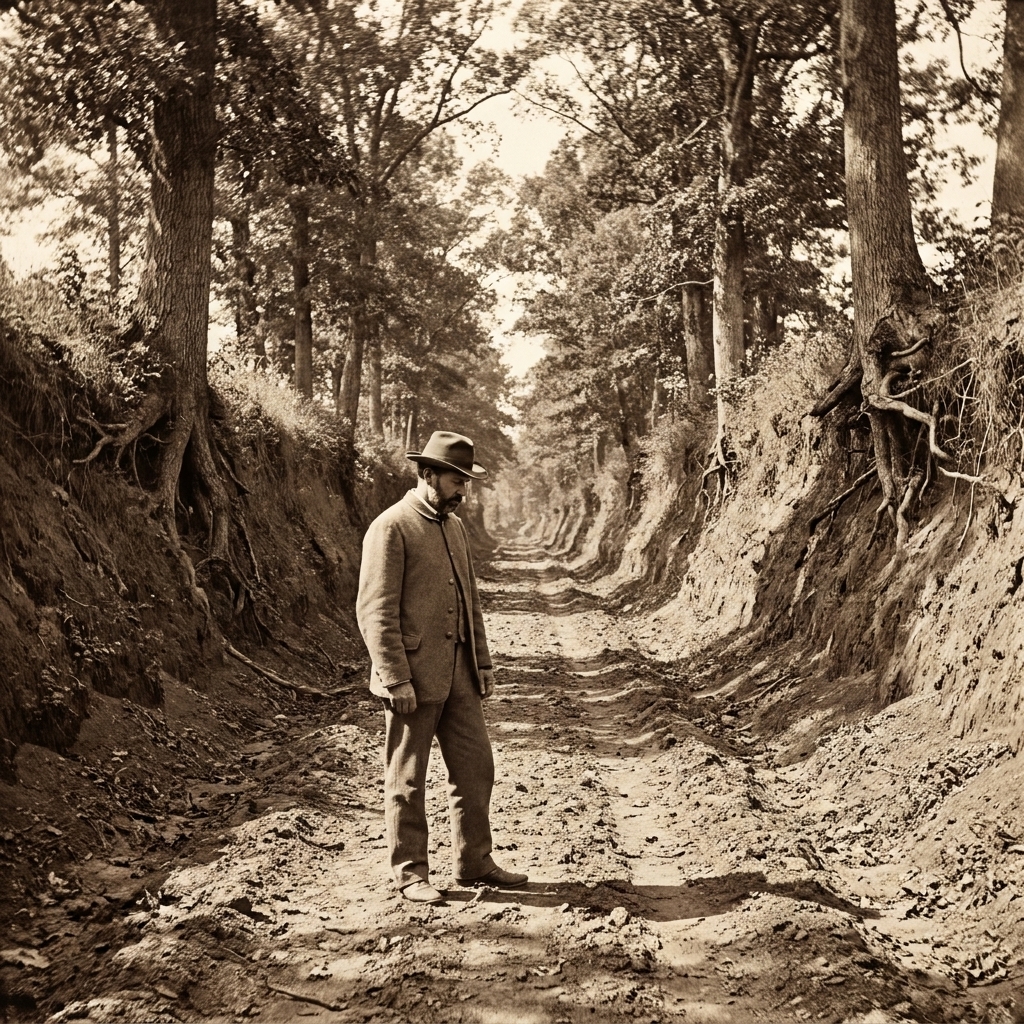
At Second Manassas, one of the clearest tactical evolutions is how Stonewall Jackson used the unfinished railroad grade. It was not merely a place to stand. It was a prepared concept: infantry tucked into cover, with fields of fire arranged to punish advances along the Warrenton Turnpike and across open ground.
When you stand near the railroad cut today, you can feel what the defenders were buying with dirt and angle. A few feet of cover turns an exchange of musketry into something lopsided. It also steadies nerves. Men who can hug earth are more likely to hold, reload, and aim.
Skirmishers become tools, not decoration
By late 1862, skirmish lines were more often used with purpose. Infantry tactics still relied on lines and brigades, but experienced leaders understood that you could not simply march a dense mass up to a hidden enemy and expect anything but a bloodletting.
Skirmishers at Second Bull Run were used to probe and shape the fight. They became the eyes and hands in front of the main line. A probing line could draw fire, identify where the enemy was strongest, and help commanders decide where to place artillery or where to shift an assault before a full brigade paid for the mistake.
Using cover becomes habitual
This is the part that hits me hardest when I compare the two battles. The men of 1862 were not necessarily braver or smarter than the men of 1861. They were more conditioned. They had learned what a Minié ball, or a heavy smoothbore round, does to a body in open air.
At Second Bull Run, you see more:
- prone firing and fighting from behind slight rises
- use of woods and fence lines as ready-made breastworks
- units hugging the reverse slope of a ridge to reduce exposure to artillery
- quick, improvised strengthening of positions
It is a small tactical shift with enormous consequences. It extends battles. It increases casualties for attackers. And it rewards commanders who can coordinate pressure, not just courage.
Coordination improves, but the punishment is clearer
Second Manassas was not a perfectly choreographed affair. But compared to 1861, there is more evidence of commanders attempting to sequence actions: hold here with infantry, concentrate guns there, threaten a flank to force a withdrawal.
You can also watch the cost of poor sequencing. On August 29, repeated Union assaults went in hard against Jackson’s railroad line, often arriving brigade by brigade. Jackson’s men could shift along the grade and through the cover behind it, reinforcing threatened points faster than attackers could reorganize in the open. The bravery is undeniable. The arithmetic of attack versus cover is brutal.
Then the battle’s tempo proves it is no longer a one-day spasm. By August 30, the fighting builds toward the massive counterstroke on the Confederate right, when Longstreet’s attack helps roll up the Union line. Even if you are focused on infantry tactics, it is a reminder that the second battle is a sequence of days, decisions, and fresh collisions, not a single afternoon’s collapse.
Five changes you can see
If you strip away the names and the politics for a moment, and focus purely on infantry behavior, these are the changes that jump out between 1861 and 1862.
- From proud lines to cautious feelers: Skirmishers matter more, and they are used earlier and more deliberately.
- From standing volleys to using the ground: More men fight prone or from cover when they can, and they seek cover instinctively.
- From open-field bravery to defensive advantage: The defender behind even modest cover gains a multiplying effect on firepower and morale.
- From “find the enemy” to “fix the enemy”: Commanders think more in terms of holding an opponent in place while another force moves.
- From one-day shock to multi-day grind: Second Manassas unfolds over several days of contact, movement, and renewed fighting, a tempo that foreshadows later campaigns.
Why the curve was steep
The weapon mix mattered
The rifled musket with the Minié ball was already in use in 1861, but it was not universal. Many units at First Bull Run still carried smoothbores, while others had rifles in varying patterns and conditions. The key point is that the armies did not flip a switch between the two battles. The hardware was already on the field in 1861, and it became more common and more deliberately used as the war ground on.
Just as important, even where rifles were present, the practical limits of visibility, training, and command control often kept fights closer than the textbooks suggest. But at those closer ranges, a man in the open still paid more than a man behind a rise, a fence, or a cut in the earth.
Experience created muscle memory
Drill teaches you how to dress a line. Combat teaches you when to drop, when to rush a fence line, when to stop firing because you are shooting at smoke, and when to conserve your last cartridges. Veterans, even in a one-year-old war, began passing those lessons down the line. They also began ignoring orders that felt suicidal, quietly, in the moment, by slowing down, bunching into cover, or firing from where they stood rather than stepping out into the open.
Commanders began to think in terrain
By 1862, there is more evidence of generals trying to read ground like a language. Not always successfully, but with more intent. A railroad cut becomes a fortress. A woodline becomes concealment for a flank move. A ridge becomes an artillery shield if you stay just behind the crest.
If you are interested in how Jackson’s 1862 operations sharpened this kind of thinking, the Valley context matters: Jackson’s 1862 Valley Campaign driving tour.
A note on cavalry and screening
This piece is about infantry tactics, but it is worth saying out loud that cavalry did not vanish from the story. Mounted troops scouted roads, guarded flanks, and chased information, and that mattered in both battles. Still, when you are standing on the ground at Manassas, the tactical changes you can physically see are often the infantry ones: where skirmishers went, where the main line chose to lie down, and how quickly men learned to treat dirt like armor.
Quick comparison
| Category | First Bull Run (1861) | Second Bull Run (1862) |
|---|---|---|
| Skirmishers | Often thin screens, inconsistently used | More purposeful probing and covering force |
| Use of cover | Instinctive, uneven | More habitual and tactical |
| Infantry formations | Heavier reliance on visible lines and volleys | Still line-based, but more cautious and more dispersed in practice |
| Defensive posture | Less systematically prepared positions | Stronger use of natural and man-made cover, notably the railroad grade |
| Command and control | High confusion, poor battlefield information flow | Still chaotic, but handled by more experienced leaders and better screening forces |
| Battle tempo | Single day, rapid collapse into retreat | Multi-day sequence, culminating in major attacks and counter-maneuver |
Walking Manassas
When I visit Manassas, I try not to tour it like a checklist. I pick one question and carry it with me. For this topic, it is simple: Where would you put men if you understood what rifled and smoothbore muskets did at the ranges people actually fought?
A few practical ways to make the ground speak:
- Stop at open approaches and imagine the last 200 yards. That is where courage turns into calculation.
- Look for low, unimpressive cover. A shallow rise, a ditch, a fence line. In 1862 those became life.
- Notice lines of sight. Where can you see, and where can you not? That is what skirmishers were solving.
- Think about sound and smoke. In both battles, commanders were often working with noise, rumors, and brief glimpses.
And if you are planning a Virginia swing that includes Manassas and other nearby fields, I keep a travel-minded overview here: 3-day Virginia Civil War battlefield road trip.
What changed most
People sometimes ask whether tactics modernized in that first year. I think a better word is hardened. The armies did not become sleek machines overnight. They became wary, more attentive to ground, more reliant on skirmishers, and more willing to fight from cover because the alternative had been proved, again and again, to be unbearable.
At First Bull Run you can feel the old world still present, the idea that boldness and good alignment might carry the day. At Second Bull Run you can feel the new world pressing in: the defensive power of dirt, the danger of open fields, and the growing realization that a battle could be won and still leave whole regiments wrecked.
That, to me, is the lesson of Manassas in one year. Not that the soldiers became less brave. They became more realistic about what bravery cost.