Kindle Available The H. L. Hunley: The Secret Hope of the Confederacy On the evening of February 17, 1864, the Confederacy H. L. Hunley sank the USS Housatonic and became the first submarine in world history to sink an enemy ship. Not until World War I "half a century later” would a submarine again accomplish such a feat. But also perishing that moonlit night, vanishing beneath the cold Atlantic waters off Charleston, South Carolina, was the Hunley and her entire crew of eight |
Union Navy Ship
|
|
|
|
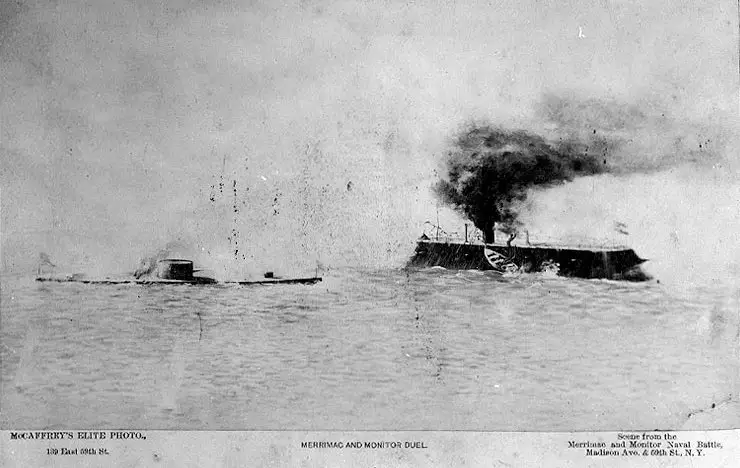
USS Monitor , a 987-ton armored turret gunboat, was built at New York to the design of John Ericsson . She was the first of what became a large number of "monitors" in the United States and other navies. Commissioned on 25 February 1862, she soon was underway for Hampton Roads, Virginia. Monitor arrived there on 9 March, and was immediately sent into action against the Confederate ironclad Virginia , which had sunk two U.S. Navy ships the previous day . The resulting battle , the first between iron-armored warships, was a tactical draw. However, USS Monitor prevented the CSS Virginia from gaining control of Hampton Roads and thus preserved the Federal blockade of the Norfolk area. Following this historic action, Monitor remained in the Hampton Roads area and, in mid-1862 was actively employed along the James River in support of the Army's Peninsular Campaign. In late December 1862, Monitor was ordered south for further operations. Caught in a storm off Cape Hatteras, she foundered on 31 December. Her wreck was discovered in 1974 and is now a marine sanctuary. USS Monitor 's Swedish engineer John Ericsson was personally responsible for Monitor 's conception and the details of her design. Perhaps with Scandanavian coastal defense conditions in mind, he had been developing the concept on paper for several decades. What emerged was well-suited for the Civil War's inshore fighting: a relatively shallow-draft iron hull, topped by an armored raft that provided good protection against ramming and cannon fire. Freeboard was less than two feet, sufficient for coastal requirements, though a real problem when the ship went to sea. Engine power was modest, but again sufficient to the need, and a Navy requirement for masts and sails was quite appropriately ignored. The most stunning innovation, on a ship whose design was dominated by innovations, was the method of carrying her guns: a thickly-armored round turret, twenty-feet in diameter, rotated by steam power to permit nearly all-around fire from a pair of eleven-inch Dahlgren smoothbore shell guns, the heaviest weapons then available. Iron fabrication began even before the Monitor 's contract was issued in early October. Rapid construction was a necessity, as the Confederates were known to be pushing work on their own ironclad, which became CSS Virginia . The new ship's hull was built by the Continental Iron Works, at Greenpoint, Long Island, with iron stock, machinery and much equipment furnished by other firms. Launched on 30 January 1862, she was outfitted over the next month and placed in commission on 25 February, under the command of Lieutenant John L. Worden . After trials and modifications, Monitor left New York on 6 March. The next day, she encountered stormy weather, which abundantly demonstrated both the inherent seakeeping problems of the design and some more-easily correctable technical difficulties. Late on 8 March, just a few hours after CSS Virginia had spread terror among the Union fleet , the weather-beaten Monitor arrived off Hampton Roads, where her exhausted crew spent a long night urgently preparing their ship for action. |
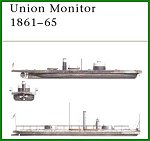 Union Monitor 1861-65 The first seagoing ironclad was the USS Monitor, and its profile has made it one of the most easily recognised warships of all time. Following her inconclusive battle with the Confederate ironclad Virginia on March 9, 1862, the production of Union monitors was accelerated. By the end of the year a powerful squadron of monitor vessels protected the blockading squadrons off the Southern coastline, and were able to challenge Confederate control of her ports and estuaries  Year on a Monitor and the Destruction of Fort Sumter Personal view of the Civil War Navy. The monitor saw action in several significant naval assaults by the Union's Squadron. It took part in the failed Federal attack on Sumter in April 1863. The "Nahant" also participated in the capture of the Confederate Ram "Atlanta," and in the assault on Fort Wagner |
|
Click on pictures to enlarge USS Monitor Officer Picture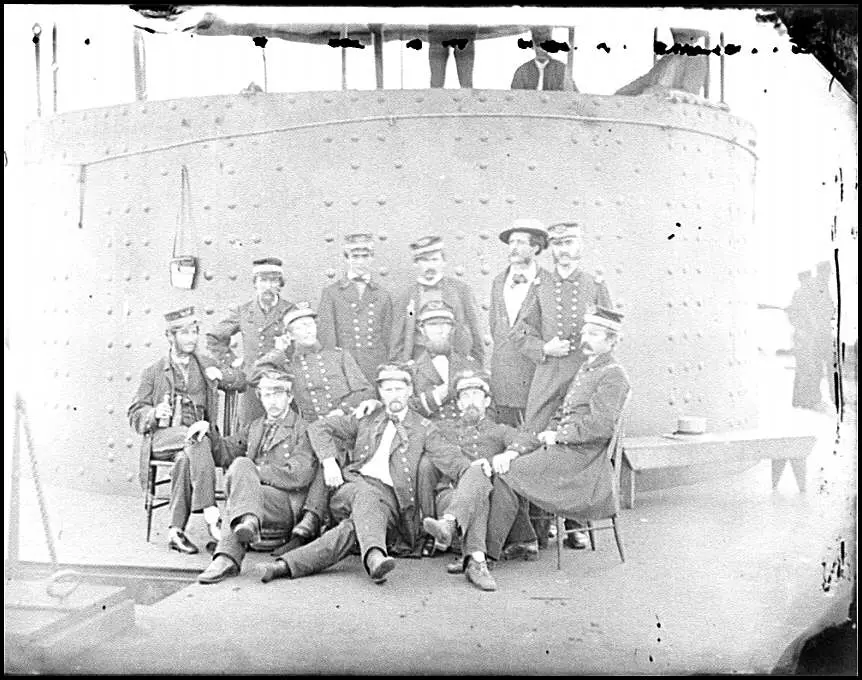 USS Monitor Crew Picture 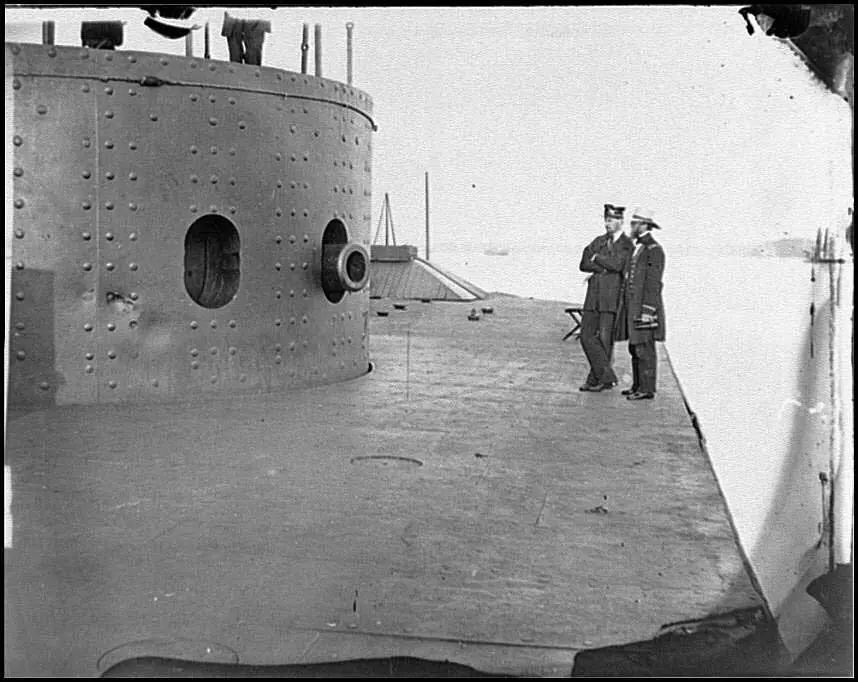 Notice the dents from cannon shells |
Kindle Available Glory in the Name: A Novel of the Confederate Navy From Norfolk to Hampton Roads, from Roanoke Island to the nighttime battle on the river below New Orleans, Glory in the Name tells the story of the Confederate States Navy, and the brave men who carried forward against overwhelming odds  Life in Mr. Lincoln's Navy A tantalizing glimpse into the hardships endured by the naval leadership to build and recruit a fighting force. The seaman endured periods of boredom, punctuated by happy social times and terrifying bouts of battle horror  Halls of Honor The U.S. Navy Museum takes you on an informed and entertaining romp through one of North America s oldest and finest military museums. The museum has been in continuous operation at the Washington Navy Yard since the American Civil War |
|
 Raise The Alabama She was known as "the ghost ship." During the Civil War, the CSS Alabama sailed over 75,000 miles and captured more than 60 Union vessels. But her career came to an end in June of 1864 when she was sunk by the USS Kearsarge off the coast of Northern France |
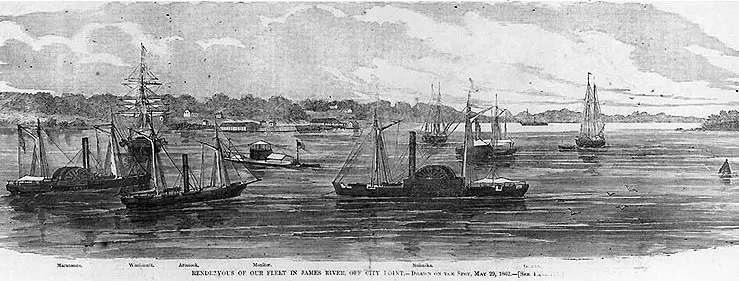
Rendezvous of the Union Fleet in James River, off City Point
|
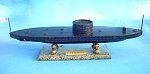 Monitor 21" Civil War Ship Wood Model Fully Assembled
|
Civil War Submarines |
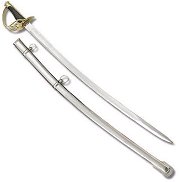 Cavalry Saber This fine replica is 39 inches overall and features a highly polished 33 inch carbon steel blade. Its leather wrapped handle fits the hand perfectly and sports decorative brass accents and a shiny brass pommel. |
Kindle Available Naval Strategies of the Civil War: Confederate Innovations and Federal Opportunism Compare and contrast the strategies of the Southern Secretary of the Navy, Mallory, against his rival in the North, Welles. Mallory used technological innovation and the skill of individuals to bolster the South's seapower against the Union Navy's superior numbers |
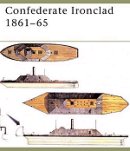 Confederate Ironclad 1861-65 Every aspect of Confederate ironclads is covered: design, construction, armor, armament, life on board, strategy, tactics, and actual combat actions. |
 Ironclads and Big Guns of the Confederacy : The Journal and Letters of John M. Brooke Information about the Confederate Navy's effort to supply its fledgling forces, the wartime diaries and letters of John M. Brooke tell the neglected story of the Confederate naval ordnance office, its innovations, and its strategic vision. |
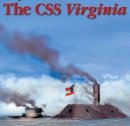 Confederate Phoenix: The CSS Virginia The CSS Virginia of the Confederate States Navy destroyed two of the most formidable warships in the U.S. Navy. Suddenly, with this event, every wooden warship in every navy in the world became totally obsolete |
Kindle Available Confederate Ironclad vs Union Ironclad: Hampton Roads 1862 The Ironclad was a revolutionary weapon of war. Although iron was used for protection in the Far East during the 16th century, it was the 19th century and the American Civil War that heralded the first modern armored self-propelled warships. Release date Nov. 2008 |
Year on a Monitor and the Destruction of Fort Sumter Personal view of the Civil War Navy. The monitor saw action in several significant naval assaults by the Union's Squadron. It took part in the failed Federal attack on Sumter in April 1863. The "Nahant" also participated in the capture of the Confederate Ram "Atlanta," and in the assault on Fort Wagner |
Kindle Available Glory in the Name: A Novel of the Confederate Navy From Norfolk to Hampton Roads, from Roanoke Island to the nighttime battle on the river below New Orleans, Glory in the Name tells the story of the Confederate States Navy, and the brave men who carried forward against overwhelming odds |
 Ironclad Down: USS Merrimack-CSS Virginia from Design to Destruction A treasure trove of detailed information about one of history s most famous vessels. Describing Stephen Russell Mallory, John Mercer Brooke, John Luke Porter, et al.--who conceived, designed and built one of the world's first ironclads |
USS Monitor on the left approaches broadside to the CSS Virginia
Sources:
U.S. National Park Service
U.S. Library of Congress
US Naval Archives