|
|
|
|
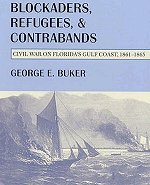 Blockaders, Refugees, and Contrabands: Civil War on Florida'S Gulf Coast, 1861-1865 Coastal Florida had a refugee crisis as the war progressed. Escaped slaves ("contrabands") sought out the blockaders. Some joined the U.S. Navy. White men and their families sought to avoid conscription or vengeful neighbors/regulators and eventually sought refuge with the blockaders |
Kindle Available The Civil War Introduces young readers to the harrowing true story of the American Civil War and its immediate aftermath. A surprisingly detailed battle-by-battle account of America's deadliest conflict ensues, culminating in the restoration of the Union followed by the tragic assassination of President Lincoln |
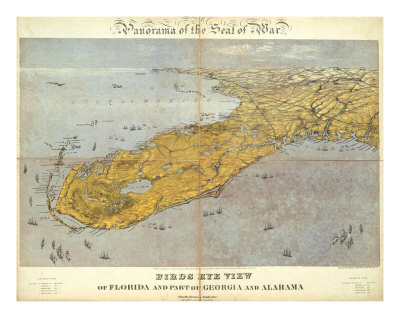 Florida and Part of Georgia and Alabama, c.1861 48 in. x 38 in. $169.99 Buy at AllPosters.com Framed |
 Sid Meier's Civil War Collection Take command of either Confederate or Union troops and command them to attack from the trees, rally around the general, or do any number of other realistic military actions. The AI reacts to your commands as if it was a real Civil War general, and offers infinite replayability. The random-scenario generator provides endless variations on the battles |
Florida State Battle Map State Battle Maps American Civil War Exhibits Civil War Timeline Confederate Commanders Union Generals Civil War Music History Women in the War Ships and Naval Battles Kids Zone Exhibits Civil War Cooking Civil War Summary |
 Lodge Logic Camp Dutch Oven Large 8 quart cast iron oven. The legs are for ease of use in campfires. Flanged lid to place coals on top of oven. Great for stews, chilli, roasts (wild game) and complete recipes for everything including old-fashioned bread. A must for reenactors villages. Camping Supplies Cast Iron Waffle Iron 12 Inch Pre Seasoned Cast Iron Skillet Full size military Camp Cot One and two man tents Large size and multiple room tents Hiking Boots Jan Sport Back Packs High Sierra Camp Equipment |
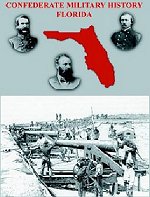 Confederate Military History of Florida The political and military events in the Confederacy's least-populated state during the American Civil War. It begins with the secession of the Florida in January 1861 and continues through the actions at Santa Rosa Island, the Battle of Olustee, and the engagement at Natural Bridge. |
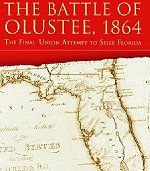 The Battle of Olustee 1864: The Final Union Attempt to Seize Florida When the Civil War began in 1861, Florida although the third state to secede from the Union was of little strategic importance to North or South. By the end of 1863, this position had changed dramatically. For the struggling Confederacy, Florida had become a crucial source of supplies, most especially for the troops in Savannah and Charleston |
 Confederate Florida The Road to Olustee A campaign study and a quick history of Confederate Florida. The political and social undercurrents of the time, and sheds light on the complex circumstances of the fateful Union campaign. Particularly of interest are the great chapters on the blockade and raid strategy of the Federal forces |
Kindle Available A South Divided: Portraits of Dissent in the Confederacy An account of Southern dissidents in the Civil War, at times labeled as traitors, Tories, deserters, or mossbacks during the war and loyalists, Lincoln loyalists, and Unionists by historians of the war |
 Discovering the Civil War in Florida A Reader and Guide While Confederates fought to preserve their sovereignty and way of life, Union troops descended on Florida with a mission to cripple the Confederacy: to destroy seashore salt works, to prevent the transfer of supplies and raw materials into, and to seize slaves and cattle |
 Confederate Military History Of North Carolina: North Carolina In The Civil War, 1861-1865 At the Battle of Big Bethel, North Carolina experienced the first Confederate casualty of the War. Field officers and privates discuss their unit's skirmishes and battles. Included are diaries and memoirs from unit historians; underscoring the veracity of their fighting history |
 Prelude to Civil War: The Nullification Controversy in South Carolina From 1816 to 1836 planters of the Palmetto State tumbled from a contented and prosperous life to a world rife with economic distress, guilt over slavery, and apprehension of slave rebellion. Compelling details ofhow this reversal of fortune led the political leaders down the path to states rights doctrines |
Kindle Available Naval Strategies of the Civil War: Confederate Innovations and Federal Opportunism Compare and contrast the strategies of the Southern Secretary of the Navy, Mallory, against his rival in the North, Welles. Mallory used technological innovation and the skill of individuals to bolster the South's seapower against the Union Navy's superior numbers |
 Kansas Pacific With the Civil War about to begin, Southern saboteurs try to prevent railroad construction from crossing Kansas to the frontier. |
 Uncle Toms Cabin DVD also features a detailed and informative essay by historian David Pierce, an extensive collection of stills, promotional materials, and music cue sheets, and details of cuts made to the film, including two deleted scenes that are among the best moments the film has to offer |
 Biography - Abraham Lincoln Preserving the Union Abe Lincoln's presidency in detail. The emotional tragedy and the humorus side of the man. His thoughts on the early commanders and dicussions with Historians. Pictures and details hard to find in other historical documentaries. |
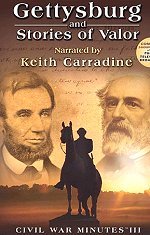 Gettysburg and Stories of Valor Civil War Minutes III DVD Box Set This 3-hour documentary captures the scenic beauty of the Gettysburg battlefield, examines rare Civil War artifacts and tells the personal stories of the men who fought in the war. |
 Rebel Sabres / The Battle of Brandy Station 1863 Through dramatic reconstructions and eye-witness accounts, this documentary explores the 1863 Battle Of Brandy Station. |
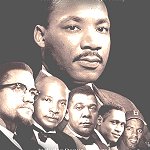 Black History: From Civil War Through Today This is an extraordinary collection of historical presentations that must be viewed in its entirety to be truly appreciated. The producers have done an excellent job in digitally restoring the vintage audio/videos but as must be expected by anyone who is knowledgeable of the restoration process some of the restorations are a bit jumpy |
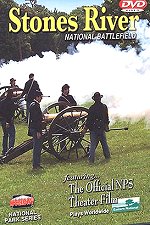 Stones River National Battlefield Stones River was one of the hardest fought battles of the Civil War with casualties of 27 percent on the Confederate side and 29 percent on the Union side |
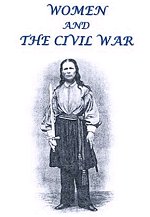 Women And The Civil War The many contributions of women in both the North and South are presented in this program describing their roles on and near the momentous battles of the American Civil War |
