|
|
|
|
Kindle Available Nathan Bedford Forrest's Escort And Staff The CSA escort company and staff officers of Nathan Bedford Forrest were held in awe by men on both sides of the conflict during the war and long after, and they continue to be held in esteem as figures as legendary as Forrest himself. Not merely guards or couriers, these men were an elite force who rode harder and fought more fiercely than any others |
Kindle Available  Standard Catalog of Civil War Firearms Over 700 photographs and a rarity scale for each gun, this comprehensive guide to the thousands of weapons used by Billy Yank and Johnny Reb will be indispensable for historians and collectors. |
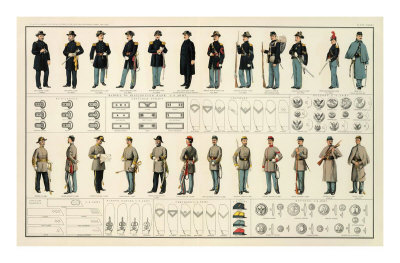 Civil War: Uniforms, US and Confederate Armies 48 in. x 31.5 in. $169.99 Buy at AllPosters.com Framed |
 Reliving the Civil War: A Reenactor's Handbook Excellent information on the reenacting hobby  Lodge Logic Camp Dutch Oven Large 8 quart cast iron oven. The legs are for ease of use in campfires. Flanged lid to place coals on top of oven. Great for stews, chilli, roasts (wild game) and complete recipes for everything including old-fashioned bread. A must for reenactors villages. |
Tennessee State Battle Map State Battle Maps American Civil War Exhibits Campaigns of the War Civil War Summary Documents of the Civil War Confederate Commanders Union Generals Civil War Timeline Women Civil War Soldiers Ships and Naval Battles Confederate Supplies |
Kindle Available The Illustrated Battle Cry of Freedom The Civil War Era Published in 1988 to universal acclaim, this single-volume treatment of the Civil War quickly became recognized as the new standard in its field. James M. McPherson, who won the Pulitzer Prize for this book, impressively combines a brisk writing style with an admirable thoroughness. |
 FAME'S ETERNAL CAMPING-GROUNDS: A Historical AND the Original Authentic Accounts of the Civil War Battles Fort Donelson, Shiloh, and Vicksburg This two-part book has something for everyone from the Civil War novice to the Civil War buff; for those who enjoy historicals and those who want authentic material |
 Where the South Lost the War: An Analysis of the Fort Henry-Fort Donelson Campaign The war probably could have been over in 1862 had Lieutenant Phelps destroyed the bridge at Florence. Not doing so provided a retreat for A. S. Johnston to move his men to Corinth and then to Shiloh |
 Winter Lightning: A Guide to the Battle of Stones River Lincoln thanked Rosecrans saying that the nation could not have taken another defeat. Additionally, Lincoln said he would remember this victory as long as he lived |
Kindle Available Six Armies in Tennessee: The Chickamauga and Chattanooga Campaigns The Federal success along the river opened the way for advances into central and eastern Tennessee, which culminated in the bloody battle of Chickamauga and then a struggle for Chattanooga. Chickamauga is usually counted as a Confederate victory, albeit a costly one |
 Sanctified Trial: The Diary of Eliza Rhea Anderson Fain, a Confederate Woman in East Tennessee The Diary of Eliza Rhea Anderson Fain |
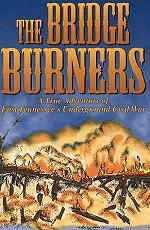 The Bridge Burners: A True Adventure of East Tennessee's Underground Civil War The railroad that proved such a peacetime boon would become a point of conflict only three years later |
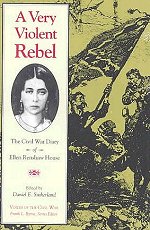 A Very Violent Rebel: The Civil War Diary of Ellen Renshaw House The Siege of Knoxville (November 1863) is covered and Sutherland's footnotes make for good history |
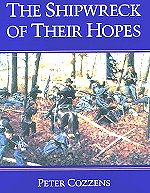 The Shipwreck of Their Hopes The Battles for Chattanooga All the information you need to understand the flow of the battle at Chattanooga as well as the political intriguing that helped to shape the results is here |
Kindle Available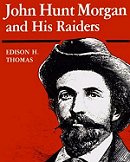 John Hunt Morgan and His Raiders The "Thunderbolt of the Confederacy" John Hunt Morgan from Tompkinsville, Kentucky to Greeneville, Tennessee. |
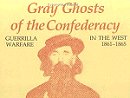 Gray Ghosts of the Confederacy: Guerrilla Warfare in the West, 1861-1865 The establishment of a police state in Missouri and the subsequent backlash and ensuing war of sabotage by local guerrillas. Missouri and Kansas had shared much animosity in the years leading up to the Civil War |
 Autobiography of Samuel S. Hildebrand Figures such as Quantrill and Anderson are better known today, Sam Hildebrand was an equally notorious Missouri bushwhacker in the southeast region of Missouri. Operating with a small group of followers, Hildebrand and his rifle "Kill-Devil" were a terror to local Unionist civilians |
Where the South Lost the War: An Analysis of the Fort Henry-Fort Donelson Campaign The war probably could have been over in 1862 had Lieutenant Phelps destroyed the bridge at Florence. Not doing so provided a retreat for A. S. Johnston to move his men to Corinth and then to Shiloh |
Women in the War
Civil War Cooking
Civil War Submarines
Kids Zone Causes of the War
|
Books Civil War Womens Subjects Young Readers Military History DVDs Confederate Store Civil War Games Music CDs Reenactors |
