Brentwood Tennessee

American Civil War
March 25, 1863

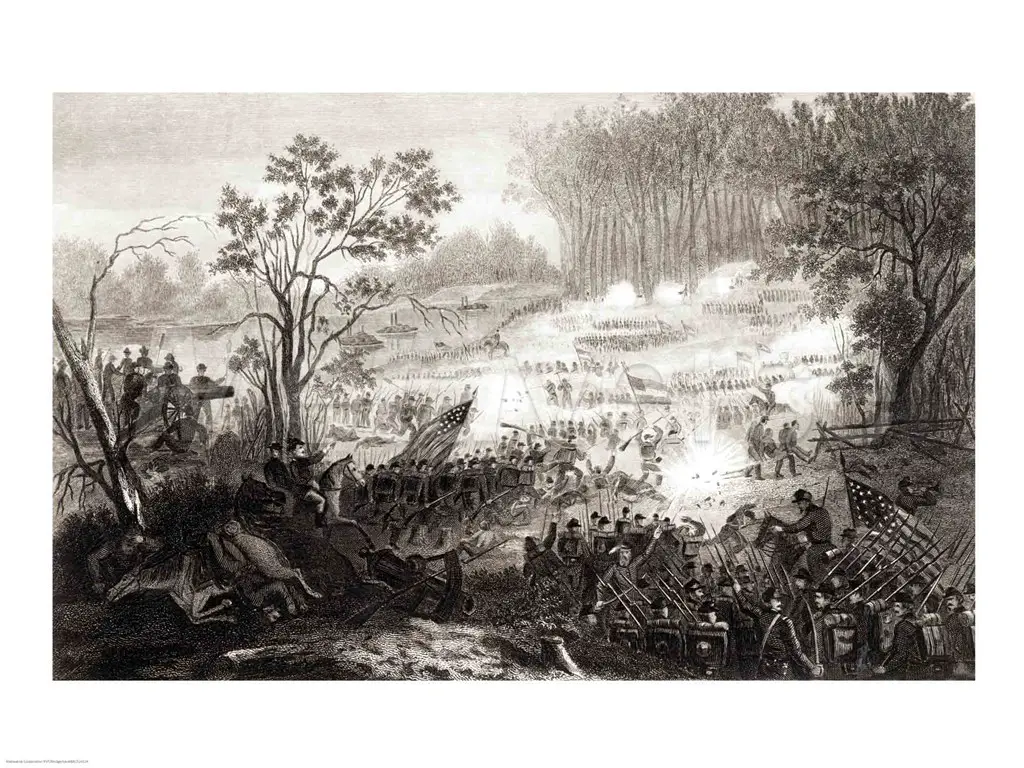
Union Lt. Col. Edward Bloodgood held Brentwood, a station on the Nashville & Decatur Railroad, with 400 men on the morning of March 25, 1863, when Confederate Brig. General Nathan B. Forrest, with a powerful column, approached the town.

The day before, Forrest had ordered Col. J.W. Starnes, commanding the 2nd Brigade, to go to Brentwood, cut the telegraph, tear up railroad track, attack the stockade, and cut off any retreat. Forrest and the other cavalry brigade joined Bloodgood about 7:00 am on the 25th. A messenger from the stockade informed Bloodgood that Forrest's men were about to attack and had destroyed railroad track.

Bloodgood sought to notify his superiors and discovered that the telegraph lines were cut. Forrest sent in a demand for a surrender under a flag of truce but Bloodgood refused. Within a half hour, though, Forrest had artillery in place to shell Bloodgood's position and had surrounded the Federals with a large force. Bloodgood decided to surrender.

Forrest and his men caused a lot of damage in the area during this expedition, and Brentwood, on the railroad, was a significant loss to the Federals.

Result(s): Confederate victory

Location: Williamson County

Campaign: Middle Tennessee Operations (1863)

Date(s): March 25, 1863

Principal Commanders: Lt. Col. Edward Bloodgood [US]; Brig. General Nathan Bedford Forrest [CS]

Forces Engaged: Detachments of the 22nd Wisconsin Volunteer Infantry, 33rd Indiana, and 19th Michigan Volunteer Infantry regiments, 1st Division, 1st Cavalry Corps (approx. 400) [US];  Forrest's Division [CS]

Estimated Casualties: 311 total (US 305; CS 6)


Decision in the Heartland
The Civil War in the West

The western campaigns cost the Confederacy vast territories, the manufacturing of Nashville, the financial center of New Orleans, communication hub Corinth, Chattanooga, and Atlanta, along with the breadbasket of the Confederacy.

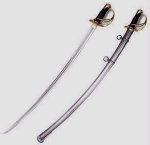
Cavalry Saber
This fine replica is 39 inches overall and features a highly polished 33 inch carbon steel blade. Its leather wrapped handle fits the hand perfectly and sports decorative brass accents and a shiny brass pommel.
Tennessee State Battle Map
State Battle Maps
American Civil War Exhibits
Campaigns of the War
Civil War Summary
Documents of the Civil War
Confederate Commanders
Union Generals
Civil War Timeline
Women Civil War Soldiers
Ships and Naval Battles
Confederate Supplies
Civil War Store

72 Piece Civil War Army Men
Play Set 52mm Union and Confederate Figures, Bridge, Horses, Canon
  • 48 Union and Confederate Soldiers
  • 4 Horses, 4 Sandbag Bunkers, 6 Fence Sections, 3 Cannon, 3 Limber Wagons (Ammo Carts)
  • Bridge, Small Barracks, 2 Cardboard buildings
  • Scale: About 1/35th
American Civil War Book Titles

This Terrible Sound
The Battle of Chickamauga

Study of the great bloody battle of Chickamauga that was the last great offensive, although costsly, victory by the Confederates. This is a detailed account of the movements of regiments, brigades, divisions.

No Better Place to Die
The Battle of Stones River

The forces of Braxton Bragg came very close to victory. But the star-crossed Confederate general ended up withdrawing, leaving Rosecrans' Union forces to claim victory by holding the field of battle

The Shipwreck of Their Hopes: The Battles for Chattanooga
All the information you need to understand the flow of the battle at Chattanooga as well as the political intriguing that helped to shape the results is here

Six Armies in Tennessee: The Chickamauga and Chattanooga Campaigns
The Federal success along the river opened the way for advances into central and eastern Tennessee, which culminated in the bloody battle of Chickamauga and then a struggle for Chattanooga. Chickamauga is usually counted as a Confederate victory, albeit a costly one

Rock of Chickamauga: The Life of General George H. Thomas
Union General George Thomas was one of the five men most important in the North's victory. Military historians consider him one of the best defensive generals ever, a man who would have stood out in any war

The Bridge Burners: A True Adventure of East Tennessee's Underground Civil War
The railroad that proved such a peacetime boon would become a point of conflict only three years later
A Very Violet Rebel Ellen Renshaw Diary
A Very Violent Rebel: The Civil War Diary of Ellen Renshaw House
The Siege of Knoxville (November 1863) is covered and Sutherland's footnotes make for good history

Where the South Lost the War: An Analysis of the Fort Henry-Fort Donelson Campaign
The war probably could have been over in 1862 had Lieutenant Phelps destroyed the bridge at Florence. Not doing so provided a retreat for A. S. Johnston to move his men to Corinth and then to Shiloh

War in Kentucky: From Shiloh to Perryville

by James Lee McDonough
By mid 1862, Union gains in the Mississippi Valley and in Tennessee and Kentucky had brought the Confederacy to a point of strategic crisis. This valuable addition to the growing literature on the Civil War in the West tells how the Union then failed to press home its advantage while the Confederacy failed to force Kentucky into the Confederacy. The climax of these events was the little-known Battle of Perryville, in which a greatly inferior Southern force under Braxton Bragg managed a draw against Don Carlos Buell's Union army but also effectively terminated the Confederate invasion of Kentucky. McDonough has researched thoroughly and written clearly, making this book informative and accessible to a wide range of Civil War students.
Cozzens follows up his magisterial account of the Battle of Chickamauga, This Terrible Sound (1992), with an equally authoritative study of the Chattanooga campaign that followed it. Braxton Bragg (who sometimes seems unfit to have been at large on the public streets, let alone commanding armies) failed to either destroy or starve out the Union Army of the Cumberland. In due course, superior Northern resources and strategy--not tactics; few generals on either side come out looking like good tacticians--progressively loosened the Confederate cordon around the city. Finally, the Union drove off Bragg's army entirely in the famous Battle of Missionary Ridge, which was a much more complex affair than previous, heroic accounts make it. Like its predecessor on Chickamauga, this is such a good book on Chattanooga that it's hard to believe any Civil War collection will need another book on the subject for at least a generation.
The Shipwreck of Their Hopes: The Battles for Chattanooga
Civil War History Documentary DVD Movie Titles

Civil War Combat: America's Bloodiest Battles
The violent mayhem of the hornet's nest at Shiloh, the valiant charge on the sunken road at Antietam, the carnage in the wheat field at Gettysburg, and the brutal fighting at Cold Harbor

Civil War Journal - The Conflict Begins
These four programs from the History Channel series Civil War Journal cover critical aspects of the early days of the war.

Long Road Back to Kentucky:
The 1862 Confederate Invasion

T he often-overlooked Western campaign of the war with a specific emphasis on Kentucky's involvement in the American Civil War. DVD

Gettysburg / Gods and Generals
The tide of the war changes during three fierce days of combat at Gettysburg [Disc 1] the gripping saga of the tactics command errors and sacrifices behind the bloodiest battle ever fought on U.S. soil. Gods and Generals [Disc 2] reveals the spirited allegiances and fierce combat of earlier Civil War struggles

History Channel Presents The Civil War
From Harper's Ferry, Fort Sumter, and First Bull Run to Shiloh, Antietam, and Gettysburg. The most legendary Civil War battles in brilliant detail. A selection of the soldiers and legendary leaders.

The Civil War - A Film by Ken Burns
Here is the saga of celebrated generals and ordinary soldiers, a heroic and transcendent president and a country that had to divide itself in two in order to become one

The Blue and the Gray
The Complete Miniseries

The Civil War proved a backdrop for this 1982 miniseries. Complete and uncut three disc set. Two families divided by the War Between the States. A Southerner caught when he becomes a war correspondent for the Northern newspaper. He finds himself  where history's in the making from the Battle of Bull Run to Abraham Lincoln's assassination

Blue Vs. Gray - Killing Fields
Relive the most vicious fighting of the Civil War, in which General Ulysses S. Grant forcibly reversed the tide of the conflict by paying with the blood of thousands. It was a desperate time for the Union

Women in the War
Civil War Cooking
Civil War Submarines
Kids Zone Causes of the War


Sources:
U.S. National Park Service
U.S. Library of Congress.


Search
AmericanCivilWar.com
 
Enter the keywords you are looking for and the site will be searched and all occurrences of your request will be displayed. You can also enter a date format, April 19,1862 or September 1864.
Books
Civil War
Womens Subjects
Young Readers
Military History

DVDs
Confederate Store
Civil War Games
Music CDs
Reenactors