 The Shipwreck of Their Hopes: The Battles for Chattanooga All the information you need to understand the flow of the battle at Chattanooga as well as the political intriguing that helped to shape the results is here |
Chattanooga Tennessee
American Civil War
|
 The Confederacy's Last Hurrah: Spring Hill, Franklin, and Nashville John Bell Hood rallied his demoralized troops and marched them off the Tennessee, desperately hoping to draw Sherman after him and forestall the Confederacy's defeat |
|
 Sherman's March: The First Full-Length Narrative of General William T. Sherman's Devastating March through Georgia and the Carolinas Beginning with the fall of Atlanta, the unrelenting aggressive slash and burn total warfare of General Sherman's Union troops, and then the final march into Raleigh |
Kindle Available John Hunt Morgan and His Raiders The "Thunderbolt of the Confederacy" John Hunt Morgan from Tompkinsville, Kentucky to Greeneville, Tennessee. |
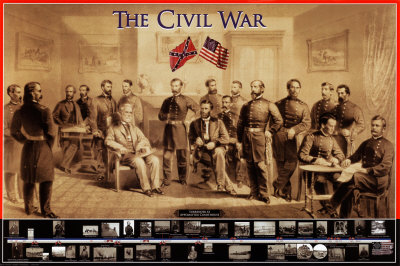
Civil War Poster 36 in. x 24 in. Buy at AllPosters.com Framed Mounted |
 History Channel Civil War A Nation Divided Rally the troops and organize a counterattack -- Your strategic decision and talent as a commander will decide if the Union is preserved or if Dixie wins its independence |
Tennessee State Battle Map State Battle Maps American Civil War Exhibits Civil War Timeline Women in the War Civil War Summary Documents of the Civil War Civil War Cooking Civil War Submarines Kids Zone Causes of the War |
 Civil War Soldier 102 Piece Playset
|
 Nashville: The Western Confederacy's Final Gamble Adequately mapped and illustrated, the read was an enjoyable one. The author was more than fair and accurate in his assessment of Hood who mismanaged, waisted and destroyed the superb Army of Tennessee, in effect throwing away the Confederacy's most viable hope |
 Struggle for the Heartland: The Campaigns from Fort Henry to Corinth The military campaign that began in early 1862 with the advance to Fort Henry and culminated in late May with the capture of Corinth, Mississippi. The first significant Northern penetration into the Confederate west |
Kindle Available From Manassas to Appomattox: General James Longstreet According to some, he was partially to blame for the Confederate defeat at Gettysburg; according to others, if Lee had followed Longstreet's advice, they would have won that battle. He has been called stubborn and vain; and he has been lauded as one of the greatest tacticians of the Civil War |
 Forts Henry and Donelson The Key to the Confederate Heartland The front in Virginia was relatively narrow (Chesapeake Bay to Blue Ridge Mountains) while in Tennessee the front stretched hundreds of miles from the Mississippi River to the Appalachian Mountains. To cover this extensive area the Confederates had a much smaller force than in Virginia |
|
Kindle Available Civil War Curiosities: Strange Stories, Oddities, Events, and Coincidences |
 The Battle of the Wilderness May 5-6, 1864 Fought in a tangled forest fringing the south bank of the Rapidan River, the Battle of the Wilderness marked the initial engagement in the climactic months of the Civil War in Virginia, and the first encounter between Ulysses S. Grant and Robert E. Lee |
 The Civil War Day By Day An Almanac, 1861-1865 The most exhaustively detailed and fascinating book on the American Civil War of its kind. Not only does it provide a day-by-day look at the major events of the war, but lists so many of the small skirmishes and actions as well. Accurate and enjoyable |
Kindle Available Civil War Medicine The staggering challenge of treating wounds and disease on both sides of the conflict. Written for general readers and scholars alike, this first-of-its kind encyclopedia will help all Civil War enthusiasts to better understand this amazing medical saga. Clearly organized, authoritative, and readable |
|
Kindle Available Advance And Retreat: Personal Experiences In The United States And Confederate States Armies John Bell Hood entered the Confederate Army at 29, loyal to Confederate Independence. He led his men into the battles of Second Manassas, Gaines's Mill, Sharpsburg, Fredericksburg, Gettysburg, and Chickamauga |
Kindle Available Tennessee in the Civil War Selected Contemporary Accounts of Military and Other Events, Month by Month |
 Winter Lightning: A Guide to the Battle of Stones River Lincoln thanked Rosecrans saying that the nation could not have taken another defeat. Additionally, Lincoln said he would remember this victory as long as he lived |
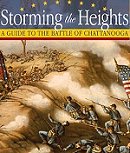 Storming the Heights: A Guide to the Battle of Chattanooga The Confederate victory of Chickamauga drove the Union Army of the Cumberland back to the key railroad hub of Chattanooga. In early October it had appeared that all Union gains in southern Tennessee might be lost |
|
Books Civil War Womens Subjects Young Readers Military History DVDs Confederate Store Civil War Games Music CDs Reenactors |
