Fair Garden Tennessee

American Civil War
January 27, 1864

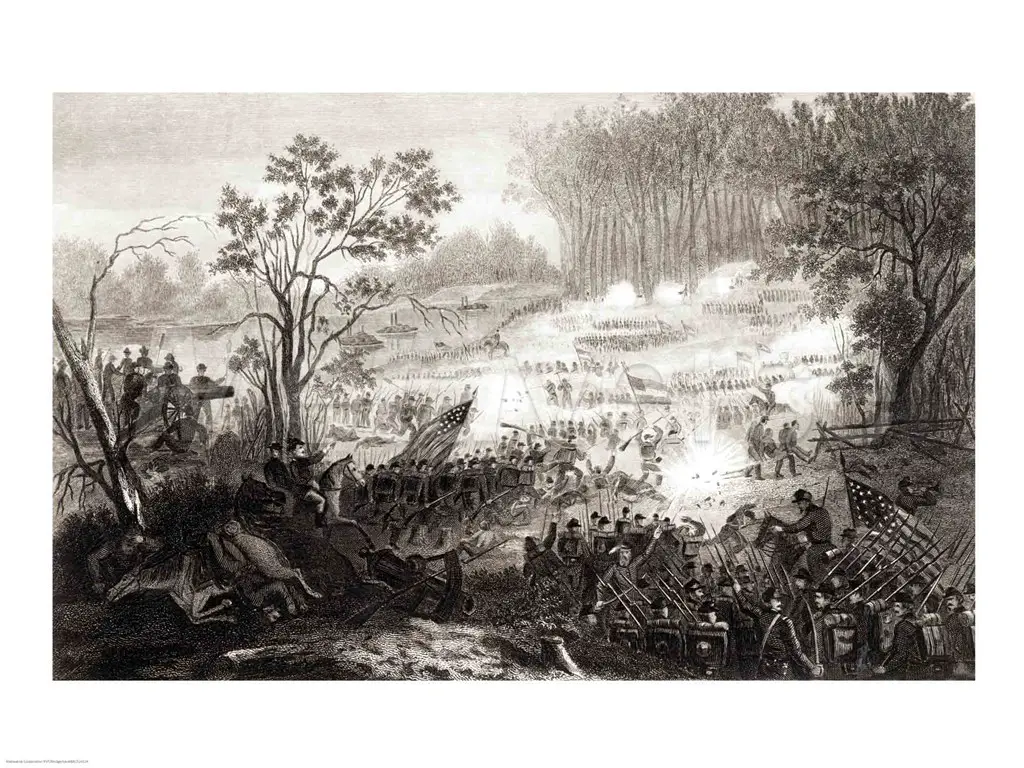
Since the Battle of Dandridge, the Union cavalry had moved to the south side of the French Broad River and had disrupted Confederate foraging and captured numerous wagons in that area. On January 25, 1864, Lt. General James Longstreet, commander of the Department of East Tennessee, instructed his subordinates to do something to curtail Union operations south of the French Broad.

On the 26th, Brig. General Samuel D. Sturgis, having had various brushes with Confederate cavalry, deployed his troopers to watch the area fords. Two Confederate cavalry brigades and artillery advanced from Fair Garden in the afternoon but were checked about four miles from Sevierville. Other Confederates attacked a Union cavalry brigade, though, at Fowler's on Flat Creek, and drove it about two miles.

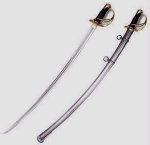
No further fighting occurred that day. Union scouts observed that the Confederates had concentrated on the Fair Garden Road, so Sturgis ordered an attack there in the morning. In a heavy fog, Col. Edward M. McCook's Union division attacked and drove back Major General William T. Martin's Confederates until about 4:00 pm. At that time, McCook's men charged with sabers and routed the Rebels.

Sturgis set out in pursuit on the 28th, and captured and killed more of the routed Rebels. The Union forces, however, observed three of Longstreet's infantry brigades crossing the river. Realizing his weariness from fighting, lack of supplies, ammunition, and weapons and the overwhelming strength of the enemy, Sturgis decided to evacuate the area. But, before leaving, Sturgis determined to attack Brig. General Frank C. Armstrong's Confederate cavalry division which he had learned was about three or four miles away, on the river. 

Unbeknownst to the attacking Federals, Armstrong had strongly fortified his position and three infantry regiments had arrived to reinforce him. Thus, the Union troops suffered severe casualties in the attack. The battle continued until dark, when the Federals retired from the area.

The Federals had won the big battle but the fatigue of continual fighting and lack of supplies and ammunition forced them to withdraw.

Result(s): Union victory

Location: Sevier County

Campaign: Operations about Dandridge, Tennessee (1863-64)

Date(s): January 27, 1864

Principal Commanders: Brig. General Samuel D. Sturgis and Col. Edward M. McCook [US]; Major General William T. Martin [CS]

Forces Engaged: Cavalry Division, Cavalry Corps, Army of the Ohio [US]; Cavalry Division, Department of East Tennessee [CS]

Estimated Casualties: 265 total (US 100; CS 165)


From Manassas to Appomattox: General James Longstreet
According to some, he was partially to blame for the Confederate defeat at Gettysburg; according to others, if Lee had followed Longstreet's advice, they would have won that battle. He has been called stubborn and vain; and he has been lauded as one of the greatest tacticians of the Civil War

Civil War Union Cavalry: 25 Piece Set
  • 13 Union Soldier Figures
  • 11 Brown Horses 2-5/8 inches tall
  • 1 White Horse Laying Down
  • Scale: Approximately 1/32nd
  • Packaging: Plastic Bag with Header Card
Tennessee State Battle Map
State Battle Maps
American Civil War Exhibits
Campaigns of the War
Civil War Summary
Documents of the Civil War
Confederate Commanders
Union Generals
Civil War Timeline
Women Civil War Soldiers
Ships and Naval Battles
Confederate Supplies
Civil War Store

72 Piece Civil War Army Men
Play Set 52mm Union and Confederate Figures, Bridge, Horses, Canon
  • 48 Union and Confederate Soldiers
  • 4 Horses, 4 Sandbag Bunkers, 6 Fence Sections, 3 Cannon, 3 Limber Wagons (Ammo Carts)
  • Bridge, Small Barracks, 2 Cardboard buildings
  • Scale: About 1/35th
American Civil War Book Titles

CHICAGO'S BATTERY BOYS
The Chicago Mercantile Battery in the Civil War's Western Theater

Organized in 1862 as part of John McClernand's 13th Corps, the battery participated in the arduous Vicksburg campaign. The artillerists performed well everywhere, Chickasaw Bluffs, Port Gibson, Champion Hill, Big Black River, and the siege of Vicksburg

Burnside
Ambrose Burnside, the Union general, was a major player on the Civil War stage from the first clash at Bull Run until the final summer of the war. He led a corps or army during most of this time and played important roles in various theaters of the war.

The Confederacy's Last Hurrah: Spring Hill, Franklin, and Nashville
John Bell Hood rallied his demoralized troops and marched them off the Tennessee, desperately hoping to draw Sherman after him and forestall the Confederacy's defeat

A Light and Uncertain Hold: A History of the Sixty-Sixth Ohio Volunteer Infantry
Thackery weaves all the historical information into a story from the formation of the 66th to it's exit muster and beyond. He uses an excellent mix of excerpts from letters home, local period newspaper articles, and various historical volumes particularly from Ohio libraries

Forts Henry and Donelson: The Key to the Confederate Heartland
The front in Virginia was relatively narrow (Chesapeake Bay to Blue Ridge Mountains) while in Tennessee the front stretched hundreds of miles from the Mississippi River to the Appalachian Mountains. To cover this extensive area the Confederates had a much smaller force than in Virginia

Where the South Lost the War: An Analysis of the Fort Henry-Fort Donelson Campaign
The war probably could have been over in 1862 had Lieutenant Phelps destroyed the bridge at Florence. Not doing so provided a retreat for A. S. Johnston to move his men to Corinth and then to Shiloh

Struggle for the Heartland: The Campaigns from Fort Henry to Corinth
The military campaign that began in early 1862 with the advance to Fort Henry and culminated in late May with the capture of Corinth, Mississippi. The first significant Northern penetration into the Confederate west

Six Armies in Tennessee: The Chickamauga and Chattanooga Campaigns
The Federal success along the river opened the way for advances into central and eastern Tennessee, which culminated in the bloody battle of Chickamauga and then a struggle for Chattanooga. Chickamauga is usually counted as a Confederate victory, albeit a costly one

Civil War History Documentary DVD Movie Titles

Civil War Combat: America's Bloodiest Battles
The violent mayhem of the hornet's nest at Shiloh, the valiant charge on the sunken road at Antietam, the carnage in the wheat field at Gettysburg, and the brutal fighting at Cold Harbor

Civil War Journal - The Conflict Begins
These four programs from the History Channel series Civil War Journal cover critical aspects of the early days of the war.

Civil War Journal
Collector's Edition 4-DVD Set

Made exclusively for Books Are Fun. Discs include: · Stonewall Jackson · Sherman and the March to the Sea · West Point Classmates-Civil War Enemies · Robert E. Lee · Battle of 1st Bull Run · The 54th Massachusetts · John Brown s War · Destiny at Fort Sumter

Gettysburg / Gods and Generals
The tide of the war changes during three fierce days of combat at Gettysburg [Disc 1] the gripping saga of the tactics command errors and sacrifices behind the bloodiest battle ever fought on U.S. soil. Gods and Generals [Disc 2] reveals the spirited allegiances and fierce combat of earlier Civil War struggles

History Channel Presents The Civil War
From Harper's Ferry, Fort Sumter, and First Bull Run to Shiloh, Antietam, and Gettysburg. The most legendary Civil War battles in brilliant detail. A selection of the soldiers and legendary leaders.

The Civil War - A Film by Ken Burns
Here is the saga of celebrated generals and ordinary soldiers, a heroic and transcendent president and a country that had to divide itself in two in order to become one

The Blue and the Gray
The Complete Miniseries

The Civil War proved a backdrop for this 1982 miniseries. Complete and uncut three disc set. Two families divided by the War Between the States. A Southerner caught when he becomes a war correspondent for the Northern newspaper. He finds himself  where history's in the making from the Battle of Bull Run to Abraham Lincoln's assassination

Long Road Back to Kentucky:
The 1862 Confederate Invasion

The often-overlooked Western campaign of the war with a specific emphasis on Kentucky's involvement in the American Civil War.

Women in the War
Civil War Cooking
Civil War Submarines
Kids Zone Causes of the War


Sources:
U.S. National Park Service
U.S. Library of Congress.

Search
AmericanCivilWar.com
 
Enter the keywords you are looking for and the site will be searched and all occurrences of your request will be displayed. You can also enter a date format, April 19,1862 or September 1864.
Books
Civil War
Womens Subjects
Young Readers
Military History

DVDs
Confederate Store
Civil War Games
Music CDs
Reenactors