Kindle Available Tennessee in the Civil War Selected Contemporary Accounts of Military and Other Events, Month by Month |
Fort Pillow Tennessee
American Civil War
|
| The war's single most brutal incident involving black troops took place at Fort Pillow. Publicized Congressional inquiries determined that many Colored Troops in the Union fort were massacred after having surrendered to Confederate attackers. Some black units responded with the avenging battle cry, "Remember Fort Pillow" in subsequent retaliations |
|
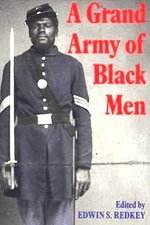 A Grand Army of Black Men: Letters from African-American Soldiers in the Union Army 1861-1865 Almost 200,000 African-American soldiers fought for the Union in the Civil War. Although most were illiterate ex-slaves, several thousand were well educated, free black men from the northern states |
Kindle Available The Civil War Introduces young readers to the harrowing true story of the American Civil War and its immediate aftermath. A surprisingly detailed battle-by-battle account of America's deadliest conflict ensues, culminating in the restoration of the Union followed by the tragic assassination of President Lincoln |
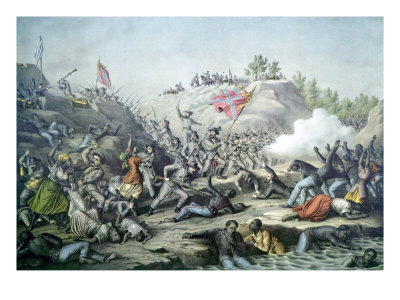
The Fort Pillow Massacre, April 12, 1864 12 in. x 9 in. Buy at AllPosters.com Framed Mounted |
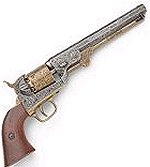 Civil War Model 1851 Naval Pistol Engraved Silver Tone / Gold Tone Finish and Wooden Grips - Replica of Revolver Used by Both USA / Union and CSA / Confederate Forces |
Tennessee State Battle Map State Battle Maps American Civil War Exhibits Civil War Timeline Women in the War Civil War Summary Documents of the Civil War Civil War Cooking Civil War Submarines Kids Zone Causes of the War |
 Sid Meier's Civil War Collection Take command of either Confederate or Union troops and command them to attack from the trees, rally around the general, or do any number of other realistic military actions. The AI reacts to your commands as if it was a real Civil War general, and offers infinite replayability. The random-scenario generator provides endless variations on the battles |
 The Black Civil War Soldiers of Illinois: The Story of the Twenty-Ninth U.S. Colored Infantry Study in the lives of black recruits in the Civil War era, and a journey into the hinterlands of an American racial pathos. Throughout this study, Miller explores in detail the biographies of individual soldiers, revealing their often convoluted histories |
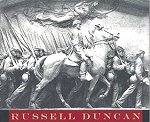 Where Death and Glory Meet: Colonel Robert Gould Shaw and the 54th Massachusetts Infantry The history of how our culture determines manhood. Although a rather detached supporter of abolition, Shaw was skeptical about the fighting abilities of freedmen, and initially declined the command. When he did accept, he was aware that the eyes of the nation were on his regiment, and his training of them was relentless. The 54th measured up by proving itself in battle |
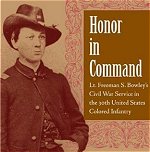 Honor in Command: Lt. Freeman S. Bowley's Civil War Service in the 30th United States Colored Infantry A young white officer who served as a lieutenant in a regiment of U.S. Colored Troops in the Union Army, is the work of a superb storyteller who describes how his Civil War experiences transformed him from a callow youth into an honorable man. Describing in detail his relationship with the men in his company, Bowley extols the role of black soldiers and their officers in the Union victory. |
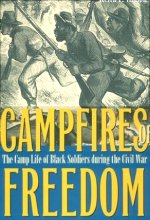 Campfires of Freedom: The Camp Life of Black Soldiers During the Civil War African-Americans - both freemen and ex-slaves - enlisted for a variety of reasons, from patriotism to sheer poverty. Like many of their white counterparts, they attributed theological significance to the war |
|
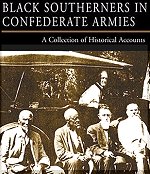 Black Southerners in Confederate Armies Official records, newspaper articles, and veterans' accounts to tell the stories of the Black Confederates. This well researched collection is a contribution to the discussion about the numbers of black Southerners involved and their significant history. |
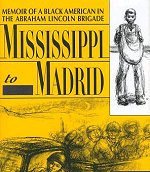 Mississippi to Madrid: Memoir of a Black American in the Abraham Lincoln Brigade From his birth to a share cropper family in Mississippi to the unrest in Chicago and New York during the depression, James Yates's experience with labor protest and union organizing shaped his vision of freedom and led to his decision to fight against fascism in the Spanish Civil War |
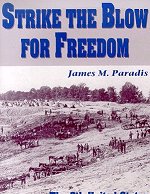 Strike the Blow for Freedom: The 6th United States Colored Infantry in the Civil War The recruitment, training, battles and finally the mustering out of the 6th. The 6th shared some of the same influences that shaped the formation of many military units of that time |
Kindle Available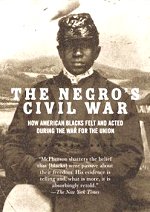 The Negro's Civil War: How American Blacks Felt and Acted During the War for the Union In this classic study, Pulitzer Prize-winning author James M. McPherson deftly narrates the experience of blacks--former slaves and soldiers, preachers, visionaries, doctors, intellectuals, and common people--during the Civil War |
|
Kindle Available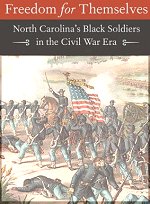 Freedom for Themselves: North Carolina's Black Soldiers in the Civil War Era The processes by which black men enlisted and were trained, the history of each regiment, the lives of the soldiers' families during the war, and the experiences of the colored veterans and their families living in an ex-Confederate state |
Kindle Available Civil War Curiosities: Strange Stories, Oddities, Events, and Coincidences |
 A House Divided: The Antebellum Slavery Debates in America, 1776-1865 An excellent overview of the antebellum slavery debate and its key issues and participants. The most important abolitionist and proslavery documents written in the United States between the American Revolution and the Civil War |
 Black Confederates It was illegal for Blacks to carry arms until March of 1865, and numerous Confederate Government documents attest to the illegality of using slaves and free Blacks in that capacity |
 |
War in Kentucky: From Shiloh to Perryville by James Lee McDonough By mid 1862, Union gains in the Mississippi Valley and in Tennessee and Kentucky had brought the Confederacy to a point of strategic crisis. This valuable addition to the growing literature on the Civil War in the West tells how the Union then failed to press home its advantage while the Confederacy failed to force Kentucky into the Confederacy. The climax of these events was the little-known Battle of Perryville, in which a greatly inferior Southern force under Braxton Bragg managed a draw against Don Carlos Buell's Union army but also effectively terminated the Confederate invasion of Kentucky. McDonough has researched thoroughly and written clearly, making this book informative and accessible to a wide range of Civil War students. |
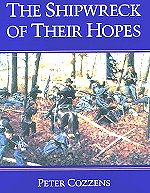
| The Shipwreck of Their Hopes: The Battles for Chattanooga Cozzens follows up his magisterial account of the Battle of Chickamauga, This Terrible Sound (1992), with an equally authoritative study of the Chattanooga campaign that followed it. Braxton Bragg (who sometimes seems unfit to have been at large on the public streets, let alone commanding armies) failed to either destroy or starve out the Union Army of the Cumberland. In due course, superior Northern resources and strategy--not tactics; few generals on either side come out looking like good tacticians--progressively loosened the Confederate cordon around the city. Finally, the Union drove off Bragg's army entirely in the famous Battle of Missionary Ridge, which was a much more complex affair than previous, heroic accounts make it. Like its predecessor on Chickamauga, this is such a good book on Chattanooga that it's hard to believe any Civil War collection will need another book on the subject for at least a generation. |
 |
|
Books Civil War Womens Subjects Young Readers Military History DVDs Confederate Store Civil War Games Music CDs Reenactors |
