|
|
|
|
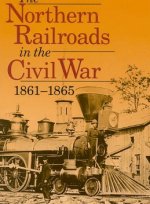 The Northern Railroads in the Civil War, 1861-1865 Account of the impact of the railroads on the American Civil War and vice versa. How the North was helped to victory through its effective use of the rails, also how the war changed the way railroads were built, run and financed after the war. |
 The Railroads of the Confederacy The story of the first use of railroads on a major scale in a major war. A complex and fascinating tale, with the railroads of the American South playing the part of tragic hero in the Civil War: at first vigorous though immature; then overloaded, driven unmercifully, starved for iron; and eventually worn out |
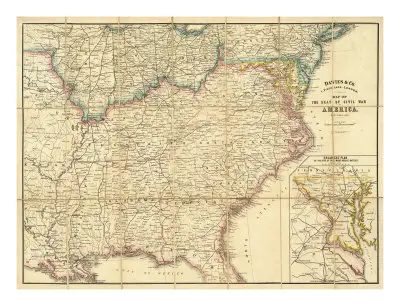 Map of the Seat of Civil War In America, c.1862 48 in. x 36.6 in. $169.99 Buy at AllPosters.com Framed |
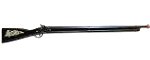 Civil War Musket Wood & Steel Frontier Rifle Designed After The Original Rifle 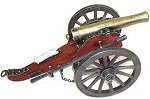 Civil War Cannon Collectible Models and childrens playsets Miniature Collectible Civil War Cannon12 pound Civil War field cannon replica |
Virginia State Battle Map 1864 State Battle Maps Ships and Naval Battles Civil War Submarines Appomattox Courthouse President Abraham Lincoln Confederate Commanders American Civil War Exhibits Civil War Summary Women Civil War Soldiers Reenactors Supplies |
 Civil War Soldier 102 Piece Playset
|
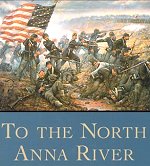 To the North Anna River Grant and Lee, May 13-25, 1864 Spectacular narrative of the initial campaign between Ulysses S. Grant and Robert E. Lee in 1864. May 13 through 25, was critical in the clash between the Army of the Potomac and the Army of Northern Virginia. |
Kindle Available Lee's Endangered Left: The Civil War In Western Virginia, Spring Of 1864 Grant devised a plan of concerted action to bring down the Confederacy. He aimed to destroy General Lee's supply source for his Army in Western Virginia and to use military activity there as an extended turning movement to threaten Lee from the west |
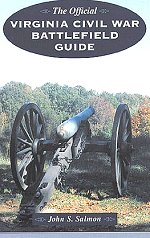 The Official Virginia Civil War Battlefield Guide Virginia was host to nearly 1/3rd of all Civil War engagements. This guide covers them all like a mini-history of the war. This guide organizes battles chronologically. Each campaign has a detailed overview, followed by concise descriptions of the individual engagements |
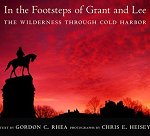 In the Footsteps of Grant and Lee The Wilderness Through Cold Harbor For forty days, the armies fought a grinding campaign from the Rapidan River to the James River that helped decide the course of the Civil War. Several of the war's bloodiest engagements occurred in this brief period: the Wilderness, Spotsylvania Court House, the North Anna River, Totopotomoy Creek, Bethesda Church, and Cold Harbor |
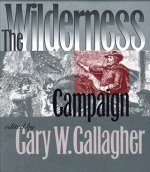 The Wilderness Campaign Military Campaigns of the Civil War In 1864, in the vast Virginia scrub forest known as the Wilderness, Ulysses S. Grant and Robert E. Lee first met in battle. The Wilderness campaign of May 5-6 initiated an epic confrontation between these two Civil War commanders |
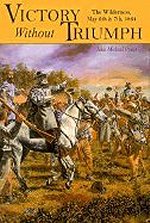 Victory Without Triumph The Wilderness, May 6th & 7th, 1864 John Priest meticulously details the vicious infantry fighting along the Plank Road, Longstreet's counterstrike against the II Corps, the cavalry operations of both armies near Todd's Tavern, and John B. Gordon's daring assault against the Army of the Potomac's right flank. |
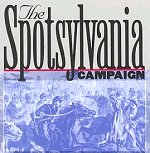 The Spotsylvania Campaign The Spotsylvania Campaign marked a crucial period in the confrontation between Ulysses S. Grant and Robert E. Lee in Virginia. Waged over a two-week period in mid-May 1864, it included some of the most savage fighting of the Civil War and left indelible marks on all involved |
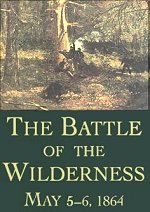 The Battle of the Wilderness May 5-6, 1864 Fought in a tangled forest fringing the south bank of the Rapidan River, the Battle of the Wilderness marked the initial engagement in the climactic months of the Civil War in Virginia, and the first encounter between Ulysses S. Grant and Robert E. Lee |
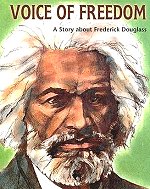 Voice of Freedom A Story About Frederick Douglass Interesting for both children and adults, this book does much to evoke the strong-minded, highly-principled person who inspired so many others |
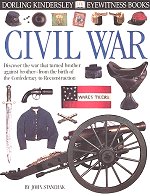 Eye Witness Civil War Eyewitness Civil War includes everything from the issues that divided the country, to the battles that shaped the conflict, to the birth of the reunited states. Rich, full-color photographs |
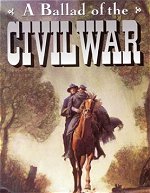 A Ballad of the Civil War A wonderful chapter book for children that should help them to appreciate the fact that some people could not defend a person's right to own other people and to understand that sad era that ended in the "brothers' war." |
Kindle Available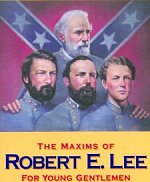 The Maxims Of Robert E. Lee For Young Gentlemen: Advice, Admonitions, and Anecdotes on Christian Duty and Wisdom from the Life of General Lee All his life, Robert E. Lee relied upon his faith for strength and guidance not only in troubled times, but also as the foundation upon which he based all of his dealings with others. |
Civil War History Documentary DVD Movie Titles
|
|
Books Civil War Womens Subjects Young Readers Military History DVDs Confederate Store Civil War Games Music CDs Reenactors |