
Final Resting Places of Famous Civil War Generals

Silas Weaver
Silas Weaver has spent decades exploring historic battlefields, reading primary journals, and tracking down the lesser-known stories of the American Civil War. His lifelong passion for 19th-century history comes through in his engaging accounts of the places, people, and lingering questions of the era. He believes that walking the actual grounds where history happened is the best way to truly connect with the past.
I have walked a lot of battlefields in the soft light of early morning, when the dew is still clinging to the grass and the monuments feel less like tourist stops and more like quiet witnesses. But some of the most powerful moments I have had as a Civil War traveler did not happen on a ridge line or behind a stone wall. They happened in cemeteries.
A general’s grave rarely shouts. Sometimes it is a grand obelisk with a famous name. Sometimes it is a modest stone tucked into family ground. Either way, these places have a way of pulling the war down to human scale. This guide is meant to help you find those sites, plan a sensible route, and visit with the kind of respect the setting deserves.
Before you go
Use the cemetery office
Even famous graves can be surprisingly hard to locate in older cemeteries with winding lanes and inconsistent section numbering. If there is an office or a kiosk map, use it. Many large cemeteries also have staff who can point you to the right drive loop and save you 30 minutes of circling.
It also helps to know that a lot of cemeteries now maintain online plot locators or downloadable maps. I still like having a paper photo of the map on my phone before I step out of the car.
Check hours and gates
Some cemeteries lock vehicle gates before dusk. Others allow pedestrians after hours. If your plan includes photography in late light, confirm what is actually permitted. I have learned this lesson the hard way. For memorial sites and mausoleums, I also double-check seasonal hours before I leave the hotel. It keeps a “quick stop” from turning into a locked-door lesson.
Expect seasonal quirks
- Winter: better visibility through trees, but some lanes may be icy or closed.
- Spring and summer: lush grounds, but dense foliage can hide smaller markers.
- Memorial Day weeks: busier, with ceremonies and traffic patterns that may change.
Gravesite etiquette
- Keep voices low and step carefully. These are active burial grounds, not outdoor museums.
- Do not rub stones, chalk inscriptions, or “clean up” on your own. Preservation is delicate work.
- Leave no objects behind unless the cemetery explicitly allows it. Small flags are usually fine, but avoid anything that could damage stone or landscaping.
- If a funeral is underway, turn around and come back later.
If you are building a broader itinerary, it helps to pair cemetery stops with nearby battlefield time. Our Plan a Civil War Battlefield Day guide lays out a pacing that works just as well for memorial sites.
Sample routes
If you like your planning tidy, here are a few loops that have worked for me. They are not the only ways to do it, but they are realistic days that keep you from spending more time driving than walking.
Two days: Northeast loop
- Day 1: Grant’s Tomb (New York City), then George H. Thomas (Troy, New York). This is a longer day than it looks on a map, especially if you are threading city traffic.
- Day 2: Winfield Scott Hancock (Norristown area, Pennsylvania).
One day: Washington and Arlington
- John A. Logan (U.S. Soldiers’ and Airmen’s Home Cemetery, Washington, D.C.)
- William S. Rosecrans (Arlington National Cemetery, Virginia)
Two days: Virginia ridge to river
- Day 1: Lexington for Lee and Jackson
- Day 2: Richmond for Hollywood Cemetery, then a Petersburg stop if you have the energy
For that Petersburg piece, I like starting here: Exploring the Trenches of Petersburg.
New York and New Jersey
If you want a trip with big names and manageable distances, the Northeast is generous. Just remember that “short drive” on a map can still mean traffic, tolls, and parking headaches.
Ulysses S. Grant
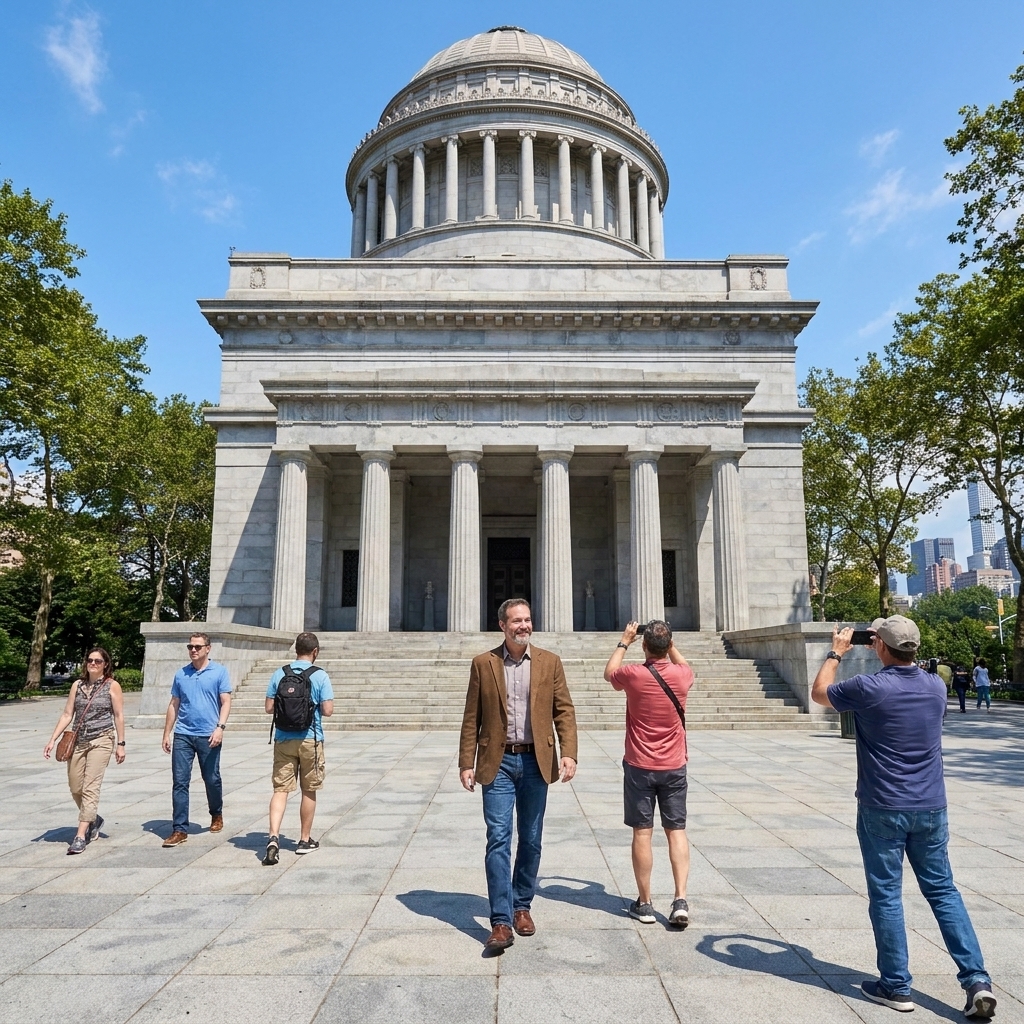
Where: General Grant National Memorial (Grant’s Tomb), Riverside Park, Manhattan, New York City.
What to expect: This is a mausoleum rather than a cemetery plot, and it feels like one. The approach alone sets the mood. Broad steps, massive stone, and that sense of entering a public place that still asks you to lower your voice. Even with city noise not far away, the interior can be hushed and surprisingly contemplative.
Visitor tip: Plan extra time for parking and city traffic. If you want a quieter visit, aim for a weekday morning, and verify current public access hours before you build your day around it.
George H. Thomas
Where: Oakwood Cemetery, Troy, New York.
What to expect: Oakwood’s older sections have a rolling, park-like feel, with long views from the hills and family plots that read like local history in stone. Thomas is often remembered through Chickamauga and Nashville, and visiting his grave has a way of sharpening the contrast between wartime achievement and postwar recognition.
George B. McClellan
Where: Riverview Cemetery, Trenton, New Jersey.
What to expect: A calmer setting than many big-city cemeteries, with a layout that makes it easy to slow down and look around rather than hunt for a single stone. The “Young Napoleon” rests in a place that fits his New Jersey ties and his long postwar life.
Visitor tip: If you are in a McClellan frame of mind, it is worth revisiting the question of why he moved the way he did in 1862. I dug into that hesitation here: Why McClellan Hesitated in the Peninsula Campaign.
Pennsylvania
Pennsylvania has a way of keeping the war close at hand. Even when you are nowhere near Gettysburg, the names and dates show up in unexpected corners.
Winfield Scott Hancock
Where: Montgomery Cemetery, near Norristown, Pennsylvania.
What to expect: A dignified burial place for one of Gettysburg’s most memorable Union corps commanders. The grounds are the kind that gently pull you uphill and downhill as you walk, and those small changes in elevation can make a cemetery feel bigger than it looks from the gate. This is the kind of stop that feels simple on paper, then sticks with you afterward. If you grew up around Pennsylvania battle talk like I did, “Hancock” is a name that tends to echo.
Pair it with: If you are deciding what to see first in the region, this helps: Gettysburg vs. Antietam.
Washington and Arlington
This is where the national story feels most formal. The grounds are carefully kept, the lines are clean, and the mood tends to be steady even when the visitor count is high.
John A. Logan
Where: U.S. Soldiers’ and Airmen’s Home Cemetery, Washington, D.C.
What to expect: A compact cemetery with an unhurried feel, set alongside an active federal campus. Logan is worth including if you are interested in the veteran movement and the way the war was remembered and organized after 1865.
William S. Rosecrans
Where: Arlington National Cemetery, Arlington, Virginia.
What to expect: Arlington carries a different kind of gravity than the older city cemeteries. The slope, the long sightlines, and the sense of order can make you feel the scale of national memory in a single glance. Rosecrans is a name that deserves more attention than it often gets, especially if you have walked the ground at Chickamauga.
Pair it with: Our Chickamauga Battlefield Guide can help connect what you see in Georgia to the commanders who carried those memories the rest of their lives.
Virginia
Virginia is the rare state where you can visit major battlefields and major burials with the same set of road-trip instincts. Give it time. These are not grab-and-go stops.
Robert E. Lee
Where: Lee Chapel, Washington and Lee University, Lexington, Virginia.
What to expect: Lee is entombed in a chapel setting rather than a traditional outdoor gravesite. It is a place where visitors tend to fall quiet, even when they arrive talkative.
Visitor tip: Be mindful that this is connected to an active university environment. Access and hours can shift with events and the academic calendar, so it is worth verifying before you build your day around it.
Thomas “Stonewall” Jackson
Where: Oak Grove Cemetery (renamed from Stonewall Jackson Memorial Cemetery), Lexington, Virginia.
What to expect: A comparatively small, focused cemetery with a strong sense of place. Lexington makes it easy to pair Jackson and Lee in a single day, with very little windshield time in between. If you are navigating by GPS or a newer map app, using “Oak Grove Cemetery” will usually get you there faster.
Context worth carrying with you: Jackson’s legend began early and took on a life of its own. If you want the short version of how that nickname really stuck, start here: The Truth Behind Stonewall Jackson’s Nickname.
J. E. B. Stuart
Where: Hollywood Cemetery, Richmond, Virginia.
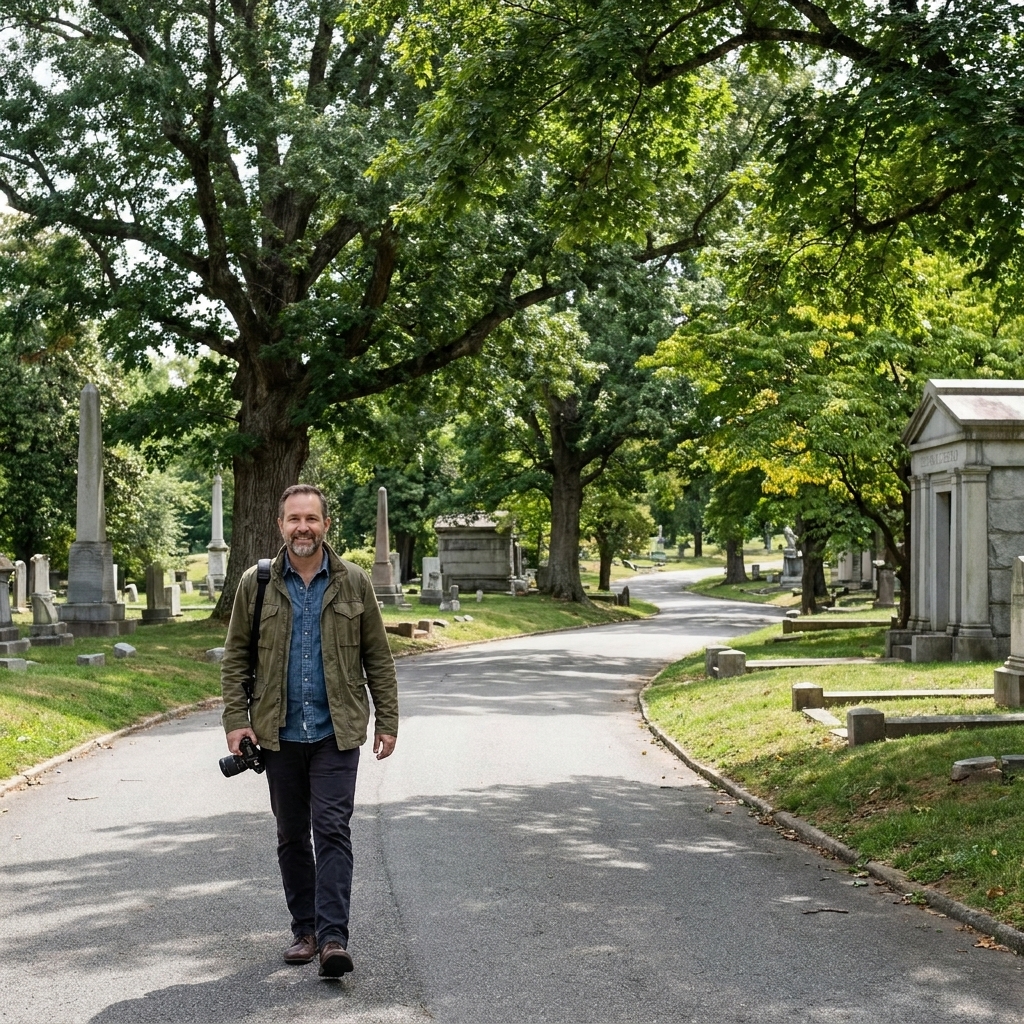
What to expect: Hollywood is one of the most significant Civil War era cemeteries in the country, both for famous burials and for the way the landscape itself shapes the experience. You feel it immediately in the elevation changes and in the way the roads curve and reveal new views. Take a moment to stand where you can see the James River, then look back across the older stones. The contrast is the point.
Visitor tip: Give yourself time to drive slowly and stop often. Hollywood rewards a patient visit, and it is easy to underestimate how big it feels once you are inside.
Mobile
Farther south, you often feel how tightly a commander’s memory is tied to one city. These cemeteries can be neighborhood-close, with local names on the stones that show up again on street signs and courthouse plaques.
Braxton Bragg
Where: Magnolia Cemetery, Mobile, Alabama.
What to expect: A quieter cemetery setting for a general whose wartime reputation still sparks debate. Magnolia’s older avenues make for a slow walk, and the live oak shade can make the place feel cooler and older than the surrounding streets. It is the kind of stop where you will likely have long stretches to yourself.
St. Louis
If your trip follows the great rivers and rail hubs that fed the war, you will find generals buried in the same cities where veterans later gathered, argued politics, raised funds, and built monuments. St. Louis is a good example. The cemeteries are expansive, and the roads inside them matter.
William Tecumseh Sherman
Where: Calvary Cemetery, St. Louis, Missouri.
What to expect: A major cemetery in a major Civil War era city. Sherman’s burial place is not a hard visit to make, but it still rewards patience. The grounds have that broad, driveable scale that can make a cemetery feel like its own small map, and it is worth slowing down enough to let the city noise fade as best it can.
Visitor tip: In a cemetery this large, a map or office directions are worth the minute it takes to ask. One correct turn can save you a lot of wandering.
How to build a trip
Choose a theme
- Gettysburg thread: Pair commanders tied to the battle with time on the field. If you are deciding what to see first, this helps: Gettysburg vs. Antietam.
- Virginia thread: Combine Lexington (Lee and Jackson) with Richmond (Hollywood Cemetery) and a Petersburg day. For Petersburg, start here: Exploring the Trenches of Petersburg.
- How memory works thread: Visit a national cemetery, a city cemetery, and a chapel tomb on the same trip. The contrast tells its own story.
Leave room for detours
Cemeteries invite detours. You come for one general and end up pausing at a row of unknown soldiers, a weathered regimental marker, or a family plot with dates that line up with a familiar campaign. Build slack into the day so you do not have to rush the moments that matter.
Pick the right season
If you asked me to pick a single season for reflective visits, I would lean toward late fall or winter. The light is cleaner, the leaves are down, and you can often see the lay of the land better. I made the case for that kind of travel here: Why Winter Is the Best Time to Visit Civil War Battlefields.
What to bring
- Comfortable walking shoes: even a “quick stop” can turn into a mile.
- A small notebook: jot down section numbers, nearby landmarks, and names you want to look up later.
- Water and a snack: many cemeteries are far from services, and you should not be hunting for food when you meant to be present.
- A paper map backup: phone reception can be spotty among hills, trees, and old stone.
Frequently asked questions
Is it appropriate to visit a general’s grave?
Yes, as long as you treat the grounds as a place of mourning and memory. Many cemeteries welcome respectful visitors, and they have long been part of how Americans learn history.
Can I leave a flag or a small token?
Small flags are commonly accepted, especially around patriotic holidays, but rules vary. When in doubt, follow posted guidance or ask the office. Avoid anything that could stain stone or interfere with mowing and maintenance.
How do I find the exact plot location?
Start with the cemetery’s own map, plot locator, or office directions. If the cemetery is large, ask for the section and the nearest road or landmark inside the grounds. That is usually more helpful than a GPS pin.
What if the site is crowded?
Step back, wait your turn, and keep your photos quick. I have had good luck visiting early on weekdays, when you can hear the wind in the trees instead of a dozen conversations at once.
A quiet ending
When I am traveling, I often save a cemetery stop for late afternoon. It is a natural way to come down from the noise of roadside traffic and the intensity of battlefield interpretation. The war, for all its maps and maneuvers, ended for every participant the same way. Standing at these stones, you feel that truth plainly.
If you want more context on how commanders’ lives braided together long before the shooting started, you might enjoy Brothers Divided: Pre-War Bonds of Rival Civil War Generals.