Kindle Available Stonewall Jackson at Cedar Mountain At Cedar Mountain on August 9,1862, Stonewall Jackson exercised independent command of a campaign for the last time |
Second Manassas, Second Bull Run
|
|
|
|
|
Video by Joe Ryan JoeRyanCivilWar @ YouTube |
|
 Rocks and War: Geology and the Civil War Campaign of Second Manassas The first study of the Battle of Second Manassas to show the importance of the landscape through which the generals maneuvered. Knowledge of landforms was vital to officers as they planned strategy and movements |
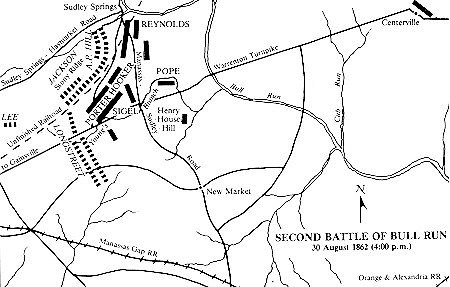 August 30 4:00 PM |
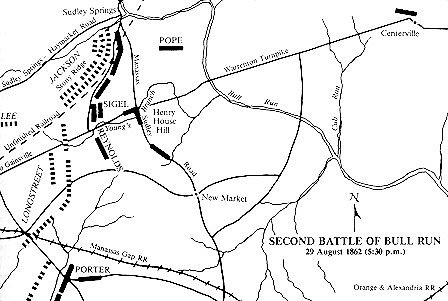 August 30 5:30 PM |
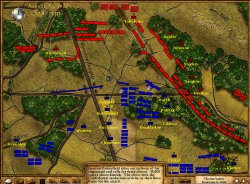 |
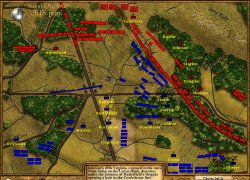 |
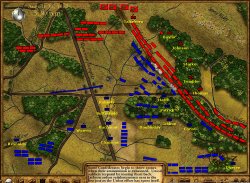 |
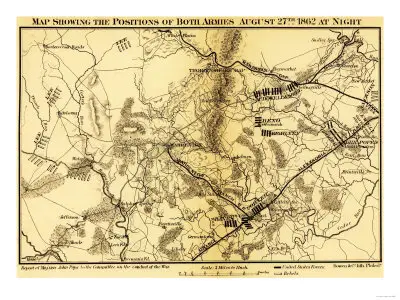
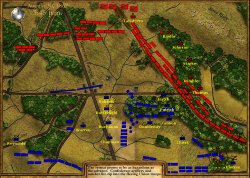 Click to enlarge |
 Cavalry Saber Metal Scabbard Authentic weight More Reenactors Supplies |
More On Second Manassas - Second Bull Run Virginia State Battle Map 1862 Civil War Battle Maps by State Ships and Naval Battles Union Hardtack Recipes Civil War Picture Album General Stonewall Jackson Clara Barton - American Red Cross Underground Railroad American Civil War Exhibits Civil War Summary Women in the War |
 Civil War Musket Wood & Steel Frontier Rifle Designed After The Original Rifle 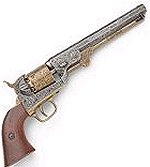 Civil War Model 1851 Naval Pistol |
 Unconditional Surrender U. S. Grant and the Civil War This is the best juvenile biography on Ulysses S. Grant by a wide margin. Marrin has done an excellent job in introducing Grant to a young audience. I highly recommend it. |
 Weapons and Strategies of the Civil War For grades 3-6 which packs 48 pages with color photos and 30 links providing quality Internet sites for more research. Chapter notes, a bibliography and an index round out information and assure not just accuracy, but constant updates to research information. |
 A Ballad of the Civil War A wonderful chapter book for children that should help them to appreciate the fact that some people could not defend a person's right to own other people and to understand that sad era that ended in the "brothers' war." It has four chapters with a prologue and a closing author's note. The conversations that Tom has with the household slave "Uncle Roger" provide some unique insight into the dilemma that slaves faced in the antebellum South |
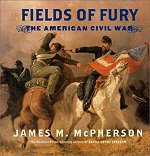 Fields of Fury The American Civil War Written for young readers a stirring account of the greatest conflict to happen on our nation's soil, the Civil War, bringing to life the tragic struggle that divided not only a nation, but also friends and family. well-organized, well-executed, kid-friendly history of the Civil War was a brilliant idea if there ever was one. It's difficult to imagine anyone doing a better job than McPherson at breaking down this complex, interrelated series of events. |
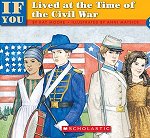 If You Lived at the Time of the Civil War All of the "If you Lived at the Time of..." books are great for kids, and also a nice, quick read for adults! What I like about them is their layout, which is easy for readers to follow. Each page begins with a question, "Would you have seen a battle in the South?" for example. Nicely drawn illustrations accompany each answer. |
 Day Of Tears Through flashbacks and flash-forwards, and shifting first-person points of view, readers will travel with Emma and others through time and place, and come to understand that every decision has its consequences, and final judgment is passed down not by man, but by his maker. |
Kindle Available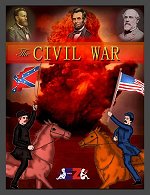 The Civil War Introduces young readers to the harrowing true story of the American Civil War and its immediate aftermath. A surprisingly detailed battle-by-battle account of America's deadliest conflict ensues, culminating in the restoration of the Union followed by the tragic assassination of President Lincoln |
 The Boys War With the many boys who fought in the civil war most of them lied about their age. A lot of them wrote letters or had a diary. Johnny Clem had run away from his home at 11. At age 12 he tried to enlist but they refused to let him join because he was clearly too young. The next day he came back to join as a drummer boy. |
Kindle Available Robert E. Lee This book not only offers concise detail but also gives terrific insight into the state of the Union and Confederacy during Lee's life. Lee was truly a one of kind gentleman and American, and had Virginia not been in the south or neutral, he ultimately would have led the Union forces. |
 Four Years With General Lee Walter Taylor was staff officer to General Robert E. Lee. His book first appeared in 1877. For many years a standard authority on Confederate history, it is the source for dozens of incidents that have now become a part of every biography of Lee. |
 Stonewall Jackson The Man, the Soldier, the Legend Jackson traces his life from his humble beginnings, through his military career, to his untimely death in 1863, discussing his military campaigns and strategies, religious beliefs, personal eccentricities |
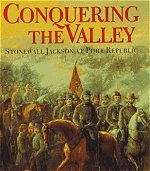 Conquering the Valley: Stonewall Jackson at Port Republic Using accurate background information as well as anecdotal material, eyewitness accounts, and new primary sources, a historic narrative outlines the events surrounding the Civil War battles at Port Republic and Cross Keys |
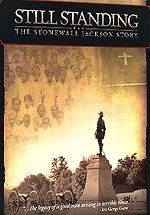 Still Standing: The Stonewall Jackson Story The life of Stonewall Jackson from his orphaned childhood, to the Sunday School class he taught for African Americans that has resulted in a lasting impact today, to the pivotal role he played as a General in the Civil War |
 500 Nations An eight-part documentary that explores the history of the indigenous peoples of North and Central America, from pre-Colombian times through the period of European contact and colonization, to the end of the 19th century and the subjugation of the Plains Indians of North America |
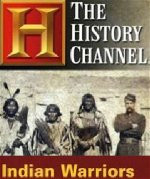 Indian Warriors - The Untold Story of the Civil War Some 20-30 thousand Native Americans fought in the Civil War. Ely Parker was a Seneca leader who found himself in the thick of battle at the side of General Ulysses S. Grant. Stand Waite, a Confederate General and a Cherokee was known for his brilliant guerilla tactics |
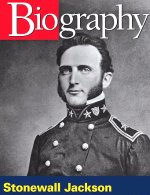 Stonewall Jackson - Biography He earned his nickname for bravery at Bull Run. He met his fate in a tragic accident at Chancellorsville. Stonewall Jackson is widely regarded as one of the greatest of the Confederate commanders of the Civil War. An outstanding leader and brilliant tactician he led some of the most stunning campaigns of the war and earned a place in military history. |
 The Last Confederate The Story of Robert Adams Great historically correct movie of a noble confederate and his undying love of a Yankee girl. |
 Civil War Terror Tales of hidden conspiracies of terror that specifically targeted the civilian populations. Engineers of chemical weapons, new-fangled explosives and biological warfare competed |
 The Civil War: To the Finish: Sherman and the March to the Sea After 3 years of battles, a Union general captured Atlanta and decided to change the course of the war for good. That general was William Tecumseh Sherman |
 The Last Days of the Civil War - Biography: Abraham Lincoln & Robert E. Lee, Civil War Journal: Jefferson Davis In-depth profiles that series--illuminate the personalities at the heart of the conflict: Abraham Lincoln, Jefferson Davis, and Robert E. Lee |
|
Battle of Shiloh Civil War Map First Manassas Civil War Pictures Civil War Cooking Gettysburg Civil War Ships |